“Normally, we think when we have the right stuff in the right circumstances, happiness happens,” notes Phakchok Rinpoche. “But we really don’t have to depend on the stuff and the circumstances; we need only to make a slight yet radical shift. And then we will be happy no matter what.” Sounds good, but what, or who, is a rinpoche? “Rinpoche” is an honorific, applied to Tibetan Buddhist teachers, much like “Rabbi” is applied to Jewish ones. Tibetan Buddhism is getting more attention lately, and the Dalai Lama receives plenty of publicity. Buddhist references abound in popular culture, too (The Matrix, anyone? Or Jon Stewart’s “moment of Zen”?) but what does its philosophy actually say? On Friday night on the Lower East Side, a popular young Tibetan teacher and a former Silicon Valley executive will try to bring the concepts down to earth for the contemporary mind. Thirtysomething Kyabgön Phakchok Rinpoche, a member of a historic family of Tibetan teachers, is known for his sharp wit, realism, sense of humor, and accessible speaking. He received traditional Tibetan Buddhist training in the Nyingma tradition, and he’s been teaching throughout the world for the last ten years (as well as occasionally hopping on a Citi Bike to get around when he’s in town). There’s more info at his website and in his online teaching program, but you can hear him in person at this informal Friday evening gathering at the second annual Jewel and Lotus Ethical Pop-up Shop & Gallery, where he and Erric Solomon, a Silicon Valley software success who retired early and then spent three years on retreat in Tibet (and now runs whatmeditationreallyis.com), will be talking about how to be happy. And on a warm summer night on the Lower East Side, that seems like a very good thing to learn. (The pop-up shop and gallery show continue through August 23, featuring Rutongo Embroideries from Rwanda, calligraphy by Marlow Brooks, and items from more than twenty ethically conscious brands. There will also be a fashion party on August 20.)
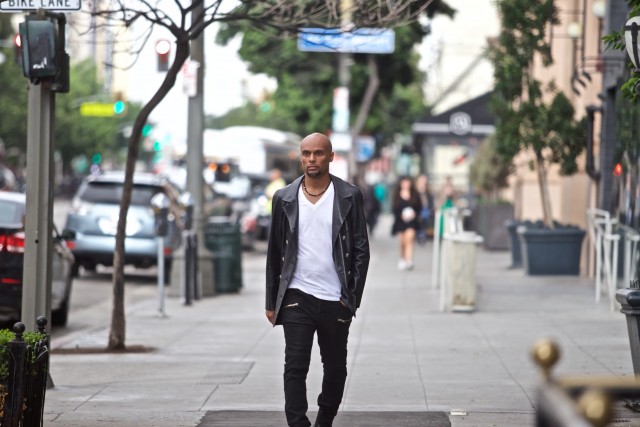
Kenny Lattimore will be performing at Harlem Week Summer in the City festivities
West 135th St. between Malcolm X Blvd. & Frederick Douglass Blvd.
Saturday, August 15, and Sunday, August 16, free, 12 noon – 6:00 pm harlemweek.com
The annual Harlem Week festival continues August 15 with Summer in the City and August 16 with Harlem Day, two afternoons of special events along West 135th St. that honor the theme “Celebrating the Journey: Embracing the Future.” Saturday’s festivities include the Historic Black College Fair & Expo, the Peace in Our Community Conference, New Yorkers Are “Dancing in the Street” (with Alvin Ailey instructors and dancers), the Fabulous Fashion Flava Show, the first day of the NYC Children’s Festival (with a parade, sports clinics, health testing, arts & crafts, and more), Harlem Honeys & Bears swimming activities in the Hansborough Recreation Center, an International Vendors Village, the Uptown Saturday Concert with Kenny Lattimore, the Jeff Foxx Band, and Deborah Cox, an Our Lives Matter program, and a screening in St. Nicholas Park of Damani Baker and Alex Vlack’s 2010 documentary, Still Bill, about newly inducted Rock and Roll Hall of Famer Bill Withers. Sunday’s Harlem Day celebration features the Upper Manhattan Auto Show, tennis clinics, a health village, the second day of the NYC Children’s Festival (with a Back to School theme), the Upper Manhattan Small Business Expo & Fair, live music, dance, and spoken-word performances, another fashion show, and a musical tribute to Malcolm X with Doug E. Fresh, Vivian Green, and others.
Elvis Costello will be at BAM on November 10 to talk about his new book (photo by Mary McCartney)
BAM Howard Gilman Opera House
Peter Jay Sharp Building
230 Lafayette Ave.
September 24 – November 10, $25-$30 ($45 with signed book), 7:30 or 8:00
718-636-4100 www.bam.org/unbound
Since its inaugural event in September 2013, BAM’s “Unbound” literary series has featured such personalities as John Cleese, Philip Glass, Kim Gordon, Jonathan Lethem, and Angélique Kidjo presenting their new books, teaming up with the nearby Greenlight Bookstore. Tickets are now on sale for the fall festival, which begins September 24 with the launch of Elizabeth Gilbert’s Big Magic: Creative Living Beyond Fear, with the author of Eat Pray Love joined by Tony-winning playwright and actress Sarah Jones. On September 27, Adam Driver, Paul Giamatti, David Strathairn, and others will be at BAM to read selections from Bryan Doerries’s The Theater of War: What Ancient Greek Tragedies Can Teach Us Today, followed by a discussion with Doerries, held in conjunction with the Onassis Cultural Center NY. On October 6, Sara Bareilles will discuss her essay collection, Sounds Like Me: My Life (so far) in Song, with Ben Folds, while Gloria Steinem will discuss her latest book, My Life on the Road, on October 27. The all-star lineup concludes on November 10 with Elvis Costello lending further insight to his memoir, Unfaithful Music & Disappearing Ink, with Rosanne Cash. Tickets are $25-$30 for a seat in the Howard Gilman Opera House and $45 if you want a signed copy of the book as well. (The Gilbert, Doerries, and Costello books will be presigned.)
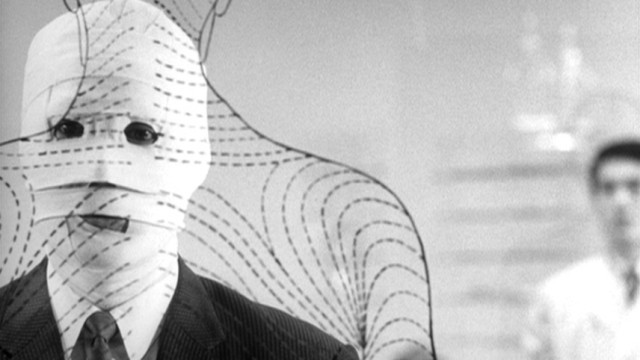
Hiroshi Teshigahara examines identity and more in THE FACE OF ANOTHER
CABARET CINEMA: THE FACE OF ANOTHER (TANIN NO KAO) (Hiroshi Teshigahara, 1966)
Rubin Museum of Art
150 West 17th St. at Seventh Ave.
Friday, August 7, $10, 9:30
212-620-5000 rubinmuseum.org
Kôbô Abe and director Hiroshi Teshigahara collaborated on five films together, including the marvelously existential Woman of the Dunes in 1964 and The Face of Another two years later. In the latter, Tatsuya Nakadai (The Human Condition, Kill!) stars as Okuyama, a man whose face has virtually disintegrated in a laboratory accident. He spends the first part of the film with his head wrapped in bandages, a la the Invisible Man, as he talks about identity, self-worth, and monsters with his wife (Machiko Kyo), who seems to be growing more and more disinterested in him. Then Okuyama visits a psychiatrist (Mikijirô Hira) who is able to create a new face for him, one that would allow him to go out in public and just become part of the madding crowd again. But his doctor begins to wonder, as does Okuyama, whether the mask has actually taken control of his life, making him as helpless as he was before. Abe’s remarkable novel is one long letter from Okuyama to his wife, filled with utterly brilliant, spectacularly detailed examinations of what defines a person and his or her value in society. Abe wrote the film’s screenplay, which tinkers with the time line and creates more situations in which Okuyama interacts with people; although that makes sense cinematically, much of Okuyama’s interior narrative, the building turmoil inside him, gets lost. Teshigahara once again uses black and white, incorporating odd cuts, zooms, and freeze frames, amid some truly groovy sets, particularly the doctor’s trippy office, and Tōru Takemitsu’s score is ominously groovy as well. As a counterpart to Okuyama, the film also follows a young woman (Miki Irie) with one side of her face severely scarred; she covers it with her hair and is not afraid to be seen in public, while Okuyama must hide behind a mask. But as Abe points out in both the book and the film, everyone hides behind a mask of one kind or another. The Face of Another is screening August 7 as part of the Rubin Museum Cabaret Cinema series “Movie Masks,” being held in conjunction with the excellent exhibition “Becoming Another: The Power of Masks,” and will be introduced by RISK! podcast host Kevin Allison. The film series continues through August 28 with such other mask-related works as Mario Bava’s Black Sunday, Billy Wilder’s Witness for the Prosecution, and Alfred Hitchcock’s To Catch a Thief.
Kevin Smith (r.) will talk about MALLRATS, and hopefully its upcoming sequel, at free twentieth anniversary screening Tuesday night in Williamsburg
Who:Kevin Smith,DJ Steve Reynolds What:Nitehawk Cinema and BuzzFeed Throwback Theater present free outdoor screening of Mallrats (Kevin Smith, 1995) Where: 50 Kent Ave. between North 11th & North 12th Sts. When: Tuesday, August 4, free with advance RSVP, doors open at 5:00, music at 7:00, film at sunset Why: Writer, director, and costar Kevin Smith will be in Williamsburg on Tuesday night for a Q&A prior to a free twentieth anniversary screening of his 1995 cult fave, Mallrats, in which he plays Silent Bob to Jason Mewes’s Jay. Also in the cast are Ben Affleck, Shannen Doherty, Jeremy London, Priscilla Barnes, Michael Rooker, Joey Lauren Adams, Ethan Suplee, Claire Forlani, and, as himself, comic book legend Stan Lee. Mallrats deals with difficult breakups, game shows, Magic Eye pictures, pre-Paul Blart mall security guards, the Easter Bunny, sex, and general loitering. Advance RSVP is required but doesn’t guarantee entry to the event, which also includes a set by DJ Steve “Party Like It’s 1999” Reynolds and such food trucks as OddFellows Ice Cream, Luzzo’s Pizza, Best Buds Burritos, and Landhaus. Smith recently confirmed that he is in the process of making a Mallrats sequel, so this is a great opportunity to hear him discuss the underrated original as well as what’s coming next for these crazy characters.
A dead medium is not quite ready to say farewell to the world in Mario Bava’s BLACK SABBATH
BLACK SABBATH (Mario Bava, 1963-64)
Anthology Film Archives
32 Second Ave. at Second St.
Saturday, August 1, 6:45, Tuesday, August 4, 7:00, and Saturday, August 8, 9:00
Series runs through July 31 – September 3
212-505-5181 anthologyfilmarchives.org
The film that gave Ozzy Osbourne’s band its name, Black Sabbath is just about everything you could want such a movie to be: cheap, exploitive, and featuring Boris Karloff, with nods to great French and Russian storytellers. (Um, sure . . . of course.) Founded in 1954 by James H. Nicholson and Samuel Z. Arkoff, American International Pictures was responsible for hundreds of low-budget independent films through 1980, specializing in horror, Westerns, blaxploitation, sci-fi, biker flicks, teen delinquency, women in prison, and even beach movies. Anthology Film Archives is paying tribute to the famed studio with a three-part series that begins July 31 by focusing on auteurs who either cut their teeth with AIP or were already well established. It’s quite a list; through September 3, Anthology will be screening works by Francis Ford Coppola, Martin Scorsese, Vincente Minnelli, Brian De Palma, and Roger Corman, who will make several appearances at the downtown movie house. Also on the roster is Italian scaremaster Mario Bava, whose Black Sabbath will be shown August 1, 4, and 8. Black Sabbath is, appropriately enough, an anthology of three short films hosted by Boris Karloff, a kind of melding of Karloff’s Thriller television series with Rod Serling’s Twilight Zone. The Italian-French coproduction was significantly changed by AIP, altering the order of the films and drastically modifying one of the plots. Black Sabbath opens with “A Drop of Water,” supposedly based on a short story by Anton Chekhov. Late one night, nurse Helen Chester (Jacqueline Pierreux) is summoned by an elderly caretaker (Milly Monti) to a stately home where a medium — sporting perhaps the most frightening face ever on a dead person, with dark, deep-set eyes and a viciously wicked smile that makes her look like an evil doll — has died during a séance. After stealing the medium’s ring off her finger, Helen is suddenly taunted by a buzzing fly and drops of water, evoking what was experienced by the killer in Edgar Allan Poe’s “The Tell-Tale Heart,” who was haunted by the unending sound of a beating heart. (Perhaps not coincidentally, AIP was famous for its Poe adaptations.) The conclusion is truly chilling, with a cool little coda.
Boris Karloff serves as host of Mario Bava’s eerie anthology film BLACK SABBATH and plays one of its creepier characters
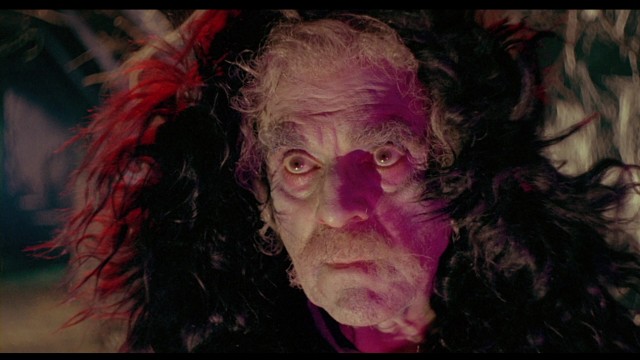
In “The Telephone,” the glamorous Rosy (Michele Mercier) returns to her apartment one night after an undisclosed outing and is harassed by a man who keeps calling her on her awesome black and red phone, the severity of his threats growing each time she picks up. When the man claims to be the recently deceased Frank, she turns to a former friend, Mary (Lydia Alfonsi), for help, but it’s going to take a lot more than that to save her from this supernatural peril. The Italian original had a tasty soupçon of lesbianism and prostitution, which was washed clean by AIP, but “The Telephone,” possibly inspired by works by F. G. Snyder and Guy de Maupassant, is still a creepy little story that holds up well in this surveillance-crazed age. The trilogy of terror concludes with the heavily atmospheric vampire yarn “The Wurdalak,” adapted from a novella by Aleksey Nikolayevich Tolstoy. In nineteenth-century Russia, a family awaits the return of its patriarch, Gorca (Karloff, looking like a cross between the Grinch, the Gremlin from the 1963 Twilight Zone episode “Nightmare at 20,000 Feet,” and the Abominable Snowman), who has gone off to kill a wurdulak, a living cadaver that feasts on the blood of loved ones. Gorca’s son Giorgio (Glauco Onorato), Giorgio’s wife (Rika Dialina), their young son, Ivan, and Giorgio’s younger siblings, Pietro (Massimo Righi) and Sdenka (Susy Andersen), are joined unexpectedly by Vladimir Durfe (Mark Damon), a traveling nobleman who discovers a man with a knife in him outside the family’s cottage. But when Gorca finally shows up, there is something different about him, and the members of the clan must decide whether he’s still their father or if he’s been turned, coming home to feast on his family.
Black Sabbath might be minor Bava, but it’s a great place to start if you know little or nothing about the Italian director, who made such other films as Black Sunday, The Girl Who Knew Too Much, Dr. Goldfoot and the Girl Bombs, and Kill, Baby, Kill before passing away in 1980 at the age of sixty-five. Black Sabbath has that classic Bava look and feel, with colorful, lush sets, eerie cinematography by Bava and Ubaldo Terzano, captivating suspense, and essentially competent acting with questionable dubbing. Karloff has a ball both as the host of the whole thing and the star of the third film, chewing up the scenery with his playful eyes and mocking brow. He would go on to make a bunch of films for AIP, including Corman’s The Terror and The Raven, Daniel Haller’s Die, Monster, Die! and Jacques Tourneur’s The Comedy of Terrors, alongside such fab costars as Jack Nicholson, Vincent Price, and Peter Lorre. American International served as a training ground for up-and-comers as well as a last bastion for aging actors and directors, and the strange and scary Black Sabbath fits right into their majestic raison d’être.
Slide the City will be coming to Park Ave. as part of Summer Streets celebration
Park Ave. & 72nd St. to Foley Square
Saturday, August 1, 8, 15, free, 7:00 am – 1:00 pm www.nyc.gov
Now in its sixth year, Summer Streets takes place the next three Saturday mornings, as Park Ave. will be closed to vehicular traffic from 72nd St. to Foley Square and the Brooklyn Bridge from 7:00 am to 1:00 pm, encouraging people to walk, run, jog, blade, skate, slide, and bike down the famous thoroughfare, getting exercise and enjoying the great outdoors without car exhaust, speeding taxis, and slow-moving buses. There are five rest stops along the route (Uptown at 52nd St., Midtown at 25th, Astor Pl. at Lafayette St., SoHo at Spring & Lafayette, and Foley Square at Duane & Centre), where people can stop for some food and drink, live performances, fitness classes, site-specific art installations, dog walks, bicycle workshops, and other activities, all of which are free. Below are some of the highlights.
Foley Square Rest Stop
Slide the City (advance preregistration required,) “ICY SIGNS” by Steve ESPO Powers, Free Style Soccer with NYC Flo, Historical Reenactors with Ben Franklin, and The Mantises Are Flipping W.3 by Bodystories: Teresa Fellion Dance + John Yannelli with members of the SLC Experimental Music Ensemble, 10:00 – 10:35, 10:55 – 11:35, 12 noon – 1:00 (August 15 only, 26 Federal Plaza)
SoHo Rest Stop
Fitness Classes, Free Bike Repair by Bicycle Habitat, Bike & Roll Bike Rental, Honest Tea, Waterfront Alliance Table
Astor Place Rest Stop
American Kennel Club Dog Park, Department of Design and Construction Arts & Crafts Workshop, Therapeutic Arts by Wheeling Forward, Guided and Self-Guided Walking Tours
Midtown Rest Stop
Whole Foods Market Summer Camp, CitiBike Information & Education, live music and dance performances, juggling, and tai chi demonstrations
Uptown Rest Stop
DOT Safety Zone, “The Postcard Project” by Connie Perry, Parkour Fitness Demonstrations, Serious Fun Children’s Network Workshop, Central Park Sightseeing Bike Rental, Bronx Museum of the Arts: Arts & Crafts with Artist Educators, live music, dance, and comedy performances


 Kôbô Abe and director Hiroshi Teshigahara collaborated on five films together, including the marvelously existential Woman of the Dunes in 1964 and The Face of Another two years later. In the latter, Tatsuya Nakadai (The Human Condition, Kill!) stars as Okuyama, a man whose face has virtually disintegrated in a laboratory accident. He spends the first part of the film with his head wrapped in bandages, a la the Invisible Man, as he talks about identity, self-worth, and monsters with his wife (Machiko Kyo), who seems to be growing more and more disinterested in him. Then Okuyama visits a psychiatrist (Mikijirô Hira) who is able to create a new face for him, one that would allow him to go out in public and just become part of the madding crowd again. But his doctor begins to wonder, as does Okuyama, whether the mask has actually taken control of his life, making him as helpless as he was before. Abe’s remarkable novel is one long letter from Okuyama to his wife, filled with utterly brilliant, spectacularly detailed examinations of what defines a person and his or her value in society. Abe wrote the film’s screenplay, which tinkers with the time line and creates more situations in which Okuyama interacts with people; although that makes sense cinematically, much of Okuyama’s interior narrative, the building turmoil inside him, gets lost. Teshigahara once again uses black and white, incorporating odd cuts, zooms, and freeze frames, amid some truly groovy sets, particularly the doctor’s trippy office, and Tōru Takemitsu’s score is ominously groovy as well. As a counterpart to Okuyama, the film also follows a young woman (Miki Irie) with one side of her face severely scarred; she covers it with her hair and is not afraid to be seen in public, while Okuyama must hide behind a mask. But as Abe points out in both the book and the film, everyone hides behind a mask of one kind or another. The Face of Another is screening August 7 as part of the Rubin Museum Cabaret Cinema series “Movie Masks,” being held in conjunction with the excellent exhibition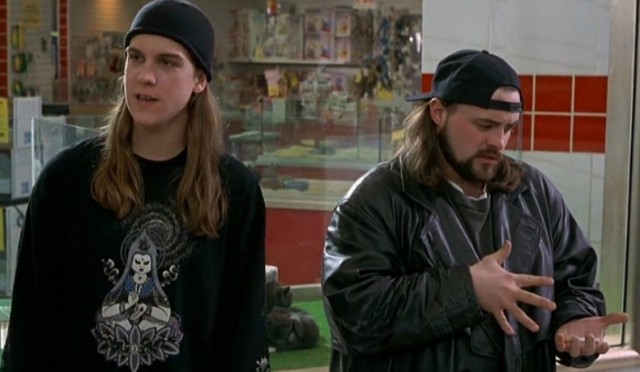
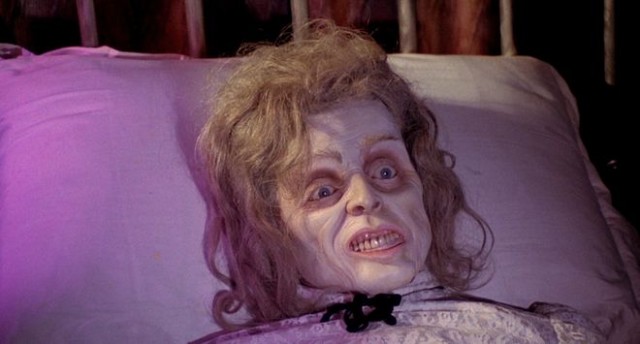
 The film that gave Ozzy Osbourne’s band its name, Black Sabbath is just about everything you could want such a movie to be: cheap, exploitive, and featuring Boris Karloff, with nods to great French and Russian storytellers. (Um, sure . . . of course.) Founded in 1954 by James H. Nicholson and Samuel Z. Arkoff, American International Pictures was responsible for hundreds of low-budget independent films through 1980, specializing in horror, Westerns, blaxploitation, sci-fi, biker flicks, teen delinquency, women in prison, and even beach movies. Anthology Film Archives is paying tribute to the famed studio with a three-part series that begins July 31 by focusing on auteurs who either cut their teeth with AIP or were already well established. It’s quite a list; through September 3, Anthology will be screening works by Francis Ford Coppola, Martin Scorsese, Vincente Minnelli, Brian De Palma, and Roger Corman, who will make several appearances at the downtown movie house. Also on the roster is Italian scaremaster Mario Bava, whose Black Sabbath will be shown August 1, 4, and 8. Black Sabbath is, appropriately enough, an anthology of three short films hosted by Boris Karloff, a kind of melding of Karloff’s Thriller television series with Rod Serling’s Twilight Zone. The Italian-French coproduction was significantly changed by AIP, altering the order of the films and drastically modifying one of the plots. Black Sabbath opens with “A Drop of Water,” supposedly based on a short story by Anton Chekhov. Late one night, nurse Helen Chester (Jacqueline Pierreux) is summoned by an elderly caretaker (Milly Monti) to a stately home where a medium — sporting perhaps the most frightening face ever on a dead person, with dark, deep-set eyes and a viciously wicked smile that makes her look like an evil doll — has died during a séance. After stealing the medium’s ring off her finger, Helen is suddenly taunted by a buzzing fly and drops of water, evoking what was experienced by the killer in Edgar Allan Poe’s “The Tell-Tale Heart,” who was haunted by the unending sound of a beating heart. (Perhaps not coincidentally, AIP was famous for its Poe adaptations.) The conclusion is truly chilling, with a cool little coda.