this week in lectures, signings, panel discussions, workshops, and Q&As

LENORE SKENAZY: WORLD’S WORST MOM

Lenore Skenazy

“World’s Worst Mom” Lenore Skenazy will be at the Museum of Jewish Heritage on September 14 to talk about fear and freedom when it comes to raising your kids

Who: Lenore Skenazy
What: “How Did We Come to Believe Our Children Are in Constant Danger from Creeps, Kidnapping, Germs, Grades, Flashers, Frustration, Failure, Baby Snatchers, Bugs, Bullies, Men, and the Perils of a Non-Organic Grape?”
Where: Museum of Jewish Heritage — A Living Memorial to the Holocaust, Edmond J. Safra Plaza, 36 Battery Pl., 646-437-4202
When: Wednesday, September 14, $12 (includes one drink), 7:00
Why: Just in time for back-to-school season, Lenore Skenazy, the creator of Free Range Kids and the facilitator of the Discovery Life Channel reality series World’s Worst Mom, will be at the Museum of Jewish Heritage to explain why it’s okay to give more freedom to your kids. On the show, Skenazy has dealt with such scenarios as children riding their bike, walking the dog, or taking the bus for the first time without parental or other adult supervision. She attempts to calm the fears of overprotective, paranoid mothers, but instead she gets such responses as “I’m very irritated with you, Lenore,” from a young mother whose two children just walked the three blocks from school to home by themselves one afternoon. “It’s setting them up for something unrealistic. They’re not going to walk to school by themselves,” the mother argues, even as her husband thinks it was a good thing. Skenazy also writes the Free Range Kids blog, examining news stories and setting everyone straight on statistics involving such issues as child abduction and abuse. “Children deserve some unsupervised time” is one of her rallying cries, but not everyone agrees. You can join in the heated debate on September 14 at MJH, although you should bring your sense of humor as well, because Skenazy promises that this is a funny talk; tickets are $12 and include one drink.
TICKET ALERT: THE DREAM-OVER 2016

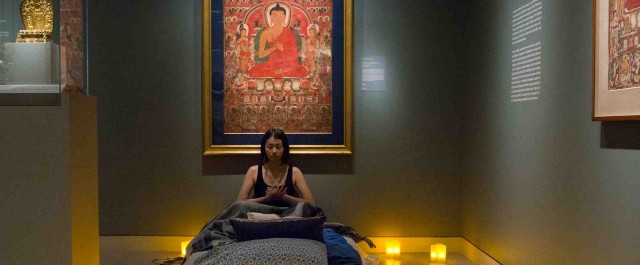
Dream-Over participants sleep under a specially selected work of art at the Rubin Museum chosen to impact their dreams

Dream-Over participants sleep under a specially selected work of art at the Rubin Museum chosen to impact their dreams

Rubin Museum
150 West 17th St. at Seventh Ave.
Tickets go on sale Tuesday, September 13, $125, 11:00 am
Event takes place October 15, 8:00 pm – 9:00 am
212-620-5000
www.rubinmuseum.org

Tickets go on sale September 13 at eleven o’clock for a uniquely satisfying and rewarding program at the Rubin Museum. The Dream-Over, which began in 2011, offers adults the opportunity to spend a special evening inside the museum, exploring the inner workings of their mind in a fascinating way. Each lucky participant fills out a Dreamlife Questionnaire in advance, giving details about themselves that will help consultants, under the leadership of dream facilitator Dr. Vanessa Sinclair, who curates the “Art and the Occult” series at the Morbid Anatomy Museum in Brooklyn, select a specific work of art in the museum under which they will sleep; hopefully the painting, photograph, or sculpture will influence their dreams. The evening will begin with a talk on the significance of dreams with Khenpo Lama Pema Wangdak and Dr. Sinclair and include lullabies and bedtime stories. Dreamers are required to arrive at the Rubin already in pajamas, robe, and slippers and must bring their own bedding. Food and drink are not allowed; there will be a midnight snack and a Tibetan breakfast. Couples can sleep and dream under the same work of art (each paying full price). In the morning, Dream Gatherers and Dream Interpreters will speak individually with the participants to figure out what their dreams might mean. Tickets for the Dream-Over sell out immediately, so don’t hesitate if you want to take part in this ultracool event.

BAM NEXT WAVE FESTIVAL: PHAEDRA(S)

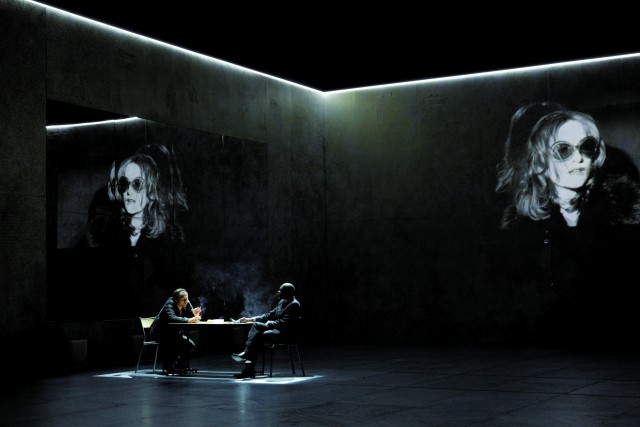
(photo courtesy of Odéon Théâtre De L’Europe) Avec: Isabelle Huppert, Agata Buzek, Andrzej Chyra, Alex Descas, Gael Kamilindi, Norah Krief, Rosalba Torres Guerrero.  (photo by Pascal Victor/ArtComArt)

Isabelle Huppert appears as multiple Phaedras in Odéon-Théâtre de l’Europe production at BAM (photo courtesy of Odéon Théâtre De L’Europe)

PHÈDRE(S)
Brooklyn Academy of Music
BAM Harvey Theater
651 Fulton St.
September 13-18, $30-$95
718-636-4100
www.bam.org

In 2005, French superstar Isabelle Huppert was devastating in Sarah Kane’s 4.48 Psychose, part of BAM’s Next Wave Festival. Four years later she returned to the festival in Robert Wilson’s Quartett, a wild adaptation of Les Liaisons Dangereuses for Odéon-Théâtre de l’Europe. Huppert and Odéon-Théâtre de l’Europe are now back at BAM with Krzysztof Warlikowski’s Phaedra(s), a two-hundred-minute production in which the award-winning Huppert (La Cérémonie, The Piano Teacher) plays three versions of the title character from Greek mythology, taken from Kane’s Phaedra’s Love and writings by Wajdi Mouawad and J. M. Coetzee. Huppert and Warlikowski previously worked together in 2004 on The Dybbuk and 2010 in A Streetcar Named Desire. The dramaturgy is by Piotr Gruszczynski, with sets and costumes by Malgorzata Szczesniak, lighting by Felice Ross, music by Pawel Mykietyn, video by Denis Guéguin, and choreography by Claude Bardouil and Rosalba Torres Guerrero. The show runs September 13-18; in addition, Huppert will participate in a discussion about Phaedra(s) with Simon Critchley on September 17 at the Hillman Attic Studio ($25, 5:00), and Charles Mee, Caridad Svich, and moderator Kaneza Schaal will gather for “Phaedra Interpreted” on September 18 (free, 11:00 am) at Borough Hall Courtroom as part of the Brooklyn Book Festival, in conjunction with BAM and the Onassis Cultural Center New York.

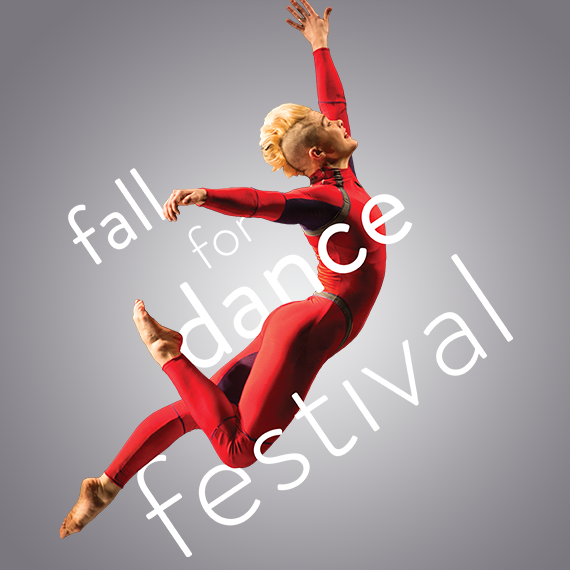
TICKET ALERT: FALL FOR DANCE FESTIVAL 2016

fall for dance 2016

New York City Center
131 West 55th St. between Sixth & Seventh Aves.
Tickets go on sale Saturday, September 10, 11:00 am
Festival runs September 26 – October 8, $15
212-581-1212
www.nycitycenter.org

One of the hottest tickets of the season is always the annual Fall for Dance Festival at City Center, ten days of performances by twenty-one companies from around the world, each show a mere fifteen bucks. This year’s lineup includes some of our faves, with performances by STREB Extreme Action, Grupo Corpo, and Alvin Ailey along with works choreographed by Sidi Larbi Cherkaoui, Frederick Ashton, and Wayne McGregor and a dance lesson led by recently retired Ailey stalwart Renee Robinson. Most evenings will be preceded by free dance lessons by members of one of that night’s performing companies, open to all ticket holders; more advanced dancers can sign up for master classes ($15) with Cie Accrorap on October 1 at 12 noon and with Wendy Whelan on October 8 at noon. Tickets go on sale Saturday, September 10, at 11:00 am, so don’t waste any time if you want to see any of the below programs, because these events sell out ridiculously fast.

Monday, September 26 and Tuesday, September 27, 8:00
STREB Extreme Action, world premiere of Airslice, choreographed by Elizabeth Streb (preshow dance lessons September 26 at 6:45)
Dada Masilo/The Dance Factory, world premiere of Spring, choreographed by Dada Masilo
American Ballet Theatre, Monotones II, choreographed by Frederick Ashton
Farruquito, New York premiere of Mi Soledad (Solea), choreographed by Farruquito (preshow dance lessons September 27 at 6:45)

Wednesday, September 28 and Thursday, September 29, 8:00
Richard Alston Dance Company with Montclair State University Vocal Accord, New York premiere of Rejoice in the Lamb, choreographed by Richard Alston
Aszure Barton & Artists, Awáa, choreographed by Aszure Barton (preshow dance lessons September 28-29 at 6:45)
Wendy Whelan and Edward Watson, U.S. premiere of The Ballad of Mack and Ginny, choreographed by Arthur Pita
Grupo Corpo, New York premiere of Suíte Branca, choreographed by Cassi Abranches

Friday, September 30 and Saturday, October 1, 8:00
CCN de la Rochelle / Cie Accrorap, U.S. premiere of Opus 14, choreographed by Kader Attou
Ayodele Casel, While I Have the Floor, choreographed by Ayodele Casel
Hong Kong Ballet, U.S. premiere of Shape of Glow, choreographed by Jorma Elo
Bangarra Dance Theatre, U.S. premiere of Spirit, choreographed by Stephen Page & Djakapurra Munyarryun (preshow dance lessons September 30 at 6:45)

Wednesday, October 5 and Thursday, October 6, 8:00
Jessica Lang Dance, New York premiere of Tesseracts of Time, choreographed by Jessica Lang
Royal Ballet Flanders, U.S premiere of Fall, choreographed by Sidi Larbi Cherkaoui
Alvin Ailey American Dance Theater, Cry, choreographed by Alvin Ailey (preshow dance lessons by Renee Robinson October 5 at 6:45)
Alina Cojocaru, Friedemann Vogel, choreographed by Johan Kobborg
The Sarasota Ballet, Marguerite and Armand, choreographed by Frederick Ashton

Friday, October 7 and Saturday, October 8, 8:00
Shantala Shivalingappa, Shiva Tarangam, choreographed by Shantala Shivalingappa
Nederlands Dans Theater, U.S. premiere of Woke up Blind, choreographed by Marco Goecke
Alessandra Ferri and Herman Cornejo, world premiere, choreographed by Wayne McGregor
Cloud Gate 2, U.S. premiere of Beckoning, choreographed by Cheng Tsung-Lung (preshow dance lessons October 7 at 6:45)

NEW YORK OYSTER WEEK 2016

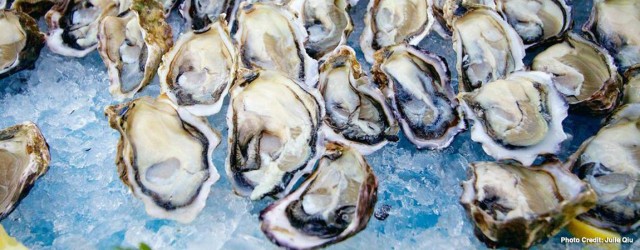
Oysters are on the menu at annual culinary festival featuring bivalve mollusks

Oysters are on the menu at annual culinary festival featuring bivalve mollusks

Multiple venues
September 16 – October 3, $75-$125
www.oysterweek.com

“Do you consider the eating of oysters to be moral and the eating of snails to be immoral?” Marcus Licinius Crassus (Sir Laurence Olivier) asks Antoninus (Tony Curtis) in Stanley Kubrick’s sword-and-sandals epic Spartacus. Fortunately, you don’t have to answer that question during New York Oyster Week, which features numerous culinary, ecologically friendly events over the course of eighteen days. The fifth anniversary of this wonderfully slimy celebration begins on September 16 with the NY Harbor Regatta & Regatta Bash on Governors Island ($125-$1,000, 2:00), hosted by Willie Geist and with commentary by Gary Jobson, live reggae music, a full oyster bar, and seafood specialties from Betony, Blue Fin, Crave Fish Bar, and other restaurants. On September 17 in Brooklyn Bridge Park ($95, 5:00), the Brooklyn Oyster Riot boasts a collection of a dozen East and West Coast oysters curated by Master Mermmelier Kevin Joseph of the OysterHood, with dishes created by chef Marc Murphy of Ditch Plains and wine and Brooklyn Brewery beer pairings, along with live music by Jan Bell and the Maybelles and oyster education from the Billion Oyster Project. This year Oyster Week debuts the Big Gay Oyster Brunch, taking place September 18 at 12 noon at Lot 45 in Bushwick ($75), with six ultrapremium oysters, ten craft beers, oyster wine, a trio of special cocktails, and DJ music. Dorlan’s Tavern & Oyster Bar will be home to Cocktail Oysters on September 21 ($75, 5:00) for a lucky fifty people, three hours of five oyster varieties and accoutrements courtesy of Joseph and chef Rob McCue, drinks from mixologist and Dorlan’s owner Jeremy Dahm, and some history about cocktail oysters. On September 23 it’s back to Lot 45 for Shellebration (6:00), consisting of a dozen oyster varieties, sustainable seafood dishes from Lot 45 and chef Behaya Samia, craft beer, cocktails, oyster wine, and more. On September 24 at the Fulton Stall Market ($85, 4:00), the inaugural Old Seaport Oyster Revival honors the rebuilding of the area with oysters, a signature seafood showcase from five old Seaport restaurants, Spirited Pearls and Accoutrement Premier by Joseph and McCue, live music from Mama Juke, and live shucking at the Shuck Truck. The Merroir + Terroir dinner on September 28 is sold out, but you can continue your oyster extravaganza on September 30 with ShuckEasy, comprising a “rare and exotic” raw bar, Spirited Pearls and Accoutrement Premier, and craft cocktails and beer at a secret location. Oyster Week comes to a close on October 1 with OystoberFest at the South Street Seaport ($85, 4:00), with a raw bar of twenty oyster varieties, the Shuck Truck, a beer garden, a cidery, a wine bar, and specialty docktails. And there’s nary a snail in sight.

THE SEASONS IN QUINCY: FOUR PORTRAITS OF JOHN BERGER

THE SEASONS IN QUINCY

Tilda Swinton pays tribute to her friend John Berger in THE SEASONS IN QUINCY

THE SEASONS IN QUINCY: FOUR PORTRAITS OF JOHN BERGER (Colin MacCabe, Christopher Roth, Bartek Dziadosz & Tilda Swinton, 2015)
Film Forum
209 West Houston St.
Opens Wednesday, August 31
212-727-8110
filmforum.org
seasonsinquincy.com

I remember the first time I saw the BBC series Ways of Seeing, thoroughly entranced by the host, a curly-haired British art critic with the cutest little lisp of his “R”s who promised that, while looking at European painting in a whole new way, “we shall discover something about ourselves and the situation in which we are living.” Years later, I was distraught when I couldn’t find my paperback copy of the companion book; my wife quickly ordered it and it was soon in my hands, where I devoured every word and image again and again. So I was terrifically excited when I heard about the new documentary The Seasons in Quincy: Four Portraits of John Berger, which opens August 31 at Film Forum. Perhaps my expectations were too high, but I came away from the four-part film feeling disappointed and let down; I selfishly wanted only Berger (pronounced with a soft “g”) but instead got too much of his friends and colleagues. And to make matters worse, the directors are too often what Berger tried so hard to avoid being throughout his long, influential career: pretentious. The film begins in winter with “Ways of Listening,” in which director Colin MacCabe focuses on Berger and his longtime friend, Oscar-nominated actress Tilda Swinton, as they talk at Berger’s farm in the small French town of Quincy, where he moved in the 1970s after becoming fed up with England. Filmed in 2010, the segment works best when Berger tells personal stories about his father and war; Swinton listens while peeling apples, the camera on her as much as on him. It occasionally feels as if she can’t decide whether to share Berger or keep him to herself; they already have a special connection, sharing the same birthday, albeit thirty-four years apart. But I wanted to make my own connection with Berger, a down-to-earth intellectual with a lust for life and a wide-ranging legacy, an artist, critic, “radical humanist,” social commentator, political activist, husband, father, farmer, and self-described “revolutionary writer” who prefers to simply be known as a storyteller.
In “Spring,” Christopher Roth focuses on Berger’s comparison of humans and animals, explored in his essay “Why Look at Animals?” But Roth’s blending of shots of nature with members of his crew, other farmers, and Jacques Derrida are disjointed, attempting too hard to create the kind of poetry that simply rolls off Berger’s tongue. The section also delves into time and death; sadly, Berger’s beloved wife, Beverly Bancroft, had recently passed away, in 2013. “Every shepherd knows that the herd outlasts the herdsman,” Berger says in a 1980 clip from Mike Dibb’s Parting Shots from Animals. For summer’s “A Song for Politics,” directors MacCabe and Bartek Dziadosz head indoors for a political discussion featuring Berger with MacCabe, German artist and director Roth, Indian poet and activist Akshi Singh, and American novelist and poet Ben Lerner. Berger makes some fascinating points, but I was hoping to see and hear more from him instead of from the others on the panel. “Let’s be quite clear,” Berger says, gesticulating with his right hand, “hope has nothing, nothing to do with optimism.”

John Berger and Tilda Swinton go on an intellectual journey in THE SEASONS IN QUINCY

John Berger and Tilda Swinton go on an intellectual journey in THE SEASONS IN QUINCY

The ninety-minute film concludes with Swinton’s fall-set “Harvest,” in which the actress and her twins, Xavier Swinton Byrne and Honor Swinton Byrne, travel through the Scottish Highlands to Quincy and meet up with Berger’s son, Yves, a painter and farmer. Meanwhile, Berger talks about the internet and Beverly and tells the kids to pick raspberries in her memory as such words as “from,” “via,” and “to” show up onscreen, emphasizing life’s journey. The craggy-faced Berger, who is now eighty-nine and boasts an impressive head of white hair, has a marvelous way of telling a story; his mind refuses to work like the rest of ours, interpreting and enjoying the world in unique and creative ways that are beautiful to watch and listen to. Unfortunately, aside from a smattering of marvelous bits here and there and some wonderful archival clips, this series of meandering narratives doesn’t quite do the extraordinary man justice. But then again, maybe I was just too optimistic. The Seasons in Quincy: Four Portraits of John Berger opens August 31 at Film Forum, with MacCabe participating in a Q&A following the 7:10 show on Wednesday night.

RADICALLY HAPPY: AN EVENING TALK WITH ERRIC SOLOMON AND KYABGÖN PHAKCHOK RINPOCHE

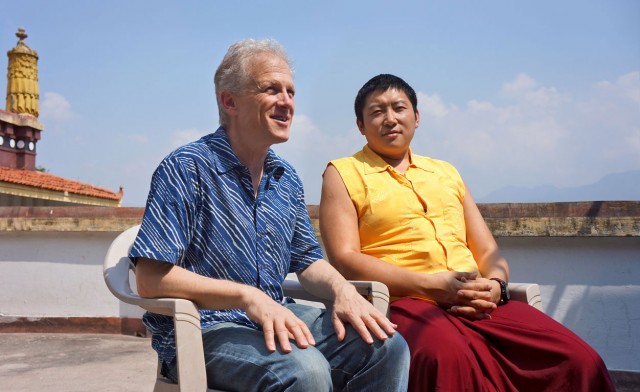
Erric Solomon and Kyabgön Phakchok Rinpoche will discuss the keys to being radically happy at the Helen Mills Theater on September 7

Erric Solomon and Kyabgön Phakchok Rinpoche will discuss the keys to being “radically happy” at the Helen Mills Theater on September 7

Who: Erric Solomon and Kyabgön Phakchok Rinpoche
What: Radically Happy
Where: Helen Mills Theater, 137 West 26th St. between Sixth & Seventh Aves.
When: Wednesday, September 7, $20-$45, 7:00
Why: Last August, I attended the talk “Being Radically Happy”in a SoHo gallery, where Tibetan yogi practitioner and Buddhist teacher Kyabgön Phakchok Rinpoche and Boston-born former Silicon Valley guru Erric Solomon discussed the radical nature of happiness. Three months later, I found myself in Kathmandu, taking two weeks of classes with Phakchok and one of his uncles, Chökyi Nyima Rinpoche. On September 7, Phakchok and Solomon will be back in New York City, at the Helen Mills Theater, for “Radically Happy.” “Everyone wants to be happy and live a meaningful life, yet the way we usually go about it can only bring a very temporary happiness at best and, at worst, leads to extreme dissatisfaction and suffering,” the Nepal-based Phakchok and Solomon, who lives in France, explain. “By making a slight but radical shift in the way we live our lives, a subtle sense of satisfaction and well-being can be ours even when things really aren’t working out.” The two friends take a common-sense approach to life, concentrating on two main elements: “slightly shifting our way of relating to ourselves and slightly altering how we relate to the world around us.” The talk is a prelude to Phakchok’s week-long teachings at the Rangjung Yeshe Gomde Meditation Center in Cooperstown, during which he will focus on “Mahāmudrā and 9 Yānas Retreat and Empowerments.”