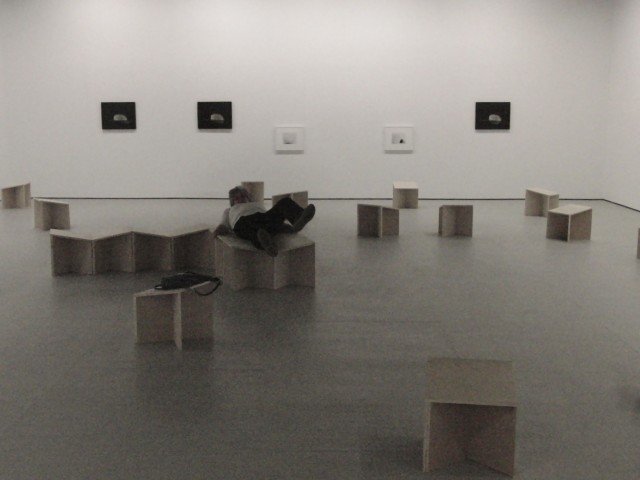
The relationship between the body and the act of viewing is explored in interactive Kitchen installation by Katherine Hubbard (photo by twi-ny/mdr)
The Kitchen
512 West 19th St. between Tenth & Eleventh Aves.
Installation open Tuesday – Saturday through October 22, free, 11:00 am – 6:00 pm
Performances Friday, October 14 & 21, free, 7:00
212-255-5793 ext11
thekitchen.org
katherinehubbard.com
Brooklyn-based interdisciplinary artist Katherine Hubbard will be at the upstairs Kitchen gallery on October 14 and 21 at 7:00, engaging with her immersive, interactive installation “Bring your own lights.” The thirty-five-year-old artist, who is currently in residency at the Chinati Foundation in Marfa and Baxter St. at the Camera Club of New York, has been exploring the presence and absence, both physically and psychologically, of the body, and specifically the female body in performance, since 2009, in such exhibitions as “cyclops & slashes,” “Untitled (shaving performance),” “Small Town Sex Shop,” and “A thing and its thing-ness. It’s all just nouns and adjectives baby.” Curated by Matthew Lyons, the multipart “Bring your own lights” begins with “Fifty percent distance,” a small room with a handful of movable, low-to-the-ground birch plywood stools where visitors can sit as the lights dim almost imperceptibly over a period of six minutes, and then brighten again, setting a calm, reflective mood. In the main gallery, there are dozens more stools, collectively called “Clear to the legs. Clear for thighs. Your body matter.,” which can be placed together to form larger chairs and reclining benches where people can relax as they check out several series of photographs while experiencing the relationship of the body to the act of viewing. Paying homage to the Kitchen building’s previous existence as an ice storage facility, “Bend the rays more sharply (Photographic print made from a negative embedded in ice at increments between zero and ninety.)” consists of ten silver gelatin prints made precisely as the parenthetical text of the title describes, resulting in intriguing abstract black-and-white images.
The seven photographs that make up “The state and the cause” were taken in the Kitchen’s main-floor black-box space, home to experimental dance, music, and theater, as spotlights shine on an empty stage devoid of performer or performance. And a trio of “Shoring and sheeting” shots reveal New York City construction sites, although it’s not clear if things are being torn down or built up. “It is the autonomous being that deflates the gaze by not acting with the intention of being gazed upon,” Hubbard wrote about her 2012 work, “floss the barbed subject,” continuing, “I recognize the physical body as the mediator between personal desires and socially constructed desires and insist on a self-defining ownership over pleasure.” The same statement can be applied to her Kitchen exhibit, which will remain on view through October 22; admission to the performances, which are first-come, first-served, and the installation are free.
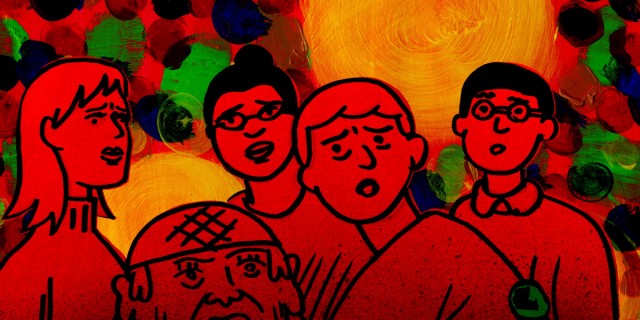
 Daria and Scooby-Doo meet The Poseidon Adventure and Titanic in graphic novelist Dash Shaw’s first full-length feature animation, the awkwardly titled, awkwardly plotted, yet awkwardly entertaining My Entire High School Sinking into the Sea. In the somewhat semiautobiographical tale, Dash (voiced by Jason Schwartzman) runs the school newsletter with his best friend, Assaf (Reggie Watts); the two consider themselves investigative journalists, even if no one reads their stories. Dash is further frustrated when Assaf shows an interest in Verti (Maya Rudolph), who has different ideas for the newsletter. After publicly embarrassing Assaf, a stunt that disappoints the relatively cool Principal Grimm (Thomas Jay Ryan), Dash discovers that the high school’s new roof, which is under construction, is not up to code. Just as he starts telling everyone that, the school begins breaking apart and falling into the ocean. Dash soon finds himself with Assaf, lunch lady Lorraine (Susan Sarandon), and his archenemy, Mary (Lena Dunham), as they try to stay above water and survive the maelstrom that is swirling all around them. In order to make it, they’ll have to go from the freshman floor, the lowest one, up through the sophomore, junior, and senior floors to potential safety, a clever way of having them grow up fast. But their journey is a gory one as they encounter plenty of dead students and teachers along with lots of body parts.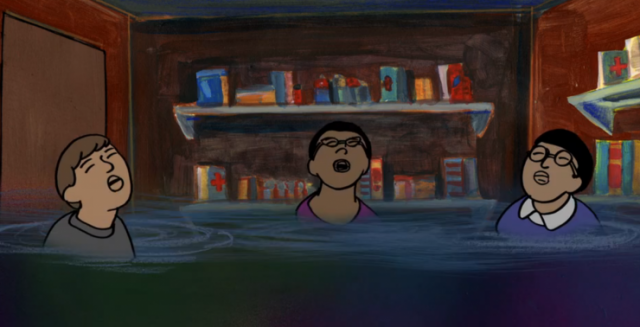
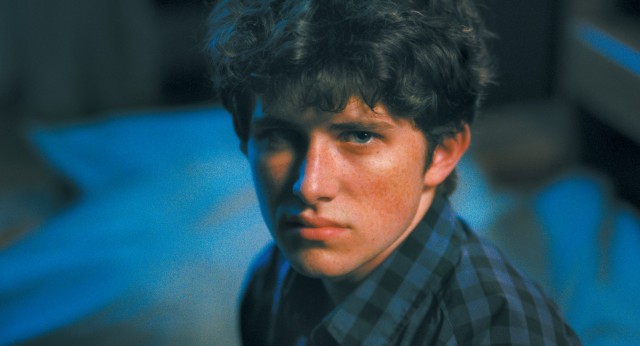
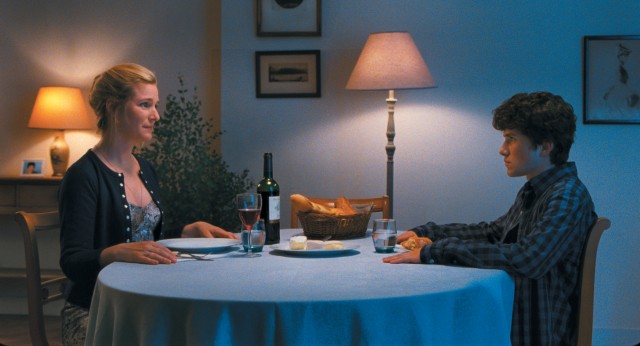
 Eugène Green returns to the New York Film Festival with the glorious French satire / black comedy / biblical parable Son of Joseph, a masterful blending of sound, image, and story that is as stunning to listen to as it is to watch. Newcomer Victor Ezenfis stars as Vincent, an intractable young teen who is desperate to discover who his father is, no matter how hard his single mother (Natacha Regnier), a nurse, tries to keep that information from him. “I don’t want to help people,” he says. “I love no one.” His sneaky ways finally reveal the man’s name, and Vincent tracks him down only to discover that the man, Oscar Pormenor (Mathieu Amalric), is a boorish, self-obsessed publisher who is cheating on his wife with his sexy secretary, Bernadette (Julia de Gasquet). At a party for his company’s latest book, The Predatory Mother, ever-so-chic critic Violette Tréfouille (Maria de Medeiros) mistakes Vincent for an up-and-coming novelist, with Oscar cluelessly declaring him the next Céline before finding out who the boy really is. Soon a disappointed Vincent is befriended by Oscar’s brother, Joseph (Fabrizio Rongione), but neither is aware of the connection. As Vincent is introduced to art and literature, he attempts to manipulate everyone around him in order to form the family he’s always wanted.