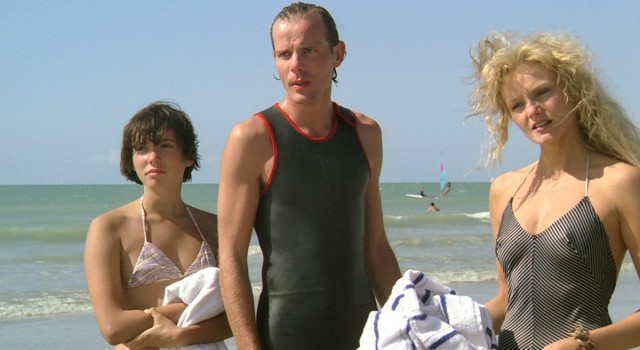
Pauline (Amanda Langlet), Pierre (Pascal Greggory), and Marion (Arielle Dombasle) get involved in a complicated love sextet in Éric Rohmer’s PAULINE AT THE BEACH
CINÉSALON: PAULINE AT THE BEACH (PAULINE À LA PLAGE) (Éric Rohmer, 1983)
French Institute Alliance Française, Florence Gould Hall
55 East 59th St. between Madison & Park Aves.
Tuesday, October 4, $14, 4:00 & 7:30
Series continues Tuesdays through October 25
212-355-6100
www.fiaf.org
 “Love’s a form of insanity,” Pauline (Amanda Langlet) says in Éric Rohmer’s modern French classic, 1983’s Pauline at the Beach. The fifteen-year-old virgin turns out to be the most intelligent and honest character in the film, which earned Rohmer the Silver Bear for Best Director at the Berlin International Film Festival. Amanda Langlet stars as Pauline, a teenager who is spending the end of the summer on the Normandy coast with her older cousin, sexy fashion designer Marion (Arielle Dombasle). Windsurfing hottie Pierre (Pascal Greggory) wants to rekindle the romance that cooled off when Marion left to get married, but the now-divorced Marion lusts for Henri (Féodor Atkine), a balding, middle-aged father who is not nearly as serious about sex as Marion is. Meanwhile, Pauline and fellow teen Sylvain (Simon de La Brosse) start a cute flirtation that gets upended when Marion shows up at Henri’s beach house one afternoon to discover candy girl Louisette (Rosette) hiding in a bathroom with Sylvain. A series of lies, misunderstandings, and miscommunications — all the elements of a basic French sex farce — ensue as various characters reevaluate their relationships as well as their faith in love.
Photographed by the great Néstor Almendros, who worked extensively with Rohmer and François Truffaut, Pauline at the Beach is a sophisticated jigsaw puzzle of a romantic drama, as Marion, Pierre, Pauline, and Henri spend much of the film debating over just what love is, each justifying their own beliefs. While the grown-ups act like children, the two teens are more like adults when examining the future. The film is also a splendid time capsule of 1980s styles, from the cheesy music to the awesome hairstyles and bathing suits. Dombasle, who has had a long film career, is racy and seductive as the libidinous blonde, but Langlet, in her cinematic debut, steals the show with her fantastic bangs, skimpy bikini, and expressive puppy-dog eyes. The third in Rohmer’s 1980s “Comedies and Proverbs” cycle — which also includes The Aviator’s Wife, A Good Marriage, Full Moon in Paris, The Green Ray, and Boyfriends and Girlfriends — Pauline at the Beach is screening October 4 at 4:00 and 7:30 in the FIAF CinéSalon series “Beyond the Ingénue”; the later show will be introduced by author Min Jin Lee (Free Food for Millionaires). The series continues Tuesday nights through October 25 with Patricia Mazuy’s The King’s Daughters, Jacques Rozier’s Adieu Philippine, and a double feature of Antoine Desrosières’s Haramiste and Claire Denis’s US Go Home.

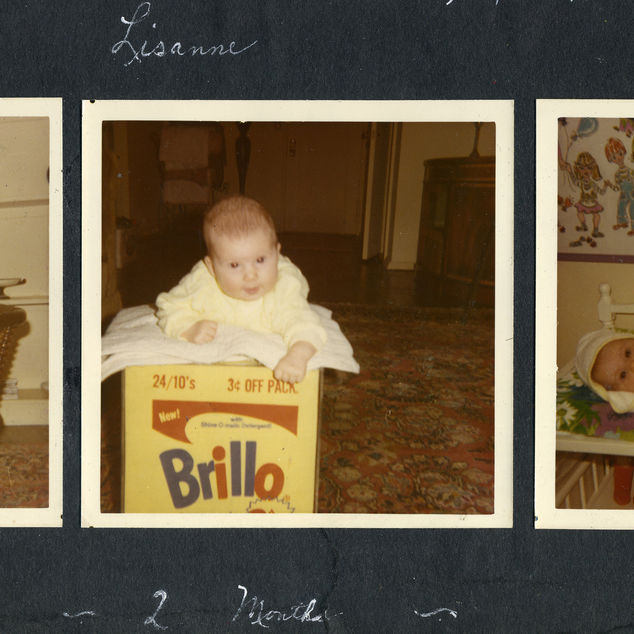
 Brillo Box (3¢ Off) is a charming and delightful look at art, family, and popular culture, as director Lisanne Skyler turns her camera on her mother and father to explore what became a major point of contention in their marriage. In 1969, young collectors Martin and Rita Skyler purchased a yellow “Brillo Box (3¢ Off)” by Andy Warhol for $1,000 from Ivan Karp at O.K. Harris in SoHo; five years earlier, in 1964, when the Skylers got engaged, the “Brillo Boxes” sold for $200 when they were first displayed. In 1971, Martin traded the box for a drawing by Abstract Expressionist dot painter Peter Young. In 2010, the Skylers’ “Brillo Box (3¢ Off)” sold at Christie’s for $3 million. In this intimate and lighthearted documentary, Skyler traces the history of Warhol’s Brillo Boxes — which were wood copies of the original boxes found in stores, designed by Abstract Expressionist James Harvey — the provenance of the specific box her family owned, and the birth, death, and rebirth of Pop art, via interviews with her parents as well as experts in the art world. “I started out not trying to be a connoisseur or anything like that but thinking that something I enjoyed doing could also just be another way of making money grow,” her father explains. Meanwhile, her mother felt a closer connection with the art, particularly with the Brillo Box, which she encased in Plexiglas and used as a coffee table. The Skylers also bought and sold works by Jake Berthot, Frank Stella, Roy Lichtenstein, Chuck Close, Jasper Johns, Cy Twombly, and Richard Serra.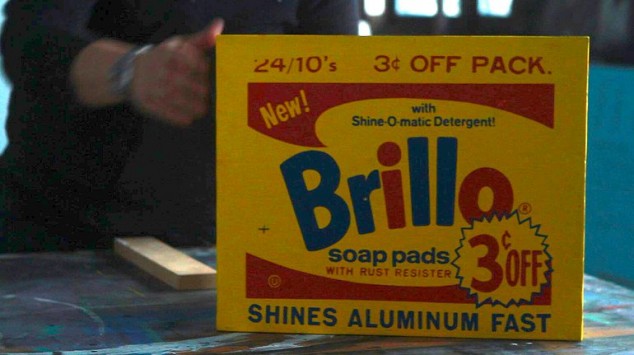
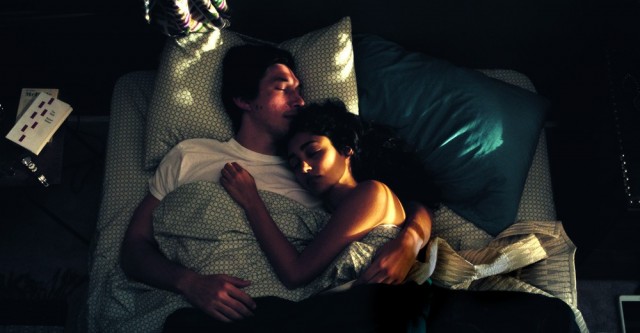
 Jim Jarmusch’s Paterson is a beautifully poetic, deceptively simple wonder about the beauty, poetry, and wonderful simplicity of life, an ode to the little things that make every day special and unique. Adam Driver stars as Paterson, a New Jersey Transit bus driver and poet who lives in Paterson with his girlfriend, Laura (Golshifteh Farahani), who spends much of her time decorating their small, quaint house, painting black and white circles and lines on curtains, couches, dishes, walls, and even her clothing, continually creating works of art out of nearly everything she comes into contact with. The film takes place over an ordinary week for the sweet-natured couple, who are very much in love, each allowing the other the freedom to explore who they are and offering their complete support. Every morning, Paterson wakes up around 6:12, as the sunlight streaks over their sleeping bodies. He checks his Casio wristwatch to confirm the time — he doesn’t use an alarm clock, nor does he own a cell phone or a computer — then snuggles closer with Laura for a few extra minutes. He eats Cheerios out of a bowl painted by Laura with circles that match the shape of the cereal. He studies a matchbook, which becomes the starting point for his next poem. Lunchbox in hand, he walks to the Market St. garage and gets on board the 23 bus. He writes a few lines of poetry, listens to fellow bus driver Donny’s (Rizwan Manji) daily complaints, then heads out on his route through his hometown, picking up pieces of some very funny passenger conversations. For lunch he sits on a bench overlooking the Paterson Great Falls and composes more mostly non-rhyming lines in his “Secret Notebook,” which he will not show anyone but Laura. At quitting time, he walks home, checks the mail, fixes the tilted mailbox, sees what new art Laura has created, and takes their English bulldog, Marvin (Nellie, who won the Palm Dog at Cannes and passed away two weeks after shooting concluded), for a walk after dark, stopping for a beer and chatting with bar owner Doc (Barry Shabaka Henley). He then goes back home, ready to do it all over again the next day. But Paterson is no bored working-class suburbanite living out a dreary routine; he finds something new and special in every moment, from his job to his relationship to his nightly trips to the bar. Every day is different from the one before, Jarmusch celebrating those variations that make life such a joy.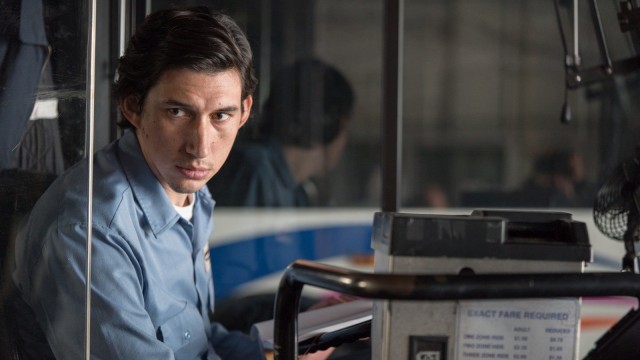
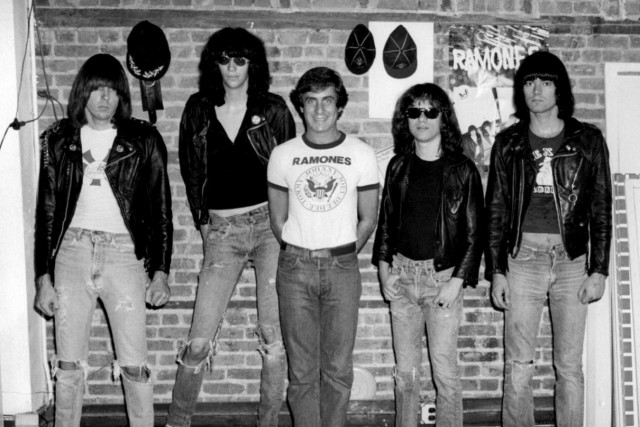
 “He’s a handmaiden to the gods. He’s been midwife to some of the most important people in music,” John Cameron Mitchell says at the beginning of Danny Says, Brendan Toller’s highly entertaining if scattershot documentary about Danny Fields. Born Daniel Henry Feinberg in Brooklyn in 1939, Fields graduated from the University of Pennsylvania when he was still a teenager, dropped out of Harvard Law School, and went on to one of the wildest careers in the music business. Attracted to both cutting-edge and celebrity culture, Fields was a DJ, a magazine editor, a record executive, a press agent, and a band manager, always doing things his way. “I always went against the grain,” he says in the film, which features family photographs, home movies (including scenes from his bar mitzvah), outstanding music clips, and new and archival interviews with Fields, a natural storyteller with a casual delivery, whether he’s talking about his sexual promiscuity, hanging out with Andy Warhol and Edie Sedgwick at the Factory, or trying to hook up Jim Morrison and Nico. Nothing is off limits as he shares tales about going to gay bars, making “Have a Marijuana” with David Peel & the Lower East Side, developing a friendship with Linda Eastman, and playing the Ramones for Lou Reed for the first time. “He had a way with words that made you want to become part of whatever he was doing,” Peel says in the film.