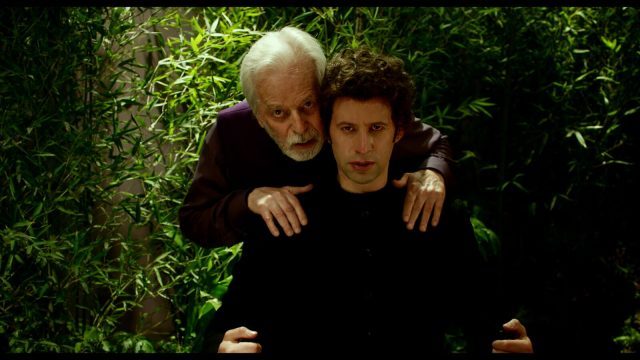
Alejandro Jodorowsky guides his younger self (Adan Jodorowsky, his real-life son) through Endless Poetry
ENDLESS POETRY (POESIA SIN FIN) (Alejandro Jodorowsky, 2016)
Landmark Sunshine Cinema
143 East Houston St. between First & Second Aves.
Opens Friday, July 14
212-330-8182
www.landmarktheatres.com
www.endlesspoetrythemovie.com
 Eccentric auteur Alejandro Jodorowsky, the mastermind behind such midnight-movie classics as 1971’s El Topo and 1973’s The Holy Mountain, once again turns his magical realist eye on his own life as a young poet in Chile in the 1940s in Endless Poetry, picking up where he left off in the autobiographical saga he began in 2013’s The Dance of Reality, his first film in more than two decades. Starting with his family’s departure from the village of Tocopilla for the big city of Santiago, where Jodorowsky’s father, Jaime (Brontis Jodorowsky), opened a clothing shop, the film quickly dispenses with any pretense of realist narrative as it explodes into a phantasmagoric bildungsroman, shot in eye-popping color by master Hong Kong cinematographer Christopher Doyle (In the Mood for Love, Last Life in the Universe). With one son, Brontis, playing his father; another son, musician Adan, playing Alejandro as a young man (he also composed the score); his grandson, Jeremías Herskovits, portraying him as a boy (Alejandrito); and occasional appearances by himself as . . . himself, interacting with his onscreen/offscreen family, Alejandro mixes time, space, and storytelling with a strong dose of the psychotherapeutic and shamanic blend he calls Psychomagic. To further the incestuous casting, Sara, his mother, and Stella Díaz Varín, his muse and lover, are played by the same actress, opera singer Pamela Flores, while his circle of friends, most of whom went on to become respected poets (Leandro Taub as the wild and crazy Enrique Lihn, Flores as Diaz Varín, Felipe Rios as Nicanor Parra), clowns, near-döppelgangers, little people (Julia Avendaño is a stand-out as Pequeñita), masked skeletons and devils, sex and nudity, and exuberant tarot card readers tumble off the screen in this disturbing, often surreal, but somehow endearing and engaging tale of the artist as a young man, searching for the meaning of his life as well as life in general.
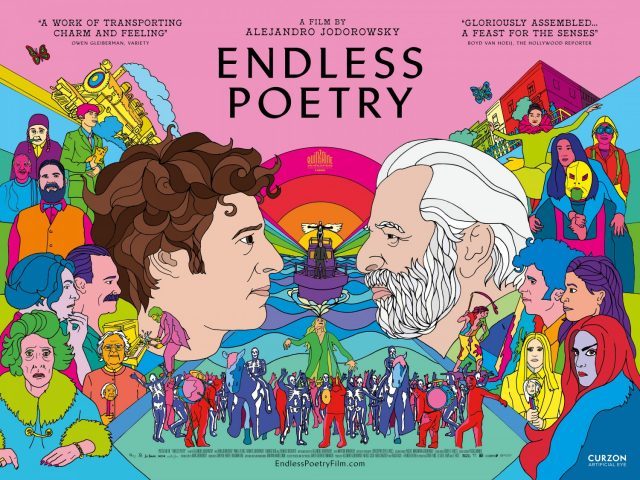
Reminiscent of Federico Fellini’s semiautobiographical Oscar-winning Amarcord, Endless Poetryis one of Jodorowsky’s most approachable works, centering on the familiar Romantic struggle of a young male artist coming-of-age against his petit bourgeois family and oppressive society, represented here by the rise of real-life dictator Carlos Ibáñez del Campo (Bastián Bodenhofer). A sly sense of humor and fondness for his youthful follies and friends brighten the proceedings, as does the spectacular production design by Alejandro himself. The final scenes of young Jodorowsky’s departure for Paris demonstrate that this old master still has the power to move an audience with strange and beautiful images that shock and unsettle — especially if one knows exactly how intertwined the relationships of the actors are with the characters they play. Endless Poetry opens July 14 at the Landmark Sunshine, with Alejandro participating in Q&As after the 7:00 show and before the 10:00 show on opening night and with Adan following the 7:00 show on July 15.

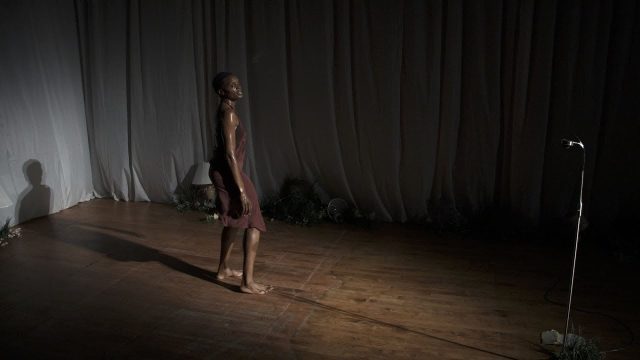
 “Okwui’s job is to scare people, just to scare them to get them to kind of wake up,” dancer, choreographer, and conceptualist Ralph Lemon says of his frequent collaborator and protégée Okwui Okpokwasili in the powerful new documentary Bronx Gothic. Directed by Okpokwasili’s longtime friend Andrew Rossi, the film follows Okpokwasili during the last three months of her tour for her semiautobiographical one-woman show, Bronx Gothic, a fierce, confrontational, yet heart-wrenching production that hits audiences right in the gut. Rossi cuts between scenes from the show — he attached an extra microphone to Okpokwasili’s body to create a stronger, more immediate effect on film — to Parkchester native Okpokwasili giving backstage insight, visiting her Nigerian-born, Bronx-based parents, and spending time with her husband, Peter Born, who directed and designed the show, and their young daughter, Umechi. The performance itself begins with Okpokwasili already moving at the rear of the stage, shaking and vibrating relentlessly, facing away from people as they filter in and take their seats. She continues those unnerving movements for nearly a half hour (onstage but not in the film) before finally turning around and approaching a mic stand, where she portrays a pair of eleven-year-old girls exchanging deeply personal notes, talking about dreams, sexuality, violence, and abuse as they seek their own identity. “Bronx Gothic is about two girls sharing secrets. . . . It is about the adolescent body going into a new body, inhabiting the body of a brown girl in a world that privileges whiteness,” Okpokwasili, whose other works include Poor People’s TV Room and the Bessie-winning Pent-Up: A Revenge Dance, explains in the film. National Medal of Arts recipient Lemon adds, “It’s about racism, gender politics — it’s not just about these two little black girls in the Bronx.” Rossi includes clips of Okpokwasili performing at MoMA in Lemon’s “On Line” in 2011, developing Bronx Gothic at residencies at Baryshnikov Arts Center and New York Live Arts, and participating in talkbacks at Alverno College in Milwaukee and the Bronx Academy of Arts and Dance, where the tour concluded, right next to her childhood church, which brings memories surging back to her.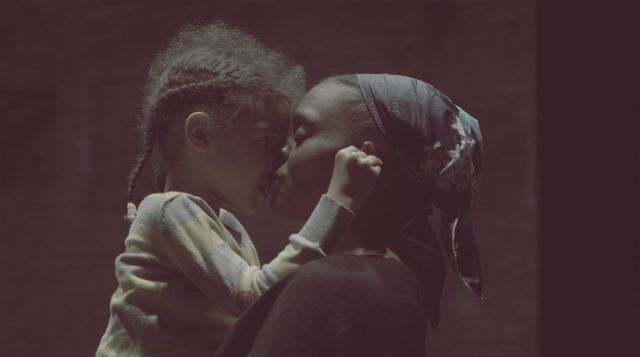

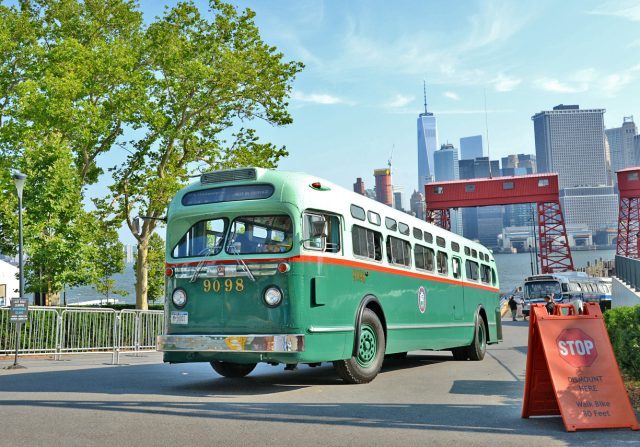
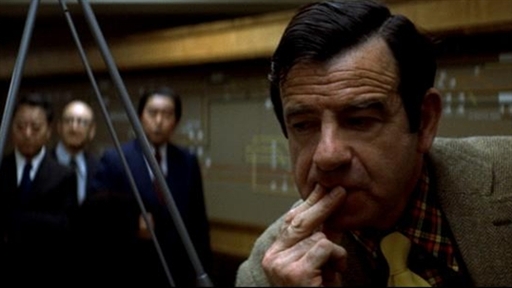
 On October 29, 1975, President Gerald R. Ford refused to grant a federal bailout of New York, resulting in one of the all-time-great headlines in the Daily News: “Ford to City: Drop Dead.” Film Forum is looking back at that rather unique decade in Big Apple history in the fab series “Ford to City: Drop Dead — New York in the 70s.” Running through July 27, the festival features more than three dozen Gotham classics, beginning with Midnight Cowboy and Taking Off and continuing with such favorites as Mean Streets (shown with Film Forum master programmer Bruce Goldstein’s Les Rues de Mean Streets), Serpico, Saturday Night Fever, Network, Klute, and Marathon Man. With all the recent problems with the subway system, it’s definitely time to revisit Joseph Sargent’s underground thriller, The Taking of Pelham One Two Three. Loosely adapted from the book by John Godey, the film wonderfully captures the cynicism of New York City in the 1970s. Four heavily armed and mustached men — Mr. Blue (Robert Shaw), Mr. Green (Martin Balsam), Mr. Gray (Hector Elizondo), and Mr. Brown (Earl Hindman), colorful pseudonyms that influenced Quentin Tarantino’s Reservoir Dogs — hijack an uptown 4 train, demanding one million dollars in one hour from a nearly bankrupt city or else they will kill all eighteen passengers, one at a time, minute by minute. The hapless mayor (Lee Wallace) is in bed with the flu, so Deputy Mayor Warren LaSalle (Tony Roberts) takes charge on the political end while transit detective Lt. Zachary Garber (a great Walter Matthau) and Inspector Daniels (Julius Harris) of the NYPD team up to try to figure out just how in the world the criminals expect to get away with the seemingly impossible heist. Sargent (Sybil) offers a nostalgic look back at a bygone era, before technology radically changed the way trains are run and police work is handled.