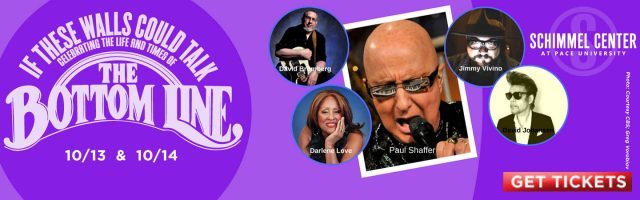
Who: David Bromberg, Jimmy Vivino, Darlene Love, David Johansen, Sean Altman, Marshall Chapman, Clint de Ganon, the GrooveBarbers, Ula Hedwig, Garland Jeffreys, Christine Lavin, Curtis King, Terre Roche, Feifei Yang, Garry Dial, the Uptown Horns, Will Lee, Paul Shaffer, Gregg Bendian
What: Music and memories about the Bottom Line
Where: Schimmel Center at Pace University, 3 Spruce St. between Park Row and Gold St., 212-346-1715
When: Friday, October 13, and Saturday, October 14, $29-$55, 7:30
Why: From February 11, 1974, to January 22, 2004, the Bottom Line was one of the great music clubs in the country, a four-hundred-seat venue that featured acts from a multitude of genres, good food and drink, and large pillars that could block part of your view depending where you were sitting, but there was no place else like it. Among the myriad performers who played there from a multitude of genres were Lou Reed, Bruce Springsteen, Charles Mingus, Patti Smith, Donovan, Warren Zevon, Prince, Little Feat, Mary Chapin Carpenter, Meat Loaf, Janis Ian, Santana, Melissa Etheridge, Steve Earle, the Indigo Girls, the New York Dolls, Mose Allison, Joan Armatrading, the Uncle Floyd Show, Tom Waits, Captain Beefheart, Barry Manilow, Cheech & Chong, Television, Jimmy Buffett, Buddy Guy and Junior Wells, Nona Hendryx, Gil Scott-Heron, the Roches, the Cars, Miles Davis, the Hollies, Richard Thompson, Suzanne Vega, Steve Forbert, Dolly Parton, 10,000 Maniacs, Jorma Kaukonen, Carly Simon with James Taylor, Richard Belzer, and regulars Flo & Eddie from the Turtles and Buster Poindexter, the alter ego of David Johansen. Owners Allan Pepper and Stanley Snadowsky had a knack for finding new talent; in some ways, the Bottom Line was the folk version of CBGB, a key step on an artist’s rise to national, and international, success.
On October 13 and 14, tribute will be paid to the legendary club with the special program “If These Walls Could Talk: Celebrating the Life and Times of the Bottom Line,” two evenings of live music and personal stories about the venerable venue, which closed its doors over back-rent and lease issues with NYU. Hosted by Paul Shaffer and with Gregg Bendian serving as music director, the shows will feature Sean Altman, David Bromberg (Friday), Clint de Ganon, the GrooveBarbers, Nona Hendryx, Garland Jeffreys (Saturday), David Johansen, Christine Lavin (Saturday), Will Lee, Darlene Love with Ula Hedwig and Curtis King, Terre Roche with Feifei Yang and Garry Dial (Friday), the Uptown Horns, and Jimmy Vivino. It’s like the ultimate version of “In Their Own Words,” the Bottom Line’s long-running series of “a Bunch of Songwriters Sittin’ Around Singing,” which was started on May 24, 1990, by the great Vin Scelsa. The Bottom Line had a personality all its own, and it is dearly missed by those of us who frequented its hallowed halls on the corner of Mercer and West Fourth Sts., so this should bring back some grand memories, along with some great music.
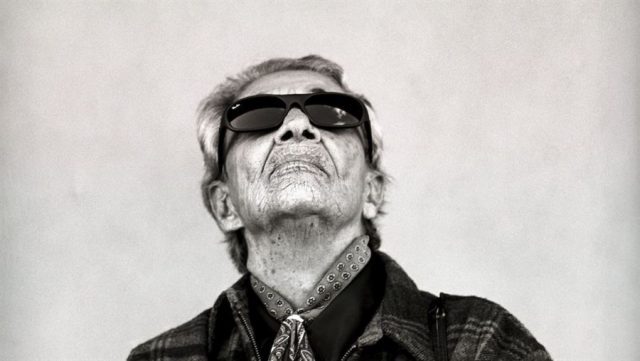
 The extraordinary story of beloved Mexican ranchera singer Chavela Vargas is intricately documented in Catherine Gund and Daresha Kyi’s warm and intimate Chavela, opening at Film Forum today. Chavela’s life might seem an all-too-familiar archetype, the tale of a powerful female vocalist, a lesbian performer whose career was wrecked by the lethal combination of a heterosexual macho society, personal demons, and addiction, but Chavela avoids stereotypes and instead delivers a very human portrait. Born in Costa Rica in 1919, Chavela had an unhappy childhood and ran away to Mexico when she was fourteen to pursue a singing career and live a freer life, able to explore her sexual orientation as she grew older. “Her own parents saw her as a strange girl. They realized she was a boyish girl,” composer Marcela Rodríguez says. “Her movement, her hands, and her body language were manly.” Her longtime partner, human rights lawyer Alicia Pérez Duarte, adds, “Chavela created her persona in a very macho world.” Chavela dedicated her life to her music while keeping much of her personal life private — the film drops little more than tantalizing hints about her relationship with artist Frida Kahlo and an evening with Ava Gardner — and her commanding presence and powerful vocal style quickly made her a star in the 1940s and ’50s. “Hers wasn’t a sweet, crystal clear voice,” says cabaret owner Jesusa Rodríguez. “And she always sounded like she’d been torn apart, as if she’d been born with the wounds of life and death.” But at the height of her fame, those wounds started catching up to her as she began drinking heavily, resulting in a fifteen-year hiatus during which many people thought she was dead. The film centers around a never-before-seen 1991 interview Gund conducted with Chavela upon her return to singing, as she speaks more openly and honestly about her sexuality, her family, and her career. She’s a riveting figure, confident and determined, ready to face the world again. “We all have to live in the present. Don’t think about yesterday or tomorrow. Today,” she says.
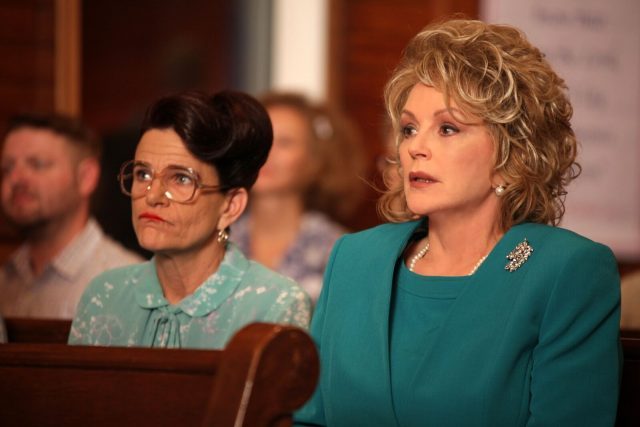
 You don’t have to know anything about the Sordid Lives phenomenon to be tickled pink by the latest entry in the series, A Very Sordid Wedding. In 1996, Del Shores’s fourth play, Sordid Lives, debuted in Los Angeles, a very personal work about his coming out to his Southern Baptist family. He turned the play into a 2000 film with an all-star cast, including Bonnie Bedelia, Delta Burke, Beau Bridges, and Olivia Newton-John. That was followed in 2008 by a twelve-episode prequel series on Logo, with Caroline Rhea, Rue McLanahan, Jason Dottley, and a few others taking over some of the roles. And now comes A Very Sordid Wedding, a sequel set in 2015, right after same-sex marriage is made legal throughout the United States. But in Winters, Texas, the Supreme Being trumps the Supreme Court, so the new minister, Reverend Jimmy Ray Barnes (Levi Kreis), has decided to throw an “Anti-Equality Revival” to keep gay marriage out of the county. Latrelle Williamson (Bedelia), however, has had a change of heart since learning that her son, Ty (Kirk Geiger), is gay and in love with Kyle (T. Ashanti Mozelle), so she has decided to fight the church on this issue. Meanwhile, Latrelle’s long-estranged sibling, aging drag performer Brother Boy (Emmy winner Leslie Jordan), meets up with escaped serial killer Billy Joe Dobson (producer Emerson Collins); the divorced Noleta Nethercott (Rhea) strikes up a passionate affair with the hunky, hospitalized Hardy (Aleks Paunovic), making her ex-husband, G.W. (David Steen), jealous; Sissy Hickey (Dale Dickey) has read the Bible cover to cover; Latrelle’s ex-husband, Wilson (Michael MacRae), has settled down with the much younger Greta (Katherine Bailess); Jesus-loving convenience store owner Vera Lisso (Lorna Scott) has helped form a homosexual-hating group; and the saucy Juanita Bartlett (Sarah Hunley) continues to share whatever is in her crazy mind. Also back are Ann Walker as LaVonda Dupree, David Cowgill as Odell Owens, Newell Alexander as bar owner Wardell Owens, Rosemary Alexander as Dr. Eve, and Scott Presley as hairdresser Roger. Things come to a head when a memorial party for Latrelle’s mother (McLanahan) is scheduled to take place at the same time as the antigay service.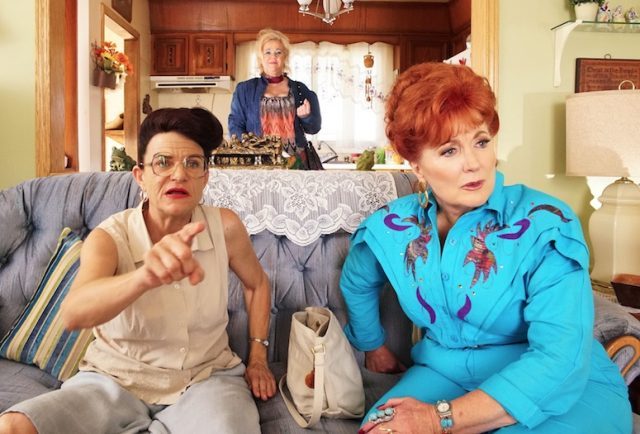
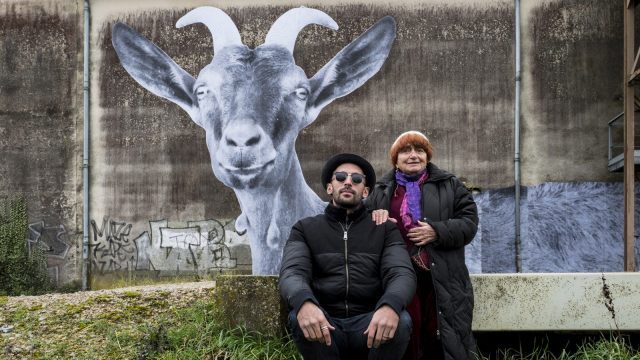
 “We’ll have fun making a film,” legendary eighty-eight-year-old Belgian-born French auteur Agnès Varda tells thirty-three-year-old French photographer and street artist