this week in lectures, signings, panel discussions, workshops, and Q&As

INSPIRING WONDERSTRUCK: THE WIND

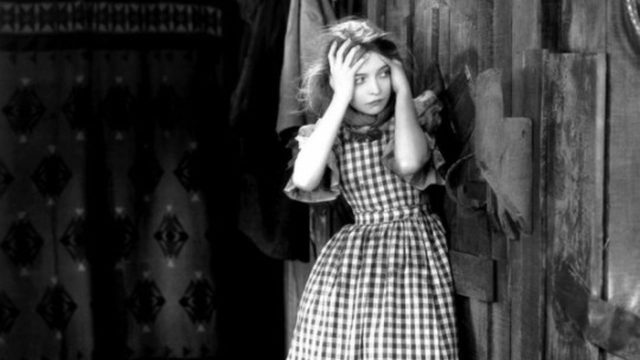
Lillian Gish in The Wind

Letty Mason (Lillian Gish) is being driven crazy by internal and external sources in The Wind

THE WIND (Victor Sjöström, 1928)
Museum of the Moving Image, Redstone Theater
35th Ave. at 36th St., Astoria
Sunday, October 15, $15, 2:00
Series runs October 13-22
718-777-6888
www.movingimage.us

Author Brian Selznick’s 2007 book The Invention of Hugo Cabret proved to be movie magic; it was turned into the film Hugo by Martin Scorsese, which garnered eleven Oscar nominations and won four. In conjunction with the theatrical release of the latest movie based on a Selznick book, Todd Haynes’s adaptation of Selznick’s 2011Wonderstruck, the Museum of the Moving Image is hosting the series “Inspiring Wonderstruck,” consisting of nine films that influenced and inspired the author. One of the most direct influences was Victor Sjöström’s 1928 now-classic silent film The Wind, starring Lillian Gish as Letty Mason, a young woman traveling from Virginia to Texas to live with her cousin Beverly (Edward Earle). Traveling from the cultured, civilized East to what was still the wild West, the uncertain Letty must confront the fierceness of nature head-on — both human nature and the harsh natural environment. On the train, she is wooed by cattleman Wirt Roddy (Montagu Love), but her fears grow as she first sees the vicious wind howling outside the train window the closer she gets to her destination. Once in Sweetwater, she is picked up by her cousin’s neighbors, the handsome Lige Hightower (Lars Hanson) and his goofy sidekick, Sourdough (William Orlamond). Both men take a quick liking to Letty, who seems most attracted to Wirt. Soon Beverly’s wife, Cora (Dorothy Cumming, in her next-to-last film before retiring), becomes jealous of Letty’s closeness with her husband and kids and kicks her out, leaving a desperate Letty to make choices she might not be ready for as the wind outside becomes fiercer and ever-more dangerous. The Wind is a tour de force for Gish in her last silent movie, not only because of her emotionally gripping portrayal of Letty but because she put the entire production together, obtaining the rights to the novel by Dorothy Scarborough, hiring the Swedish director and star Hanson, and arguing over the ending with the producers and Irving Thalberg. (Unfortunately, she lost on that account, just about the only thing that did not go the way she wanted.)
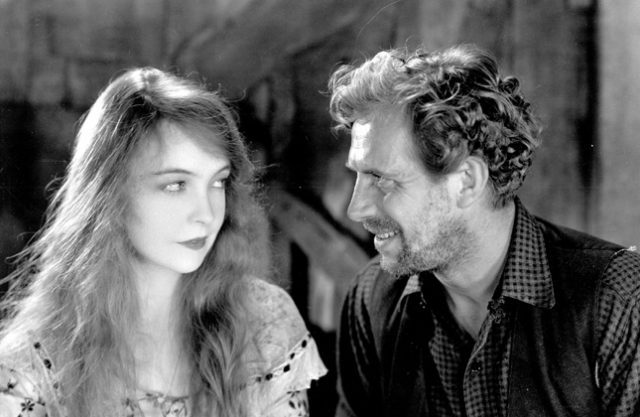
The Wind

Letty Mason (Lillian Gish) and Lige Hightower (Lars Hanson) have some tough decisions to make in Victor Sjöström’s silent classic

Sjöström (The Phantom Carriage, The Divine Woman), who played Professor Isak Borg in Ingmar Bergman’s Wild Strawberries, and cinematographer John Arnold create some dazzling effects as a twister threatens and Letty battles both inside and outside; she is regularly shot from the side, at the door of the shack where she lives, not knowing if she’d be safer inside or outside as the wind and sand blast over her. The film, an early look at climate change, was shot in the Mojave Desert in difficult circumstances; to get the wind to swirl, the crew used propellers from eight airplanes. Dialogue is sparse, and the story is told primarily in taut visuals. “Lillian Gish [is] at the height of her powers, fighting the wind and insanity nonstop for the entire movie,” Selznick says of The Wind. “A silent film made just after the silent era ended, the film is now recognized as one of Gish’s greats. The character of Lillian Mayhew, played by Julianne Moore in Wonderstruck, is directly inspired by Gish, and the fictional movie within a movie, Daughter of the Wind, is exactly that, an offspring of this very movie.” A restored 35mm print of The Wind with the original music and effects soundtrack is screening October 15 at 2:00 at the Museum of the Moving Image. “Inspiring Wonderstruck” runs October 13-22 and also includes, among others, Francis Ford Coppola’s The Conversation, Haynes’s I’m Not There and Poison, Diane Garey and Lawrence Hott’s Through Deaf Eyes, Robert Mulligan’s To Kill a Mockingbird, and Hal Ashby’s Being There as well as a preview screening of Wonderstruck, followed by a Q&A with Selznick, production designer Mark Friedberg, and costume designer Sandy Powell and a book signing with Selznick.
PERFORMA 17 BIENNIAL

performa 17

Multiple venues
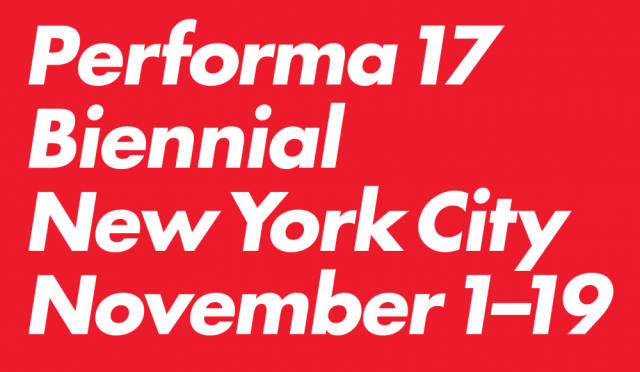
November 1-19, free – $40
17.performa-arts.org

The seventh Performa biennial takes place November 1-19 in multiple venues around the city, featuring an impressive roster of international artists pushing the limits of what live performance can be. This year’s lineup includes ten Performa commissions and dozens of events, from film, poetry, and dance to architecture, music, and comedy, arranged in such categories as Performa Projects, Performa Premieres, and Pavilion without Walls. In addition to the below recommendations for this always exciting festival, there will be presentations by Kendell Geers, Xavier Cha, Yto Barrada, Brian Belott, Flo Kasearu, Jimmy Robert, Mohau Modisakeng, Kelly Nipper, Kemang Wa Lehulere, Nicolas Hlobo, Kris Lemsalu with Kyp Malone, the Marching Cobras of New York, and others at such venues as Abrons Arts Center, BAM, the Met, White Box Arts Center, Marcus Garvey Park, the Connelly Theater, St. Mark’s Church in-the-Bowery, Harlem Parish, and the Glass House in New Canaan.

Thursday, November 2, 7:00
Friday, November 3, 7:00 & 9:00
Saturday, November 4, 7:00

Teju Cole: Black Paper, BKLYN Studio at City Point, 445 Albee Square West, $15-$25

Thursday, November 2, 9, 16
Barbara Kruger: The Drop, Performa 17 Hub, 47 Walker St., $5, 4:00 – 8:00

Sunday, November 5
Monday, November 6

William Kentridge: Ursonate, Harlem Parish, 258 West 118th St., $25-$40, 7:00

Sunday, November 5, 12, 19
Eiko Otake: A Body in Places, Metropolitan Museum of Art, free with museum admission, 10:30 am

Wednesday, November 8
Estonian Pavilion Symposium: Call for Action — Key Moments of Estonian Performance Art, lecture and screening with curators Anu Allas and Maria Arusoo, free, Performa 17 Hub, 47 Walker St., 5:00

Thursday, November 9
Friday, November 10
Saturday, November 11

The Tracey Rose Show in Collaboration with Performa 17 and Afroglossia Presents: The Good Ship Jesus vs The Black Star Line Hitching a Ride with Die Alibama [Working Title], the Black Lady Theatre, 750 Nostrand Ave., $15-$25, 7:30

Friday, November 10
Zanele Muholi on Visual Activism, grand finale of two weeks of meetings, performances, discussions, and art-making, the Bronx Museum, 1040 Grand Concourse, free, 7:00

Friday, November 10
through
Sunday, November 19

Alex Schweder and Ward Shelley: The Newcomers, with Lena Kouvela and Sarah Burns, 28 Liberty Plaza, free, all day

be here now

Saturday, November 11
Architecture Conference, with Giovana Borasi, Lluís Alexandre Casanovas Blanco, Yve Laris Cohen, Cooking Sections (Daniel Fernández Pascual & Alon Schwabe), and Elizabeth Diller, Performa 17 Hub, 47 Walker St., free, 2:00 – 6:00

Monday, November 13
Tuesday, November 14

Wangechi Mutu: Banana Stroke, Metropolitan Museum of Art, Grace Rainey Rogers Auditorium, free with museum admission, 7:00

Monday, November 13
through
Friday, November 17

Kwani Trust: Everyone Is Radicalizing, multimedia installation and public programs, Performa 17 Hub, 47 Walker St., free, 12 noon – 6:00 pm

Wednesday, November 15
Thursday, November 16
Friday, November 17

Anu Vahtra: Open House Closing. A Walk, Performa 17 Hub, 47 Walker St., free, 5:00

Thursday, November 16
Julie Mehretu and Jason Moran: MASS (HOWL, eon), Harlem Parish, 258 West 118th St,, $25-$40, 7:00 & 9:00

Thursday, November 16
Friday, November 17
Saturday, November 18

Gillian Walsh: Moon Fate Sin, Danspace Project, St. Mark’s Church in-the-Bowery, 131 East Tenth St., $22-$25, 8:00

BAM NEXT WAVE FESTIVAL: RICHARD III

(photo by Arno Declair)

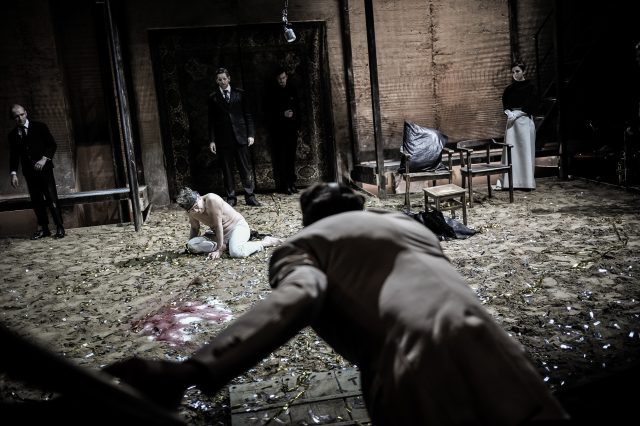
Thomas Ostermeier transforms Richard III into a glittery spectacle in German production (photo by Arno Declair)

Brooklyn Academy of Music
BAM Harvey Theater
651 Fulton St.
October 11-14, $35-$115, 7:30
718-636-4100
www.bam.org
www.schaubuehne.de

German director Thomas Ostermeier and Schaubühne Berlin return to BAM with a wildly unpredictable, glittery, contemporary take on William Shakespeare’s paean to power and ego, Richard III, running October 11-14 at the BAM Harvey as part of BAM’s 2017 Next Wave Festival. Last at BAM in 2013 with An Enemy of the People —his previous shows at BAM include Nora in 2004, Hedda Gabler in 2006, and The Marriage of Maria Braun in 2010 — Ostermeier now presents the Bard as if caught up in endless expressionistic glam decadence. Lars Eidinger plays the hunchbacked villain, with Moritz Gottwald as Buckingham, Eva Meckbach as Elizabeth, and Jenny König as Lady Anne. The pulsating soundtrack is by Nils Ostendorf, with songs by Tyler Gregory Okonma, Laurie Anderson, Iannis Xenakis, and Thomas Tomkins and Andrew John Powell; Thomas Witte provides live drumming. The luxuriously gaudy visual style comes courtesy of set designer Jan Pappelbaum, with costumes by Florence von Gerkan, video by Sébastien Dupouey, dramaturgy by Florian Borchmeyer (who adapted An Enemy of the People), and lighting by Erich Schneider. On October 12 at 6:00 ($25) at BAM Rose Cinemas, Ostermeier will sit down for an “Iconic Artist Talk” with playwright Branden Jacobs-Jenkins (Everybody, An Octoroon), who is adapting Ostermeier and Borchmeyer’s An Enemy of the People for a Broadway run later this season.

OPEN HOUSE NEW YORK WEEKEND 2017

(photo by twi-ny/mdr)

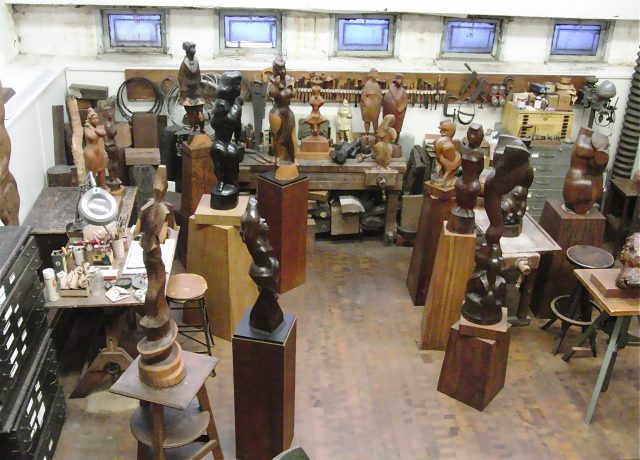
The Renee & Chaim Gross Foundation is one of hundreds of architectural sites that invite in guests for free during fifteenth annual Open House New York Weekend (photo by twi-ny/mdr)

Multiple venues in all five boroughs
Saturday, October 14, and Sunday, October 15
Advance reservations required for some sites ($5 per guest)
OHNY Passport: $150
212-991-OHNY
www.ohny.org

Reservation lines for the fifteenth annual Open House New York Weekend are open, so act quickly if you want to gain access to some of New York City’s most fascinating architectural constructions, as many of them have already sold out. Among those locations still available for advance RSVP ($5 per guest, up to two per reservation) are the Caribbean Cultural Center African Diaspora Institute, the Design within Reach Flagship Store, the East Harlem School, the Elmhurst Library, the Flushing Quaker Meeting House, ISSUE Project Room, Maple Grove Cemetery, the Ocean Breeze Track and Field Athletic Center, Plymouth Church, Ridgewood Reservoir, Snug Harbor Cultural Center and Botanical Garden, the Town Hall, and Waterside Plaza. Even if you don’t snag one of the highly coveted reservations, there’s still plenty to do and see during Open House New York Weekend, as there are hundreds of participating buildings, parks, museums, studios, neighborhoods, and other architectural wonders in all five boroughs that will not require an RSVP and are free to enter and enjoy, including the Edgar Allan Poe Cottage, the Kingsland Wildflowers Green Roof, the Bartow-Pell Mansion Museum, Gowanus SuperFUN Canoe Voyages, the Brooklyn Army Terminal, the Alexander Hamilton U.S. Custom House, the African Burial Ground National Monument, the US Coast Guard Cutter Lilac, Grace Church, the Jefferson Market Library, the Van Alen Institute, the General Society of Mechanics and Tradesmen of the City of New York, Central Synagogue, the Ukrainian Institute of America, the Renee & Chaim Gross Foundation, Westbeth, the Brooklyn Grange, the New York State Pavilion, the Little Red Lighthouse, the General Grant National Monument, the Mount Vernon Hotel Museum & Garden, and so many more.

NOH-NOW: LEFT-RIGHT-LEFT

Luca Veggettis Left-Right-Left will make its North American premiere at Japan Society October 13-14 as part of NOH NOW series

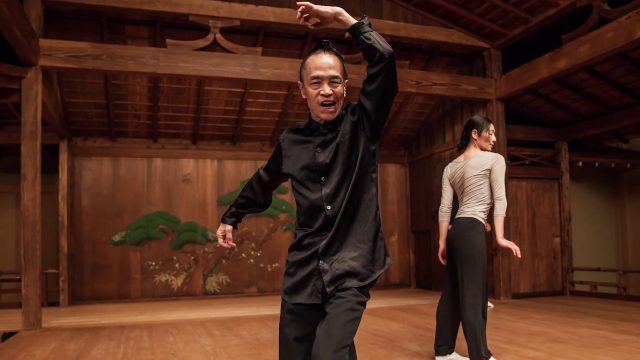
Luca Veggetti’s Left-Right-Left will make its North American premiere at Japan Society October 13-14 as part of “NOH-NOW” series

Japan Society
333 East 47th St. at First Ave.
Friday, October 13, and Saturday, October 14, $35, 7:30
212-715-1258
www.japansociety.org

In May 2014, Italian director and choreographer Luca Veggetti brought Project IX — Pléïades to Japan Society, a graceful collaboration with Japanese percussionist Kuniko Kato and Japanese dancer Megumi Nakamura that was the finale of the sixtieth anniversary season of the institution’s performing arts program. Veggetti and Nakamura are now back for the North American premiere of Left-Right-Left, part of Japan Society’s 110th anniversary and the series “NOH-NOW,” which blends the traditional Japanese musical drama with contemporary styles. The work, commissioned by Japan Society and Yokohama Noh Theater, is conceived, directed, and choreographed by Veggetti, with the esteemed author and scholar Dr. Donald Keene of the Donald Keene Center of Japanese Culture serving as project advisor and text translator. The three-part piece is inspired by the ancient play Okina, a sacred ritual about peace, prosperity, and safety. It will be performed by butoh dancer Akira Kasai, contemporary dancer Nakamura, and butoh-trained dancer Yukio Suzuki, with music director Genjiro Okura on noh small hand drum and Rokurobyoe Fujita on noh fue. Child noh actor Rinzo Nagayama will recites the new English translation of passages from Okina and another popular traditional noh play, Hagoromo, about a celestial feather robe. The lighting is by Clifton Taylor, with costumes by Mitsushi Yanaihara. “Noh has very precise patterns in the space that the performers follow,” Veggetti says in a promotional interview, explaining that his goal was “to use this archaic blueprint form and infuse it with different choreographic ideas, with that to find a language that is somehow organic.” Left-Right-Left, or “sa-yu-sa” in Japanese, will be at Japan Society on October 13, followed by a Meet-the-Artists Reception, and October 14, followed by an artist Q&A. In addition, Okura, Grand Master of the Okura School of kotsuzumi, will lead a noh music workshop on October 14 at 10:30 am ($45). “NOH-NOW” continues November 3-5 with the world premiere of Hiroshi Sugimoto’s Rikyu-Enoura, December 7-9 with Leon Ingulsrud’s adaptation of Yukio Mishima’s Hanjo, and January 11-14 with Satoshi Miyagi’s Mugen Noh Othello.

NYFF55: CLAUDE LANZMANN’S FOUR SISTERS

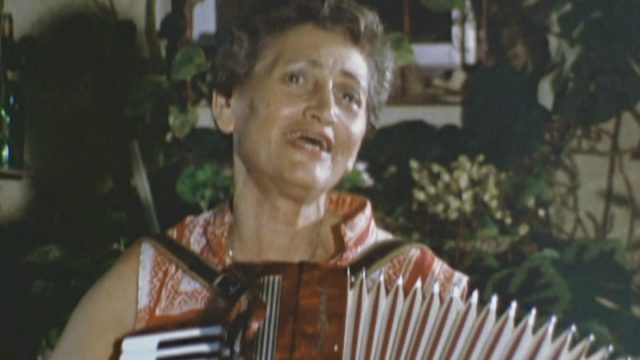
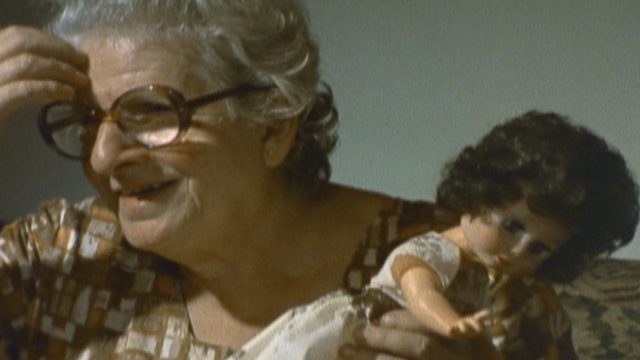
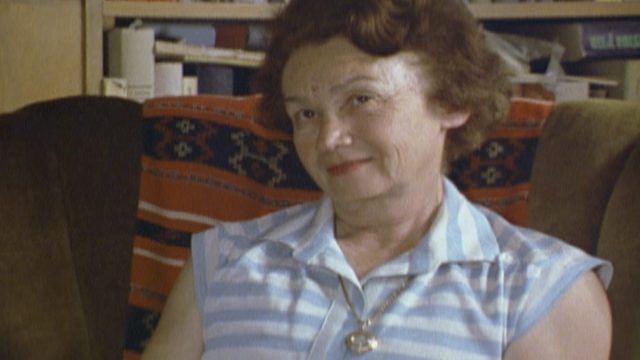
Holocaust survivor Ruth Elias tells her amazing story to Claude Lanzmann — and sings — in The Hippocratic Oath

Holocaust survivor Ruth Elias tells her amazing story to Claude Lanzmann — and sings — in The Hippocratic Oath

CLAUDE LANZMANN’S FOUR SISTERS (Claude Lanzmann, 2017)
New York Film Festival, Film Society of Lincoln Center
Sunday, October 8, The Hippocratic Oath, Walter Reade Theater, $25, 11:30 am, introduced by Claude Lanzmann
Sunday, October 8, Baluty, Walter Reade Theater, $25, 2:00
Tuesday, October 10, The Merry Flea and Noah’s Ark, Francesca Beale Theater, $25, 6:00
Festival runs September 28 – October 14
212-875-5601
www.filmlinc.org

“You are very well informed,” Holocaust survivor Ruth Elias tells filmmaker Claude Lanzmann in The Four Sisters: The Hippocratic Oath. Thanks to the Paris-born Lanzmann, a French resistance fighter during WWII, we are all very well informed about so many of the atrocities perpetrated by the Nazis, told to him in moving, powerful stories by “living witnesses” for decades. In The Four Sisters, making its world premiere at the New York Film Festival on October 8 and 10, the Shoah director focuses on the extraordinary experiences of four strong women who survived concentration camps, each one originally interviewed for Shoah. “The more I thought about these four women, the more the necessity to bring the spotlight on these female faces of the Shoah seemed important,” Lanzmann explains in his director’s note about deciding to turn them into four separate portraits. “Each of them deals with a little-known chapter of the Holocaust, each from a unique point of view. . . . The incredible strength in each of them has to exist in its own right, and yet the exceptional quality they all share also had to come through — that searingly sharp, almost physical intelligence, and an irrepressible survival instinct which could not be extinguished, despite an apparently certain death awaiting them.”

Ada Lichtman details her time in Sobibór in The Merry Flea

Ada Lichtman details her time in Sobibór in The Merry Flea

In The Hippocratic Oath, which the ninety-one-year-old Lanzmann (The Last of the Unjust) will introduce at the Walter Reade Theater on October 8 at 11:30 am, Elias tells her remarkable story from the Nazi occupation of Czechoslovakia in March 1939 to her deportation in April 1942 to Theresienstadt, where she was reunited with and married her boyfriend, to her pregnancy in the winter of 1943, which led to her being sent to Ravensbrück and Auschwitz, where she met Dr. Josef Mengele, who chose to use her baby in an inhuman experiment. Filmed in a little garden, Elias, an accordion player, is firm and direct as she shares the details of precisely what happened, her dark eyes seemingly sent back to Eastern Europe as her words bring it all to vivid life; one can visualize each location, each movement, each glance. The camera occasionally turns to Lanzmann, smoking a cigarette as he listens to her, mesmerized, just as the audience is. Lanzmann is more active in Baluty, walking along the shore in Panama City, Florida, with Paula Biren, whose story begins in Lodz, Poland. An elegant woman, Biren needs a little more prodding to speak, which she does very carefully, with a brutally cold honesty. She describes how Lodz was turned into a ghetto, how she became a police officer there, and then was sent to Auschwitz, where her younger sister and mother were killed, followed by her father’s death shortly thereafter. Lanzmann supplements the film with archival photographs of Lodz. Throughout The Merry Flea, Ada Lichtman is cleaning and mending dolls; it is eerie as viewers eventually find out why. Lichtman, from the Polish town of Wieliczka, relates her story of being captured by the Germans and sent to Sobibór, speaking at a determined, almost eager pace, sometimes skipping around so that Lanzmann has to interject to get her back on track or to go into more specifics, particularly regarding her treatment at the hands of a Nazi officer named Wagner and her description of cattle cars where naked men, women, and children were forced to dance with one another. The camera occasionally shifts to her husband, who she met in the camps; he stares ahead almost blankly, with hollow, haunted eyes, then hides his head in his hands. The sound of traffic outside can be heard, as if coming from another time and place.

Hanna Marton has a frightening tale to tell Claude Lanzmann in Noah’s Ark

Hanna Marton has a frightening tale to tell Claude Lanzmann in Noah’s Ark

Finally, in Noah’s Ark, Lanzmann introduces Hungarian native Hanna Marton, who sits calmly in a chair, holding a small notebook as she speaks in Hebrew, the director sitting right in front of her, nearly knocking knees; in the film’s production notes, Lanzmann explains, “I’ve never heard an account that is as constantly, relentlessly painful as the one that Hanna Marton gave me when I filmed her during the shoot for Shoah in her Jerusalem apartment.” Her eyes sometimes tearing up, Marton, continually on edge and at times defensive, talks about the early Zionist movement in her hometown of Cluj, the capital of Transylvania; discusses how Jews were used by the Hungarian army, which supported Germany and Italy, as living mine detectors; details the creation of the Kolozsvár ghetto in May 1944 as a way to quickly exterminate Jews; and delves into her involvement with the Kastner train, a deal made between Jewish-Hungarian lawyer Rudolf Kastner and Nazi Obersturmbannführer Adolph Eichmann. The Four Sisters is no mere addendum to Shoah, nor is it a footnote to Lanzmann’s long, important career; together, the four films make a powerful statement about hatred and bigotry, about violence and war, and about the indomitable strength and spirit of women, especially during the war and its aftermath. They are also a terrifying reminder that given the state of the world today, it’s not impossible that something like this could happen again, even right here in America, as there are fewer and fewer concentration-camp eyewitnesses, Holocaust deniers litter the internet, nations build walls and fences to keep out refugees, and a sitting president insists that some white supremacists are “very fine people.”

IF THESE WALLS COULD TALK: CELEBRATING THE LIFE AND TIMES OF THE BOTTOM LINE

if these walls could talk

Who: David Bromberg, Jimmy Vivino, Darlene Love, David Johansen, Sean Altman, Marshall Chapman, Clint de Ganon, the GrooveBarbers, Ula Hedwig, Garland Jeffreys, Christine Lavin, Curtis King, Terre Roche, Feifei Yang, Garry Dial, the Uptown Horns, Will Lee, Paul Shaffer, Gregg Bendian
What: Music and memories about the Bottom Line
Where: Schimmel Center at Pace University, 3 Spruce St. between Park Row and Gold St., 212-346-1715
When: Friday, October 13, and Saturday, October 14, $29-$55, 7:30
Why: From February 11, 1974, to January 22, 2004, the Bottom Line was one of the great music clubs in the country, a four-hundred-seat venue that featured acts from a multitude of genres, good food and drink, and large pillars that could block part of your view depending where you were sitting, but there was no place else like it. Among the myriad performers who played there from a multitude of genres were Lou Reed, Bruce Springsteen, Charles Mingus, Patti Smith, Donovan, Warren Zevon, Prince, Little Feat, Mary Chapin Carpenter, Meat Loaf, Janis Ian, Santana, Melissa Etheridge, Steve Earle, the Indigo Girls, the New York Dolls, Mose Allison, Joan Armatrading, the Uncle Floyd Show, Tom Waits, Captain Beefheart, Barry Manilow, Cheech & Chong, Television, Jimmy Buffett, Buddy Guy and Junior Wells, Nona Hendryx, Gil Scott-Heron, the Roches, the Cars, Miles Davis, the Hollies, Richard Thompson, Suzanne Vega, Steve Forbert, Dolly Parton, 10,000 Maniacs, Jorma Kaukonen, Carly Simon with James Taylor, Richard Belzer, and regulars Flo & Eddie from the Turtles and Buster Poindexter, the alter ego of David Johansen. Owners Allan Pepper and Stanley Snadowsky had a knack for finding new talent; in some ways, the Bottom Line was the folk version of CBGB, a key step on an artist’s rise to national, and international, success.

On October 13 and 14, tribute will be paid to the legendary club with the special program “If These Walls Could Talk: Celebrating the Life and Times of the Bottom Line,” two evenings of live music and personal stories about the venerable venue, which closed its doors over back-rent and lease issues with NYU. Hosted by Paul Shaffer and with Gregg Bendian serving as music director, the shows will feature Sean Altman, David Bromberg (Friday), Clint de Ganon, the GrooveBarbers, Nona Hendryx, Garland Jeffreys (Saturday), David Johansen, Christine Lavin (Saturday), Will Lee, Darlene Love with Ula Hedwig and Curtis King, Terre Roche with Feifei Yang and Garry Dial (Friday), the Uptown Horns, and Jimmy Vivino. It’s like the ultimate version of “In Their Own Words,” the Bottom Line’s long-running series of “a Bunch of Songwriters Sittin’ Around Singing,” which was started on May 24, 1990, by the great Vin Scelsa. The Bottom Line had a personality all its own, and it is dearly missed by those of us who frequented its hallowed halls on the corner of Mercer and West Fourth Sts., so this should bring back some grand memories, along with some great music.