this week in lectures, signings, panel discussions, workshops, and Q&As

HIROSHI SUGIMOTO: RIKYU-ENOURA

(photo © Odawara Art Foundation)

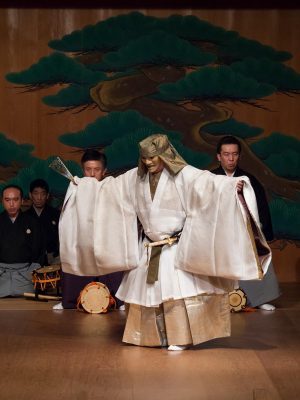
Hiroshi Sugimoto’s Rikyu-Enoura makes its world premiere this weekend at Japan Society (photo © Odawara Art Foundation)

Japan Society
333 East 47th St. at First Ave.
November 3-5, $95
212-715-1258
www.japansociety.org
www.odawara-af.com/en

In 2011 and 2014, Japan Society awarded grants to Japanese multidisciplinary artist Hiroshi Sugimoto for his ambitious Odawara Art Foundation, which is now open to the public and features indoor and outdoor stages for noh and bunraku productions, a large gallery, a tearoom, astronomical observation spaces, and more. Sugimoto, who is based in Tokyo and New York City, will now be presenting the first fruits of that collaboration with several special programs at Japan Society, beginning with the exhibition “Gates of Paradise” (through January 7), the noh play Rikyu-Enoura (November 3-5), and the lecture and book signing “Architecture of Time: Enoura Observatory, Where Consciousness & Memory Originate” (December 15). For more than forty years, photographer, sculptor, architect, and historian Sugimoto has explored history and science, the past and the future, time and memory while blurring the lines between fiction and reality. He has photographed dioramas at natural history museums (“Still Life”), captured electrical discharges on photographic dry plates (“Lightning Fields”), focused on the horizon line across the ocean (“Seascapes”), shot wax figures to look like paintings (“Portraits”), used long exposures to reveal the blinding soul of movie palaces (“Theaters”), and turned one thousand gilded wooden Buddha statues at Sanjῡsangen-dō (Hall of Thirty-Three Bays) in Kyoto into a dizzying film (Sea of Buddha). He also curated the expansive and wide-ranging “History of History” in 2005-6 at Japan Society and designed the set and costumes for Sanbaso, divine dance, an ancient celebratory ritual dance with noh performers in the Guggenheim Rotunda in 2013. So Sugimoto was a logical go-to choice when Japan Society was putting together its “NOH NOW” series as part of its 110th anniversary. Sugimoto will be staging the world premiere of Rikyu-Enoura, about sixteenth-century tea master Sen-no-Rikyu, featuring a libretto by traditional-style poet Akiko Baba; a tea ceremony by Sen So’oku (a direct descendant of Sen-no-Rikyu); noh actors Kanze Tetsunojo and Katayama Kurouemon; noh musician Kamei Hirotada; and more. Each show will be preceded by a lecture by Wesleyan University assistant professor Dr. Takeshi Watanabe one hour before curtain.

BROOKLYN MUSEUM: BEST OF THE BOROUGH

Strike

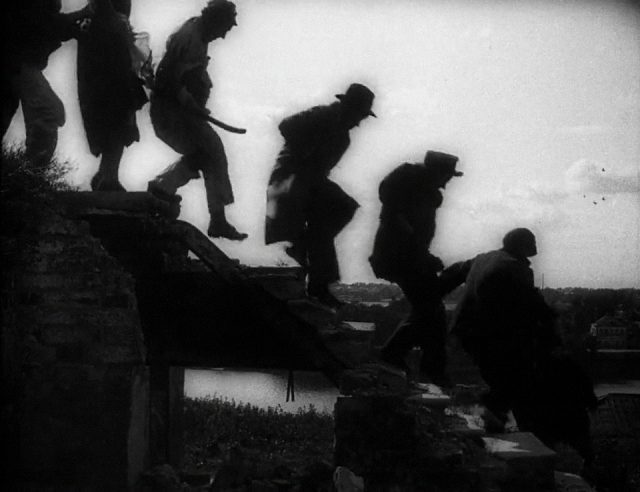
Sergei Eisenstein’s classic Strike will be screened at the Brooklyn Museum with a live score conducted by Hisham Akira Bharoocha

Brooklyn Museum
200 Eastern Parkway at Washington St.
Saturday, November 4, free, 5:00 – 11:00
212-864-5400
www.brooklynmuseum.org

The Brooklyn Museum celebrates the world’s preeminent borough in its monthly free First Saturday program in November with “Best of the Borough.” There will be live music by Alsarah & the Nubatones, Phony Ppl, and DJ Ian Friday; a curator tour of “Arts of Korea” with Joan Cummins; a hands-on art workshop inspired by Mickalene Thomas’s extraordinary “A Little Taste Outside of Love”; a scholar talk and book signing with Chip Colwell, author of Plundered Skulls and Stolen Spirits: Inside the Fight to Reclaim Native America’s Culture; a Brooklyn Dance Festival showcase with by the D.R.E.A.M. Ring, FLEXN, Kristin Sudeikis Dance, SynthesisDANCE, Concepts in Choreography, and the Francesca Harper Project; a pop-up gallery talk on Ancient Egyptian art; a book club reading with poet Tommy Pico from his latest book, Nature Poem; and a special screening of Sergei Eisenstein’s 1925 classic, Strike! with a live score conducted by Hisham Akira Bharoocha and featuring Angel Deradoorian, Jeremy Hyman, Nicos Kennedy, and Joe Williams. In addition, the galleries will be open late so you can check out “Roots of ‘The Dinner Party’: History in the Making,” “Soulful Creatures: Animal Mummies in Ancient Egypt,” “Robert Longo: Untitled (Raft at Sea),” “Proof: Francisco Goya, Sergei Eisenstein, Robert Longo,” “Arts of Asia and the Middle East, “Infinite Blue,” “A Woman’s Afterlife: Gender Transformation in Ancient Egypt,” and more.

BAM NEXT WAVE FESTIVAL: STATE OF SIEGE

(photo by Jean Louis Fernandez)

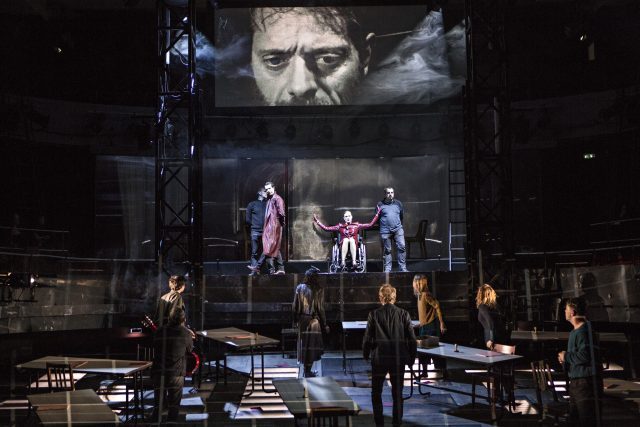
Théâtre de la Ville returns to BAM with a timely take on Albert Camus’s State of Siege (photo by Jean Louis Fernandez)

BAM Howard Gilman Opera House
30 Lafayette Ave. between Ashland Pl. & St. Felix St.
November 2-4, $35-$110
718-636-4100
www.bam.org
www.theatredelaville-paris.com

“When State of Siege first opened in Paris, there was no dissenting voice among the critics. Truly, few plays have ever enjoyed such a unanimous slashing,” Albert Camus wrote in a 1958 preface to a collection of four of his plays, including State of Siege. “This is the more deplorable since I have never given up thinking that State of Siege, with all is shortcomings, is, of all my writings, the one that most resembles me.” He also insisted that the 1948 allegorical drama about the search for liberty amid a spreading plague was not an adaptation of his 1947 novel, The Plague. Regardless of what has come before, State of Siege is now in good hands with Théâtre de la Ville, Paris, which returns to BAM November 2-4 with a timely take on the play. The company was previously at BAM with its unique and inventive versions of Pirandello’s Six Characters in Search of an Author in 2014 and Ionesco’s Rhinoceros in 2012. Serge Maggiani stars as the Plague, with Hugues Quester as the Man, Alain Libolt as the Judge, Valérie Dashwood as the Secretary, Jauris Casanova as the Alcade, Matthieu Dessertine as Diego, and Philippe Demarle as Nada. The inimitable Emmanuel Demarcy-Mota directs, with sets by Yves Collet, lighting by Collet and Christophe Lemaire, sound by David Lesser, costumes by Fanny Brouste, and video by Mike Guermyet. On November 3 at 6:00 in Wendy’s Subway Reading Room at the BAM Fisher, Demarcy-Mota will give a free lecture on the work and its relevance to what is going on in the world today.

CABARET CINEMA — SOUNDTRACK: THE YOUNG GIRLS OF ROCHEFORT

The Young Girls of Rochefort

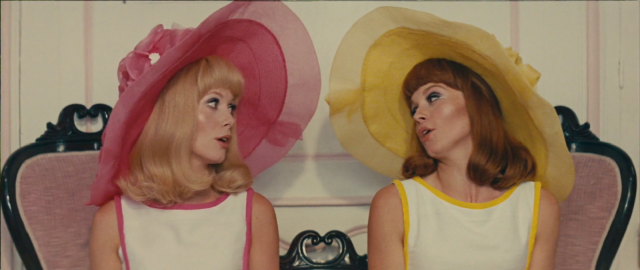
Real-life sisters Catherine Deneuve and Françoise Dorléac play Gemini twins in Jacques Demy’s The Young Girls of Rochefort

THE YOUNG GIRLS OF ROCHEFORT (LES DEMOISELLES DE ROCHEFORT) (Jacques Demy, 1967)
Rubin Museum of Art
150 West 17th St. at Seventh Ave.
Friday, October 27, $10, 9:30
Series continues Friday nights through April 28
212-620-5000
rubinmuseum.org

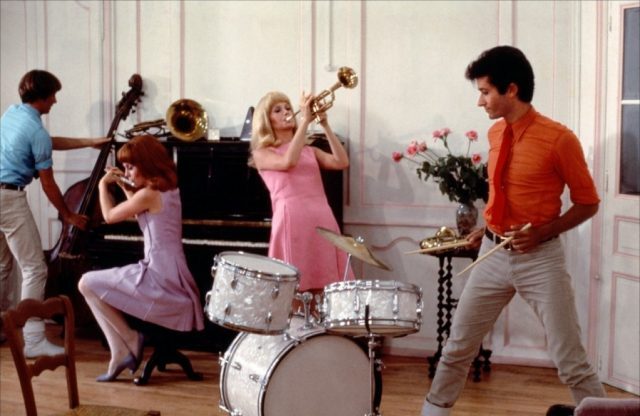
When asked why he chose The Young Girls of Rochefort for the Rubin Museum Cabaret Cinema series “Soundtrack,” being held in conjunction with the exhibition “The World Is Sound,” movie executive Jack Lechner explained, “In addition to being the single biggest influence on Damien Chazelle’s La La Land, Jacques Demy’s The Young Girls of Rochefort is the sheerest expression of pure joy in the history of movies — a nonstop celebration of song, dance, and romantic idealism.” Demy’s 1967 pastel-colored romp is all that and more, a swirling, twirling two-hour-plus party of music, missed connections, and murder. In the port town of Rochefort, a fair has come to town, including hot-to-trot carnies Etienne (George Chakiris, with songs overdubbed by Romuald) and Bill (Grover Dale, José Bartel), who spend a lot of time hanging out at a café right next to the town square, owned by Yvonne Garnier (Danielle Darrieux, the only one who does her own singing), who has grown twin girls, dance instructor Delphine (Catherine Deneuve, Anne Germain) and piano teacher Solange (Françoise Dorléac, Claude Parent), as well as a young son, Booboo (Patrick Jeantet, Olivier Bonnet). Local gallery owner Guillaume Lancien (Jacques Riberolles, Jean Stout) is in love with Delphine, but she wants nothing to do with him. Music store owner Simon Dame (Michel Piccoli, Georges Blaness) is trying to arrange a meeting between Solange, who has written a symphony, with his very successful conservatory friend, Andy Miller (Gene Kelly, Donald Burke). Meanwhile, blond sailor and painter Maxence (Jacques Perrin, Jacques Revaux) has drawn a picture of his ideal woman — a dead ringer for Delphine — but circumstances keep preventing them from bumping into each other. Meanwhile, the perky Josette (Geneviève Thénier, Alice Gerald) serves such regulars as Dutrouz (Henri Crémieux) and Pépé (René Bazart) in the café. Over the course of one rather long weekend, characters fall in and out of love, uncover family secrets, and keep missing one another as they sing and dance as if it’s the most natural thing in the world. And who’s to argue with them.

The Young Girls of Rochefort

Sound is a key element in multiple ways in one of the grandest musicals ever made

Recently restored with the participation of Demy’s widow, fellow Nouvelle Vague master Agnès Varda, The Young Girls of Rochefort is a genuine treat for the eyes and ears. Deneuve and Dorléac are utterly delightful as the Gemini twins, wearing candy-colored dresses and dramatic hats (the glorious costumes are by Jacqueline Moreau and Marie-Claude Fouquet), everything gorgeously photographed by Ghislain Cloquet. (Sadly, Dorléac, Deneuve’s older sister in real life) died in a car accident a few months before the film was released; she was only twenty-five.) Demy wrote and directed the film, including penning the lyrics for Michel Legrand’s wide-ranging score, even giving an inside nod to the composer. While his previous film, 1964’s The Umbrellas of Cherbourg, featured every piece of dialogue being sung, The Young Girls of Rochefort mixes it up, much like the dancing, choreographed by Norman Maen; at any moment, some characters are dancing and others just sitting or walking, sometimes noticing each other with quick moves, and sometimes not, almost as if the worlds of fantasy and reality are side-by-side. Of course, this being Demy (Model Shop, Une chambre en ville), it’s not all sweetness and light. There’s a violent murderer on the loose, the military is marching through town, and Guillaume seems to be rather handy with a gun. “Trouble is everywhere,” Yvonne says. Several times Maxence notes that his return to Nantes, Demy’s own hometown, is “immi-Nantes,” and that goofy joke is one of the many sly elements that keeps the film sharp and edgy; the plot is built around everything being imminent to the point of intoxicating ridiculousness. In addition to also kvelling over abstract art (“Braque, Picasso, Klee, Miró, Matisse — that’s life!” Maxence declares), the film is surprisingly feminist. Delphine and Solange regularly add little quips, almost under their breath, refusing to be taken for floozies no matter how sexist and misogynist some of their suitors might be. And then, at the end, Demy literally and figuratively opens and closes one last door. The Young Girls of Rochefort is screening at the Rubin at 9:30 on October 27 and will be introduced by Lechner; “Soundtrack” continues Friday nights through December 15 with such other sound-specific films as Michael Powell and Emeric Pressburger’s I Know Where I’m Going, Gus Van Sant’s Elephant, and Lars von Trier’s Dancer in the Dark.

HANK AND JIM: 12 ANGRY MEN / MR. SMITH GOES TO WASHINGTON

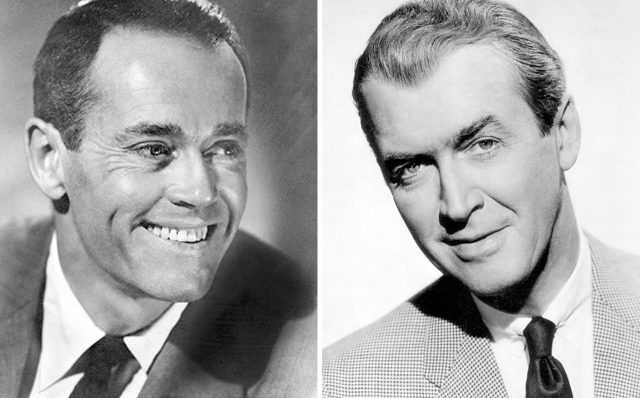
Henry Fonda and Jimmy Stewart

The long friendship Henry Fonda and Jimmy Stewart is the focus of terrific three-week series at Film Forum

Film Forum
209 West Houston St.
October 27 – November 16
212-727-8110
filmforum.org

If only America were more like the long relationship between Nebraska-born Oscar winner Henry Jaynes Fonda and Pennsylvania-born Oscar winner James Maitland Stewart. Fonda, who served in the Navy during WWII and passed away in 1982 at the age of seventy-seven, was a liberal Democrat who was married five times; Stewart, who served in the Army during WWII and passed away in 1997 at the age of eighty-nine, was married to the same woman for forty-four years. Not only did Hank and Jim disagree on politics, which they early on decided never to talk about in each other’s company, but they also went head-to-head for the Best Actor Oscar in 1941, when Stewart (The Philadelphia Story) beat Fonda (The Grapes of Wrath). Still, they remained best buddies, which is documented in Scott Eyman’s new book, Hank and Jim: the Fifty-Year Friendship of Henry Fonda and James Stewart (October 24, Simon & Schuster, $29), a tome that serves as the inspiration behind the fab Film Forum series “Hank and Jim,” running October 27 through November 16, consisting of more than three dozen movies made by the two actors, who both experienced success on Broadway as well as in Hollywood. (The onetime roommates met while trying to establish their careers in New York City.) Eyman will be at Film Forum to introduce several screenings and sign copies of his book.

The series begins October 27 with an Alfred Hitchcock double feature, The Wrong Man, starring Fonda as a jazz musician accused of murder, and Rope, in which Stewart plays a professor invited to a dinner party with an unexpected guest. That is followed October 28 with Sidney Lumet’s 12 Angry Men and Frank Capra’s Mr. Smith Goes to Washington, in which Fonda and Stewart both portray men with consciences who care about fairness and the truth. Other double features with films made by each man include The Ox-Bow Incident and Broken Arrow, Call Northside 777 and The Boston Strangler, The Moon’s Our Home and Next Time We Love, and Destry Rides Again and Daisy Kenyon, in addition to double features with just one of them and individual screenings of some of their greatest solo films. Fonda and Stewart made only three movies in which they appeared together, On Our Merry Way, Vincent McEveety’s Firecreek, and Gene Kelly’s The Cheyenne Social Club, but, oddly, none of them is part of this festival, nor is How the West Was Won, which stars both of them but they are never in the same scene.
12 ANGRY MEN

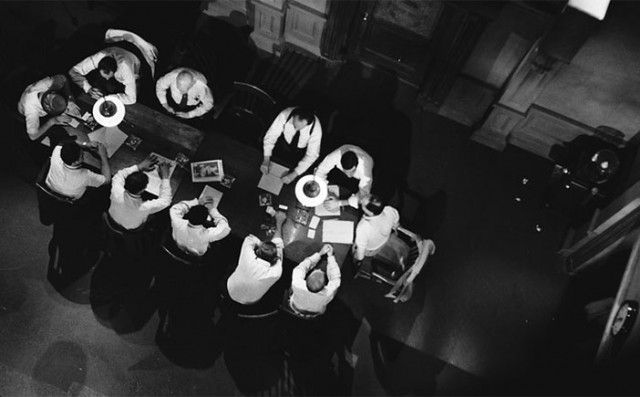
Sidney Lumet’s 12 Angry Men explores the consciences and more of a dozen jurors deciding a murder case

12 ANGRY MEN (Sidney Lumet, 1957)
Film Forum
Saturday, October 28, 3:00, 7:30
www.filmforum.org

The fate of an eighteen-year-old boy charged with the murder of his father is at stake in Sidney Lumet’s first film, the gripping, genre-defining 12 Angry Men. After a series of establishing shots, a judge sends a dozen New Yorkers into the jurors room, where they need to come to a unanimous verdict that could lead to the execution of the teen. Over the course of about ninety minutes, an all-star cast examines and reexamines the case — and their own personal biases — as the heat increases, both literally and figuratively. At first, the nameless dozen men make small talk, trying to be friendly, but it’s not long before some of them are at others’ throats, primarily the gruff Lee J. Cobb, who has it in for the calm and thoughtful Henry Fonda, who is ready to stand alone if necessary for what he believes in. The other uniformly excellent actors playing a very specific cross-section of white, male America are John Fiedler, Martin Balsam, Robert Webber, E. G. Marshall, Jack Klugman, Edward Binns, Jack Warden, Ed Begley, Joseph Sweeney, and George Voskovec. “I tell you, we were lucky to get a murder case,” Webber tells Fonda, but he won’t feel the same as the tension reaches near-violent proportions. 12 Angry Men is a searing examination of the criminal justice system as well as basic human instincts, behavior, and common decency. The Philadelphia-born Lumet, whose parents were both in the Yiddish theater, is able to tell the story in cinematic ways despite its taking place mostly in one small, sweaty room, letting the intense acting drive the narrative; the director, who was nominated for an Oscar for the film, would go on to make such other classic New York City dramas as The Pawnbroker, The Anderson Tapes, Serpico, Dog Day Afternoon, and Prince of the City. Nominated for a Best Picture Oscar and winner of the Golden Bear at Berlin, 12 Angry Men, based on an original teleplay by Reginald Rose, is screening October 28 as part of a double feature with Frank Capra’s Mr. Smith Goes to Washington in the Film Forum series “Hank and Jim”; the 7:30 show will be introduced by Scott Eyman, author of Hank and Jim: the Fifty-Year Friendship of Henry Fonda and James Stewart, and followed by a book signing.
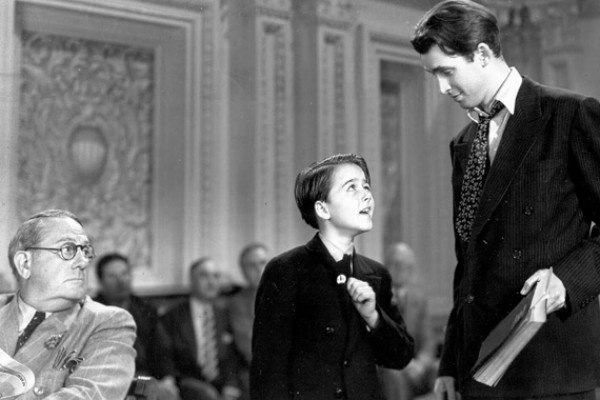
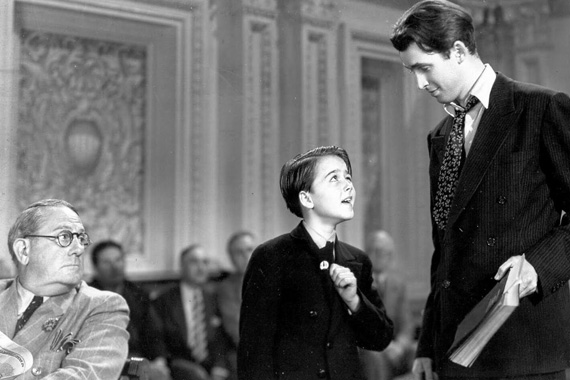
Jimmy Stewart takes filibustering to a whole new level in Mr. Smith Goes to Washington

MR. SMITH GOES TO WASHINGTON (Frank Capra, 1939)
Film Forum
Saturday, October 28, 12:30, 4:55
www.filmforum.org

We love Jimmy Stewart; we really do. Who doesn’t? But a few years ago we had the audacity to claim that Jim Parsons’s performance as Elwood P. Dowd in the 2012 Broadway revival of Harvey outshined that of Stewart in the treacly 1950 film, and now we’re here to tell you that another of his iconic films is nowhere near as great as you might remember, although it still has its place in the Hollywood canon. Nominated for eleven Academy Awards, Frank Capra’s Mr. Smith Goes to Washington caused quite a scandal in America’s capital when it was released in 1939, depicting a corrupt democracy that just might be saved by a filibustering junior senator from a small state whose most relevant experience is being head of the Boy Rangers. (The Boy Scouts would not allow their name to be used in the film.) Stewart plays the aptly named Jefferson Smith, a dreamer who believes in truth, justice, and the American way. “I wouldn’t give you two cents for all your fancy rules,” Smith says of the Senate, “if, behind them, they didn’t have a little bit of plain, ordinary, everyday kindness and a little looking out for the other fella, too.” He’s shocked — shocked! — to discover that his mentor, the immensely respected Sen. Joseph Harrison Paine (played by Claude Rains, who was similarly shocked that there was gambling at Rick’s in Casablanca), is not nearly as squeaky clean as he thought, involved in high-level corruption, manipulation, and pay-offs that nearly drains Smith of his dreams. Having recently celebrated its seventy-fifth anniversary, Mr. Smith Goes to Washington is still, unfortunately, rather relevant, as things haven’t changed all that much, but Capra’s dependence on over-the-top melodrama has worn thin. It’s a good film, but it’s no longer a great one. Just in time for election day, Mr. Smith Goes to Washington is screening October 28 as part of a double feature with Sidney Lumet’s 12 Angry Men in the Film Forum series “Hank and Jim”; the 4:55 show will be introduced by Scott Eyman, author of Hank and Jim: the Fifty-Year Friendship of Henry Fonda and James Stewart, and followed by a book signing.
CINEMATOGRAPHER CAROLINE CHAMPETIER: SHAPING THE LIGHT — THE INNOCENTS / HOLY MOTORS

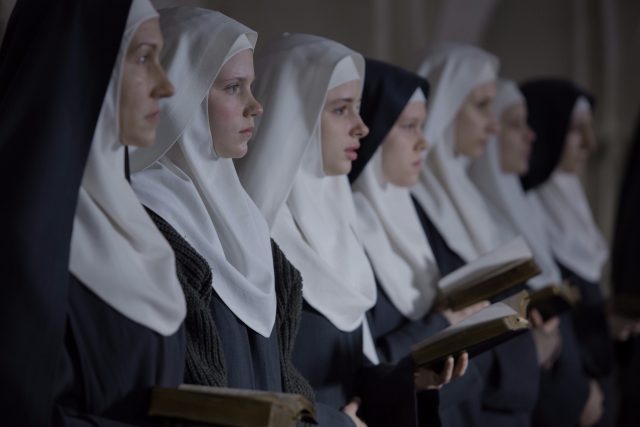
A convent of nuns reexamine their faith following tragedy in Les Innocentes

Polish nuns reexamine their faith following unspeakable tragedy during WWII in Les Innocentes

CinéSalon: THE INNOCENTS (LES INNOCENTES) (AGNUS DEI) (Anne Fontaine, 2016)
French Institute Alliance Française, Florence Gould Hall
55 East 59th St. between Madison & Park Aves.
Tuesday, October 24, $14 ($23 for both films), 4:00
Series continues Tuesdays through October 31
212-355-6100
www.fiaf.org
www.musicboxfilms.com

FIAF’s CinéSalon series “Cinematographer Caroline Champetier: Shaping the Light” continues the celebration of the career of the César-winning French director of photography October 24 with two of her best films, Anne Fontaine’s Les Innocentes and Léos Carax’s Holy Motors, each of which will be followed by a Q&A and wine and beer reception with Champetier. Inspired by a true story, Les Innocentes is a haunting tale of a French WWII Red Cross doctor, Mathilde Beaulieu (Lou de Laâge), who is secretly summoned by Sister Maria (Agata Buzek) to help a nun give birth in a remote Polish convent. She soon discovers that several of the Benedictine nuns are pregnant, the result of brutal rapes by Soviet soldiers. The Mother Superior (Agata Kulesza) doesn’t want any outsiders to know what happened, out of both shame and fear, but the babies, and the nuns themselves, may not survive without obstetric care. Mathilde, a Communist, is stationed at a mobile surgical hospital in Warsaw, where she primarily assists Samuel (Vincent Macaigne), a Jewish doctor tending to wounded soldiers after the war, in December 1945; she gets into trouble with Samuel when she refuses to even hint at where she is disappearing to. As the due dates for the multiple births draw close, so does the danger surrounding Mathilde and the nuns.
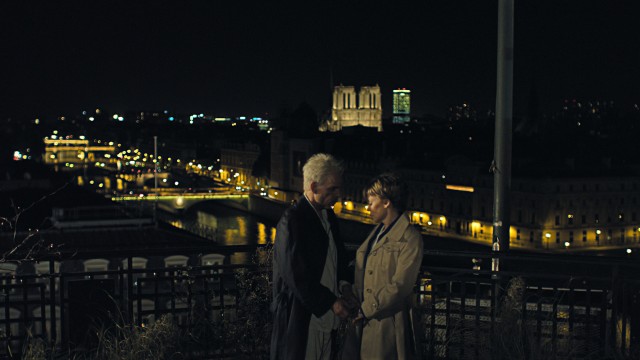
Les Innocentes was nominated for four Césars, Best Film, Best Director, Best Original Screenplay — even though it was based on the diaries of French Resistance doctor Madeleine Pauliac — and Best Cinematography, by Champetier (Of Gods and Men, Toute une nuit), who does an exquisite job with her camera throughout the film, which is beautifully directed by Fontaine (Coco Before Chanel, Gemma Bovery). In scene after scene, amid a palette dominated by black, white, and brownish gray, a light glows near the center of the screen, from candles, open doorways, windows, and snow to a fire, lamps, truck headlights, and even the white parts of the nuns’ habits, giving the film a chiaroscuro look reminiscent of canvases by Georges de la Tour. It’s like a flicker of hope at the center of tragedy, or birth coming out of death as the nuns and the doctors reexamine their faith, their basic belief system, and the concept of motherhood. De Laâge, who was nominated twice for the Most Promising Actress César, gives a heartfelt, honest performance as Mathilde, as she goes back and forth between her duties with the Red Cross and her deep-set desire to help the nuns. Champetier’s camera loves her face, which often melts into the shot like a figure in a classical painting. Les Innocentes is a powerful look at some of the many innocent victims of war and how far people will go to protect their secrets. Les Innocentes is screening October 24 at 4:00 at FIAF, followed by a Q&A and wine and beer reception with Champetier.

Léos Carax’s HOLY MOTORS is a dazzling tribute to Paris, cinema, and the art of storytelling

Léos Carax’s Holy Motors is a dazzling tribute to Paris, cinema, and the art of storytelling

CinéSalon: HOLY MOTORS (Léos Carax, 2012)
Tuesday, October 24, $14 ($23 for both films), 7:30
www.fiaf.org
www.holymotorsfilm.com

French writer-director Léos Carax (Boy Meets Girl, Mauvais Sang) has made only five feature films in his thirty-plus-year career, a sadly low output for such an innovative, talented director, but in 2012 he gave birth to his masterpiece, the endlessly intriguing, confusing, and exhilarating Holy Motors. His first film since 1999’s POLA X, the work is a surreal tale of character and identity, spreading across multiple genres in a series of bizarre, entertaining, and often indecipherable set pieces. Holy Motors opens with Carax himself playing le Dormeur, a man who wakes up and walks through a hidden door in his room and into a movie theater where a packed house, watching King Vidor’s The Crowd, is fast asleep. The focus soon shifts to Carax alter ego Denis Lavant as Monsieur Oscar, a curious character who is being chauffeured around Paris in a white stretch limo driven by the elegant Céline (Édith Scob). Oscar has a list of assignments for the day that involve his putting on elaborate costumes — including revisiting his sewer character from Merde, Carax’s contribution to the 2009 omnibus Tokyo! that also included shorts by Michel Gondry and Bon Joon-ho — and becoming immersed in scenes that might or might not be staged, blurring the lines between fiction and reality within, of course, a completely fictional world to begin with. It is as if each scene is a separate little movie, and indeed, Carax, whose middle name is Oscar, has said that he made Holy Motors after several other projects fell through, so perhaps he has melded many of those ideas into this fabulously abstruse tale that constantly reinvents itself.

Stunningly photographed by Caroline Champetier, former president of the French Association of Cinematographers, the film is also a loving tribute to Paris, the cinema, and the art of storytelling, with direct and indirect references to Franz Kafka, E. T. A. Hoffman, Charlie Chaplin, Lon Chaney, Eadweard Muybridge, Georges Franju, and others. (Scob, who starred in Franju’s Eyes Without a Face, at one point even pulls out a mask similar to the one she wore in that classic thriller.) The outstanding cast also features Kylie Minogue, who does indeed get to sing; Eva Mendes as a robotic model; and Michel Piccoli as the mysterious Man with the Birthmark. Holy Motors is screening October 24 at 7:30 at FIAF, followed by a Q&A and wine and beer reception with Champetier. “Cinematographer Caroline Champetier: Shaping the Light” concludes October 31 with Margarethe von Trotta’s Hannah Arendt and Jean-Luc Godard’s Grandeur et décadence d’un petit commerce de cinema.

A NITE TO DISMEMBER: THE HAUNTED LIBRARY

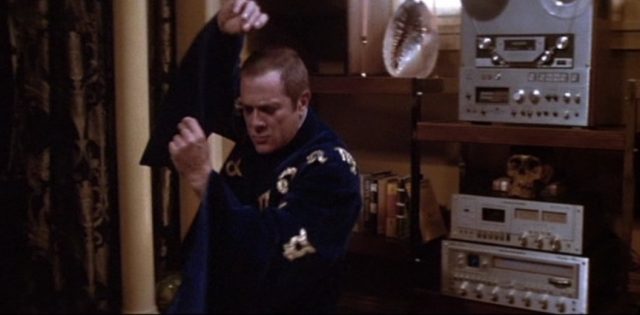
Tony Curtis dances with glee as he readies for Nitehawks A Nite to Dismember, which includes The Manitou

Tony Curtis dances with glee as he readies for Nitehawk’s “A Nite to Dismember,” which includes The Manitou

Nitehawk Cinema
136 Metropolitan Ave. between Berry St. & Wythe Ave.
Saturday, October 28, $65, 12 midnight to 6:00 am
718-384-3980
nitehawkcinema.com

Nitehawk Cinema’s fifth annual “A Nite to Dismember” is dedicated to horror films based on novels, including several bloody-strange choices that should get your blood flowing for Halloween. Running a mere 540 minutes, “A Nite to Dismember: The Haunted Library” begins at midnight with Roger Corman’s 1964 favorite The Masque of the Red Death, starring Vincent Price and Jane Asher, based on the Edgar Allan Poe book and the Poe short story “Hop Frog.” Batting second is James Whale’s seldom-screened The Old Dark House, based on J. B. Priestley’s Benighted and boasting the spectacular cast of Boris Karloff, Charles Laughton, Eva Moore, Gloria Stuart, Melvyn Douglas, and Raymond Massey. Next up is Hideo Nakata’s genuinely creepy and scary 1998 game changer, Ringu, based on the Kôji Suzuki book; the flick was followed by sequels and a decent Hollywood remake, but there’s nothing like the original. In the cleanup spot is Jennifer Kent’s 2014 sleeper hit, The Babadook, about a children’s pop-up book with some downright frightening elements. The all-night scares conclude with a very odd yet inspired selection, William Girdler’s 1978 The Manitou, based on Graham Masterton’s first novel and featuring Michael Ansara, Susan Strasberg, Burgess Meredith, and Tony Curtis in a supernatural tale about a neck tumor that turns out to be the rather unhappy title character. The evening will also include a new short film, a costume contest hosted by Jameson Caskmates, FG. Freaks candy from Eugene J., David Lynch Organic Coffee, a library of horror books curated by Sam Zimmerman, Kris King, and Caryn Coleman, trivia with prizes from Shudder and Out of Print, gift bags, and a free eggs-and-tater-tots breakfast if you make it all the way through.

THE BABADOOK

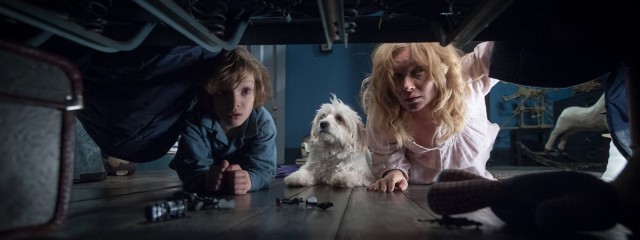
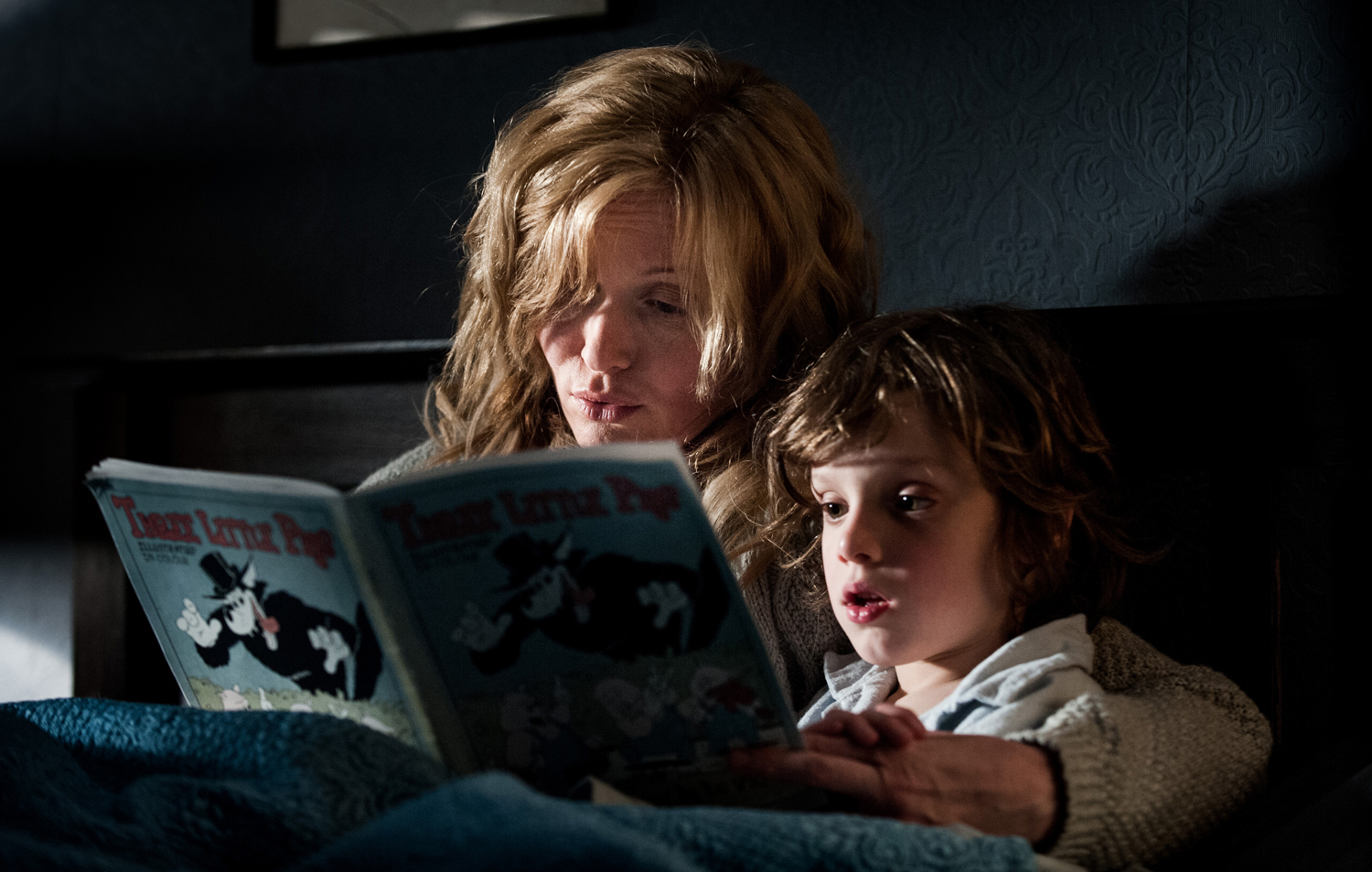
A mother (Essie Davis) and her young son (Noah Wiseman) must get past terrible tragedy in The Babadook

THE BABADOOK (Jennifer Kent, 2014)
nitehawkcinema.com
www.thebabadook.com

A sleeper hit at Sundance that was named Best First Film of 2014 by the New York Film Critics Circle, The Babadook is a frightening tale of a mother and her young son — and a suspicious, scary character called the Babadook — trapped in a terrifying situation. Expanded from her 2005 ten-minute short, Monster, writer-director Jennifer Kent’s debut feature focuses on the relationship between single mom Amelia (Essie Davis), who works as a nursing home aide, and her seemingly uncontrollable six-year-old son, Samuel (Noah Wiseman), who is constantly getting into trouble because he’s more than just a little strange. Sam was born the same day his father, Oskar (Ben Winspear), died, killed in a car accident while rushing Amelia to the hospital to give birth, resulting in Amelia harboring a deep resentment toward the boy, one that she is afraid to acknowledge. Meanwhile, Sam walks around with home-made weapons to protect his mother from a presence he says haunts them. One night Amelia reads Sam a book that suddenly appeared on the shelf, an odd pop-up book called Mister Babadook that threatens her. She tries to throw it away, but as Sam and the book keep reminding her, “You can’t get rid of the Babadook.” Soon the Babadook appears to take physical form, and Amelia must face her deepest, darkest fears if she wants she and Sam to survive.

Writer-director Jennifer Kent brings out classic horror tropes in her feature debut, the sleeper hit THE BABADOOK

Writer-director Jennifer Kent explores classic horror tropes in her feature debut, the sleeper hit The Babadook

The Babadook began life as a demonic children’s book designed by illustrator Alex Juhasz specifically for the film — and one that was available in a limited edition, although you might want to think twice before inviting the twisted tome into your house. The gripping film, shot by Polish cinematographer Radek Ladczuk in subdued German expressionist tones of black, gray, and white with bursts of other colors, evokes such classic horror fare as Stanley Kubrick’s The Shining, Roman Polanski’s Repulsion, and Edgar Allan Poe’s The Fall of the House of Usher, where place plays such a key role in the terror. The Babadook itself is a kind of warped combination of the villains from F. W. Murnau’s Nosferatu, Robert Wiene’s The Cabinet of Dr. Caligari, and Hideo Nakata’s Ringu. Kent, a former actress who studied at Australia’s National Institute of Dramatic Art with Davis, lets further influences show in the late-night television Amelia is obsessed with, which includes films by early French wizard Georges Méliès. But the real fear comes from something that many parents experience but are too ashamed or embarrassed to admit: that they might not actually love their child, despite trying their best to do so. At its tender heart, The Babadook is a story of a mother and son who must go through a kind of hell if they are going to get past the awful way they were brought together.