Saul Rubinek will be at the Museum of Jewish Heritage for two very special, deeply personal evenings
Who:Saul Rubinek,Annette Insdorf,Caroline Aaron What:“All in the Telling — a somewhat true story” Where:Museum of Jewish Heritage, Edmond J. Safra Plaza, 36 Battery Pl. When: Wednesday, March 25, and Thursday, March 26, $18, 7:30 Why: Last fall, Genie Award winner Saul Rubinek brought his one-man show, Playing Shylock, a melding of the Bard’s Merchant of Venice and Rubinek’s own life, to the Polonsky Shakespeare Center in Fort Greene. The Jewish Canadian Rubinek, who was born in a German refugee camp in 1948 and later raised in Canada — and whose parents were Holocaust survivors — is now coming to Manhattan to present two special evenings at the Museum of Jewish Heritage. On March 25 and 26, he will perform excerpts from and sign copies of his new novel, All in the Telling: a somewhat true story (Redwood, $24.99), described as “a true story of miraculous survival, a murder mystery, an operatic family drama, and undying romance,” inspired by his parents’ real-life experiences.
The reading will be accompanied by clips from his 1987 documentary, So Many Miracles, in which Rubinek takes his mother and father back to Poland to reunite with the farmers who hid them during the Holocaust. The first night will be followed by a conversation with Columbia University School of the Arts film professor Annette Insdorf (Indelible Shadows: Film and the Holocaust), while the second night will conclude with a discussion with actress Caroline Aaron (The Marvelous Mrs. Maisel,Between the Temples). Rubinek, who has starred in such films as Joel and Ethan Coen’s The Ballad of Buster Scruggs, Clint Eastwood’s Unforgiven, Tony Scott’s True Romance, and Ralph L. Thomas’s Ticket to Heaven, is a master storyteller who knows how to command an audience, so these programs promise to be memorable events.
[Mark Rifkin is a Brooklyn-born, Manhattan-based writer; you can follow him on Substack here.]
Who:Janet Biggs,Mary Lucier,Shaun Leonardo,Marka27,Pablo Helguera What: Public art campaign benefit for Art at a Time Like This Where:Cristin Tierney Gallery, 49 Walker St. When: Thursday, March 27, minimum donation $150 ($75 for artists), 6:00 – 9:00 Why: Only a few days into the pandemic lockdown in March 2020, independent curator and author Barbara Pollack and artist agent Anne Verhallen took action, starting the nonprofit Art at a Time Like This (ATLT), dedicated to the idea that “art can make a difference and that artists and curators can be thought-leaders, envisioning alternative futures for humanity.” Art at a Time Like This has presented two dozen online and in-person exhibitions and programs since then, including “Dangerous Art, Endangered Artists,” “Rupture: Interventions of Possibility,” and “Don’t Look Now: A Defense of Free Expression.”
On March 27, ATLT will be celebrating its sixth anniversary, at the Cristin Tierney Gallery on Walker St., with a three-hour evening of cocktails, conversation, and a call to action, featuring four impressive speakers: artists Janet Biggs, Mary Lucier, Shaun Leonardo, and Marka27, with Pablo Helguera serving as moderator. The event is hosted by Leonardo Bravo, Andy Cushman, Helina Metaferia, Marilyn Minter, Gina Nanni, Megan Noh, Eric Shiner, and Cristin Tierney.
“At the very beginning of a worldwide pandemic, we asked a simple question: How can you think of art at a time like this?” Pollack tells twi-ny. “The question is now more relevant than ever, which presents both a tragedy and an opportunity for creative solutions.”
The next creative solution for ATLT is the exhibition “Take One Action,” which the organization considers “an antidote” for what is happening around the globe today. All artists are invited to submit one artwork, along with a suggested action to help protect and preserve our democracy — with an eye toward the midterm elections. Select contributions will be printed and wheatpasted across the city and/or appear in an ever-growing digital exhibit.
“Barbara and Anne responded to the pandemic with amazing speed, care, and inclusiveness by asking a question: ‘How can you think of art at a time like this?’ The overwhelming response was: ‘How can you not?’” explains Biggs, a research-based interdisciplinary artist known for her immersive work in video, film, and performance. “They have continued to ask that question in the face of ongoing trauma, injustice, and upheaval, and artists have continued to answer with work that is engaged, compassionate, and necessary. That is why Art at a Time Like This — and its programming — is so essential.”
Admission is a minimum donation of $150 ($75 for artists) for what should be a fascinating gathering of thought-leaders who will not just be honoring the success of ATLT but continuing the fight to use art to make a difference.
[Mark Rifkin is a Brooklyn-born, Manhattan-based writer; you can follow him on Substack here.]
Christian Petzold will discuss Miroirs No. 3 as part of Art House Cinema Week
ART HOUSE CINEMA WEEK NEW YORK
Multiple venues
March 20-26 www.arthouseny.org
Frustrated by how many Oscar-nominated films you never heard of? Well, that means you don’t frequent many of New York’s art houses, where you can find the best in foreign-language films, documentaries, indies, and more.
The city is trying to rectify that with the inaugural Cinema Week, sponsored by the NYC Mayor’s Office of Media and Entertainment (MOME) and Art House New York (AHNY). Running March 20-26, the festival comprises special events and low-priced screenings at nearly thirty local institutions, including Alamo Drafthouse Brooklyn, the Angelika, Anthology, DCTV’s Firehouse Cinema, the Marlene Meyerson JCC Manhattan, Maysles Documentary Center, Metrograph, Nitehawk Cinemas, and the Paris Theater.
“Cinema Week is a chance to celebrate the local, curated, and community-oriented cinemas across our city that help New York feel like New York,” AHNY cofounder Allason Leitz said in a statement. “We look forward to welcoming new and returning audiences and together making Cinema Week a reminder of why these spaces matter as a cultural cornerstone of New York City. Our cinemas’ unwavering commitment to gathering people in real life, around complex stories and collective discussion, is an essential element to the future of our city, democracy, and daily lives.”
A central initiative is offering five thousand free tickets to New Yorkers, which can be picked up at the box office. You can also buy tickets in advance.
“These tickets will make it easier for working New Yorkers to enjoy these incredible films, and they will provide a boost for our local theaters and small businesses supporting the festival. Access to arts, culture, and entertainment should be a right for every New Yorker, not a luxury for the few,” Deputy Mayor for Economic Justice Julie Su added.
Below are only some of the highlights.
Friday, March 20
Sad Girl Cinema Club: Melancholia (Lars Von Trier, 2011), Alamo Drafthouse Brooklyn, $19.18, 11:10 am
Tales of the Immigrant City: In America (Jim Sheridan, 2002), with guest speaker Colum McCann, Uptown Film Center at the New York Historical, free – $12, 6:30
Black and White (James Toback, 1999), followed by a Q&A with filmmakers and cast members, Cinema Village, $16.19, 7:00
Esta Isla (Cristian Carretero & Lorraine Jones, 2025), followed by a Q&A with the directors, Village East by Angelika, $21.19, 7:20
Saturday, March 21
The Murray Center at 10: Future of Documentary Secret Screening, followed by a panel discussion with Sergei Loznitsa, Stephen Maing, Meg Vatterott, Farihah Zaman, Chris Boeckmann, Jason Ishikawa, and Yance Ford, moderated by Robert Greene, Metrograph, $18, 1:00
Miroirs No. 3 (Christian Petzold, 2025), followed by a Q&A with Christian Petzold and discount concessions, Film at Lincoln Center, $21, 6:00
Stephanie Barber: Jhana and the Rats of James Olds or 31 Days / 31 Videos, with a talk and performance by Stephanie Barber, Anthology Film Archives, $14, 7:00
Sunday, March 22
Debra Granik: Unseen America — Conbody vs Everybody (Debra Granik, 2024), With Debra Granik in person, Cinema Arts Centre, $18, noon
Stink-O-Vision show: Dead Lover (Grace Glowicki, 2025), followed by a Q&A moderated by John Early, IFC Center, $19.95, 7:00
Monday, March 23
“Built to Move: NYC Subway on Film Series” — The Wreck of the New York Subway (1969 newsreel), Elevator Pitch (Martyna Starosta, 2020), and End of the Line (Emmett Adler, 2021), DCTV’s Firehouse Cinema, $10, 7:00
Sneak Preview Screening: Something Very Bad Is Going to Happen (Netflix, 2026), followed by a conversation with series creator Haley Z. Boston and cast members Camila Morrone and Adam DiMarco, moderated by Josh Horowitz, Paris Theater, free tickets available in advance, 7:00
Tuesday, March 24 Will (Jessie Maple, 1981), followed by a Q&A with E. Daniel Butler and Audrey Maple Snipes, Maysles Documentary Center, free – $15, 7:00
Wednesday, March 25
The Young Film Forum (YFF) Archive Dive: The Same River Twice (Robb Moss, 2003), introduced by Joel Coen and Frances McDormand, Film Forum, $17, 6:30
Reel Sisters & BAM present An Evening of Shorts Honoring Women’s History Month, BAM, $17, 7:00
Early Access: The Six Billion Dollar Man: Julian Assange and the Price of Truth (Eugene Jarecki, 2025), followed by a Q&A with Eugene Jarecki, Angelika, $21.99, 7:30
Brooklyn Horror Film Festival — Live Sound Cinema: Faust (F. W. Murnau, 1926), with live score by the Flushing Remonstrance, Nitehawk Williamsburg, $24, 9:30
Thursday, March 26
March Melodrama: All About My Mother (Pedro Almodóvar, 1999), introduced by filmmaker Tristan Scott-Behrends, Quad Cinema, $20.19, 6:10
[Mark Rifkin is a Brooklyn-born, Manhattan-based writer; you can follow him on Substack here.]
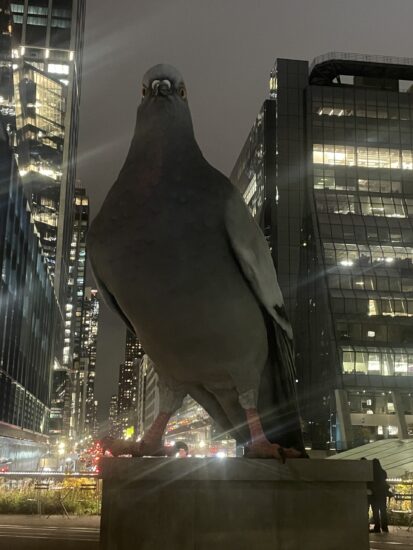
Iván Argote’s Dinosaur will be flying off from the High Line soon (photo by twi-ny/mdr)
FAREWELL, DINOSAUR
High Line Plinth on the High Line Spur
Thirtieth St. at Tenth Ave.
Friday, March 21, free, noon – 4:00 www.thehighline.org
It promises to be the biggest send-off for a New York City pigeon ever.
On June 14, 2025, the High Line welcomed Iván Argote’s High Line Plinth commission, Dinosaur, with “Pigeon Fest,” a festival celebrating pigeons, urban ecology, and public art on National Pigeon Appreciation Day. The High Line is now saying goodbye to the seventeen-foot-tall, one-ton aluminum pigeon sculpture on March 21 with another party, “Farewell, Dinosaur,” consisting of games, photo ops, and more, with Argote, DJ Tommy Sparks, and Miriam Abrahams, the British multidisciplinary artist who won the Pigeon Impersonation Pageant at the opening. Visitors are encouraged to again come in feather-brained costumes as they play bingo and have Argote sign limited-edition posters.
“The name Dinosaur makes reference to the sculpture’s scale and to the pigeon’s ancestors who millions of years ago dominated the globe, as we humans do today,” the Colombia-born, Paris-based Argote said in a statement. “The name also serves as a reference to the dinosaur’s extinction. Like them, one day we won’t be around anymore, but perhaps a remnant of humanity will live on — as pigeons do — in the dark corners and gaps of future worlds. I feel this sculpture could generate an uncanny feeling of attraction, seduction, and fear among the inhabitants of New York.”
The attraction, seduction, and fear will continue through early April, when Dinosaur will go extinct on the High Line, replaced by Tuan Andrew Nguyen’s The Light That Shines Through the Universe.
[Mark Rifkin is a Brooklyn-born, Manhattan-based writer; you can follow him on Substack here.]
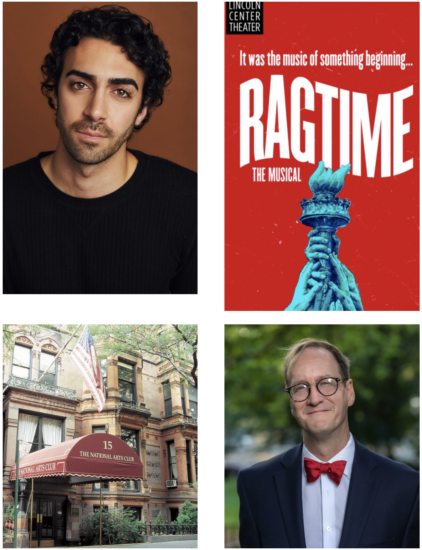
Who:Rodd Cyrus,Carl Raymond What: Inaugural Friday lunch conversation Where:The Coffee House at the National Arts Club, 15 Gramercy Park South When: Friday, March 20, $85, 11:30 am Why: Back in November, I wrote in a Substack post about meeting actor Rodd Cyrus after seeing Ragtime at Lincoln Center; I was there with a group of women from Wellesley organized by Rodd’s mother. Cyrus plays Harry Houdini, who enters by dangling on a wire and declaring, “He made his mother proud.”
Now you can meet Cyrus as well when he is the special guest at the inaugural Coffee House Club lunch at the National Arts Club. He will be interviewed by writer, lecturer, tour guide, and social and culinary historian Carl Raymond, host of the Gilded Gentleman podcast.
Cyrus was born in Boston and raised in the San Francisco Bay Area and is of Iranian-English-Irish-Welsh-Italian-American heritage. In addition to starring in Ragtime, he is a regular on Elsbeth, has appeared in such plays as James Joyce’s Exiles and Maija García’s Valor and such films as Doctor, Doctor and 72 Hours, and portrayed Giuseppe Naccarelli in The Light in the Piazza at Encores!
“Rodd’s story is not only a great theatrical story; it’s a uniquely American story,” Raymond told twi-ny. “To be playing the role of immigrant superstar Harry Houdini in this revival along with his own personal story makes his portrayal unique and deeply important.”
The prix fixe lunch includes beet and mixed green salads, a choice of a turkey club sandwich, mushroom power bowl, rigatoni alla Bolognese, or chicken Marsala, and nostalgic sweets for dessert.
Only a few tickets remain to be part of this exciting event.
[Mark Rifkin is a Brooklyn-born, Manhattan-based writer; you can follow him on Substack here.]
MABOU MINES CINEMA
Anthology Film Archives
32 Second Ave. at Second St.
March 13 – March 19 www.anthologyfilmarchives.org
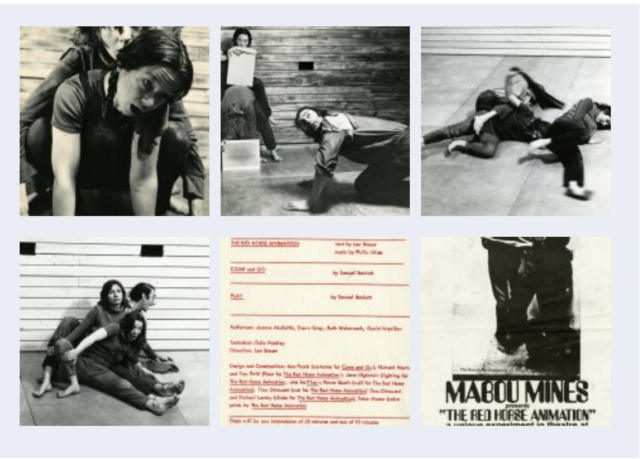
“Do I owe a debt to the cinema?” a character asks in Lee Breuer’s 1974 forty-minute video The Red Horse Animation, part of the weeklong Anthology Film Archives series “Mabou Mines Cinema.”
Actually, lovers and creators of experimental avant-garde film and theater owe a huge debt to Mabou Mines.
Founded in 1970 by Breuer, JoAnne Akalaitis, Philip Glass, Ruth Maleczech, and David Warrilow, Mabou Mines has been presenting unique, wholly original live works onstage for more than half a century, but the collective, currently under the artistic leadership of Mallory Catlett, Karen Kandel, and Carl Hancock Rux, also has a long history of low-budget DIY films that pushed the boundaries of what cinema can be.
From March 13 to 19, Anthology will be screening nine films across seven programs, with numerous shows followed by Q&As with special guests. Perhaps the most unusual work in the series is the theatrical premiere of Jill Godmilow’s 2001 Mabou Mines’ Lear ’87 Archive (Condensed), a nearly six-hour documentary of the making of the troupe’s 1990 adaptation of Shakespeare’s King Lear, which won multiple Obies and starred Maleczech as Lear, Greg Mehrten as the Fool, Ellen McElduff as Elva, Bill Raymond as Goneril, Ron Vawter as Regan, and Lute Ramblin’ as Cordelion. It will be shown in two parts; the March 14 show will be followed by a Q&A with Mehrten and journalist Alisa Solomon.
In Godmilow’s 1984 hybrid Far from Poland, the director, who passed away last September at the age of eighty-two, is determined to make a documentary about the Polish Solidarity movement despite being denied a visa, so she takes viewers behind the scenes into her process as she discusses the possibilities with Mark Magill, incorporates archival news footage, and re-creates interviews with Anna Walentynowicz (played by Ruth Maleczech), Elzbieta Komorowska (Hanna Krall), reporter Barbara Lopienska (Honora Fergusson), government censor K-62 (Bill Raymond), Polish dictator Wojciech Jaruzelski (David Warrilow), journalist Richard Fraser (John Fitzgerald), and shipyard worker Adam Jarewski (Mark Margolis). The March 17 screening will be followed by a Q&A with film historian Susan Delson and film scholar Ricky Herbst.
In 2009, I saw Mabou Mines Dollhouse at St. Ann’s Warehouse; in my review, I wrote, “Winner of two Obies — for director (and company cofounder) Lee Breuer and star Maude Mitchell — this unique reimagination of Henrik Ibsen’s controversial 1879 feminist classic features three leading men who are all under four and a half feet tall, with the three main women approaching six feet, immediately calling into question issues of strength, power, and social status.” The previous year, Breuer directed a film of the stage work, which Anthology will be screening on March 15 at 7:45, followed by a Q&A with professor Olga Taxidou and co-adaptor Mitchell.
The series was programmed by Breuer’s son Mojo Lorwin; below is a look at other highlights.
Mojo Lorwin finishes his father’s film, Moi-même, after more than half a century
MOI-MÊME (Mojo Lorwin & Lee Breuer, 1968/2024)
Friday, March 13, 6:30
Wednesday, March 18, 6:30 www.anthologyfilmarchives.org
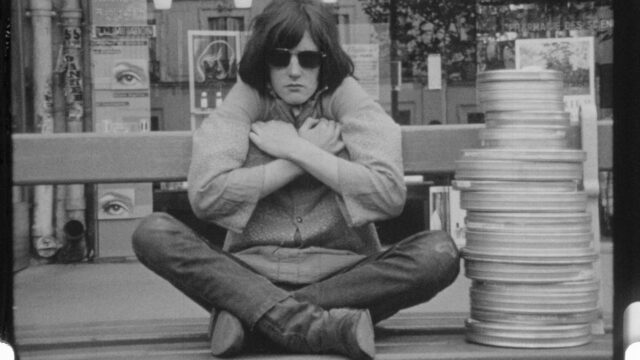
In 1968, experimental theater director, playwright, and poet Lee Breuer began making a black-and-white improvised film during the May 1968 Paris riots, where he was living at the time. He and cinematographer John Rounds shot the footage but never added sound, edited it, or wrote a script. In 1970, Breuer cofounded the seminal New York City company Mabou Mines with Philip Glass, Ruth Maleczech, JoAnne Akalaitis, David Warrilow, and Frederick Neumann, winning numerous Obies among other accolades over the next half century, but he never finished the movie, which itself is about making a movie.
Breuer died in January 2021 at the age of eighty-three; one of his children, Mojo Lorwin, decided to complete the project, hiring voice actors and musicians and serving as writer, director, editor, and producer. The result is the hilarious Nouvelle Vague satire Moi-même (“Myself”), a sixty-five-minute foray into the world of François Truffaut, Jacques Rivette, Jean-Pierre Melville, Agnès Varda, William Klein, and Jean-Luc Godard, who makes a cameo, walking backward as Kevin shares a series of statements ending with “Everything is a movie.”
Kevin Mathewson stars as Kevin (voiced in 2024 by Declan Kenneally), an adolescent who is making a film with his alter ego (Patrick Martin). As he proceeds around town, he meets up with a strange driver (executive producer Russ Moro / 2024 composer Olivier Conan), a movie producer (Frederick Neumann / David Neumann, Frederick’s son), a starlet (Ginger Hall / Clove Galilee, Breuer and Maleczech’s daughter), the son of a baron (Warrilow / David Neumann), an Italian heiress (Renata / Tessie Herrasti), a revolutionary actress (Anna Backer / Tiera Lopper), her replacement (Judy Mathewson, Kevin’s younger sister / Ruma Breuer, Lee’s granddaughter), a sleazy agent (Mark Smith / Alon Andrews), a couple of goons (Pippo and Mike Trane / Frier McCollister), and the owner of a film shop (Lee Pampf / Thomas Cabus). He is often accompanied by his conscience (Maleczech / Alexandra Zelman-Doring) as he faces financial and creative crises.
Lorwin has fun with cinematic and societal tropes while maintaining the underground, DIY feel; for example, he doesn’t match the dialogue exactly to the movement of the characters’ mouths as they make such proclamations as “The movies aren’t fair,” “The movies are a game and everyone who plays is a cheater,” and “All I want is to be seen and heard.” The soundtrack consists of unexpected sound effects and songs and music by Frank LoCastro, Alex Klimovitsky, Eliot Krimsky, Conan, and others.
There’s lots of drinking and smoking, violent shootings, political ranting, discussions of art and love, vapid gatherings, a heist, a touch of psychedelia, and superfluous nudity, nearly everything you could possibly want in a French film.
“Film costs money, more than you’ve got,” the driver barks at Kevin. “Producers are perverts,” Kevin tells the actress while preparing a baby bottle of milk. Unable to afford film reels, Kevin says, “Film is more expensive than love and revolution.”
Describing the film to the agent, Kevin explains, “Here it is: It’s me, but it’s not me. You dig? I mean, it’s the film adaptation of me. I just need a little bread to turn boring old me into moi-même. Feels like doors are finally opening for me.” He delivers the last line as a door opens in front of him.
Perhaps the most important line of dialogue is given to Kevin from a man on the street, who tells him, “There are no rules.” I would add, “Viva la revolución!”
Moi-même is being shown March 13 and 18 at 6:30 at Anthology Film Archives and will be followed by Q&As with professor emeritus Arthur Sabatini, Kevin Mathewson, and Lorwin.
The Red Horse Animation captures a live Mabou Mines performance with cinematic additions
THE RED HORSE ANIMATION (Lee Breuer, 1974) / B. BEAVER ANIMATION (Lee Breuer, Chris Coughlan, and Craig Jones, 1979) / SISTER SUZIE CINEMA (Lee Breuer, 1982)
Friday, March 13, 8:45
Wednesday, March 18, 8:30 www.anthologyfilmarchives.org
The second program in the “Mabou Mines Cinema” series brings together a trio of cutting-edge shorts that embody the Mabou Mines approach to art while challenging the audience to adjust their expectations. The thirty-eight-minute Horse Animation captures Mabou Mines’ inaugural production, a piece that melds together movement, music, and text by Breuer that is a kind of manifesto as JoAnne Akalaitis, Ruth Maleczech, and David Warrilow crawl over one another across the floor, recite words in robotlike fashion (“I’m not myself. How in my illness I see something, my life, somewhere. And now it comes to me that I am a representation”), laugh, and turn into ghostlike digital projections by DeeDee Halleck, whose camera shoots the rest of the film in grainy black-and-white from a multitude of angles; the live music is by Philip Glass. In a 1970 Guggenheim program note, Breuer wrote about the piece, “The red horse, in its representational form, materializes and falls apart in the course of the performance. It lives in real time. ‘Lives’ in this sense means conveys meaning to its creators and observers. It tries to create its life outside the real performance time. It tries to live in dramatic time.”
In B. Beaver Animation, Breuer, Chris Coughlan, and Craig Jones zoom close in on Fred Neumann as he delivers a thirty-minute monologue about floods, snow, beavers, and dams; when he says early on, “To be specific, a force of nature,” he could be speaking about himself as he tears through the words like he’s in a race against time, with stutters and occasional breaks so he — and the audience — can catch a breath until he slows down for the dramatic finale.
And in Sister Suzie Cinema, the a capella quintet 14 Karat Soul performs gospel-tinged doo-wop songs while in a movie theater, the flickering light illuminating them in the darkness until they take flight in a nineteen-minute cinematic fantasia directed by Breuer in muted colors and written by Breuer and composer Bob Telson. The March 18 screening will be followed by a Q&A with Carl Hancock Rux, Telson, and singer Glenny T of 14 Karat Soul.
Dead End Kids is an unusual, haunting look at nuclear war from JoAnne Akalaitis
OTHER CHILDREN (JoAnne Akalaitis, 1979) / DEAD END KIDS: A HISTORY OF NUCLEAR POWER (JoAnne Akalaitis, 1986)
Monday, March 16, 7:00
Thursday, March 19, 7:00 www.anthologyfilmarchives.org
Other Children, JoAnne Akalaitis’s first film and not a Mabou Mines production, is a visually rich, poetic adaptation of Jane Bowles’s last work of fiction, the coming-of-age short story “A Stick of Green Candy.” The nineteen-minute film was shot in Cape Breton, Nova Scotia, in a small house, on the streets, and at a rocky clay pit. Juliet Glass stars as Mary, Erik Moskowitz as Franklin, George Rosenblatt as her father, and Joan Jonas as his mother; the verbatim dialogue is overdubbed by Glass, Moskowitz, Bill Raymond as the man, and Ellen McElduff as the woman and features such gems as this from Franklin’s mother: “I’d rather have a girl than a boy. There’s nothing much I can discuss with a boy. A grown woman isn’t interested in the same things a boy is interested in. My preference is discussing furnishings. Always has been. I like that better than I like discussing styles. I’ll discuss styles if the company wants to, but I don’t enjoy it nearly so well. The only thing about furnishings that leaves me cold is curtains. I never was interested in curtains, even when I was young. I like lamps about the best. Do you?” Jacki Ochs’s camera lovingly follows Mary, bringing her imaginary adventures to life as she leads an army of mountain-goat fighters, with gentle editing by David Hardy. In a rare title card with narration from the original story, we are told, “All at once she had had the fear that by looking into her eyes the soldiers might divine her father’s existence. To each one of them she was like himself — a man without a family.” The 16mm film, which was restored in 2022, concludes with the Hackberry Ramblers’ jaunty Cajun country instrumental “Just Once More.”
Other Children is screening on March 16 and 19 with Akalaitis’s 1986 feature Dead End Kids: A History of Nuclear Power, which captures Akalaitis’s Obie-winning 1980 play that incorporates numerous elements as it assesses the future of the world, with a cast that includes McElduff, Ruth Maleczech, Terry O’Reilly, Greg Mehrten, Fred Neumann, Glass, and Lee Breuer and Maleczech’s children Clove Galilee and Lute Ramblin’ in addition to David Byrne, who composed the synth soundtrack. The March 19 screening will be followed by a Q&A with journalist Don Shewey and McElduff.
Meanwhile, Mabou Mines is still going strong, having recently staged Samuel Beckett’s All That Fall, directed by Akalaitis, with such promising upcoming shows as the opera Barcelona, Map of Shadows and Rux’s Etudes.
[Mark Rifkin is a Brooklyn-born, Manhattan-based writer and editor; you can follow him on Substack here.]
“I think cinema, movies, and magic have always been closely associated. The very earliest people who made film were magicians,” Francis Ford Coppola said. In its sixth annual collaboration with BAM, Triple Canopy celebrates that connection with “Magic,” a weeklong selection of programs, curated by Yasmina Price, that explores the illusion inherent in the medium.
Among the highlights are “Rituals for the Dead and Living,” consisting of short works by Noor Abed, Maya Deren, Kenneth Anger, and Ulysses Jenkins; such all-time favorites as Dario Argento’s Suspiria, Alain Resnais’s Last Year at Marienbad, and Charles Burnett’s To Sleep with Anger; such sleepers as Apichatpong Weerasethakul’s Mysterious Object at Noon, Sergei Parajanov and Dodo Abashidze’s The Legend of Suram Fortress, Raúl Ruiz’s Three Crowns of the Sailor, and Mohsen Makhmalbaf’s Gabbeh; and “Tricks, Spirits, and Flickering Lights,” featuring shorts by Walter R. Booth, Alice Guy-Blaché France, Gaston Vell, Christopher Harris, Ken Jacobs, Rea Tajiri, John Baldessari, and Cynthia Maughan.
On March 7 at 7:00, “A Night with Alex Tatarsky” will feature the American performance artist will explore “movement writing” in a special lecture-séance.
Below is a look at some of the films.
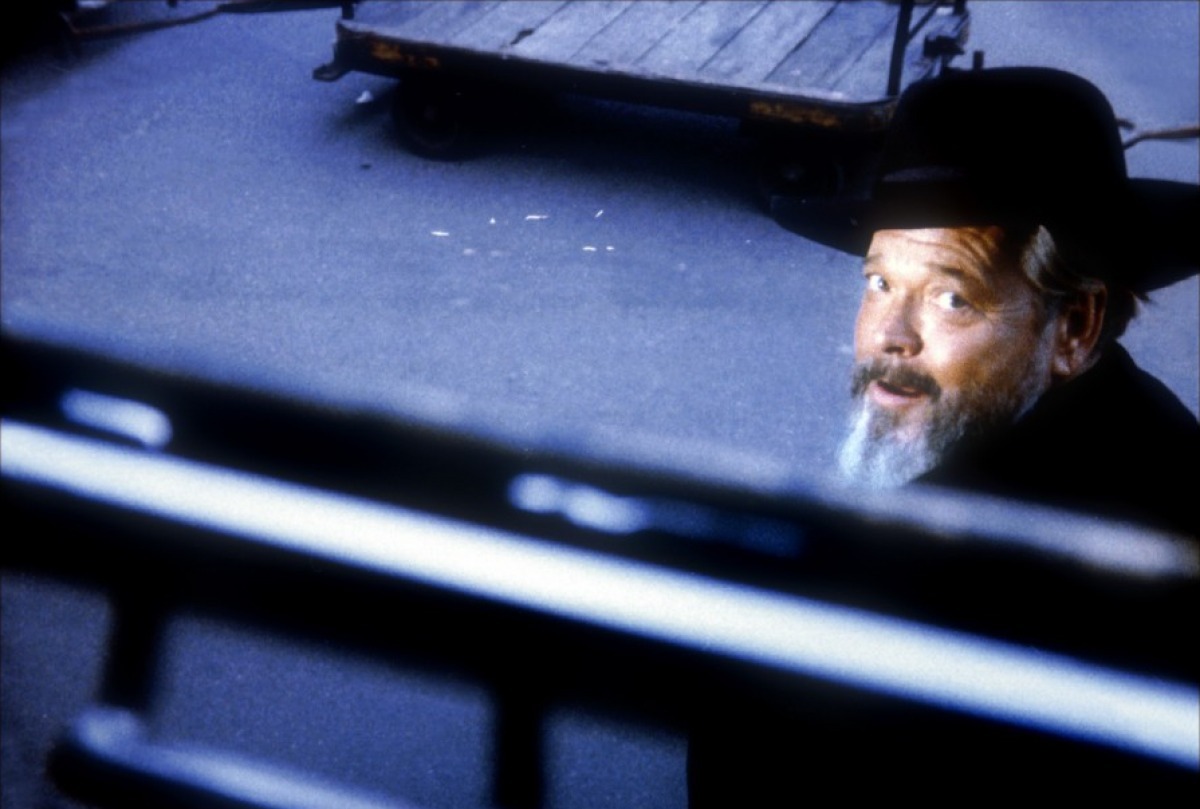
Orson Welles explores cinematic reality and artistic forgery in F for Fake
F FOR FAKE (Orson Welles, 1976)
Sunday, March 8, 4:30 www.bam.org
Orson Welles plays a masterful cinematic magician in the riotous F for Fake, a pseudo-documentary (or is it all true?) about art fakes and reality. Exploring slyly edited narratives involving art forger Elmyr de Hory, writer Clifford Irving, Spanish painter and sculptor Pablo Picasso, and reclusive billionaire Howard Hughes, the iconoclastic auteur is joined by longtime companion Oja Kodar and a cast of familiar faces in a fun ride that will leave viewers baffled — and thoroughly entertained. Welles manipulates the audience — and the process of filmmaking — with tongue firmly planted in cheek as he also references his own controversial legacy with nods to such classics as Citizen Kane and The Third Man. It’s both a love letter to the art of filmmaking as well as a warning to not always believe what you see, whether in books, on canvas, or, of course, at the movies.
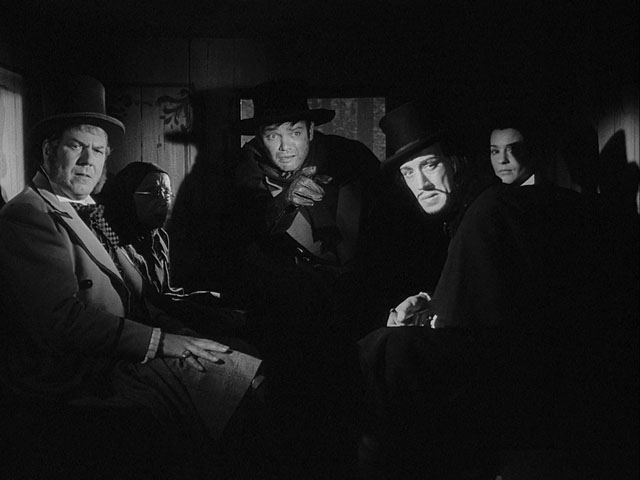
A traveling troupe of illusionists is forced to defend itself in Ingmar Bergman’s The Magician
THE MAGICIAN (ANSIKTET) (Ingmar Bergman, 1958)
Monday, March 9, 8:30
Tuesday, March 10, 4:30 www.bam.org
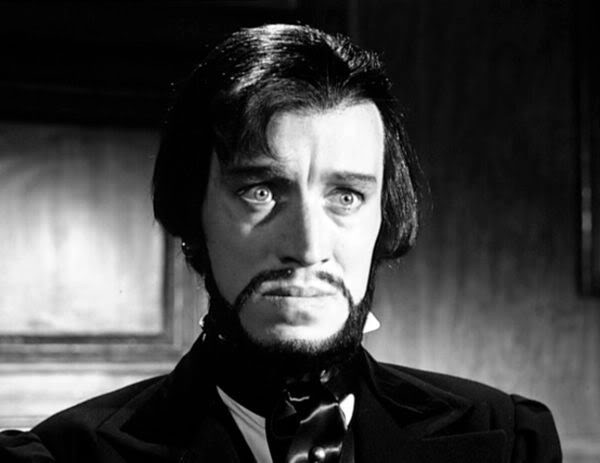
Winner of the Special Jury Prize at the 1959 Venice Film Festival, Ingmar Bergman’s darkly comic 1958 film The Magician is one of the Swedish auteur’s lesser-known, underrated masterpieces, an intense yet funny, and fun, work about art, science, faith, death, and the power of the movies themselves. When Vogler’s Magnetic Health Theater comes to town, the local triumvirate of Dr. Vergérus (Gunnar Björnstrand), police commissioner Starbeck (Toivo Pawlo), and Consul Egerman (Erland Josephson) brings the traveling troupe in for questioning, forcing them to spend the night as guests in Egerman’s home. The three men seek to prove that mesmerist Albert Emanuel Vogler (Max von Sydow), his assistant, Mr. Aman (Ingrid Thulin), a witchy grandmother (Naima Wifstrand), and their promoter, Tubal (Åke Fridell), are a bunch of frauds. The interrogations delve into such Bergmanesque topics as science vs. reason, good vs. evil, life and death, and the existence of God. As various potions are dispensed to and tricks played on a staff that includes maid Sara (Bibi Andersson), cook Sofia Garp (Sif Ruud), and stableman Antonsson (Oscar Ljung) in addition to Starbeck’s wife (Ulla Sjöblom) and Egerman’s spouse (Gertrud Fridh), a series of romantic rendezvous take place, along with some genuine horror, leading to a thrillingly ambiguous ending.
Max von Sydow is mesmerizing as mesmerist and Ingmar Bergman alter ego Albert Emanuel Vogler in The Magician
Von Sydow is mesmerizing as the mesmerist, a silent, brooding man in a sharp beard and mustache, his penetrating eyes a character all their own. (The original title of the film is Ansiktet, which means “Face.”) His showdowns with Dr. Vergerus serve as Bergman’s defense of the art of film itself, an illusion of light and shadow and suspension of belief. Meanwhile, Tubal and wandering drunk Johan Spegel (Bengt Ekerot) add comic relief and a needed level of absurdity to the serious proceedings. The film is superbly shot in black-and-white by cinematographer Gunnar Fischer, maintaining an appropriately creepy and mysterious look throughout. It also introduces character names into Bergman’s canon, appellations such as Vogler, Vergérus, and Egerman, that will show up again in such future works as Persona (with Liv Ullmann as actress Elisabet Vogler, who has stopped speaking, and Björnstrand as Mr. Vogler), Hour of the Wolf (with Thulin as Veronica Vogler, a former lover haunting von Sydow’s painter Johan Borg), Fanny and Alexander (with Jan Malmsjö as Bishop Edvard Vergérus), and After the Rehearsal (with Josephson as theater director Henrik Vogler and Lena Olin as actress Anna Egerman).
[Mark Rifkin is a Brooklyn-born, Manhattan-based writer; you can follow him on Substack here.]