this week in lectures, signings, panel discussions, workshops, and Q&As

WHITE LIGHT FESTIVAL 2019

(photo copyright Hiroshi Sugimoto / courtesy Odawara Art Foundation)

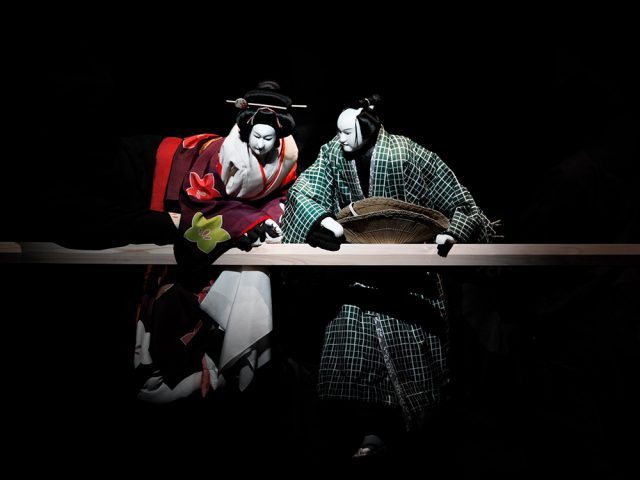
Sugimoto Bunraku Sonezaki Shinju’s The Love Suicides at Sonezaki kicks off Lincoln Center’s tenth annual White Light Festival (photo copyright Hiroshi Sugimoto / courtesy Odawara Art Foundation)

Multiple venues at Lincoln Center
October 19 – November 24, free – $165
212-721-6500
www.lincolncenter.org

Lincoln Center’s multidisciplinary White Light Festival turns ten this year, and it is celebrating with another wide-ranging program of dance, theater, music, and more, running October 19 through November 24 at such venues as the Rose Theater, the Gerald W. Lynch Theater at John Jay College, Alice Tully Hall, and the Church of St. Mary the Virgin. “The resonance of the White Light Festival has only deepened during its first decade, as we have moved into far more challenging times here and around the world,” Lincoln Center artistic director Jane Moss said in a statement. “The Festival’s central theme, namely the singular capacity of artistic expression to illuminate what is inside ourselves and connect us to others, is more relevant than ever. This tenth anniversary edition spanning disparate countries, cultures, disciplines, and genres emphasizes that the elevation of the spirit the arts inspires uniquely unites us and expands who we are.” Things get under way October 19-22 (Rose Theater, $35-$100) with Sugimoto Bunraku Sonezaki Shinju’s The Love Suicides at Sonezaki, a retelling of a long-banned tale by Chikamatsu Monzaemon using puppets, composed and directed by Seiji Tsurusawa, with choreography by Tomogoro Yamamura and video by Tabaimo and artistic director Hiroshi Sugimoto. That is followed October 23-25 by Australia ensemble Circa’s boundary-pushing En Masse (Gerald W. Lynch Theater, $25-$65), directed and designed by Yaron Lifschitz, combining acrobatics and contemporary dance with music by Klara Lewis along with Franz Schubert and Igor Stravinsky.

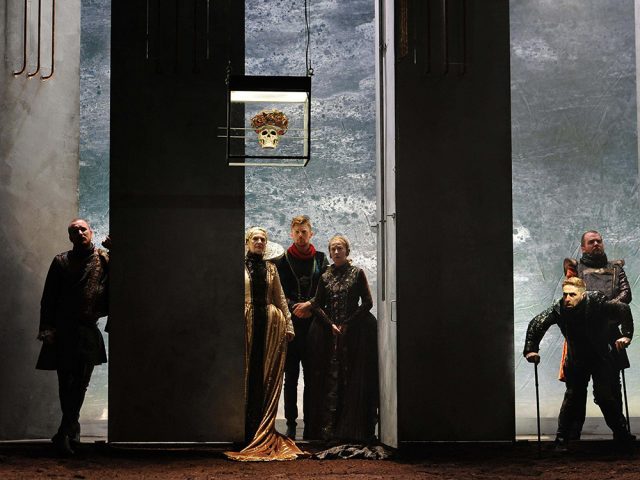
In Zauberland (Magic Land) (October 29-30, Gerald W. Lynch, $35-$95), soprano Julia Bullock performs Schumann’s Romantic song cycle Dichterliebe while facing haunting memories; the text is by Heinrich Heine and Martin Crimp, with Cédric Tiberghien on piano. The set for Roysten Abel’s The Manganiyar Seduction (November 6–9, Rose Theater, $55-$110) is mind-blowing, consisting of more than two dozen Manganiyar musicians in their own lighted rectangular spaces in a giant red box. Last year, Irish company Druid and cofounder Garry Hynes brought a comic Waiting for Godot to the White Light Festival; this year they’re back with a dark take on Richard III (November 7-23, Gerald W. Lynch, $35-$110) starring Aaron Monaghan, who played Estragon in 2018. Wynton Marsalis will lead The Abyssinian Mass (November 21-23, Rose Theater, $45-$165) with Chorale Le Chateau, featuring a sermon by Rev. Dr. Calvin O. Butts III. In addition to the above, there are also several one-time-only events, listed below.
(photo by Robbie Jack)

DruidShakespeare will present Richard III at the White Light Festival November 7-23 (photo by Robbie Jack)

Thursday, October 24
Jordi Savall: Journey to the East, Alice Tully Hall, $35-$110, 7:30

Tuesday, October 29
Mahler Songs, recital by German baritone Christian Gerhahe with pianist Gerold Huber, Alice Tully Hall, $45-$90, 7:30

Thursday, November 7
Stabat Mater by James MacMillan, with Britten Sinfonia and the Sixteen, conducted by Harry Christophers, Alice Tully Hall, $50-$85, 7:30

Saturday, November 9
White Light Conversation: Let’s Talk About Religion, panel discussion with Kelly Brown Douglas, Marcelo Gleiser, James MacMillan, and Stephen Prothero, moderated by John Schaefer, Daniel and Joanna S. Rose Studio, free, 3:00

Sunday, November 10
Goldberg Variations, with pianist Kit Armstrong, Walter Reade Theater, $25, 11:00 am

Wednesday, November 13
Ensemble Basiani: Unifying Voices, Church of St. Mary the Virgin, $55, 7:30

Thursday, November 14
Attacca Quartet with Caroline Shaw: Words and Music, David Rubenstein Atrium, free, 7:30

Sunday, November 17
Tristan and Isolde, Act II, with the National Symphony Orchestra, conducted by Gianandrea Noseda, featuring Stephen Gould as Tristan and Christine Goerke as Isolde, David Geffen Hall, $35-$105, 3:00

Thursday, November 21
Gloria, with the Orchestra of the Age of Enlightenment and its Choir, conducted by harpsichordist Jonathan Cohen, featuring soprano Katherine Watson, countertenor Iestyn Davies, and soprano Rowan Pierce, Alice Tully Hall, $100, 7:30

Sunday, November 24
Los Angeles Philharmonic: Cathedral of Sound, Bruckner’s “Romantic” Symphony, conducted by Gustavo Dudamel, David Geffen Hall, $35-$105, 3:00
69 METS CELEBRATION

69-mets-celebration

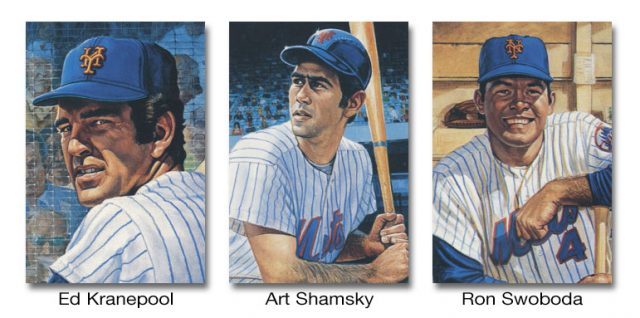
Who: Ed Kranepool, Art Shamsky, Ron Swoboda
What: Fiftieth anniversary celebration of the Mets’ 1969 world championship
Where: Cradle of Aviation Museum, Charles Lindbergh Blvd., Garden City, 516-572-4111
When: Wednesday, October 16, $50-$100, 7:00
Why: Something remarkable shocked the world in the summer and fall of 1969. No, I’m not talking about the lunar landing or Woodstock but something even more amazing: The New York Mets made a seemingly impossible run in August and September to capture the National League pennant and go on to the World Series, where, on October 16, they won Game Five to defeat the heavily favored Baltimore Orioles and become world champions. On Wednesday, October 16, three of the Amazin’s improbable stars, Art Shamsky, Ed Kranepool, and Ron Swoboda, will be in the Cradle of Aviation Museum’s Dome Theater in Garden City to talk about that unlikely victory by a group of misfits based in Queens. General admission is $50; VIP entry of $100 comes with up-front seating and a photo and autograph session.

NEXT WAVE 2019

(photo by Heidrun Lohr)

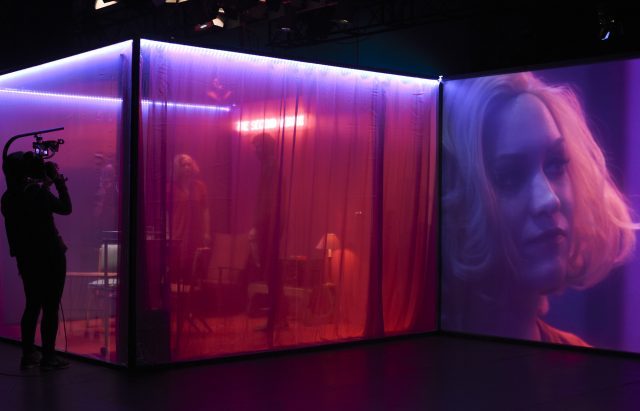
The Second Woman repeats the same scene from John Cassavetes’s Opening Night one hundred times (photo by Heidrun Lohr)

BAM Howard Gilman Opera House, Peter Jay Sharp Building, 230 Lafayette Ave.
BAM Fisher, Fishman Space, 321 Ashland Pl.
October 15 – December 15
718-636-4100
www.bam.org

Like myriad loyal BAMgoers, I look forward every year to the announcement of the Next Wave Festival at the Brooklyn Academy of Music, which has been presenting cutting-edge, experimental, and innovative dance, music, film, theater, opera, and hard-to-categorize multidisciplinary performances from around the world for nearly forty years. We eagerly scour the schedule to see when our longtime BAM favorites will be returning, scanning for such beloved names and companies as Robert Wilson, Sasha Waltz, Grupo Corpo, Batsheva, Philip Glass, Sankai Juku, Ivo van Hove, Mark Morris, Théâtre de la Ville, William Kentridge, Laurie Anderson, and the incomparable Pina Bausch, programmed by masterful executive producer Joe Melillo since 1999.

But this year’s lineup features nary a single familiar name, including that of Melillo, who retired after the Winter/Spring season. For his debut Next Wave Festival, new artistic director David Binder has opted to include a roster of performers all making their BAM debuts as well. But don’t be scared off by the lack of recognition. There was a time when no one in New York had ever seen Pina Bausch, Sankai Juku, Batsheva, Sasha Waltz, et al. And by its very nature, the Next Wave is all about the future of performance, delivered to an eager and intrepid audience open to anything and everything.

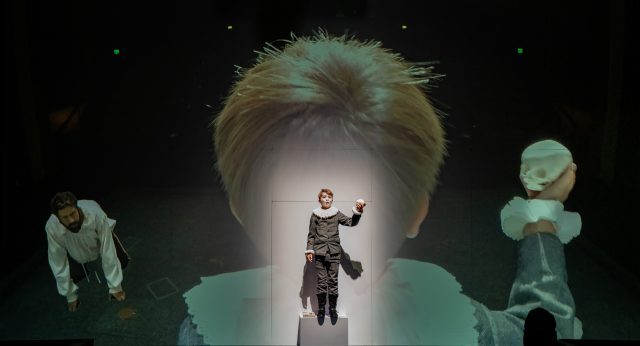
(photo by Ernesto Galan)

Dead Centre’s Hamnet tells the story of Shakespeare’s son (photo by Ernesto Galan)

“In programming my first season at BAM, I was inspired by the genesis of Next Wave and the groundbreaking work of my predecessors, Harvey Lichtenstein and Joe Melillo,” Binder said in a statement. “Next Wave is a place to see, share, and celebrate the most exciting new ideas in theater, music, dance, and, especially, the unclassifiable adventures. We’ve invited a slate of artists who have never performed at BAM. Each and every one of them is making a BAM debut, with artistic work that’s surprising and resonant. I’m excited to launch this season and to build BAM’s next chapter
with you.”

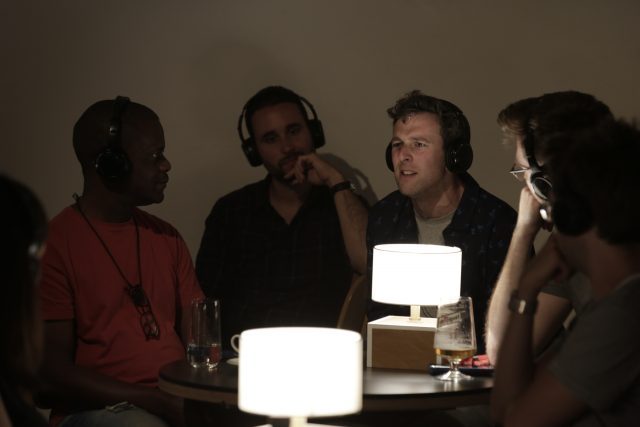
The 2019 Next Wave roster is an impressive one, kicking off October 15-20 with Michael Keegan-Dolan and Teaċ Daṁsa’s Swan Lake / Loch na hEala, about a young girl sexually assaulted by a priest. In The Second Woman, Alia Shawkat performs the same scene from John Cassavetes’s Opening Night one hundred times with one hundred different men over the course of twenty-four consecutive hours. Christiane Jatahy’s What if they went to Moscow? explores film and theater in a retelling of Anton Chekhov’s Three Sisters that takes place concurrently onstage at the BAM Fisher and onscreen at BAM Rose Cinemas, the audiences switching places as the performance repeats. In Dante or Die’s User Not Found, audience members sit in a café at the Greene Grape Annex on Fulton St., following the exploits of a man a few tables away. Dimitris Papaioannou breaks boundaries as he explores human existence in The Great Tamer. And Glenn Kaino’s When a Pot Finds Its Purpose will be the inaugural free exhibition at the new Rudin Family Gallery at BAM Strong.

(photo by Justin Jones)

Dante or Die’s User Not Found takes place in the Greene Grape Annex on Fulton St. (photo by Justin Jones)

The 2019 Next Wave Festival also includes Bruno Beltrão/Grupo de Rua’s Inoah, Dumbworld’s free outdoor art piece He Did What?, Selina Thompson’s free interactive installation Race Cards, Dead Centre’s Hamnet, Marlene Monteiro Freitas’s Bacchae: Prelude to a Purge, Untitled Projects/Unicorn Theatre, UK’s The End of Eddy, Peeping Tom’s 32 rue Vandenbranden, Fuel/National Theatre/Leeds Playhouse’s Barber Shop Chronicles, Kyle Marshall Choreography’s A.D. & Colored, Kate McIntosh’s In Many Hands, and Meow Meow’s A Very Meow Meow Holiday Show. Still worried about unfamiliarity? If you’ve been to BAM before, you should be ready, willing, and able to be surprised, and if you’ve never been to BAM, you should be preparing to make your debut.

NYFF57 SPOTLIGHT ON DOCUMENTARY: THE BOOKSELLERS

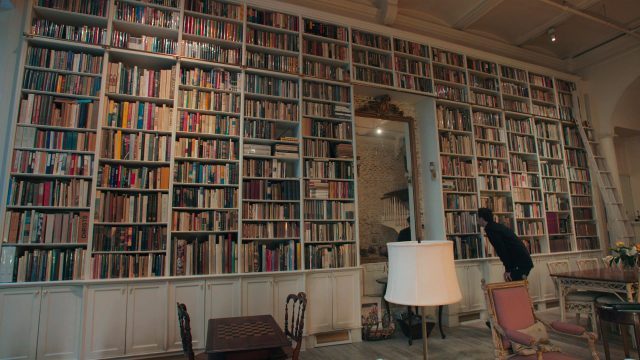
The Booksellers

Rare-book dealers such as Adam Weinberger scour through private homes to find buried treasure in The Booksellers

THE BOOKSELLERS (D. W. Young, 2019)
Film Society of Lincoln Center, Elinor Bunin Munroe Film Center
144 West 65th St. between Broadway & Amsterdam Ave.
Monday, October 7, Francesca Beale Theater, 6:00
Wednesday, October 9, Howard Gilman Theater, 8:30
Festival runs September 27 – October 13
www.filmlinc.org

“There’s so much more to a book than just the reading,” Maurice Sendak is quoted as saying in D. W. Young’s wonderfully literate documentary The Booksellers, screening at the New York Film Festival on October 7 and 9. I have to admit to being a little biased, as I work in the children’s book industry in another part of my life, and I serve as the managing editor on Sendak’s old and newly discovered works. The film follows the exploits of a group of dedicated bibliophiles who treasure books as unique works of art, buying, selling, and collecting them not merely for the money but for the thrill of it. “The relationship of the individual to the book is very much like a love affair,” Americana collector Michael Zinman explains.

Sisters Adina Cohen, Judith Lowry and Naomi Hample, owners of the Argosy Book Store, at the store on East 59th Street in Manhattan

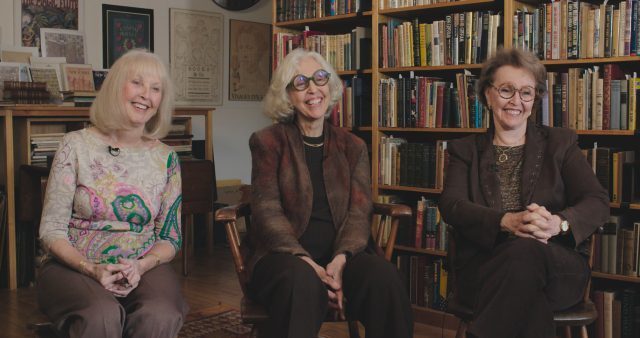
Sisters Adina Cohen, Judith Lowry, and Naomi Hample of Argosy Book Store keep the family legacy alive

In the film, which features narration by executive producer Parker Posey, Young visits the Antiquarian Book Fair at the Park Avenue Armory and speaks with a wide range of intellectual characters, including author and cultural commentator Fran Lebowitz, who relates her experiences in rare-book stores; bestselling writer Susan Orlean, who discusses her archives; leather-bound connoisseur Bibi Mohamed of Imperial Fine Books, who talks about going to her first estate sale; late-twentieth-century specialist Arthur Fournier; Nicholas D. Lowry and Stephen Massey of Antiques Roadshow, the latter of whom was the auctioneer for the most expensive book ever sold, Leonardo Da Vinci’s Hammer codex; sci-fi expert and author Henry Wessells; Justin Schiller, who worked with Sendak and other children’s book authors; Rebecca Romney of Pawn Stars; Jim Cummins, who owns some four hundred thousand books; Erik DuRon and Jess Kuronen of Left Bank Books; Nancy Bass Wyden of the Strand; and Adina Cohen, Naomi Hample, and Judith Lowry, the three sisters who own the Argosy Book Store, continuing the family legacy.

But times have changed, for both good and bad. Dealer Dave Bergman complains, “The internet has killed the hunt,” comparing the excitement of live auctions and the detective-like chase for a title to the boredom of automated online searches and bidding. However, diversity is on the rise, as explored with Kevin Young of the Schomburg Center for Research in Black Culture; Caroline Schimmel, a leading collector of books by women; and hip-hop archivist and curator Syreeta Gates. “I think the death of the book is highly overrated,” Heather O’Donnell of Honey and Wax Booksellers declares. From her mouth. . . . The Booksellers, which is worth seeing solely for Antiques Roadshow appraiser and Swann Auction Galleries president Nicholas D. Lowry’s fab mustache, is screening October 7 at 6:00 and October 9 at 8:30, followed by Q&As with D. W. Young and producers Judith Mizrachy and Dan Wechsler.

NYFF57 MAIN SLATE: THE MONEYCHANGER

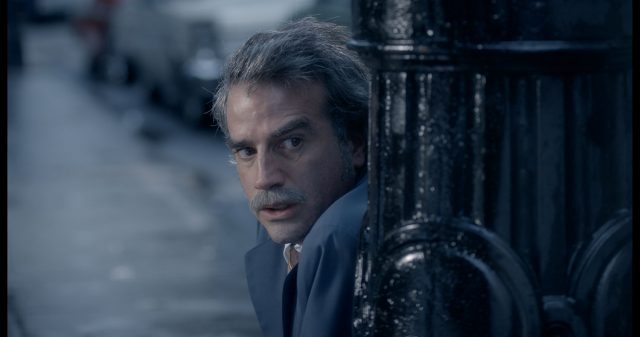
The Moneychanger

Daniel Hendler plays the harried Humberto Brause in Federico Veiroj’s The Moneychanger

THE MONEYCHANGER (Federico Veiroj, 2019)
New York Film Festival, Film Society of Lincoln Center
144/165 West 65th St. between Broadway & Amsterdam Ave.
Wednesday, October 9, Walter Reade Theater, 9:00
Thursday, October 10, Francesca Beale Theater, 6:00
www.filmlinc.org

“Jesus knew what he was doing; at the very cradle of civilization, we money brokers are the root of all evil. We’re to blame for everything that’s rotten in this world,” Humberto Brause (Daniel Hendler) says at the beginning of The Moneychanger, Uruguayan-Spanish writer-director Federico Veiroj’s fifth narrative feature, making its US premiere at the New York Film Festival on October 9 and 10. Hendler is terrific as Brause, playing the selfish, greedy businessman with a jittery unease, a man clearly uncomfortable in his own skin, especially as his world falls apart all around him.

The film begins in the city of Montevideo in 1975 and flashes back to 1956, when Brause is working for successful financier Schwensteiger (Luis Machín) and takes an instant liking to his boss’s daughter, Gudrun (Dolores Fonzi). Schwensteiger might be highly ethical, but his protégé and son-in-law is soon in bed with corrupt politicians, a questionable couple who needs a whole lot of laundry done, and an unclean prostitute. Brause knows he is doing bad things, breaking laws, and jeopardizing his relationship with his family — he moves about awkwardly, hesitant with his words, a kind of schmendrick who keeps being offered piles of cash — but he just can’t say no. “Our goal in life wasn’t to earn our peers’ respect and admiration,” he narrates. “Life was about making money and enjoying it. Enjoy every penny earned and spent. Getting into the garden of Eden was just a small fortune away.” But when his actions start blowing up in his face, he has to decide how far he will go to protect his interests.

Based on Juan Enrique Gruber’s 1979 novella Así habló el cambista, this cinematic satire was written by Veiroj with Martín Mauregui and cinematographer Arauco Hernández, who shoots the film in a droll 1970s palette of browns, blacks, and grays; the splendid period art direction is by Pablo Maestre Galli. Fonzi is static as Gudrun; her passive expression barely changes no matter what is happening. The cast also includes Benjamín Vicuña as extortionist Javier Bonpland, Paulo Betti as political conspirer Don Marins, and Germán de Silva as hit man Moacyr. Veiroj (A Useful Life, The Apostate) maintains an offbeat pace with subtle humor aimed at the absurdity of it all as one man navigates through a business sector gone off the deep end because of rampant deregulation. The Moneychanger is screening at the Walter Reade Theater on October 9 at 9:00 and at the Francesca Beale Theater on October 10 at 6:00, both followed by Q&As with Veiroj.

NYFF57 SPOTLIGHT ON DOCUMENTARY: THE BOOKSELLERS CAPSULE REVIEW

The Booksellers

Rare-book dealers such as Adam Weinberger scour through private homes to find buried treasure in The Booksellers

THE BOOKSELLERS (D. W. Young, 2019)
Film Society of Lincoln Center, Elinor Bunin Munroe Film Center
144 West 65th St. between Broadway & Amsterdam Ave.
Monday, October 7, Francesca Beale Theater, 6:00
Wednesday, October 9, Howard Gilman Theater, 8:30
Festival runs September 27 – October 13
www.filmlinc.org

D. W. Young’s wonderfully literate documentary The Booksellers is making its world premiere at the New York Film Festival, screening on October 7 at 6:00 and October 9 at 8:30, followed by Q&As with D. W. Young and producers Judith Mizrachy and Dan Wechsler. The film follows the exploits of a wide-ranging group of dedicated bibliophiles who treasure books as unique works of art, buying, selling, and collecting them not merely for the money but for the thrill of it. “The relationship of the individual to the book is very much like a love affair,” Americana collector Michael Zinman explains. Among those who share their thoughts on books are Fran Lebowitz, Susan Orlean, and the owners of such New York City bookstores as Imperial Fine Books, Left Bank Books, the Argosy Book Store, and the Strand. Look for my full review to be posted when the film debuts Monday night.
CROSSING THE LINE: WHY?

Kathryn Hunter in Peter Brook and Marie-Hélène Estienne's play 'Why?' at the Bouffes du Nord in Paris, June 2019 Pascal Gely

Kathryn Hunter wonders why in Peter Brook and Marie-Hélène Estienne production about theater itself (photo by Pascal Gely)

Theatre for a New Audience, Polonsky Shakespeare Center
262 Ashland Pl. between Lafayette Ave. & Fulton St.
Through October 6, $85-$120
866-811-4111
www.tfana.org
crossingthelinefestival.org

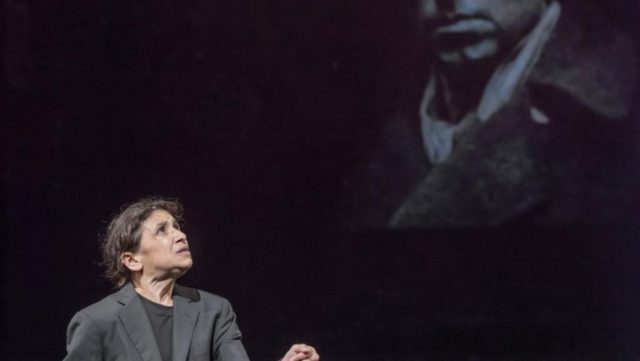
The basic three-letter question “Why?” can be a repeated response, over and over again, from a curious child learning about the world, a deeply philosophical inquiry into human nature, or a painful cry when tragedy occurs. In Peter Brook and Marie-Hélène Estienne’s Why?, continuing at Theatre for a New Audience’s Polonsky Shakespeare Center through October 6, it relates to two queries, general and specific: Why do we make and attend theater, and why did Josef Stalin have theater innovator Vsevolod Meyerhold and his actress wife, Zinaida Reich, brutally killed?

Part of FIAF’s multidisciplinary Crossing the Line Festival, Why? is also the centerpiece of “Peter Brook\NY,” a two-week, two-borough tribute to the ninety-four-year-old theater and film director — he actually prefers being called a “distiller” — an Emmy and two-time Tony winner who has written such books as The Open Door: Thoughts on Acting and Theatre, Tip of the Tongue: Reflections on Language and Meaning, and The Shifting Point: Theatre, Film, Opera 1946-1987 and has directed such plays as Hamlet with Paul Scofield, The Visit with Alfred Lunt and Lynn Fontanne, Marat/Sade, and more recently The Suit, The Prisoner, and The Valley of Astonishment. He is a fixture at TFANA, which is around the corner from the BAM Harvey Theater, which he helped renovate in 1987 for his epic version of The Mahabharata. He and Estienne have been collaborating for more than forty decades, and they know theater.

(photo by Pascal Gely)

Marcello Magni gets serious after clowning around in Why? (photo by Pascal Gely)

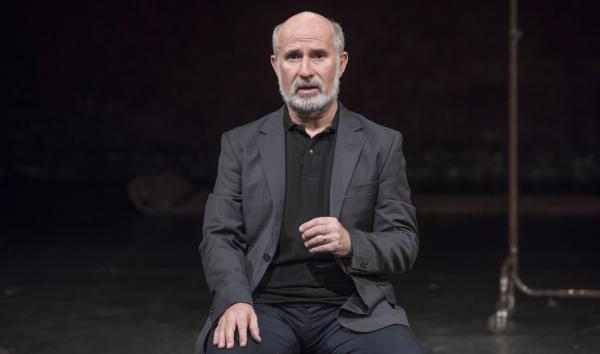
The first half cheerfully explores why there is theater at all, how it came to be, and what can make it so special. The show begins with Hayley Carmichael, Kathryn Hunter, and Marcello Magni, all dressed in black, giving a kind of master class in acting. Highlights include a clownish Magni running around in circles and Hunter wondering how to make the line “My Lord, the carriage awaits” not boring. They interact with the audience, even bringing a few people onstage for some clever improv, and clearly are in love with their chosen profession, just as we are in love with watching them. There’s lots of laughter, accompanied by Laurie Blundell on piano. Theater appears to be a friendly, safe space for everyone.

But in the second act, the trio, still wearing the same costumes, moving about on the same, mostly empty stage (Brook is known for his spare sets, as evidenced by his seminal book The Empty Space — A Book About the Theatre: Deadly, Holy, Rough, Immediate), the trio becomes far more serious, reading letters, news reports, and other documents relating what happened to Stanislavski protégé Meyerhold and Reich when they supported the communist revolution instead of Stalin, who dealt with them in violent, theatrical ways. The harsh tale also involves actor and director Konstantin Stanislavski and poet Vladimir Mayakovsky. “Theater is a dangerous weapon,” Meyerhold famously wrote in the 1920s. Nearly a century later, it still is; it may be able to entertain, educate, and enlighten us, but it is also seen by far too many as a threat, which Brook and Estienne point out in their inimitable, inestimable way.