this week in lectures, signings, panel discussions, workshops, and Q&As

FIRST SATURDAYS: CROSSING ASIAN AMERICA

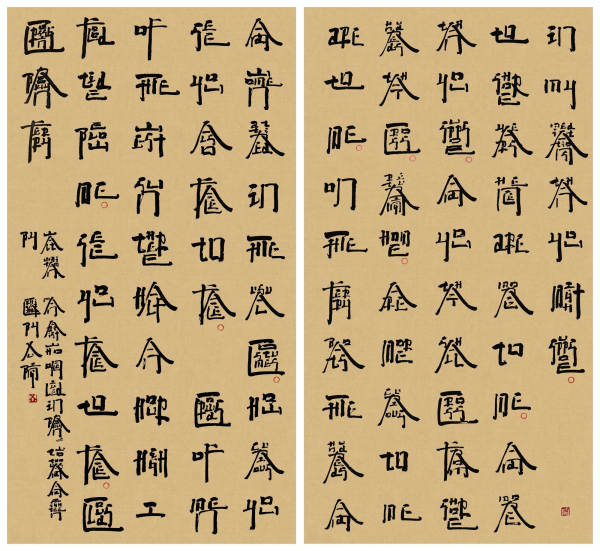
Xu Bing, Square Word Calligraphy: Crossing Brooklyn Ferry, Walt Whitman, ink on paper, 2018

Xu Bing, Square Word Calligraphy: Crossing Brooklyn Ferry, Walt Whitman, ink on paper, 2018 (photo courtesy of the artist)

Brooklyn Museum
200 Eastern Parkway at Washington St.
Saturday, November 2, free (some events require advance tickets), 5:00 – 11:00
212-864-5400
www.brooklynmuseum.org

The Brooklyn Museum parties with Asian pride in the November edition of its free First Saturday program. There will be live performances by the Brooklyn Symphony Orchestra (playing works by Mastora Goya and Chen Yihan, featuring such instruments as the koto, erhu, guzheng, and pipa), Hong Kong-born, Brooklyn raised singer-songwriter Reonda, the Metropolitan Opera (previewing Philip Glass’s Akhnaten with countertenor Anthony Roth Costanzo, the Brooklyn Youth Chorus, Gandini Juggling, and the Philip Glass Institute at the New School’s College of Performing Arts), Collective BUBBLE_T (with DJ sets by Tito Vida and Stevie Huynh, Clara Lu performing “The Butterfly Lovers” on guzheng, and Walang Hiya NYC), Miho Hatori’s New Optimism, and comics Fumi Abe, Karen Chee, Saurin Choksi, Aidan Park, and Irene Tu; a screening of Mountains That Take Wing (C. A. Griffith & H. L. T. Quan, 2009), followed by a talk with community organizer Akemi Kochiyama, granddaughter of one of the film’s subjects; poetry readings by Diannely Antigua, Mark Doty, and Jessica Greenbaum, hosted by Jason Koo, celebrating Walt Whitman, the inspiration behind the exhibition “One: Xu Bing”; teen pop-up talks in the Arts of Japan galleries; a curator tour of the Arts of China galleries and “One: Xu Bing” with Susan L. Beningson; a hands-on art workshop in which participants can make works on paper with brushpens inspired by the calligraphy in Arts of Asia galleries; and a community talk with the W.O.W. Project about the future of Chinatown. In addition, the galleries will be open late so you can check out “Garry Winogrand: Color,” “Nobody Promised You Tomorrow: Art 50 Years After Stonewall,” “JR: Chronicles,” “Pierre Cardin: Future Fashion,” “Infinite Blue,” and more.

I LIKE WHAT I KNOW: AN EVENING OF ART, HORROR, AND FOOD CELEBRATING VINCENT PRICE

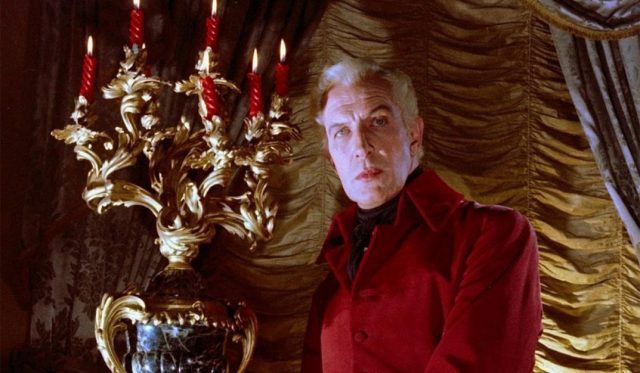
Vincent Price will be celebrated in film, food, and talk at Nitehawk Cinema on October 29

Vincent Price will be celebrated in film, food, and talk at Nitehawk Cinema on October 29

FILM FEAST
Nitehawk Cinema
188 Prospect Park West
Tuesday, October 29, $150, 7:00
nitehawkcinema.com

In addition to being a horror legend, St. Louis-born actor Vincent Price was an art collector and a chef, writing several books with his wife, Mary, including the indispensable A Treasury of Great Recipes, and the Vincent Price Art Museum houses his collection at East Los Angeles College. On October 29, just in time for Halloween, the Prospect Park Nitehawk Cinema will pay tribute to the wide-ranging legacy of the inimitable Price, who passed away in 1993 at the age of eighty-two, with the special one-time-only presentation “I Like What I Know: An Evening of Art, Horror, and Food Celebrating Vincent Price.” Part of Nitehawk’s Film Feast series, the festivities feature short videos of Price’s dedication to art; a conversation with Price’s daughter, author and inspirational speaker Victoria Price, moderated by Nitehawk programmer, curator, and writer Caryn Coleman; a screening of Roger Corman’s 1960 Edgar Allan Poe classic The Fall of the House of Usher, in which Price stars as Roderick Usher; Poe giveaways; and a four-course meal consisting of dishes inspired by the film and Price’s love of cooking, accompanied by wine and cocktails: “The Great Hamlet’s Dagger” (poached shrimp canape served on black bread with Aquavit cream and American paddlefish caviar, chives), “Duck Flambe Belle Terrasse” (roasted duck breast, potato rosti, fine herbs salad, and flambeed cognac sauce), “Kraft Suppe” (braised short rib served with marrow bone, celery and leek gremolata, roasted carrots, spaetzle, and rich beef broth), and tart aux framboise (raspberry tart with Scotch-scented pastry cream).

WAVE HILL: FALL OPERA, NATURE WALKS, PHOTOGRAPHY BOOK

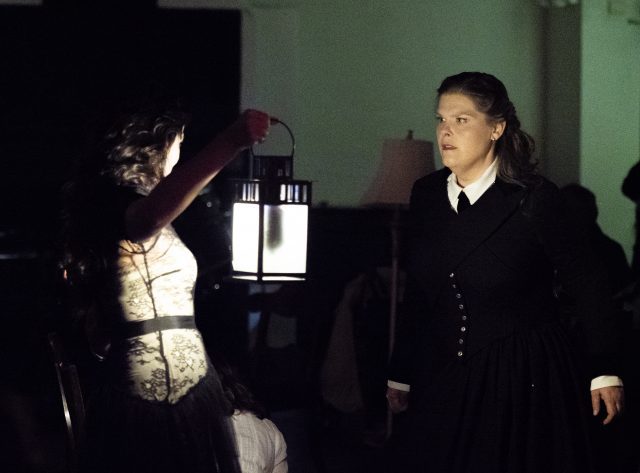
On Site Opera is presenting The Turn of the Screw at Wave Hill (photo by Pavel Antonov)

On Site Opera is presenting The Turn of the Screw at Wave Hill this weekend (photo by Pavel Antonov)

4900 Independence Ave. at West 249th St.
Grounds admission: $10 adults, $6 students and seniors, $4 children 6-18 (free Tuesdays & Saturdays 9:00 am – noon)
The Turn of the Screw: October 25-27, $75
Walks: free with admission unless otherwise noted
www.wavehill.org
osopera.org

There are many ways to experience Wave Hill, the magnificent twenty-eight-acre urban oasis on two former Bronx estates owned by George W. Perkins and transformed by landscape gardener Albert Millard. One of the most unusual, and wonderfully entertaining, is On Site Opera’s adaptation of Benjamin Britten’s 1954 opera The Turn of the Screw, which runs October 25-27, taking place in multiple locations in the Riverdale garden. With a libretto by Mifawny Piper, the chamber opera, based on the 1898 novella by Henry James, is a ghost story set in an English country house where a new governess (Jennifer Check) has arrived to take care of two creepy children, Flora (Ashley Emerson) and her brother, Miles (Jordan Rutter); the house is run by Mrs. Grose (Margaret Lattimore) and is also home to the deceased Peter Quint (Dominic Armstrong), who has a past with Miles, and Miss Jessel (Adriana Zabala), who is uncomfortably close with Flora. The opera begins at the Pergola, overlooking the Hudson River and the Palisades; everyone is given an old-fashioned lantern to carry to light the dark night and help them find their way when the action moves down a path to Wave Hill House, where it continues first in the Mark Twain Room, then in the lovely, cavernous Armor Hall.

The orchestra, conducted by Geoffrey McDonald, features members of the American Modern Ensemble: Max Moston and Victoria Paterson on violin, Philip Payton on viola, Dave Eggar on cello, Roger Wagner on bass, Sato Moughalian on flute, Keve Wilson on oboe, Pascal Archer on clarinet, Charles McCracken on bassoon, Kyle Hoyt on horns, Katie Andrews on harp, Clara Warnaar on percussion, and Jonathan Heaney on keyboards. The opera is directed by Eric Einhorn, with costumes by Amanda Seymour and lighting by Shawn K. Kaufman. There is at least a half hour of standing, so wear comfy shoes, and download the special app that streams the supertitles. The grounds are open for ticket holders, so you can arrive early and wander around on your own. Up next for On Site Opera is Gian Carlo Menotti’s Amahl and the Night Visitors at the Holy Apostles Soup Kitchen December 4-8 and Luigs & Warrender’s Das Barbecü at Hill Country Barbecue Market in the Flatiron District January 26 to February 11.

wave hill book

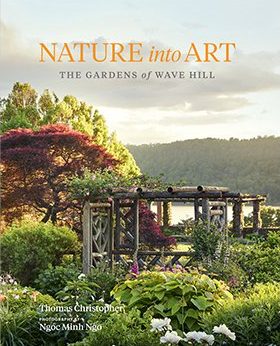
“Gardening is often likened to painting, but really it has more in common with dance,” Thomas Christopher writes in the new book Nature into Art: The Gardens of Wave Hill (Timber Press, September 2019, $40), which shows off the beauty of the Riverdale gardens with gorgeous photography by Ngoc Minh Ngo. “It’s true that gardeners use color, texture, and form in much the same way as do painters, and there is a similar striving to create a composition or view. But like a dance, a garden is a performance through and with time. Unlike a painting, a garden isn’t static; the planting is just a beginning.” (The word opera can replace dance in that sentence without changing the meaning; you can see dance at Wave Hill every spring and summer.) Christopher and Minh journey through the Flower Garden, the Gold Border, the Monocot and Aquatic Gardens, the Shade Border, the Wild Garden, the Alpine House and Troughs, the Herb and Dry Gardens, the Elliptical Garden, and the Conservatory. They also focus on “Wave Hill Through the Seasons”: “This is perhaps the greatest strength of Wave Hill. Its scenes change from day to day and week to week,” Christopher explains. “The colors wax and wane, the foliage changes hue with the seasons, bursting out in spring, settling into summer, flaring in autumn, and then falling away with winter’s onset to reveal the underlying sculpture of the trunks and branches. Some of the transient beauties are fortuitous, of course, but the main outlines of the seasonal displays, the transformations, are planned as carefully as a dancer works out a sequence of steps.” Some of Ngo’s framed photographs from the book, along with work from a new series, are on view in Wave Hill House in the exhibition “Wave Hill Florilegium” through the end of the year.

You can get a personal look at fall at Wave Hill in a series of guided walks, most of which are free with admission to the grounds and some of which require advance registration.

Saturday, November 2
Artist-Led Woodland Walk, with Bahar Behbahani, tracing water flow on the Conifer Slope and in the Herbert and Hyonja Abrons Woodland, 3:00

Sunday, November 3
Forest Bathing: Celebrating Change and the Changing Seasons, with certified forest therapist Gerti Schoen, adults only, $30, 10:00

Wednesday, November 6
Fall Foliage Walk, with senior horticultural interpreter Charles Day, 1:00

Saturday, November 9
Wings over Wave Hill Weekend: Avian Adventures Family Walk, with environmental educator Olivia Kalin, 1:00

Monday, November 11
Wings over Wave Hill Weekend: Garden Walk — Birds and the Winter Garden, with NYC Audubon birding guide and naturalist Tod Winston and senior horticultural interpreter Charles Day, 11:00

EMPEROR SERIES: KWAIDAN — CALL OF SALVATION HEARD FROM THE DEPTHS OF FEAR

Kwaidan

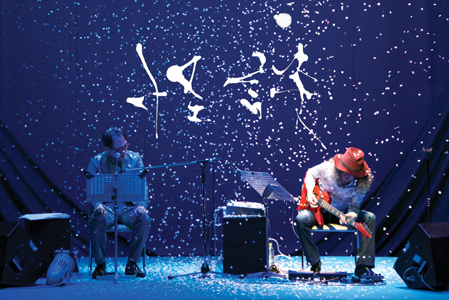
Shirō Sano and Kyoji Yamamoto team up at Japan Society for Kwaidan

Japan Society
333 East 47th St. at First Ave.
Thursday, October 24, $30, 7:30
212-715-1258
www.japansociety.org

Japan Society gears up for Halloween with the spooky presentation Kwaidan — Call of Salvation Heard from the Depths of Fear. On October 24 at 7:30, popular Japanese film and television actor Shirō Sano (Zutto Anata ga Suki data, Karaoke) will read five tales of the supernatural he selected by Lafcadio Hearn, aka Yakumo Koizumi (1850-1904), with live music played by guitarist Kyoji Yamamoto, of BOW WOW and VOW WOW fame. (Sano and Yamamoto both hail from Matsue City in Shimane Prefecture.) Japanese film fans will be familiar with Hearn’s oeuvre from Masaki Kobayashi’s 1965 horror anthology, Kwaidan, which consists of the Hearn tales “The Black Hair,” “The Woman of the Snow,” “Hoichi the Earless,” and “In a Cup of Tea.” The performance will be preceded by a short lecture by Hearn’s great-grandson, Lafcadio Hearn Memorial Museum director and folklorist Bon Koizumi, and a reception with the artists will follow the show, which is part of Japan Society’s Emperor Series, celebrating Emperor Naruhito’s ascension to the Chrysanthemum Throne on May 1.

VISION PORTRAITS WITH Q&As

(photo by Kjerstin Rossi)

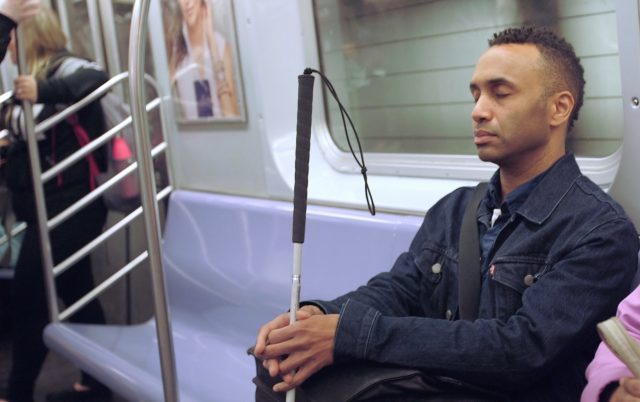
Filmmaker Rodney Evans explores his increasing blindness in Vision Portraits (photo by Kjerstin Rossi)

VISION PORTRAITS (Rodney Evans, 2019)
BAMfilm, BAM Rose Cinemas
30 Lafayette Ave. between Ashland Pl. & St. Felix St.
October 18-20
718-636-4100
www.bam.org/film
www.thefilmcollaborative.org

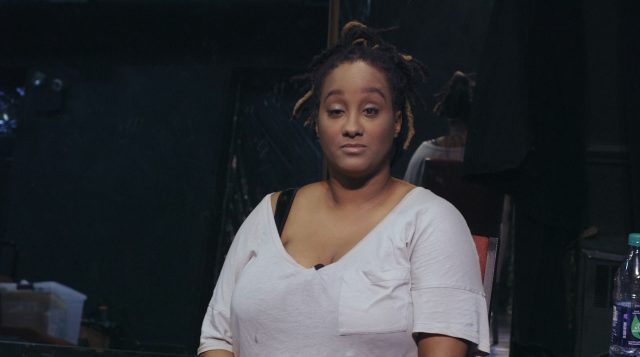
“In a lot of ways, I feel like I’m just looking for guidance in how to be a blind artist,” filmmaker Rodney Evans says in Vision Portraits, his remarkable new documentary playing October 18-20 at BAM. Evans follows three artists as they deal with severe visual impairment but refuse to give up on their dreams as he seeks experimental treatment for his retinitis pigmentosa. Manhattan photographer John Dugdale lost most of his eyesight from CMV retinitis when he was thirty-two but is using his supposed disability to his advantage, taking stunning photos bathed in blue, inspired by the aurora borealis he sees when he closes his eyes. “Proving to myself that I could still function in a way that was not expected of a blind person was really gonna be the thing,” he says. “It’s fun to live in this bliss.” Bronx dancer Kayla Hamilton was born with no vision in one eye and developed iritis and glaucoma in the other, but she is shown working on a new piece called Nearly Sighted that incorporates the audience into her story. “How can I use my art form as a way of sharing what it is that I’m experiencing?” she asks.

(photo by Kjerstin Rossi)

Dancer Kayla Hamilton is not about to let visual impairment get in the way of her career (photo by Kjerstin Rossi)

Canadian writer Ryan Knighton lost his eyesight on his eighteenth birthday due to retinitis pigmentosa, but he teaches at a college and presents short stories about his condition at literary gatherings. “I had that moment where I had a point of view now, like, I realized blindness is a point of view on the world; it’s not something I should avoid, it’s something I should look from, and I should make it my writerly point of view,” Knighton explains. Meanwhile, Evans heads to the Restore Vision Clinic in Berlin to see if Dr. Anton Fedorov can stop or reverse his visual impairment, which is getting worse.

Vision Portraits is an intimate, honest look at eyesight and art and how people adapt to what could have been devastating situations. Evans, who wrote and directed the narrative features Brother to Brother and The Happy Sad, also includes animated segments that attempt to replicate what the subjects see, from slivers of light to star-laden alternate universes. BAM is hosting several postscreening Q&As, with Evans, moderated by Kirsten Johnson, Friday at 7:30; with Evans, moderated by Imani Barbarin, Saturday at 5:00; with Evans, moderated by Jourdain Searles, Saturday at 8:30; and with Kjerstin Rossi, Mark Tumas, Hannah Buck, and Hamilton, moderated by Charmaine Warren, Sunday at 4:30.

SHITAMACHI: TALES OF DOWNTOWN TOKYO

Yasuki Chiba

Yasuki Chiba’s Shitamachi is part of Film Forum series focusing on the popular downtown area of Tokyo

Film Forum
209 West Houston St.
Series runs October 18 – November 2
212-727-8110
filmforum.org

Tokyo’s downtown area known as Shitamachi, which means “low town,” has been a popular setting for movies since cinema began. Southeast of the Imperial Palace, it consists of small neighborhoods going back to the Edo period, filled with traditional Japanese culture particularly for the lower classes. You can explore its many facets in the Film Forum series “Shitamachi: Tales of Downtown Tokyo,” twenty-five films that take place in the geographical area seemingly invented for the movies. Running October 18 to November 7, the festival features a wide range of films, from Yasujirô Ozu’s Record of a Tenement Gentleman and Shôhei Imamura’s Eijanaika to Sadao Yamanaka’s Humanity and Paper Balloons and Nobuhiko Ôbayashi’s Reason, from Kenji Mizoguchi’s Street of Shame and Nami Iguchi’s The Cat Leaves Home to Takeshi Kitano’s Kikujiro and Ishirô Honda’s Godzilla. The series is copresented with the Japan Foundation and programmed by Aiko Masubuchi, who will introduce screenings of Tadashi Imai’s Still I Live On and Satsuo Yamamoto’s The Street without Sun, while Steve Sterner will play live piano accompaniment to Ozu’s Woman of Tokyo. Japanese master Akira Kurosawa was drawn to Shitamachi for several of his tales about class struggle, and Film Forum will be showing four of them, highlighted below.

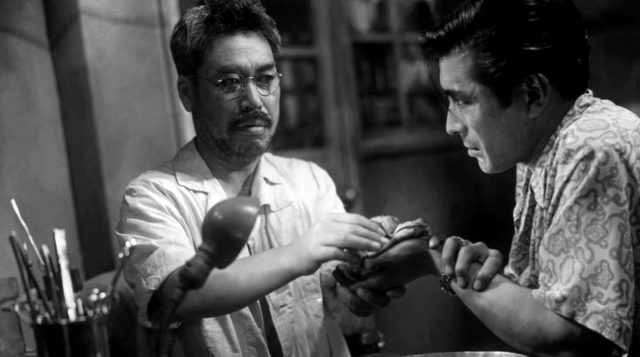
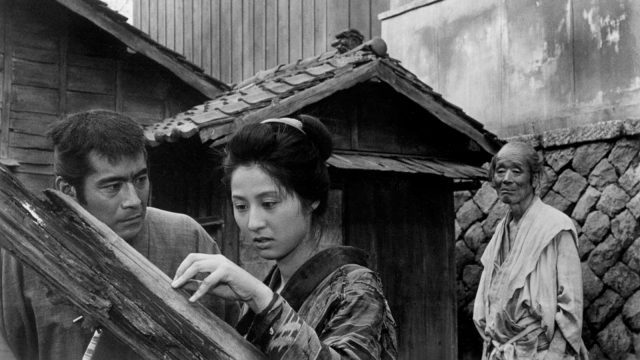
Takashi Shimura and Toshiro Mifune star in Kurosawa noir DRUNKEN ANGEL

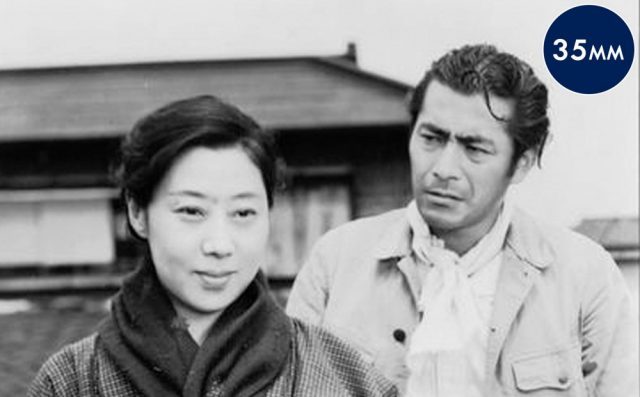
Takashi Shimura and Toshirô Mifune star in Akira Kurosawa noir Drunken Angel

DRUNKEN ANGEL (Akira Kurosawa, 1948)
Friday, October 18, 12:30, 4:50
Saturday, October 19, 5:10, 9:40
Wednesday, October 23, 4:20, 10:15
Friday, November 1, 9:30
filmforum.org

The first film that Akira Kurosawa had total control over, Drunken Angel tells the story of a young Yakuza member, Matsunaga (Toshirô Mifune), who shows up late one night at the office of the neighborhood doctor, Sanada (Takashi Shimura), to have a bullet removed from his hand. Sanada, an expert on tuberculosis, immediately diagnoses Matsunaga with the disease, but the gangster is too proud to admit there is anything wrong with him. Sanada sees a lot of himself in the young man, remembering a time when his life was full of choices — he could have been a gangster or a successful big-city doctor. When Okada (Reisaburo Yamamoto) returns from prison, searching for Sanada’s nurse, Miyo (Chieko Nakakita), the film turns into a classic noir, with marvelous touches of German expressionism thrown in. The terrible incidental music lapses into melodramatic mush, preventing the film from reaching its full potential greatness, but that’s just a minor quibble.

STRAY DOG

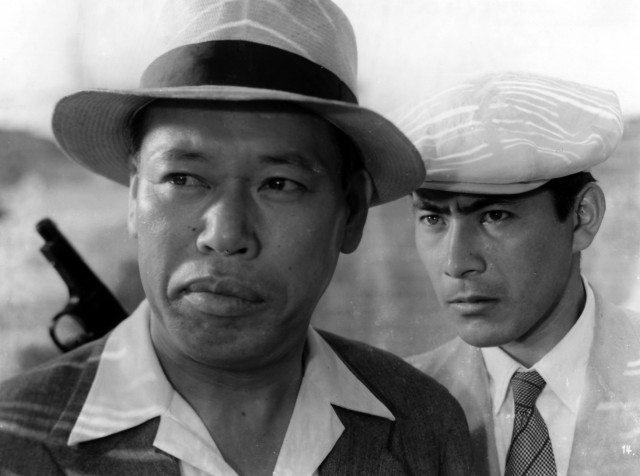
Takashi Shimura and Toshirō Mifune team up as detectives tracking a stolen gun in Akira Kurosawa’s Stray Dog

STRAY DOG (野良犬) (NORA INU) (Akira Kurosawa, 1949)
Friday, October 18, 2:30, 8:20
Saturday, October 19, 1:20, 7:10
Thursday, October 24, 12:30, 9:45
filmforum.org

Akira Kurosawa’s thrilling police procedural, Stray Dog, is one of the all-time-great film noirs. When newbie detective Murakami (Toshirō Mifune) gets his Colt lifted on a trolley, he fears he’ll be fired if he does not get it back. But as he searches for the weapon, he discovers that it is being used in a series of robberies and murders — for which he feels responsible. Teamed with seasoned veteran Sato (Takashi Shimura), Murakami risks his career — and his life — as he tries desperately to track down his gun before it is used again. Kurosawa makes audiences sweat, showing postwar Japan in the midst of a brutal heat wave, with Murakami, Sato, dancer Harumi Namiki (Keiko Awaji), and others constantly mopping their brows — the heat is so palpable, you can practically see it dripping off the screen. (You’ll find yourself feeling relieved when Sato hits a button on a desk fan, causing it to turn toward his face.) In his third of sixteen films made with Kurosawa, Mifune plays Murakami with a stalwart vulnerability, working beautifully with Shimura’s cool, calm cop who has seen it all and knows how to handle just about every situation. (Shimura was another Kurosawa favorite, appearing in twenty-one of his films.)

STRAY DOG

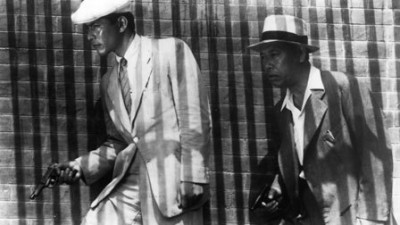
Rookie detective Murakami (Toshirō Mifune) often finds himself in the shadows in STRAY DOG

Mifune is often seen through horizontal or vertical gates, bars, curtains, shadows, window frames, and wire, as if he’s psychologically and physically caged in by his dilemma — and as time goes on, the similarities between him and the murderer grow until they’re almost one and the same person, dealing ever-so-slightly differently with the wake of the destruction wrought on Japan in WWII. Inspired by the novels of Georges Simenon and Jules Dassin’s The Naked City, Stray Dog is a dark, intense drama shot in creepy black and white by Asakazu Nakai and featuring a jazzy soundtrack by Fumio Hayasaka that unfortunately grows melodramatic in a few key moments — and oh, if only that final scene had been left on the cutting-room floor. It also includes an early look at Japanese professional baseball. Kurosawa would soon become the most famous Japanese auteur in the world, going on to make Rashomon, Ikiru, Seven Samurai, Throne of Blood, The Hidden Fortress, The Bad Sleep Well, The Lower Depths, and I Live in Fear in the next decade alone.

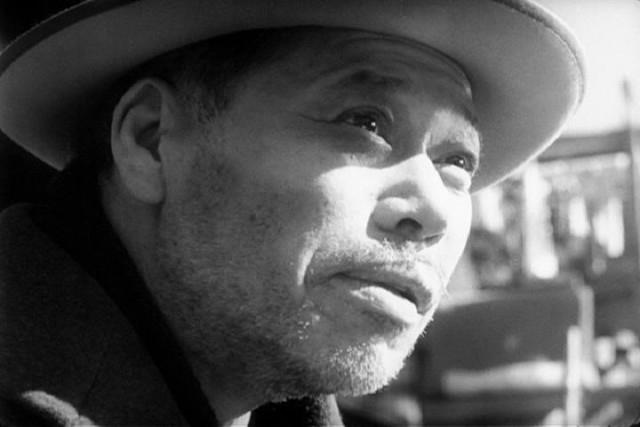
Takashi Shimura does a stellar job with a rare leading role in Kurosawa’s captivating melodrama IKIRU

Takashi Shimura does a stellar job with a rare leading role in Akira Kurosawa’s captivating melodrama Ikiru

IKIRU (TO LIVE) (DOOMED) (Akira Kurosawa, 1952)
Sunday, October 20, 1:20
Thursday, October 24, 4:50
filmforum.org

In Akira Kurosawa’s 1952 gem, Ikiru, winner of a special prize at the 1954 Berlin International Film Festival, the great Takashi Shimura is outstanding as simple-minded petty bureaucrat Kanji Watanabe, a paper-pushing section chief who has not taken a day off in thirty years. But when he suddenly finds out that he is dying of stomach cancer, he finally decides that there might be more to life than he thought after meeting up with an oddball novelist (Yunosuke Ito). While his son, Mitsuo (Nobuo Kaneko), and coworkers wonder just what is going on with him — he has chosen not to tell anyone about his illness — he begins cavorting with Kimura (Shinichi Himori), a young woman filled with a zest for life. Although the plot sounds somewhat predictable, Kurosawa’s intuitive direction, a smart script (cowritten with Hideo Oguni), and a marvelously slow-paced performance by Shimura (Stray Dog, Scandal, Seven Samurai) make this one of the director’s best melodramas.

The Lower Depths is another masterful tour de force from Akira Kurosawa

The Lower Depths is another masterful tour de force from Akira Kurosawa

THE LOWER DEPTHS (DONZOKO) (Akira Kurosawa, 1957)
Saturday, November 2, 12:50, 8:40
filmforum.org

Loosely adapted from Maxim Gorky’s social realist play, The Lower Depths is a staggering achievement, yet another masterpiece from Japanese auteur Akira Kurosawa. Set in an immensely dark and dingy ramshackle skid-row tenement during the Edo period, the claustrophobic film examines the rich and the poor, gambling and prostitution, life and death, and everything in between through the eyes of impoverished characters who have nothing. The motley crew includes the suspicious landlord, Rokubei (Ganjiro Nakamura), and his much younger wife, Osugi (Isuzu Yamada); Osugi’s sister, Okayo (Kyôko Kagawa); the thief Sutekichi (Toshirō Mifune), who gets involved in a love triangle with a noir murder angle; and Kahei (Bokuzen Hidari), an elderly newcomer who might be more than just a grandfatherly observer. Despite the brutal conditions they live in, the inhabitants soldier on, some dreaming of their better past, others still hoping for a promising future. Kurosawa infuses the gripping film with a wry sense of humor, not allowing anyone to wallow away in self-pity. The play had previously been turned into a film in 1936 by Jean Renoir, starring Jean Gabin as the thief.

OPEN HOUSE NEW YORK WEEKEND 2019

Kings County Distillery at the Brooklyn Navy Yard will offer tours during Open House New York weekend (photo courtesy of Kings County Distillery)

Kings County Distillery at the Brooklyn Navy Yard will offer tours during Open House New York Weekend (photo courtesy of Kings County Distillery)

Multiple venues in all five boroughs
October 18-20, free – $5
212-991-OHNY
www.ohny.org

Although $5 reservations for most of the usual suspects for the seventeenth annual Open House New York Weekend are long gone, there are still plenty of opportunities to go behind the scenes at numerous unique churches, art and design studios, universities, breweries, cultural centers, and other architectural sites, particularly if you’re willing to travel away from midtown and downtown Manhattan. There are hundreds of locations that are open for free, although you might have to wait on long lines, whereas snagging a reservation at one of the below guarantees you admission. Among the classic free sites are the Actors’ Temple, the African Burial Ground National Monument, the AT&T Long Distance Building Lobby, the Bartow-Pell Mansion Museum, the Brooklyn Army Terminal, Castle Williams on Governors Island, the Cathedral Church of St. John the Divine, Central Park’s Belvedere Castle, Central Synagogue, City Hall, Dyckman Farmhouse Museum, the Edgar Allan Poe Cottage, FDR Four Freedoms State Park, the Federal Hall National Memorial, the Fifth Avenue Presbyterian Church, Fort Tilden in the Rockaways, Fort Tryon Park Cottage & Heather Garden, the General Grant National Memorial, the General Society of Mechanics and Tradesmen of the City of New York — and that is only through the beginning of the alphabet. Reservation lines close soon, so you better hurry.

Friday, October 18
Justin Paul Inc, Brooklyn Navy Yard, Brooklyn, 9:00 am, 10:00

Big aLICe Brewing Co, Long Island City, Queens, 9:00 am, 10:30, 12:00

Kepco, Inc., Flushing, Queens, 9:30 am, 11:00 am, 3:00

Crystalyn Kae Accessories at Industry City, Industry City, Brooklyn, 9:00 am, 11:00, 1:00, 3:00

Urban Archaeology, Long Island City, Queens, 10:00 am, 11:00, 12:00

Red White and Blue Enterprises, Woodside, Queens, 10:00 am, 11:00, 12:00, 1:00, 2:00

Legion Lighting & SMASH Industries, East New York, Brooklyn, 10:00 am, 11:30, 1:00, 2:30

Tech Products, Inc., Clifton, Staten Island, 10:30 am, 1:30

Wild East Brewing Company, Gowanus, Brooklyn, 11:00 am, 12:00, 2:00, 3:00

Stickbulb at RUX Studios, Long Island City, Queens, 11:00 am, 2:00, 4:00

urbangreen, Sunset Park, Brooklyn, 1:00, 2:00

Watermark Designs, East New York, Brooklyn, 1:00, 2:00

Transmitter Brewing, Brooklyn Navy Yard, Brooklyn, 2:00, 3:00, 4:00
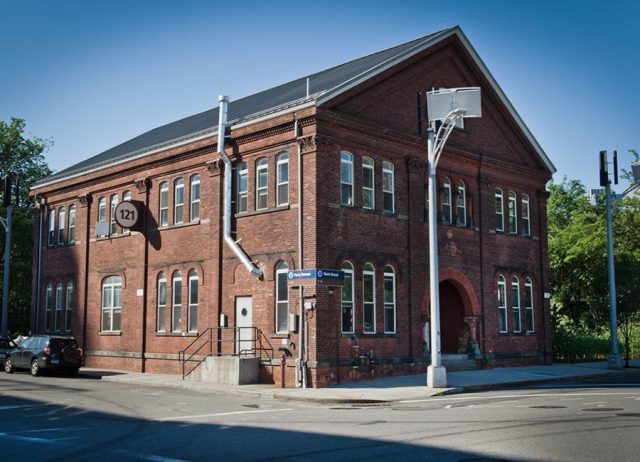
Caribbean Cultural Center African Diaspora Institute

Caribbean Cultural Center African Diaspora Institute offers walking tours and site-specific art during OHNY Weekend

Saturday, October 19
Morningside Park, Morningside Heights, Manhattan, 10:00 am, 1:00, 4:00

Art and Architecture at Lehman College, the City University of New York, Jerome Park, Bronx, 10:00 am, 11:30, 1:00, 2:30

COOKFOX Architects, Columbus Circle, Manhattan, 11:00 am, 12:00, 1:00, 2:00

Museum of the City of New York, East Harlem, Manhattan, 11:00 am, 12:00, 4:00, 5:00

Caribbean Cultural Center African Diaspora Institute, Harlem, Manhattan, 11:00 am, 1:00

Ridgewood Reservoir, Glendale, Queens, 11:00 am, 1:00

Friends Seminary, Gramercy, Manhattan, 11:00 am, 1:00, 3:00

Square Roots Urban Growers Inc, Bedford-Stuyvesant, Brooklyn, 11:00 am, 1:00, 3:00, 5:00

Van Cortlandt House Museum, Van Cortlandt Park, Bronx, 11:30 am, 1:30, 3:00

HLW, Garment District, Manhattan, 12:00, 1:00, 2:00, 3:00

Plymouth Church, Brooklyn Heights, Brooklyn, 12:30 – 3:00

Kings County Distillery, Navy Yard, Brooklyn, 1:00 – 4:00

Chelsea District Health Center, Chelsea, Manhattan, 2:00, 3:00, 4:00

Maison, Upper East Side, Manhattan, 2:00, 3:00, 4:00

The Delson/Transitional Service for New York, Jamaica, Queens, 2:00, 3:00, 4:00, 5:00

Sunday, October 20
Madison Square Boys & Girls Club, Upper Harlem, Manhattan, 10:00 am, 11:30, 1:00

Morningside Park, Morningside Heights, Manhattan, 10:00 am, 1:00, 4:00

Ridgewood Reservoir, Glendale, Queens, 11:00 am, 1:00

Friends Seminary, Gramercy, Manhattan, 11:00 am, 1:00, 3:00

Van Cortlandt House Museum, Van Cortlandt Park, Bronx, 11:30 am, 1:30, 3:00

Building Energy Exchange, Civic Center, Manhattan, 12:00, 1:00, 2:00

Plymouth Church, Brooklyn Heights, Brooklyn, 12:30 – 3:00

Kings County Distillery, Navy Yard, Brooklyn, 1:00 – 4:00

Grace Church High School, East Village, Manhattan, 1:30, 2:30, 3:30