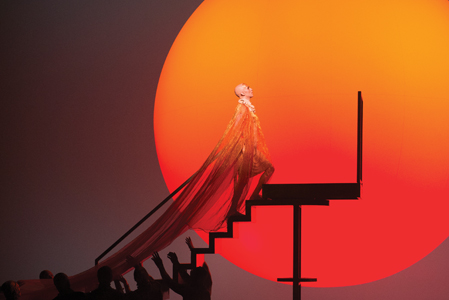
this week in lectures, signings, panel discussions, workshops, and Q&As

TAITEN: NOH & KYOGEN

taiten

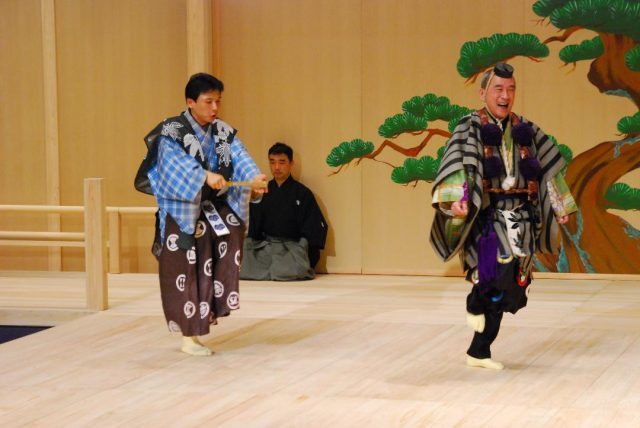
Noritoshi Yamamoto (right) and members of his prestigious family will perform Kagyu (The Snail) at Japan Society November 14-16 (photo © Yoshiaki Kanda)

Japan Society
333 East 47th St. at First Ave.
November 14-16, $97, 7:30
www.japansociety.org

Japan Society’s Emperor Series, celebrating the ascension of Emperor Naruhito to the Chrysanthemum Throne in May, concludes with a special program that includes a noh play created for Emperor Taishō’s ascension to the throne in 1912. In honor of the era turning from Heisei to Reiwa, Kurouemon Katayama X will stage Taiten, portraying the god Amatsukami, wearing a Mikazuki mask as he descends from the heavens for a ritual dance. The work is rarely performed; in mounting the Reiwa version, Kurouemon X was influenced by notes left by his father and grandfather from the 1912 original commission. In addition, Noritoshi Yamamoto and members of his family will perform the comedic kyogen play Kagyu (The Snail), in which a servant is sent to gather up snails but collects a traveling priest instead, thinking it is the shelled gastropod.

The show runs November 14-16, at the same time the succession rites, known as the Daijosai, or the Great Thanksgiving Ceremony, are taking place at the Imperial Palace in Tokyo. The November 14 performance will be followed by a soirée, and Japan Society will host a noh workshop with actors from the Kyoto Kanze Association on November 15 at 1:00 ($60) and a kyogen workshop with members of the Yamamoto Tojiro Family of the Okura School of Kyogen on November 16 at 1:00 ($60). This is a rare chance to experience these works, so tickets are going fast despite their relatively high cost for a Japan Society event.

DOC NYC 2019: SCHOOL OF SEDUCTION / ELLIOTT ERWITT — SILENCE SOUNDS GOOD / FOR SAMA

School of Seduction: 3 Stories from Russia

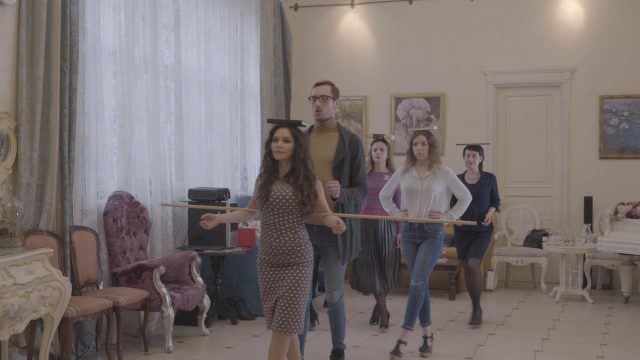
School of Seduction: 3 Stories from Russia follows three women learning how to snare a man

SCHOOL OF SEDUCTION: 3 STORIES FROM RUSSIA (Alina Rudnitskaya, 2019)
IFC Center
323 Sixth Ave. at West Third St.
Saturday, November 9, 9:15
Festival runs November 6-15
www.docnyc.net

In 2009, Russian filmmaker Alina Rudnitskaya made the short film Bitch Academy, about a school where a man taught women of all ages how to attract potential husbands the old-fashioned way, by flaunting their sexuality and playing dumb. She has now expanded that into the full-length feature documentary School of Seduction: 3 Stories from Russia, making its North American debut at IFC Center as part of the DOC NYC festival. Rudnitskaya follows three women over seven years as they take the workshop run by Vladimir Rakovsky and then apply what they’ve learned to their life, with varying degrees of success. Rakovsky, a former 911 hotline worker who is not exactly a smooth-talking Romeo or Don Juan — he actually talks and acts like someone you might avoid on the subway — teaches the women how to bend over, how to wiggle their butts, and how to jump in a man’s arms and turn him on. “What did you think it was about? The psychological aspects of gender politics in modern society?” he says, defending his techniques, which are questionable at best in the twenty-first century (or any time, really). But there is a severe shortage of available men in Russia, so he convinces the eager women that they need to play this game in order to snag a wealthy suitor, that they are not able to survive in this world on their own.

“What a nightmare!” Lida Lodigenskaya declares about Rakovsky’s ideals. Lida lives with her mother and is in love with a married father of two. She is combative and determined, sure that he will eventually leave his wife; surprisingly, he allows himself to be filmed with Lida despite his personal situation. Vika Sitnik is in a lackluster marriage and is in the process of opening a lingerie store in a mall. She suffers from anxiety, sharing her fears with a psychologist. Her mother does not understand her crisis, stuck in the old ways. “I feel bad inside,” Vika says as she reaches a turning point in her life. Diana Belova is a single mother whose parents threw her out of the house so she lives with her grandmother. She makes the most out of the workshop, creating a fake, fanciful existence built on attractiveness and elegance. “I believe in fairy tales,” she says as she meets a series of men, not searching for true love but for someone who will be able to give her the upper-crust life she feels she deserves. “I need to be the best,” she explains.

Rudnitskaya is not making fun of any of these people but rather focusing on the difficulty women are having finding the right person to share their life. They have been reduced to becoming kewpie dolls to catch and keep a man, which is both sad and heartbreaking to watch. The film is screening on November 9 at 9:15, with executive producers Sigrid Jonsson Dyekjær, Eva Mulvad, and Rose Grönkjær in attendance to talk about the film.

ELLIOTT ERWITT — SILENCE SOUNDS GOOD (Adriana Lopez Sanfeliu, 2019)
IFC Center
323 Sixth Ave. at West Third St.
Sunday, November 10, 4:30
www.docnyc.net

“I hate to give explanations,” photographer Elliott Erwitt says in Adriana Lopez Sanfeliu’s lighthearted Elliott Erwitt — Silence Sounds Good, having its North American premiere November 10 at IFC Center as part of the DOC NYC festival. Sanfeliu, a protégé of Erwitt’s, follows her mentor around the world for two years as he goes through his vast archives; exercises in his Manhattan apartment overlooking the park; returns to Cuba for a new book and exhibition and meets former ballerina and choreographer Alicia Alonso, who passed away last month at the age of ninety-eight; snaps pictures on the street at the spur of the moment; and shows some of his iconic images, including photos of presidents and popes, a series on dogs (especially one that steals his heart in Cuba), a photo of segregated drinking fountains in North Carolina, and others that reveal his innate sense of composition. But he doesn’t have a lot to say about them; “I’m not very good about talking about pictures,” he notes at an illustrated lecture.

Now eighty-nine, Erwitt, who was born in France, moved to Italy when he was three, then came to the United States when he was ten, has a dry, self-effacing sense of humor, although he has a tremendous amount of fun taking unusual self-portraits. Sanfeliu often lets her camera linger on him as he sits quietly, with nothing more to say, preferring to let his work speak for itself. “Photography is about having a point of view, nothing else,” he says. “With calm, but also with passion. But without making too much noise about it. It’s the photo which must make noise.” When he does pontificate, he has a tendency to come up with some doozies. “I don’t think anything is serious,” he says. “Nothing is serious, and everything is serious. . . . Well, it’s one of those conundrums. You might say that I’m serious about not being serious.” Erwitt will be at the DOC NYC screening to perhaps talk about it — he does appreciate his silence — along with Sanfeliu, producer François Bertrand, editor Scott Stevenson, and writer Mark Monroe. Preceding it is Tasha Van Zandt’s fourteen-minute short One Thousand Stories: The Making of a Mural, about JR’s video mural project, The Chronicles of San Francisco.

For Sama

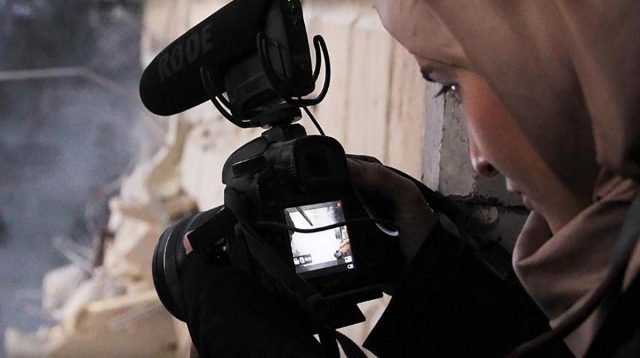
Waad al-Kateab documents daily life under constant bombardment in Aleppo in For Sama

FOR SAMA (Waad al-Kateab & Edward Watts, 2019)
Cinepolis Chelsea
260 West 23rd St.
Sunday, November 10, 11:00 am
Monday, November 11, 1:25
www.docnyc.net
www.forsamafilm.com

“You’re the most beautiful thing in our life, but what a life I’ve brought you into. You didn’t choose this. Will you ever forgive me?” Waad al-Kateab asks in the extraordinary documentary For Sama. In 2012 during the Arab Spring, Waad, a marketing student at Aleppo University, joined the protests against the regime of President Bashar al-Assad. She started taking photos and cell-phone video, then got a film camera as she became a citizen journalist, documenting the escalating conflict, trying to find moments of joy amid the brutal, senseless murders of innocent men, women, and children. She met and fell in love with heroic doctor Hamza al-Kateab, who was determined to keep his hospital running as the bombings got closer. Waad and Hamza got married, and on January 1, 2016, she gave birth to a healthy girl, Sama.

The film, directed by Waad (who also served as cinematographer and producer) and Edward Watts (Escape from ISIS), is a poignant, unflinching confession from mother to daughter, explaining in graphic detail what the families of Aleppo are going through as Russian and Syrian forces and Islamic extremists maintain a constant attack. “We never thought the world would let this happen,” Waad explains as the body count rises — which she intimately shows, not shying away from shots of bloodied victims being brought into the hospital, a pile of dead children, or a desperate attempt to save the life of a mother and a newborn after an emergency caesarean. “I keep filming. It gives me a reason to be here. It makes the nightmares feel worthwhile,” Waad says.

She captures bombings as they happen, films families huddled inside their homes while machine guns can be heard outside, talks to a child who says he wants to be an architect when he grows up so he can rebuild Aleppo. Because she is a woman, Waad gains access to other women that would not be available to a male filmmaker as they share their stories of love and despair. Waad and Hamza plant a lovely garden to bring color to the dank, brown and gray city. A snowfall covers the turmoil in a beautiful sheet of white. The pitter-patter of rain offers a brief respite. But everything eventually gets destroyed as Waad and Hamza struggle with the choice of leaving with Sama or staying to continue their critical roles in the rebellion, she depicting the personal, heart-wrenching images of war — in 2016, her Inside Aleppo reports aired on British television — he tending to the ever-increasing wounded. “The happiness you brought was laced with fear,” Waad tells Sama in voiceover narration. “Our new life with you felt so fragile, as the freedom we felt in Aleppo.” Winner of the Prix L’Œil d’Or for Best Documentary at Cannes among other awards, For Sama is screening at Cinepolis Chelsea on November 10 and 11 as part of the DOC NYC festival, with director Waad al-Kateab, codirector Edward Watts, and subject Dr. Hamza al-Kateab expected to attend to discuss the film.

DOC NYC — ROLLING THUNDER REVUE: A BOB DYLAN STORY BY MARTIN SCORSESE

Martin Scorsese

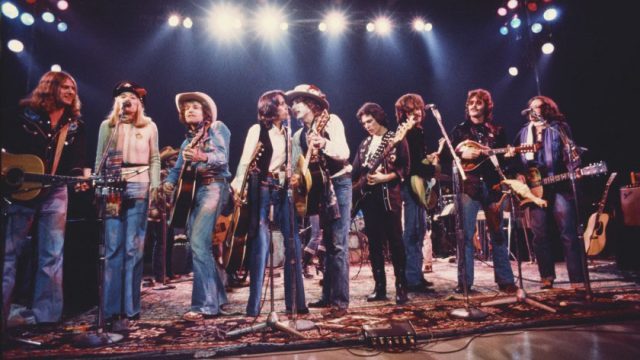
Martin Scorsese’s Netflix doc about Rolling Thunder Revue moves to the big screen for DOC NYC

ROLLING THUNDER REVUE: A BOB DYLAN STORY BY MARTIN SCORSESE (Martin Scorsese, 2019)
Cinepolis Chelsea
260 West 23rd St.
Thursday, November 7, 9:15
Festival runs November 6-15
www.docnyc.net

“I wouldn’t say it was a traditional revue but it was in the traditional form of a revue — that’s all clumsy bullshit,” Bob Dylan says at the beginning of Rolling Thunder Revue: A Bob Dylan Story by Martin Scorsese, a documentary about the legendary 1975-76 tour led by Bob with a collection of special guests. “I’m trying to get to the core of what this Rolling Thunder thing is all about, and I don’t have a clue, because it’s about nothing. It’s just something that happened forty years ago. . . . I don’t remember a thing about Rolling Thunder. I mean, it happened so long ago I wasn’t even born. So what do you want to know?” he asks with a wry smile. Scorsese, whose 2005 documentary No Direction Home focused on Dylan’s early years, now takes viewers behind the scenes and onstage of the infamous tour, in which Dylan donned face paint and wore a mask and a southwestern hat with flowers. Along with a load of anecdotes, the film features electrifying versions of such songs as “One More Cup of Coffee (Valley Below),” “Love Minus Zero / No Limit,” “When I Paint My Masterpiece,” “She Belongs to Me,” “It Takes a Lot to Laugh, It Takes a Train to Cry,” “A Hard Rain’s a-Gonna Fall,” “The Ballad of Ira Hayes,” and “Romance in Durango,” among many others.

And what a cast it has: Allen Ginsberg as the Oracle of Delphi, Patti Smith as the Punk Poet, Martin von Haselberg as the Filmmaker, Scarlet Rivera as the Queen of Swords, Joan Baez as the Balladeer, Roger McGuinn as the Minstrel, Larry “Ratso” Sloman as the Rolling Stone Reporter, Jim Gianopulos as the Promoter, Ramblin’ Jack Elliott as the Sailor, Sam Shepard as the Writer, David Mansfield as the Innocent, Sharon Stone as the Beauty Queen, Ronnie Hawkins as the Shitkicker, Anne Waldman as the Word Worker, Ronee Blakley as the Ingénue, Joni Mitchell as the Artist, Chief Rolling Thunder as the Medicine Man, Chief Mad Bear as the Chief, Peter La Farge as the Cowboy Indian, Michael Murphy as the Politician, and Rubin “Hurricane” Carter as the Boxer. The film debuted on Netflix but will look and sound much better in a theater; it is screening November 7 at Cinepolis Chelsea as part of the DOC NYC festival and will be followed by a discussion with producer Margaret Bodde and executive producer/editor David Tedeschi.

DOC NYC OPENING NIGHT — ONCE WERE BROTHERS: ROBBIE ROBERTSON & THE BAND

Documentary explores the history and legacy of the Band from a singular point of view

Documentary explores the history and legacy of the Band from a singular point of view

ONCE WERE BROTHERS: ROBBIE ROBERTSON & THE BAND (Daniel Roher, 2019)
SVA Theatre
333 West 23rd St. between Eighth & Ninth Aves.
Wednesday, November 6, 7:00 & 7:30
Festival runs November 6-15
212-924-7771
www.docnyc.net
www.ifccenter.com

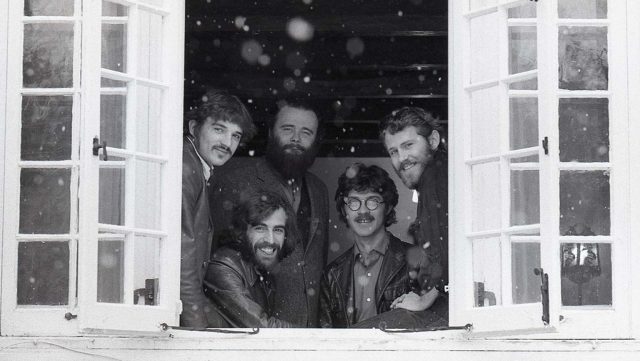
The tenth annual DOC NYC festival, which has grown dramatically since its humble beginnings, consisting now of more than three hundred screenings and special events over ten days at three venues, kicks off in a big way on November 6 with Daniel Roher’s Once Were Brothers: Robbie Robertson & the Band, an intimate, if completely one-sided, look inside one of the greatest, most influential music groups in North American history. The film was inspired by Band cofounder Robbie Robertson’s 2016 memoir, Testimony, offering his take on the Band’s ups and downs, famous battles, and ultimate breakup. “I don’t know of any other group of musicians with a story equivalent to the story of the Band, and it was a beautiful thing. It was so beautiful it went up in flames,” Robertson, sitting in a chair in a vast, empty room, guitars hanging on the wall far behind him, says. The setup puts the focus on Robertson’s individuality, his alone-ness, in what others trumpet as a collection of extraordinary musicians. “There is no band that emphasizes coming together and becoming greater than the sum of their parts, than the Band. Simply their name: The Band. That was it,” fan Bruce Springsteen says. “I was in great awe of their brotherhood. It was the soul of the Band,” notes Eric Clapton, who says he wanted to join the group made up of singer-songwriter and guitarist Robertson, singer and bassist Rick Danko, singer and keyboardist Richard Manuel, singer and drummer Levon Helm, and keyboardist and accordionist Garth Hudson.

When Robertson, who was born in Toronto in 1943, talks about his childhood — his mother was born on the Six Nations of the Grand River Indian reserve, which had a profound effect on him musically, and his biological father was a Jewish gangster, although he was raised by an abusive stepfather — the film is revelatory, with archival photographs and live footage of Robertson’s early bands and his time with Ronnie Hawkins and the Hawks. Robertson shares mesmerizing anecdotes about going electric with Bob Dylan, recording the Basement Tapes in a house called Big Pink, and discussing his craft. “I don’t have much of a process of like I’m thinking about this, and now I’m going to write a song and it’s gonna be about that,” he explains. “A lot of times, the creative process is trying to catch yourself off guard. And you sit down and you’ve got a blank canvas and you don’t know what you’re gonna do and you just see what happens.”

Hawkins speaks glowingly of his protégé Robertson, who wrote his first songs for Hawkins when he was only fifteen. Roher also talks to executive producer Martin Scorsese, Rolling Stone founder Jann Wenner, record producer John Simon, road manager Jonathan Taplin, equipment manager Bill Scheele, photographer John Scheele, Asylum Records creator David Geffen, and musicians Dylan, Taj Mahal, Peter Gabriel, Van Morrison, and Jimmy Vivino, who all rave about Robertson and the Band. “They were totally in love with their music, and they were in love with each other,” photographer Elliott Landy says. “I never saw any jealousy, I never saw any arguments, I never saw them disagree. They were always supporting each other. They were five brothers, very clearly five brothers who loved each other, and I never saw anything but that.”

Of course, Roher cannot talk to Manuel, Danko, and Helm, who are all dead, and Hudson did not participate in the documentary. Robertson and his wife, Dominique, paint a harrowing picture of the Band’s severe strife as drugs and alcohol tear them apart. There’s really no one, aside from a brief point made by guitarist Larry Campbell, to offer an opposing view to Robertson’s tale, which puts him on a golden throne despite some very public disagreements, particularly with Helm over songwriting credit and royalties. Robertson speaks enthusiastically and intelligently throughout the film, but it’s clear from the get-go that these are his carefully constructed, perhaps selective memories about what happened. But Roher doesn’t disguise that conceit; the film is named after one of Robertson’s solo songs, and the second half of the title is, after all, Robbie Robertson & the Band, as if Robertson is separate from the rest.

One of the main surprises is Robertson’s claim that the Last Waltz concert at Winterland in 1976 was not meant as a farewell but just a pause; Roher and Robertson fail to point out that the group continued to tour and record without Robertson. On his sixth solo album, Sinematic, which was released in September, Robertson has a song about the Band, the aforementioned “Once Were Brothers,” that can be heard at the start of the film. “Oh, once were brothers / Brothers no more / We lost a connection / After the war / There’ll be no revival / There’ll be no one cold / Once were brothers / Brothers no more,” Robertson sings. “When that curtain comes down / We’ll let go of the past / Tomorrow’s another day / Some things weren’t meant to last.” It’s a sad testament to a storied legacy. Packed with amazing photos and live clips that make it a must-see for fans of the group, Once Were Brothers: Robbie Robertson & the Band is screening at 7:00 and 7:30 on November 6 at the SVA Theatre, with Roher and Robertson on hand to discuss the work.

TWI-NY TALK — RICK CRANDALL & JOE COSGRIFF: THE DOG WHO TOOK ME UP A MOUNTAIN

(photo courtesy Rick Crandall)

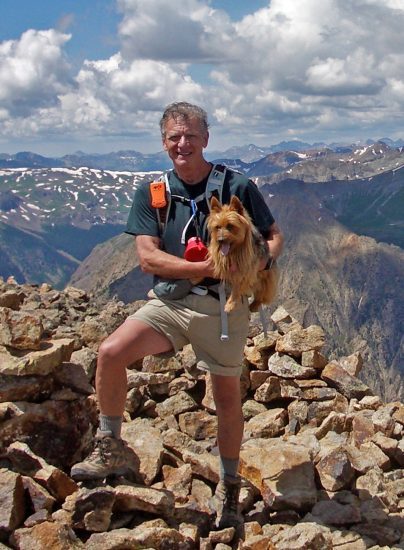
Rick Crandall lifts Emme at a 14er summit (photo courtesy Rick Crandall)

IN THE AUTHOR’S CORNER
The AKC Museum of the Dog
101 Park Ave. between Fortieth & Forty-First Sts.
Friday, November 8, free with RSVP, 2:00
museumofthedog.org
rickcrandallbooks.com

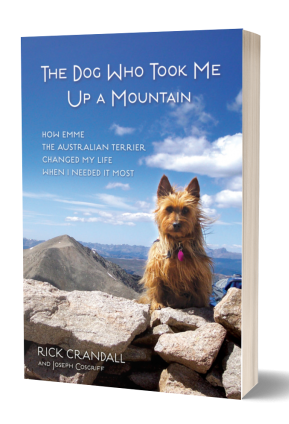
In 2001, Rick Crandall was looking for something different. The New York-born Michigan grad had experienced tremendous success in early tech, cofounding the computer timeshare business Comshare. “But after our talented team defied long odds to keep the company relevant, innovative, and (mostly) profitable for over twenty-five years, I found myself in my mid fifties and burned out mentally, physically, and spiritually,” he explains in The Dog Who Took Me Up a Mountain: How Emme the Australian Terrier Changed My Life When I Needed It Most (HCI, September 2019, $15.95), which he cowrote with Joseph Cosgriff. He went through “the emotional lows and anxieties that were the fallout of a sad and difficult divorce” but found love with Pamela Levy after moving to Colorado. They were married and the next year added to their family on April 5, 2001, by getting a tiny Australian terrier they named Emme. “There were pastrami sandwiches at Katz’s Deli that were larger and weighed more than this puppy,” he writes.

Crandall, once named one of the Five Leading Pioneers of the Computer Industry, started going on hikes with the dog, and together they were soon climbing Colorado’s fourteeners, peaks of at least fourteen thousand feet in altitude. He blogged about their adventures and was then teamed with Hasbrouck Heights native, raconteur, and sports and jazz aficionado Cosgriff, a former star athlete dedicated to the New York Rangers and Boston Red Sox and who wrote the song “I Like Jersey Best” for his close pal John Pizzarelli. Cosgriff, a friend of mine, had previously collaborated with Pizzarelli on the latter’s memoir World on a String and with publishing scion Richard Press on Rebel without a Suit: The Not-So-Casual Road to Casual Friday. In his book, Crandall, now seventy-six, tells his compelling, irresistible story in such chapters as “Pint-Sized Pup, Giant Personality”; “Take Me Higher”; and “Everybody’s Got a Mountain to Climb.” On November 8, he and Cosgriff will be at the American Kennel Club Museum of the Dog on Park Ave. to talk more about The Dog Who Took Me Up a Mountain in an Author’s Corner event, followed the next afternoon by a talk and signing at Bookends Bookstore in Ridgewood, New Jersey. Below is an edited, combined transcript of separate interviews I conducted with them.

twi-ny: Rick, what was your single favorite moment with Emme? When did you realize she was special?

rick crandall: It was when I first realized how strong was her will to push forward and upward on a hike or climb regardless of the challenges. She had a drive to get to the highest place wherever we ventured. On a hike near Aspen, we were on a trail that had high grass on both sides; we saw two massive bulls headbutting right across our trail. I was debating whether to turn around or fight through sidetracking in the bush.

Then I noticed Emme continuing a steady march right towards the bulls. She let out a single low-pitched “rrrruff,” and both bulls turned their head to see what the noise was. Emme stared them down as she continued straight towards them without a single hesitation. Astonishingly, the bulls each backed up about ten feet like two semi-trucks in reverse. Emme proceeded to march right through that temporary truce as if saying, “Make way, I’m coming through, and I’m bringing my human with me.”

I saw no option but to follow her, nervously. She got through and so did I right behind her. Soon after we passed, the bulls went right back to headbutting across the path — I have the photo. It was then I saw how unstoppable was her spirit, which served us so well afterwards going for the high peaks. She was undeterred by high wind, hail, boulders, or slippery rocks and it motivated me to adopt the same will, which then transformed into a passion.

twi-ny: What do you think it was about her that made her such an extraordinary outdoor companion?

rc: Two things: First is that she never backed down, never quit; second is that she watched out for me. For example, the mountains get increasingly rocky as you go higher, and after the freeze/thaw of winter, many rockslides often make some rocks unstable underfoot. She was always ahead of me, and when she got on a rock that teetered she would stop and teeter while turning her head to me as if to say, “Dad, this one moves, don’t come here.”

Also, when climbing I was always with friends who were younger and faster than me. When they would get far enough above me to be out of sight, she would climb up quickly, spot them, and then come back down just far enough so I could see her like a sentinel and I would know where they went. She was a connector and she knew it.

twi-ny: As a child, you had Jiggs, a Boston terrier, which was a great experience, and much later you had Simba, Pamela’s cat, which didn’t go so well, and more recently Tucker, who ended up getting along famously with Emme. Have any other animals prior to or after Emme played an important part in your life?

rc: Emme just passed a few years ago at age fifteen. Pamela and I have been looking for the next Emme. Pamela has been breeding some of Emme’s descendants and we currently have a young Aussie similarly named Ella, who is behaving like she may be my next climbing buddy. She is irrepressible with an alpha personality, just like Emme. Even fresh out of the womb, while the smallest in the litter, she climbed on top of the other pups and right out of the whelping box. Now we see her seeking the highest point around, just like Emme. She is fearless and adventurous. That would be so cool, because while I have finished climbing all fifty-eight fourteeners in the Rockies, I have a lot of great thirteeners to enjoy and would love to have a dog buddy with me.

twi-ny: Joe, have you had any pets that had an impact on your life? Do you consider yourself a dog or cat person?

joseph cosgriff: Working backwards, I’m definitely a dog person, especially after bonding with Emme through Rick’s stories. Also from reading the works of Alexandra Horowitz, most notably Being a Dog. I missed the four years of our family’s dog experiment while in college and away playing baseball, although I seem to recall that the dog (or a hungry sibling) ate one of my baseball gloves.

(photo courtesy Rick Crandall)

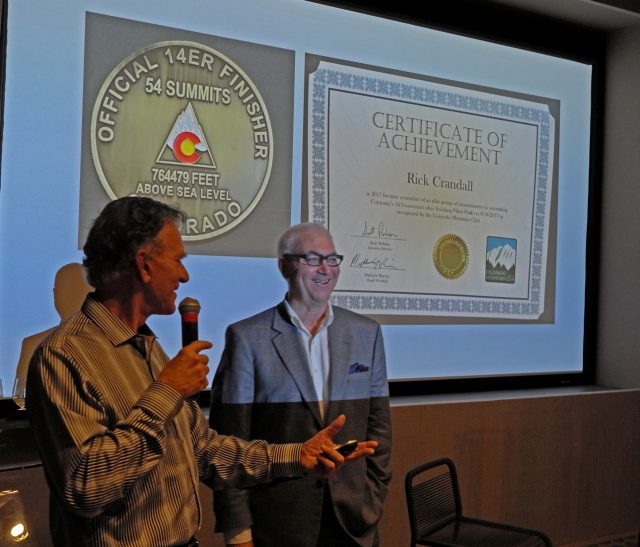
Rick Crandall and Joseph Cosgriff talk about The Dog Who Took Me Up a Mountain: How Emme the Australian Terrier Changed My Life When I Needed It Most at a special event (photo courtesy Rick Crandall)

twi-ny: Rick, in addition to Ella, what’s your pet situation now?

rc: Currently we have six Aussies, some of which are there to carry on Emme’s line with more litters, and one, Ralfie, is a record-setting show dog in the breed. Pamela has been having about one litter every eighteen to twenty-four months. She loves everything dog and the Australian terrier meets all her checkboxes.

twi-ny: As a native New Yorker, what do you miss most about the city?

rc: NYC has the most intense and densely located feast of stimuli for anyone searching for a new passion in life. Colorado has mountains that became such an important real part of my life, but the mountains in my story in the book also serve as a metaphor for any passion that can raise the quality of life for any New Yorker, especially with so many choices.

twi-ny: What do you miss the least?

rc: Everything worth climbing has an elevator!

twi-ny: Joe, have you had any experience climbing mountains or going on long hikes?

jc: Rick has promised to take me up into the mountains, so I’m hoping to mix some hiking and jazz in Aspen this summer.

twi-ny: Have you climbed any metaphorical mountains in your life?

jc: Sure, we all have mountains to climb every day. The lesson of Rick and Emme is that allowing one’s senses to enjoy every aspect of a hike is as important as reaching the summit.

twi-ny: Have you ever been to Colorado and, if so, how did you like it?

jc: I have been to Colorado for business a few times, which included “team building” via white water rafting and a few novice hikes with office colleagues. I look forward to a summer trip that lets me explore firsthand several of the climbs we wrote about.

twi-ny: Rick, what was the best part of collaborating with Joe?

rc: The best part is that we quickly developed a relationship due to the intense interaction that only longtime friends get to know about each other. The older I get, the more I cherish a friendship like that.

twi-ny: What was the most challenging part?

rc: The most challenging part wasn’t very challenging. Joe is passionate and highly knowledgeable about MLB — baseball — and he is prone to introduce baseball quotes here and there. He would throw some in and I would go, Huh? But we had no trouble getting to a balance closer to my world — i.e., more mountain and dog quotes. 😊

twi-ny: Joe, what was the best part of collaborating with Rick?

jc: The best part was that Rick came to the book armed with a central, overarching theme — the importance of finding a passion for the final third of one’s life. But those words would have fallen flat like bromides without the stories that put the reader on the mountain trails with Rick and Emme.

Cover Final - Soft Cover
twi-ny: What was the most challenging?

jc: As you’d expect from someone who has been a business founder, a management consultant, and a chairman of the board of several corporations, Rick has strong opinions. No surprises there.

twi-ny: You’ve also collaborated with John Pizzarelli and Richard Press. How did those collaborations compare with the one with Rick?

jc: Those collaborations were different in that I had known both men for a while, and the published book was at least our third or fourth project together. In the case of Pizzarelli, we had known one another for over thirty years and had already cowritten songs and worked out material for Red Sox luncheons both in New York and in Boston.

The highest compliment I would hear about the Pizzarelli and Press books was “Why did they need you?” I know both voices well and tried to tell those stories using each one’s style. Not being as familiar with Rick’s voice, I worked extra hard to describe the world as he does and not as, say, Jean Shepherd would have.

twi-ny: Rick, you climbed all fifty-eight fourteeners in the Rockies with Emme, beginning when you were sixty-four, and thirteeners might be in your immediate future with Ella. Do you have any other grand adventures coming up, with or without an animal companion?

rc: Yes, this is an often-asked question, especially by people trying to figure out how to discover what their next passion should be and from where that idea might come. Mine came from the unlikely source of following my irrepressible dog who had already discovered her passion.

Now, even though she is gone from this earth, the impact on my life continues as I work to get the inspirational message underlying this book in front of as many eyeballs and hearts as I can.

Increasingly I am hearing that my talks at author events, like the one coming up at the Museum of the Dog on November 8, is inspiring to others. That is as much a gift to me and I am all over it, treating this book as my next adventure. I do still climb and I will continue until I can’t, but I don’t have a goal to reach a number; rather, I want to smell the different roses all the way up to each summit.

twi-ny: Joe, next up for you are a music documentary and a children’s book. Anything you can talk about yet?

jc: Yes, I am working on a music documentary that will likely air on public television in early 2021. The director is Jim Burns, who also directed the terrific PBS pledge-week doc a few years ago about the great songwriter and WWII test pilot Jimmy Van Heusen [Swingin’ with Frank & Bing]. My next book will be about the 1904 baseball season and the first pennant race ever between the New York and Boston teams that became the Yankees and the Red Sox. And the children’s book Pizzarelli and I are planning is built around a song near and dear to our hearts — “I Like Jersey Best.” It will be a trip to the Jersey Shore and other Garden State landmarks as seen through the wondering eyes of two eight-year-olds.

twi-ny: Rick, how did the Museum of the Dog event come about?

rc: They schedule a monthly series called the Author’s Corner. When Joe heard that after thirty-two years the AKC had moved the museum back to New York City, he brought a copy of the book over. They called the next day, excited to have us. I am also doing an article for the AKC community, which is impressively large.

twi-ny: How would you say your book is different from the many other dog-related books out there?

rc: On the surface it is an easy flowing mix of humor, adventure, and uncanny stories about an improbably older guy following his small dog up the highest mountains in the continental US in pursuit of their new passion in life. Underlying is the joy and inspiration that takes the reader away from all the negatives bombarding us daily and gives us something important to think about.

twi-ny: Speaking of being bombarded, while you’re in New York, what else do you plan to do for fun?

rc: Hunt around for a jazz club; too many are shutting down, but still some of the best jazz in the country is right here in the city.

COMPOSING FOR THE SUN: A CONVERSATION WITH PHILIP GLASS

(photo © Richard Hubert Smith / English National Opera)

Philip Glass will be at Japan Society on November 6 to talk about Akhnaten (photo © Richard Hubert Smith / English National Opera)

Who: Philip Glass, Tom Hare, Anthony Roth Costanzo
What: Conversation, performance, reception
Where: Japan Society, 333 East 47th St. at First Ave., 212-715-1258
When: Wednesday, November 6, $28, 6:30
Why: On November 8, the Met is premiering a new production of Philip Glass’s Akhnaten, directed by Phelim McDermott, conducted by Karen Kamensek, and featuring countertenor Anthony Roth Costanzo as the monotheistic title pharaoh and mezzo-soprano J’Nai Bridges as Nefertiti. On November 6, Japan Society is hosting “Composing for the Sun: A Conversation with Philip Glass,” in which the eighty-two-year-old Glass, whose other operas include Einstein on the Beach, In the Penal Colony, Satyagraha, and The Civil Wars: A Tree Is Best Measured When It Is Down, will sit down with Princeton professor Tom Hare to talk about the opera; as a bonus, Costanzo will perform an excerpt from the work, and there will be a post-event reception with the artists. Tickets are sold out, but a waitlist will start one hour before the start time. The presentation is part of Japan Society’s Emperor Series, celebrating Emperor Naruhito’s ascension to the Chrysanthemum Throne in May.

PERFORMA 19

Sarah Friedland: CROWDS,

Sarah Friedland’s CROWDS will attract crowds at La MaMa as part of Performa Biennial

Multiple locations
November 1-24, free – $50
performa19.org/tickets

The eighth annual Performa Biennial kicks off today, celebrating the hundredth anniversary of the Staatliches Bauhaus, the German art school founded in 1919 by Walter Gropius that set in motion a major movement in art, architecture, and design around the world. There will be dozens of performances across disciplines, including film, dance, theater, music, installation, and unique hybrids, often incorporating architectural and sculptural elements, as well as conversations and panel discussions through November 24. The price for ticketed events range from $10 to $50, with most around $15-$25; among the highlights are artist Nairy Baghramian, dancer-choreographer Maria Hassabi, late modernist designer Janette Laverrière, and architect Carlo Mollino’s Entre Deux Actes (Ménage à Quatre), taking place on two floors of a Fifth Avenue town house; Lap-See Lam’s Phantom Banquet, a multimedia performance piece about ghosts and Chinese restaurants in Sweden; Pat’s You’re at Home, a one-night-only collaboration between Jacolby Satterwhite and Nick Weiss; Yvonne Rainer’s restaging of her seminal 1965 work Parts of Some Sextets, with new choreography and a recording of the original score; Huang Po-Chin’s Heaven on Fourth, which tells the story of a Chinese immigrant sex worker who committed suicide in Flushing in 2017; and the grand finale, Radio Voices, led by David J of Bauhaus and Love & Rockets with special guests Curse Mackey, Rona Rougeheart, Vangeline, and Heather Paauwe. But there are also dozens of free shows in cool locations, from museums and art galleries to outside on the street, most of which do not require advance RSVP; the full list is below.

Friday, November 1, 4:00 – 8:00
Saturday November 2, 4:00 – 8:00
Sunday, November 3, 2:00 – 6:00

Zakaria Almoutlak and Andros Zins-Browne: Atlas Unlimited: Acts VII–X, with the voices of Ganavya Doraiswamy and Aliana de la Guardia, 80 Washington Square East

Friday, November 1
through
Sunday, November 24

Ylva Snöfrid: Nostalgia — Acts of Vanitas, daily painting performance ritual, fifth-floor loft at 147 Spring St.

Saturday, November 2
Shu Lea Cheang, Matthew Fuller: SLEEP1237, Performa Hub, 47 Wooster St., 5:50 pm – 6:25 am

Gaetano Pesce: WORKINGALLERY, Salon 94 Design, 3 East Eighty-Ninth St., 2:00 – 4:00

Saturday, November 2
through
Sunday, November 24

Yu Cheng-Ta: “Fameme,” live and filmed performances about reality television, Wallplay, 321 Canal St.

Tuesday, November 5
Tara Subkoff: Deepfake, the Hole, 312 Bowery, 7:00

November 6, 13, 16, 20
Luca Veggetti with Moe Yoshida: From Weimar to Taipei (Roland Gebhardt-Mercedes Searer’s Selfdom, Luca Veggetti’s Fourth Character, Chin Chih Yang’s Black Hole, Rolando Peña’s Less Is More), WhiteBox Harlem, 213 East 121st St., 7:00

Thursday, November 7
Yahon Chang: Untitled, Performa Hub: Deitch Projects, 18 Wooster St., 5:00

Sarah Friedland: CROWDS, three-channel video installation of durational dance, La MaMa La Galleria, 47 Great Jones St., 6:00

Saturday, November 9
Pia Camil and Mobile Print Power: Screen Printing Workshop, Queens Museum, 1:00

Niels Bolbrinker and Thomas Tielsch: Bauhaus Spirit: 100 Years of Bauhaus, Goethe-Institut New York, 30 Irving Pl., 3:00

Duke Riley: Non-Essential Consultants, Inc., Red Hook Labs, 133 Imlay St., 6:00
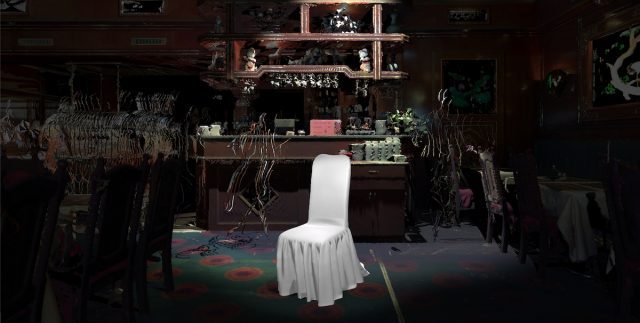
LAP-SEE LAM, PHANTOM BANQUET, 2019. PRODUCTION STILL. COURTESY THE ARTIST AND GALERIE NORDENHAKE, STOCKHOLM.

Lap-See Lam’s Phantom Banquet takes place at Deitch Projects (photo courtesy the artist and Galerie Nordenhake, Stockholm)

Sunday, November 10
Glendalys Medina: No Microphone, Participant Inc., 253 East Houston St. #1, 4:00

Sunday, November 10, 17, 24
Glendalys Medina: The Shank Live, Participant Inc., 253 East Houston St. #1, 8:00 am

Monday, November 11
Nkisi: Listening Session, Performa Hub, 47 Wooster St., 6:00

Monday, November 11
through
Sunday, November 17

Dimitri Chamblas, Sigrid Pawelke: UNLIMITED BODIES, Performa Hub: Deitch Projects, 18 Wooster St., 12:00 and/or 1:00

Tuesday, November 12
Huang Po-Chih, Su Hui-Yu, Yu Cheng-Ta: “The Afterlife of Live Performance” Panel Discussion, Performa Hub, 47 Wooster St., 6:00

Adam Weinert: Monuments: Echoes in the Dance Archive, the New York Public Library for the Performing Arts, Bruno Walter Auditorium, 111 Amsterdam Ave., 6:00

Tuesday, November 12, 19
Glendalys Medina: Dear Me, Participant Inc., 253 East Houston St. #1, advance RSVP required, 4:00 – 9:00

Wednesday, November 13
Paul Maheke, Ligia Lewis, Nkisi: Levant, Goethe-Institut Cultural Residencies, Ludlow 38, 38 Ludlow St., 6:00

Thursday, November 14
The New Blockheads: The Brotherhood of the New Blockheads, the Mishkin Gallery, 135 East Twenty-Second St., 6:00

Friday, November 15
Bauhaus at the Margins: Gender, Queer, and Sexual Politics, Performa Hub, 47 Wooster St., 6:00

Heman Chong, Fyerool Darma, Ho Rui An, and Erika Tan: As the West Slept, Silver Art Projects, 4 World Trade Center, twenty-eighth floor, 7:00
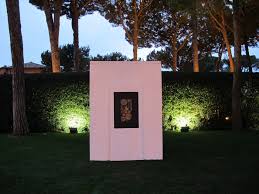
Glendalys Medina: Dear Me, Participant Inc.,

Glendalys Medina’s Dear Me plays to one visitor at a time (photo courtesy the artist)

Saturday, November 16
“A School for Creating Humans”: Bauhaus Education and Aesthetics Revisited, Performa Hub, 47 Wooster St., 1:00

Sunday, November 17
Bodybuilding: Architecture and Performance Book Launch, including a lecture-performance by New Affiliates (Ivi Diamantopoulou and Jaffer Kolb), Performa Hub, 47 Wooster St., 4:00

Lap-See Lam in conversation with Charlene K. Lau, Performa Hub, 47 Wooster St., free with advance RSVP, 4:00

Tuesday, November 19, 6:00
through
Sunday, November 24, 8:00

Éva Mag: Dead Matter Moves, production of clay bodies, the Gym at Judson Memorial Church, 243 Thompson St., 1:00 – between 5:00 & 8:00

Tuesday, November 19, 6:00
Friday, November 22, 8:00

Torkwase Dyson: I Can Drink the Distance: Plantationocene in 2 Acts, multimedia performative installation, Pace Gallery, 540 West Twenty-Fifth St.

Thursday, November 21
Machine Dazzle, Narcissister and Rammellzee: Otherworldly: Performance, Costume and Difference, Aronson Gallery, Sheila Johnson Design Center at Parsons School of Design, 66 Fifth Ave., 6:00

Sarah Friedland: CROWDS — Conversation with Tess Takahashi, La MaMa La Galleria, 47 Great Jones St., 7:00

Thursday, November 21, 6:00
Saturday, November 23, 1:00 & 3:00
Sunday, November 24, 1:00 & 3:00

Tarik Kiswanson: AS DEEP AS I COULD REMEMBER, AS FAR AS I COULD SEE, featuring eleven-year-old children reading his writings, Alexander Hamilton US Custom House, 1 Bowling Green, free with advance tickets

Friday, November 22
Tarik Kiswanson: AS DEEP AS I COULD REMEMBER, AS FAR AS I COULD SEE: In Conversation with Performa Curator Charles Aubin, Performa Hub, 47 Wooster St., 5:00

Saturday, November 23
Cecilia Bengolea, Michèle Lamy: Untitled Performa Commission, featuring boxers and ballet, dancehall, vogue, and contemporary dancers, Performa Hub: Deitch Projects, 18 Wooster St., 4:00

Sunday, November 24, 8:00
Éva Mag: Dead Matter Moves — In Conversation with Camilla Larsson and Yuvinka Medina, the Gym at Judson Memorial Church, 243 Thompson St., 3:00