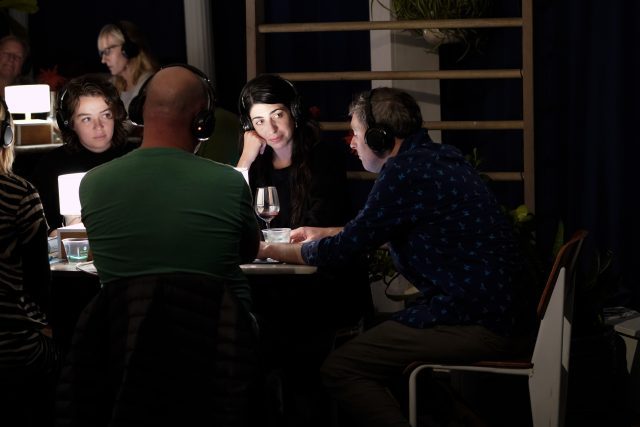
Jack Sim is on a mission to bring clean toilets to India, China, and the rest of the world
MR. TOILET: THE WORLD’S #2 MAN (Lily Zepeda, 2019)
Village East Cinema
181-189 Second Ave. at 12th St.
Opens Friday, November 22
212-529-6799
mrtoiletfilm.com
www.villageeastcinema.com
Jack Sim is my new hero. Known as Mr. Toilet, the Singapore native and former construction entrepreneur travels around the globe preaching the gospel of poo, promoting safe and healthy sanitation in countries where bathrooms are scarce and open defecation leads to rampant disease and even crime, especially against women and children, who find themselves particularly vulnerable when they must relieve themselves outside in remote areas. Lily Zepeda tells Sim’s story in her first feature film, the vastly entertaining and important documentary Mr. Toilet: The World’s #2 Man. “The toilet is a spiritual room, a place to cherish and rejoice,” Sim explains at the beginning of the film. “When you go and let go, you’re connected with the universe. That’s why good ideas come up from the toilet. If you survey people before and after they use the toilet, ninety-nine percent of them will be much happier than before they go to the toilet. When you open the toilet door, it’s not the toilet inside; it’s your future.” Sim must go a lot, because he is one happy guy.
Zepeda follows the eccentric Sim as he meets with government officials, local leaders, young students, and the general public in Singapore, China, India, and the United Nations, lobbying for more toilets, particularly for schoolchildren and women. He has a never-ending array of fecal puns (one of his mottoes is “Getting People to Give a Shit”), rides around on a scooter, uses a toilet brush to comb his hair, swims with a poo emoji float, and often dresses up in costume as a man sitting on a toilet, doing his business; the playful animation Zepeda includes highlights Sim’s youthful qualities. Now sixty-two, he is away from home a lot, which disappoints his loyal wife, Julie Teng, and their four kids, daughters Faith and Earth and sons Worth and Truth, who consider their father “a twelve-year-old trapped in a sixty-year-old man’s body.” Sim does things his own way, with little regard for the consequences; he believes strongly in civil disobedience, feeling that certain rules don’t apply to him. “I’m very naughty,” he admits.
Sim is nearly all laughs and smiles until there are rumbles of dissatisfaction with some board members of his nonprofit, the World Toilet Organization, which boasts such fans as Oscar winner Matt Damon, Bollywood star Salman Khan, and “Indian King of Toilets” Dr. Bindeshwar Parhak. “I support his movement, but for me, frankly, the task for Jack is too big,” notes former Singapore prime minister Goh Chok Tong, not necessarily realizing his own fecal pun. But as goofy as Sim is — and he’s plenty goofy — he knows his shit and is very serious about changing the planet’s perception of poop, one toilet, and one crappy joke, at a time. Mr. Toilet: The World’s #2 Man opens November 22 at Village East Cinema, with Zepeda and Sim participating in Q&As after the 7:00 shows on Friday and Saturday.
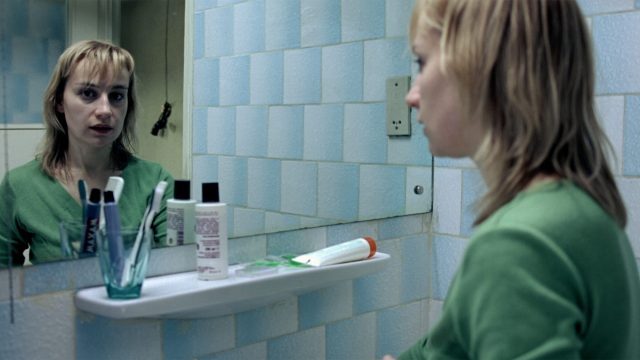
 On December 25, 1989, Romanian dictator Nicolae Ceaușescu and his wife, Elena, were executed by a firing squad after being found guilty of corruption and genocide. In the wake of his death, the Romanian film industry reinvented itself, and Film Forum pays tribute to that change with “The Romanians: 30 Years of Cinema Revolution,” consisting of thirty films screening over twelve days through November 26. Several shows will be followed by Q&As with the director and/or actor. In addition to the below four recommendations, the series includes Nae Caranfil’s Do Not Lean Out the Window, Radu Mihaileanu’s Train of Life, Alexandru Solomon’s The Great Communist Bank Robbery, and Constantin Popescu’s Pororoca.
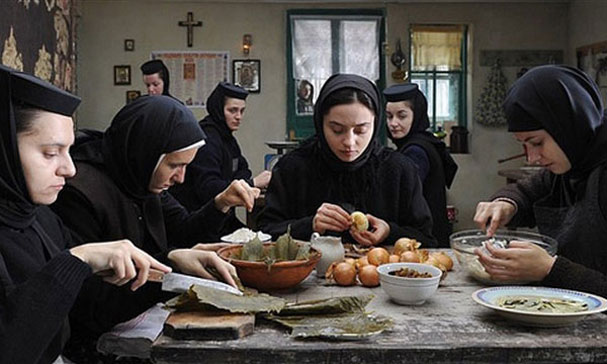
 Inspired by a true story detailed in a pair of nonfiction novels by Romanian journalist Tatiana Niculescu Bran, Cristian Mungiu’s Beyond the Hills is a powerful, emotional study of love, friendship, dedication, devotion, and sexual repression. In a barren section of modern-day Romania, Alina (Cristina Flutur) arrives at a poverty-stricken Orthodox monastery, where her childhood friend Voichita (Cosmina Stratan) has become a nun. Both young women grew up in a poor orphanage, and both still have no real place in society. Alina has come to try to convince Voichita — possibly her former lover — to leave the flock and go with her to Germany, where they can live and work together freely. Early on, Voichita rubs a tired Alina’s bare back; when Alina turns over, Voichita just stops short of massaging her friend’s chest, the sexual tension nearly exploding in a scene of quiet beauty that speaks volumes about their relationship. Despite Alina’s pleading, Voichita, apparently filled with deep inner guilt, refuses to turn her back on the priest (Valeriu Andriuţă), whom all the nuns refer to as Pa, and her newfound vocation. Unable to accept her friend’s decision, Alina begins acting out in threatening ways to both herself and the true believers, leading to shocking, tragic consequences.