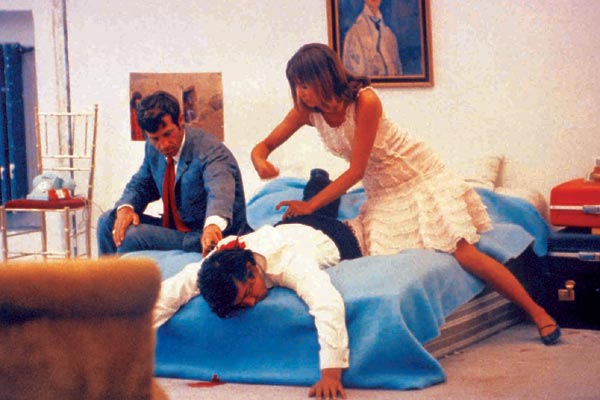
Jean-Paul Belmondo and Anna Karina star in Godard’s colorful crime musical, PIERROT LE FOU
PIERROT LE FOU (Jean-Luc Godard, 1965)
Anthology Film Archives
32 Second Ave. at Second St.
Saturday, September 14, 4:45, and Thursday, September 19, 9:15
Series runs September 12-30
212-505-5181
www.anthologyfilmarchives.org
 Art, American consumerism, the Vietnam and Algerian wars, Hollywood, and the cinema itself get skewered in Jean-Luc Godard’s fab feaux gangster flick / road comedy / romance epic / musical Pierrot Le Fou. Based on Lionel White’s novel Obsession, the film follows the chaotic exploits of Ferdinand Griffon (Jean-Paul Belmondo) and Marianne Renoir (Anna Karina, Godard’s then-wife), former lovers who meet up again quite by accident. The bored Ferdinand immediately decides to leave his wife and family for the flirtatious, unpredictable Marianne, who insists on calling him Pierrot despite his protestations. Soon Ferdinand is caught in the middle of a freewheeling journey involving gun running, stolen cars, dead bodies, and half-truths, all the while not quite sure how much he can trust Marianne. Filmed in reverse-scene order without much of a script, the mostly improvised Pierrot Le Fou was shot in stunning color by Raoul Coutard. Many of Godard’s recurring themes and style appear in the movie, including jump cuts, confusing dialogue, written protests on walls, and characters speaking directly at the audience, who are more or less along for the same ride as Ferdinand. And as with many Godard films, the ending is a doozy.

PIERROT LE FOU is screening as part of “John Zorn Selects” series at Anthology Film Archives
Pierrot Le Fou is screening September 14 and 19 as part of the Anthology Film Archives series “John Zorn Selects,” comprising a dozen works chosen by the master experimental musician on the occasion of his sixtieth birthday, focusing on the soundtracks. “Godard continues to be the ONLY director whose drop-the-needle strategies work for me — he alone commands a supreme knowledge of how previously existing music can be used in an overall sonic design, and his Histoire(s) du Cinéma is perhaps the highest level of this technique, reducing Hollywood’s attempts at the same approach to nostalgia, advertising, and cartoon silliness,” Zorn writes on the Anthology website. “But here in his early years he trusted the brilliant Georges Delerue to do his thing and the results are magnificent. This and Shoot the Piano Player are fabulous examples of 1960s French scoring — heavy on strings, lyricism, and moodiness. Pierrot holds a special place in my heart — I am really a Romantic, not a Postmodern — and this film’s music never ceases to reduce me to tears.” The festival runs September 12-30 and includes such other films as Alfred Hitchcock’s Vertigo, Michael Winner’s The Mechanic, Masahiro Shinoda’s Pale Flower, and Orson Welles’s Touch of Evil. From September 20 to 28, Anthology will present “A Pocketful of Firecrackers: The Film Scores of John Zorn,” consisting of such films as Marc Levin’s Protocols of Zion, Michael Glawogger’s Workingman’s Death, and Joseph Dorman’s Sholom Aleichem: Laughing in the Darkness, but the real highlight are two nights of Zorn performing live to short films.
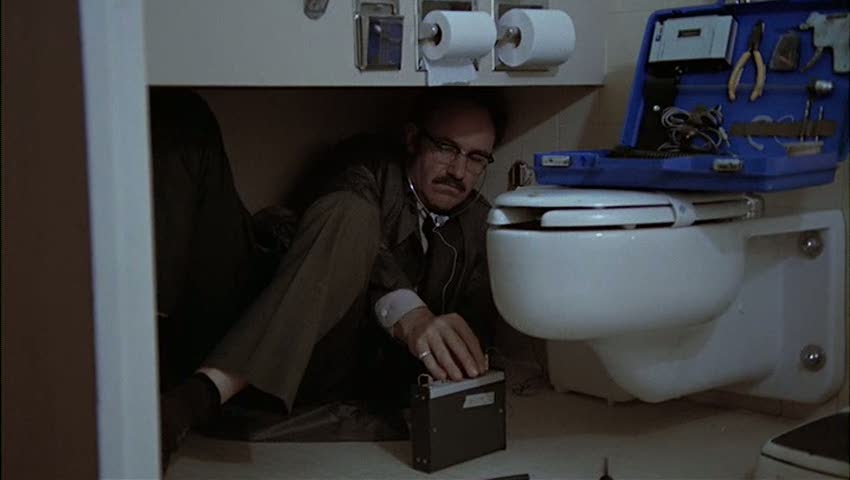
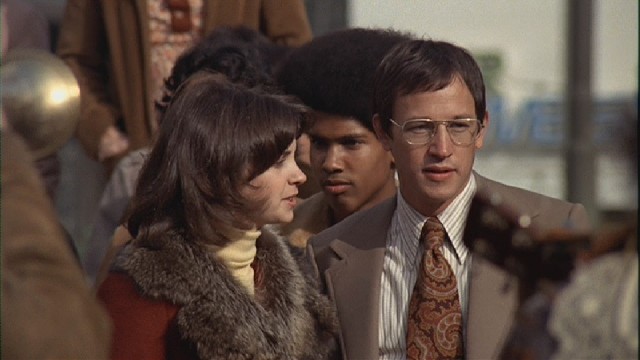
 While changing the face of Hollywood cinema with The Godfather and The Godfather Part II, American auteur Francis Ford Coppola snuck in yet another 1970s masterpiece, the dark psychological thriller The Conversation. Gene Hackman gives a riveting performance as Harry Caul, an audio surveillance expert who has been hired to record a meeting between two people (Cindy Williams and Frederic Forrest) in Union Square in San Francisco. Thinking that he might have stumbled onto a murder plot, Caul soon finds himself in the middle of a dangerous conspiracy that threatens the lives of all those involved. The Conversation is a gripping, taut examination of obsession, paranoia, and loneliness as well as an exploration of language and communication. Caul might spend most of his time listening in on the intimate conversations of others, but he is an intensely private individual who is extremely uncomfortable in his own skin. A deeply religious man who also plays the saxophone, Caul has trouble relating to other people; Hackman is particularly outstanding in a party scene where Caul is forced to talk shop with fellow surveillance expert Bernie Moran (Allen Garfield), who wants to know Caul’s secrets, but the always nervous Caul isn’t about to share everything. The film also examines how people hear what they want to hear and see what they want to see, and it takes on even more meaning in a twenty-first century dominated by public and private surveillance, from store security cameras and government monitoring to Facebook, Twitter, and YouTube. The supporting cast, which also features Harrison Ford, Robert Duvall, Teri Garr, and John Cazale, is exceptional, but this is Hackman’s show all the way, leading to one of the great endings in the history of cinema.