Brooklyn Museum
200 Eastern Parkway at Washington St.
Saturday, November 2, free, 5:00 – 11:00 (some events require free tickets distributed in advance at the Visitor Center)
212-864-5400
www.brooklynmuseum.org
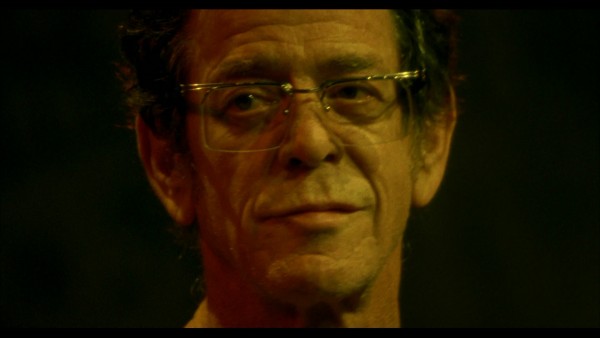
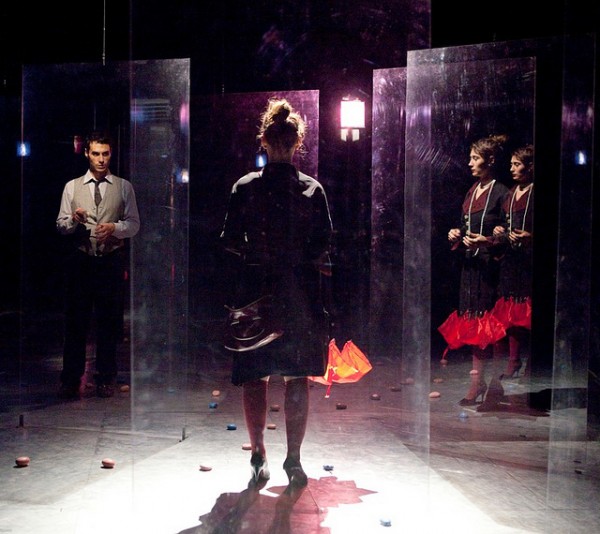
The career of French fashion designer John Paul Gaultier will be celebrated at the Brooklyn Museum’s November edition of its free First Saturdays program. In conjunction with the opening of the multimedia exhibition “The Fashion World of Jean Paul Gaultier: From the Sidewalk to the Catwalk,” there will be a curator talk by Lisa Small, an arts workshop demonstrating how to make Gaultier-inspired fashion plates, fashion-related pop-up gallery talks, a lecture on fashion, ethics, and the law by Susan Scafidi, a special performance by Company XIV and Dances of Vice with Miss Ekat and DJ Johanna Constantine, a discussion with photographer Richard Corman about his book Madonna NYC 83, and screenings of Loic Prigent’s 2009 documentary The Day Before, which follows Gaultier as he prepares for a fashion show, and Luc Besson’s The Fifth Element, for which Gaultier designed the costumes. The night will also include live music by Au Revoir Simone, Watermelon, and Tamar-kali. In addition, the galleries will be open late, giving visitors plenty of opportunity to check out “Valerie Hegarty: Alternative Histories,” “Käthe Kollwitz: Prints from the ‘War’ and ‘Death’ Portfolios,” “Divine Felines: Cats of Ancient Egypt,” “Life, Death, and Transformation in the Americas,” “Connecting Cultures: A World in Brooklyn,” “Wangechi Mutu: A Fantastic Journey,” and other exhibits.
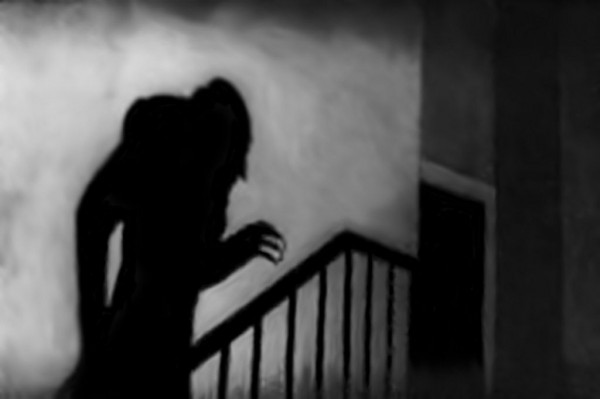
 In F. W. Murnau’s classic horror film, Max Schreck stars as Count Orlok, a creepy, inhuman-looking Transylvanian who is meeting with real estate agent Thomas Hutter (Gustav von Wangenheim) in order to buy a house in Germany. Hutter soon learns that the count has a taste for blood, as well as lust for his wife, Ellen (Greta Schröder), whom he has left behind in Germany. When Count Orlok, a bunch of rats, and a group of coffins filled with Transylvanian earth head out on a ship bound for Wisborg, the race is on to save Ellen, and Germany. Murnau’s Nosferatu is set in an expressionist world of liminal shadows and fear, as he and cinematographers Fritz Arno Wagner and Günther Krampf continually place the menacing Orlok in oddly shaped doorways that help exaggerate his long, spiny fingers and pointed nose and ears. Unable to acquire the rights from Bram Stoker’s estate to adapt the Gothic horror novel Dracula into a film, writer Henrik Galeen (The Golem, The Student of Prague) and director Murnau (Sunrise, The Last Laugh) instead made Nosferatu, paring down the Dracula legend, changing the names of the characters, and tweaking the story in various parts. Upon its 1922 release, they were sued anyway, and all prints were destroyed except for one, ensuring the survival of what became a defining genre classic. In 1979, German auteur Werner Herzog (Woyzeck, Fitzcarraldo) paid tribute to the earlier film with Nosferatu the Vampyre, a near scene-by-scene homage to Murnau’s original but with Stoker’s character names restored, as the book was by then in the public domain. Hans Erdmann’s complete score no longer exists, so numerous musical compositions have accompanied screenings and DVD/VHS releases over the years; at Film Forum, pianist Steve Sterner will offer his take on November 4 at 7:30.
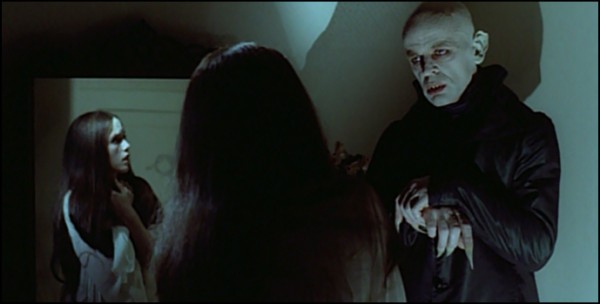
 Nearly sixty years after Murnau battled the Stoker estate, Herzog remade Nosferatu with an all-star cast featuring Bruno Ganz as real estate agent Jonathan Harker, Isabelle Adjani as his wife, Lucy, and Klaus Kinski as Count Dracula. Shot in flat colors by Jörg Schmidt-Reitwein and set to a score by German electronica band Popol Vuh, Herzog’s Nosferatu follows the same path as Murnau’s, as Jonathan Harker travels to Transylvania to have the count sign a contract, discovers that Dracula likes blood and sleeps in a coffin, then tries to save his wife when the count and thousands of (purportedly mistreated) rats sail to Wismar, renewing fears of plague. Kinski plays the count as a sad, lonely figure who no longer belongs in the modern world. He’s desperate for human contact, and his castle has seen much better days. Kinski often seems to be shot in black-and-white, surrounded by color, as if he were from another time, except for his shockingly red lipstick. It’s a virtuoso performance that is significantly more nuanced than Schreck’s, which is a more direct take on the character. Both films are gems; Film Forum is showing a new 35mm print of the rare German-language version of Herzog’s remake through November 7; on November 4 you can see them both, with separate paid admission.