this week in (live)streaming

MIA HANSEN-LØVE SELECTS

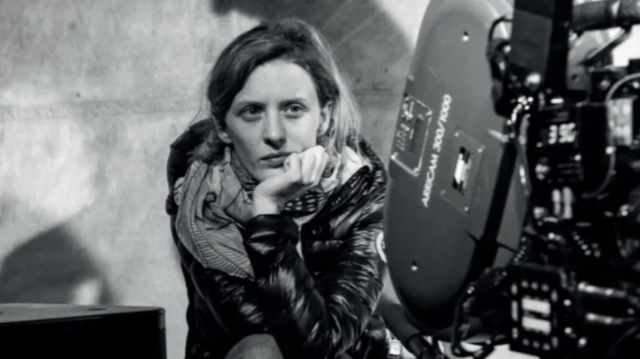
Mia Hansen-Løve is curating an inspirational series at Metrograph (photo by Judicaël Perrin)

MIA HANSEN-LØVE SELECTS
Metrograph
7 Ludlow St. between Canal & Hester Sts.
November 5-13
212-660-0312
nyc.metrograph.com

“Filmmaking is a perpetual questioning of existence. What is beauty? Why am I living? And I need that, I think, perhaps because of being the daughter of two philosophy teachers,” French writer-director Mia Hansen-Løve told the Guardian in 2016. A critics darling and regular award winner for her intimate tales of family drama and romantic love (Goodbye First Love, The Father of My Children, Things to Come), often with semiautobiographical elements involving her DJ brother, her philosophy professor parents, and her long relationship with former husband Olivier Assayas, she is ready to make a big jump with her latest film and first in English, Bergman Island, in which a pair of filmmakers (Vicky Krieps and Tim Roth) seek inspiration on Fårö Island, where Ingmar Bergman lived and made some of his finest films.

In conjunction with the film’s release, she is curating a program at Metrograph, “Mia Hansen-Løve Selects,” running November 5-13, consisting of six films that had an impact on her, in addition to her debut. Earlier this year, for a similar series at BAMPFA in California, she chose Jean Eustache’s The Mother and the Whore, Hou Hsiao-hsien’s Café Lumière, Gérard Blain’s The Pelican, Bo Widerberg’s Adalen 31, and Éric Rohmer’s Summer. Her Metrograph lineup is similarly diverse: Bergman actor Victor Sjöström’s 1928 silent classic, The Wind; indie favorite Kelly Reichardt’s Wendy and Lucy, in which Michelle Williams portrays a homeless woman on the move with her dog; Rohmer’s A Tale of Winter, about a single mother searching for companionship; Agnès Varda’s Le Bonheur, a unique take on happiness; Edward Yang’s epic four-hour A Brighter Summer Day, about teen angst in Taiwan; and Hou’s dizzying, swirling Millennium Mambo, starring a resplendent performance by Shu Qi. The series is anchored by Hansen-Løve’s 2007 debut feature, All Is Forgiven, being shown November 5-18 (and available on demand), about a family in crisis because of drug addiction. Below are select reviews.

Lillian Gish in The Wind

Letty Mason (Lillian Gish) is being driven crazy by internal and external sources in The Wind

THE WIND (Victor Sjöström, 1928)
Metrograph
Friday, November 5, and Sunday, November 7, noon
nyc.metrograph.com

Victor Sjöström’s 1928 now-classic silent film The Wind stars Lillian Gish as Letty Mason, a young woman moving from Virginia to Texas to live with her cousin Beverly (Edward Earle). Traveling from the cultured, civilized East to what was still the wild West, the uncertain Letty must confront the fierceness of nature head-on — both human nature and the harsh natural environment. On the train, she is wooed by cattleman Wirt Roddy (Montagu Love), but her fears grow as she first sees the vicious wind howling outside the train window the closer she gets to her destination. Once in Sweetwater, she is picked up by her cousin’s neighbors, the handsome Lige Hightower (Lars Hanson) and his goofy sidekick, Sourdough (William Orlamond). Both men take a quick liking to Letty, who seems most attracted to Wirt. Soon Beverly’s wife, Cora (Dorothy Cumming, in her next-to-last film before retiring), becomes jealous of Letty’s closeness with her husband and kids and kicks her out, leaving a desperate Letty to make choices she might not be ready for as the wind outside becomes fiercer and ever-more dangerous.
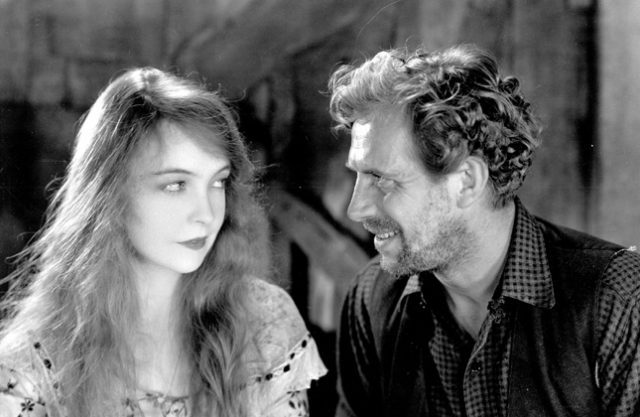
The Wind

Letty Mason (Lillian Gish) and Lige Hightower (Lars Hanson) have some tough decisions to make in Victor Sjöström’s silent classic

The Wind is a tour de force for Gish in her last silent movie, not only because of her emotionally gripping portrayal of Letty, but because she put the entire production together, obtaining the rights to the novel by Dorothy Scarborough, hiring the Swedish director and star Hanson, and arguing over the ending with the producers and Irving Thalberg. (Unfortunately, she lost on that account, just about the only thing that did not go the way she wanted.)

Sjöström (The Phantom Carriage, The Divine Woman), who played Professor Isak Borg in Ingmar Bergman’s Wild Strawberries, and cinematographer John Arnold create some dazzling effects as a twister threatens and Letty battles both inside and outside; she is regularly shot from the side, at the door of the shack where she lives, not knowing if she’d be safer inside or outside as the wind and sand blast over her. The film, an early look at climate change, was shot in the Mojave Desert in difficult circumstances; to get the wind to swirl, the crew used propellers from eight airplanes. Dialogue is sparse, and the story is told primarily in taut visuals.
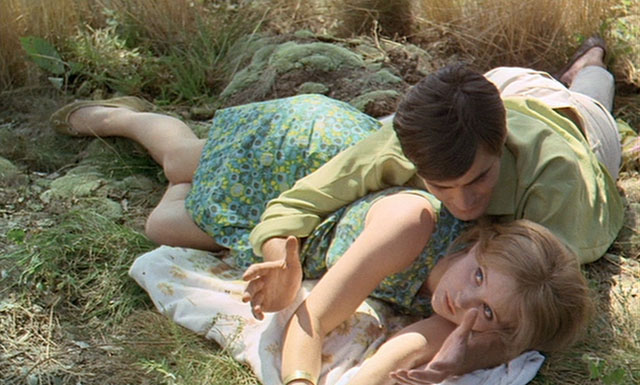
LE BONHEUR

François (Jean-Claude Drouot) tries to convince Thérèse (Claire Drouot, his real-life wife), that he has plenty of happiness to spread around in Le Bonheur

LE BONHEUR (HAPPINESS) (Agnès Varda, 1965)
Metrograph
Friday, November 5, and Monday, November 8, 6:45
nyc.metrograph.com

In 1965, French Nouvelle Vague auteur Agnès Varda said about her third film, Le Bonheur, which translates as Happiness: “Happiness is mistaken sadness, and the film will be subversive in its great sweetness. It will be a beautiful summer fruit with a worm inside. Happiness adds up; torment does too.” That is all true more than fifty years later, as the film still invites divided reaction from critics. “Miss Varda’s dissection of amour, as French as any of Collette’s works, is strikingly adult and unembarrassed in its depiction of the variety of love, but it is as illogical as a child’s dream,” A. H. Weiler wrote in the New York Times in May 1966. “Her ‘Happiness,’ a seeming idyll sheathed in irony, is obvious and tender, irresponsible and shocking and continuously provocative.” All these decades later, the brief eighty-minute film is all that and more, save for the claim that it is illogical. In a patriarchal society, it actually makes perfect, though infuriating, sense.
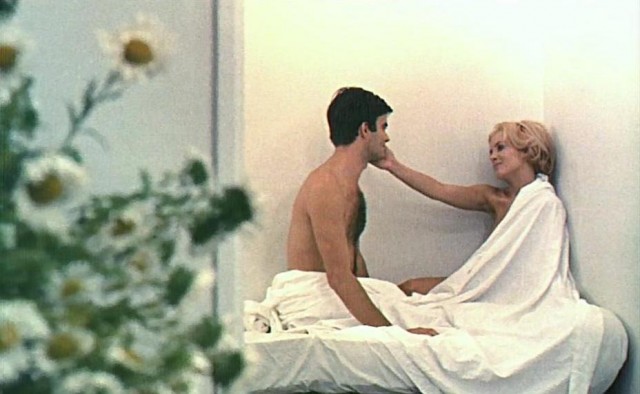
François and Émilie (Marie-France Boyer) seek out their own happiness in Nouvelle Vague classic

François and Émilie (Marie-France Boyer) seek out their own happiness in Nouvelle Vague classic

French television star Jean-Claude Drouot (Thierry La Fronde) stars as the handsome François, who is leading an idyllic life with his beautiful wife, Thérèse (Claire Drouot), and their delightful kids, Pierrot (Olivier Drouot) and Gisou (Sandrine Drouot), in the small, tight-knit Parisian suburb of Fontenay. While away on a job, François meets the beautiful Émilie (Marie-France Boyer), a postal clerk who connects him to his wife via long-distance telephone, flirting with him although she knows he is happily married. And despite being happily married, François returns the flirtation, offering to help with her shelves when she moves into an apartment in Fontenay. Both François and Émilie believe that there is more than enough happiness to go around for everyone, without any complications. “Be happy too, don’t worry,” Émilie tells him. “I’m free, happy, and you’re not the first,” to which he soon adds, “Such happiness!” And it turns out that even tragedy won’t put a stop to the happiness, in a plot point that angered, disappointed, confused, and upset many critics as well as the audience but is key to Varda’s modern-day fairy tale.

The beauty of nature plays a key role in LE BONHEUR

The beauty of nature plays a key role in Le Bonheur

Le Bonheur is Varda’s first film in color, and she seems to have been heavily influenced by her husband, Jacques Demy (The Umbrellas of Cherbourg), bathing the film in stunning hues that mimic Impressionist paintings, particularly the work of Pierre-Auguste Renoir, in a series of picnics and flower-filled vases. In a sly nod, at one point a black-and-white television is playing the 1959 film Le Déjeuner Sur L’herbe (“Picnic on the Grass”), which was directed by Jean Renoir, one of Auguste’s sons, and also deals with sex, passion, procreation, and nature. Le Bonheur also features numerous scenes that dissolve out in singular blocks of color that take over the entire screen. Cinematographers Claude Beausoleil and Jean Rabier shoot the film as if it takes place in a candy-colored Garden of Eden, all set to the music of Mozart, performed by Jean-Michel Defaye. Varda doesn’t allow any detail to get away from her; even the protagonists’ jobs are critical to the story: François is a carpenter who helps builds new lives for people; Thérèse is a seamstress who is in the midst of making a wedding gown; and Émilie works in the post office, an intermediary for keeping people together. As a final touch, François, who represents aspects of France as a nation under Charles de Gaulle, and his family are played by the actual Drouot clan: Jean-Claude and Claire are married in real life (and still are husband and wife after more than fifty years), and Olivier and Sandrine are their actual children, so Le Bonheur ends up being a family affair in more ways than one.

DANCING FUTURES: MAY I DANCE ON YOUR SCREEN? LIVE Q&A

Who: Rourou Ye, Wendy Perron
What: Virtual Q&A about online exhibition
Where: digitaldance.space
When: Thursday, October 28, free with RSVP, 7:30
Why: “When I returned to the dance studio again in April 2021, I felt weird,” multidisciplinary artist Rourou Ye said about working during the pandemic. “The studio was empty. Not only because there was no one else there but because it also lacked the characteristics and stories inherent to one’s surroundings. What can I do with this space? There was nothing I could play with, and it made me the center of attention. I was motionless. So I went back home to create dances through video.” On October 28 at 7:30, the Chinese-born, US-based artist, who incorporates dance, shadow puppetry, everyday objects, and multimedia technology into works that defy reality, will discuss her process with teacher, writer, dancer, choreographer, and Dance magazine editor at large Wendy Perron over Zoom.

They will be delving into Ye’s online exhibition, “May I Dance on Your Screen?,” which continues through December 31 with such dance films as Daydreaming (“How can I duplicate myself so I can have a dance companion?”), Dis/Placed, (“How can I appear in my collaborator’s space even though I’m physically in another location?”), and I Followed the Moon to the River, My Far-Flung Home (“It’s been so long since I’ve been home . . .”). The program is part of the seventh annual Dancing Futures: Artist and Mentor Collaborative Residency, which “offers emerging Bronx-based and/or dance artists of color with resources, performance opportunities, mentorship, and documentation to strengthen and shine a spotlight on the Bronx as a creative incubator of new dance and performance work.”

GHOSTFOLK

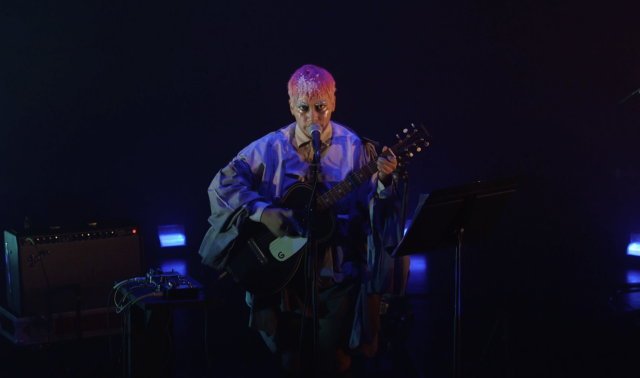
River L. Ramirez will discuss their latest project, GhostFolk, in a live BAC Zoom talk

Who: River L. Ramirez, Lou Tides, Sarah Galdes, Morgan Bassichis
What: Streaming performance and live virtual discussion
Where: Baryshnikov Arts Center online
When: Live Zoom discussion October 26, free with RSVP, 7:00; performance available on demand through November 1 at 5:00, free
Why: “This is a piece about life and living and celebrating the innate ability that we all have here on Earth to love, even if there’s nothing to love sometimes, even if it’s just for you, even if it’s, you know, a feeling that’s kind of cavernous and feels so lonely,” River L. Ramirez says in their introduction to the virtual piece GhostFolk, streaming for free from the Baryshnikov Arts Center through November 1. In the forty-minute work, the Queens-based musician and comedian plays guitar and tells stories in a contemporary song cycle that explores everyday life, joined by Teeny Lieberson/Lou Tides on bass and background vocals and Sarah Galdes on drums, looking like a hip Halloween trio, with costumes by Peter Smith, makeup by Angelo Balassone, and spooky lighting by Devin Cameron. “A new day begins,” Ramirez declares in the first tune.

Over the course of forty minutes, they explore quarantine, read personal poems, find the face of Jesus in a plantain, call for babies to help us out of the mess we’re in, search for what’s next, explain that trolls are real, scream and screech, and listen to an animated frog as, occasionally, a figure in a sheet with holes dances in solitude. GhostFolk was filmed and edited by Tatyana Tenenbaum at BAC’s Jerome Robbins Theater; Tenenbaum, a star of the pandemic lockdown, has also shot such BAC works as Landrover and Holland Andrews’s Museum of Calm. On October 26 at 7:00, Ramirez, whose social media name is Pile of Tears and who used to do standup as Lorelei Ramirez, will discuss GhostFolk and more with comedian Morgan Bassichis in a live Zoom Q&A.

HOPE BOYKIN: . . . AN EVENING OF HOPE

Alisha Rena Peek and Terri Ayanna Wright perform in Hope Boykin’s Redefine US, from the INside OUT at the 92nd St. Y (photo by Richard Termine / 92nd Street Y)

Who: Hope Boykin, Patrick Coker, Alisha Rena Peek, William Roberson, Deidre Rogan, Martina Viadana, Terri Ayanna Wright, Matthew Rushing
What: New York premiere and other works from HopeBoykinDance
Where: 92Y online
When: October 22-24, $15
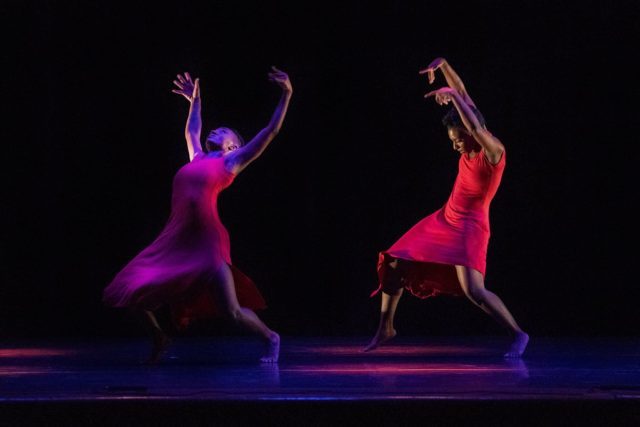
Why: “We sometimes evaluate ourselves based on one another — the media, our neighbors, what we see from others, what they have and what we do not. Comparison is the enemy, but it can help to understand what else is out there until we, or, until I, discover my right to my own walk, giving value to trials, circumstance, and the weight of my experience as truth,” fearless dancer and choreographer Hope Boykin begins in her introduction to “. . . an evening of HOPE,” her October 21 live, in-person show at the 92nd Street Y Harkness Dance Center, available on demand through October 24 at midnight. “And until then, until then, I won’t actually go anywhere, just around in circles, but not forward, not upward, only still. So, what do I do? Keep reaching? Yes! Always reaching, constantly searching, climbing, falling some, starting again. Wanting more, doubting, and hoping — but always hoping. . . . Incorporating yesterday’s thoughts with now moments will teach you what you thought you knew and maybe unclose your mind to my truth, my movement language.” The lights then rise on Deidre Rogan performing Again, Ave, a graceful solo set to Leslie Odom Jr.’s version of “Ave Maria.”

During the pandemic lockdown, Boykin remained busy performing the “This Little Light of Mine” excerpt from Matthew Rushing’s 2014 Odetta for the December 2020 Ailey Forward Virtual Season; presenting the world premiere of the dance film . . . a movement. Journey., part of the 92Y program “Charlie Parker: Now’s the Time – Celebrating Bird at 100”; contributing a short film in honor of Zadie Smith at BAM’s 2020 virtual gala; and winning a twi-ny Pandemic Award for Best Short Zoom Dance for the Works & Process at the Guggenheim commission “. . . it’s okay too. Feel,” a collaboration with BalletX.

Hope Boykin takes an intimate and personal look at herself in 92Y program (photo by Steve Vaccariello)

The evening at the Kaufmann Concert Hall continues with Patrick Coker and William Roberson in an emotional duet set to Ledisi’s torch ballad “No, Don’t (Ne Me Quitte Pas).” Self-described educator, creator, mover, and motivator Boykin, who was born and raised in Durham, North Carolina, and danced with Alvin Ailey from 2000 to 2020, focuses on herself, discussing her truth and movement language in the filmed segment About Her. Me., originally commissioned for Barbara Ann Teer’s National Black Theatre during the lockdown, sharing her thoughts about power, strength, tolerance, equality, choice, and being seen as a threat, dancing in a park over tender music by Gavin Luke.

Boykin next offers the New York City premiere of Redefine US, from the INside OUT, an Annenberg Center commission in which Alisha Rena Peek, Martina Viadana, and Terri Ayanna Wright swirl around in a changing series of long gowns for thirty minutes to a building score by Bill Laurance, yearning and demanding as they approach an exhilarating finale, joined by Boykin. The show concludes with Boykin showering praise on how the stage offers her a platform, particularly coming out of the lockdown, as Coker, Peek, Roberson, Rogan, Viadana, and Wright perform . . . with Your name, set to Kirk Franklin’s rousing gospel song “My World Needs You.”

But Boykin is not done yet, sitting down for a Q&A with Ailey associate artistic director Rushing. As she explains in a program note, “When given the opportunity to have ‘. . . an evening of HOPE,’ I wanted to take a look back at my life as a dance maker and rethink, renew, and revise what today’s Hope may have made. . . . I have waited, sometimes patiently, for my turn, permission to be given. Who have I been waiting on and why? I can’t wait anymore.”

CONGO WEEK: CONGO IN HARLEM 13

Who: Lebert Sandy Bethune, Herb Boyd, Milton Allimadi, Lubangi Muniania, more
What: Thirteenth annual Congo in Harlem festival
Where: Maysles Documentary Center, 343 Lenox Ave. / Malcolm X Blvd. between 127th and 128th Sts.
When: Saturday, October 23, and Sunday, October 24, $12 (virtual screenings free)
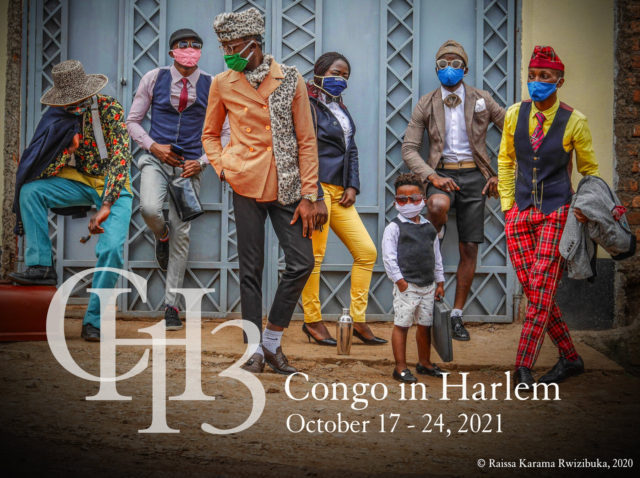
Why: The Maysles Documentary Center’s thirteenth annual Congo in Harlem festival, part of Congo Week, concludes its hybrid presentation this weekend with a trio of in-person screenings, two of which are followed by live discussions. On October 23 at 7:30, Maysles will show Bill Stephens’s raw, recently rediscovered, untranslated, and unfinished 1971 film, Congo Oyé, made in collaboration with Chris Marker, Paul and Carole Roussopoulas, and Eldridge and Kathleen Cleaver, consisting of forty-five minutes of remarkable footage of Black Panther Eldridge Cleaver’s visit to Brazzaville, the capital of the Republic of the Congo. At the same time, the Harlem-based theater will screen Lebert Bethune and John Taylor’s 1966 doc, Malcolm X: Struggle for Freedom, with Bethune, scholar and activist Herb Boyd, and journalist Milton Allimadi on hand to talk about the film, which was shot in Paris shortly before the controversial leader’s assassination.

Bill Stephens’s recently rediscovered Congo Oyé, is part of Maysles Documentary Center’s Congo in Harlem festival

On October 24 at 4:00, Congolese art educator Lubangi Muniania will moderate a discussion after a screening of Mark Kidel’s 1989 film, New York: Secret African City, in which scholar Robert Farris Thompson, who has been writing and teaching about African art and culture since 1958, shares his iconographic studies of the diaspora in New York, beginning with a trip across the Brooklyn Bridge in which Thompson explains, “We’re undergoing a ritual moment because we’re leaving Wall Street, we’re leaving Madison Avenue, we’re leaving white New York, and we’re entering one of the blackest of the cultural segments of New York.” Tickets to the events are $12 each. In addition, free virtual screenings continue through October 24 of Jihan El-Tahri’s L’Afrique en Morceaux (Africa in Pieces), Douglas Ntimasiemi and Raffi Aghekian’s Kinshasa Mboka Té (Kinshasa Wicked Land), Mathieu Roy’s Les Creuseurs (The Diggers), Kidel’s Pygmies in Paris, Sammy Baloji and David Bernatchez’s Rumba Rules: New Genealogies, Moimi Wezam’s Zero, and the above-mentioned works as well as more than a dozen shorts.

THREE SHORT PLAYS BY TRACY LETTS

NIGHT SAFARI / THE OLD COUNTRY / THE STRETCH
Steppenwolf NOW
Through October 24, $20
www.steppenwolf.org

During the pandemic lockdown, Chicago’s Steppenwolf Theatre Company has presented a series of outstanding online presentations, including the Christmas audio play Wally World, the illustrated fairy tale Red Folder, the sizzling two-character drama What Is Left, Burns, and the royal chatfest Duchess! Duchess! Duchess! In preparation for its return to live, in-person theater next month with a revival of longtime company member Tracy Letts’s 2006 play, Bug, in which two people meet in an Oklahoma motel room, Steppenwolf NOW is giving us a tasty apéritif with a trio of three virtual works by Letts, available on demand through October 24. Here in New York City, the three online plays whet our appetite for the Broadway debut of Letts’s The Minutes, which begins previews at Studio 54 in March.

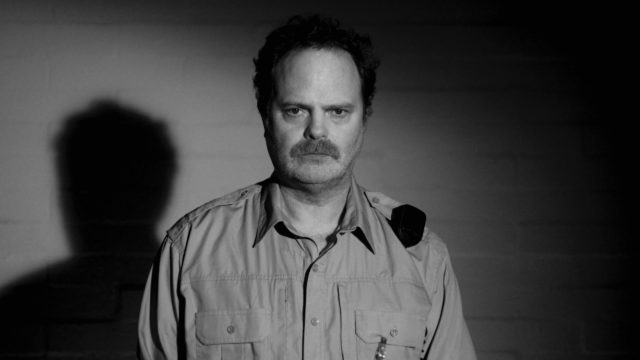
Rainn Wilson plays an unhappy tour guide in online Night Safari (photo by Robert Benavides)

Night Safari stars Rainn Wilson as Gary, a guide leading an evening tour at a zoo. Introducing the first animal, he notes, “In captivity, the Panamanian night monkey is monogamous and lives about twenty years. In the wild, they are not monogamous, and their life span is cut roughly in half. There’s a lesson in there somewhere, but you’re going to have to figure it out for yourself. The Night Safari frowns on editorializing.” But that’s exactly what he does as he takes the visitors to see the aardwolf, the boreal owl, the slow loris, and the paradoxical frog, discussing aspects of their lives that relate to his own failed existence as he slowly grows more ornery, harried, and withdrawn. “What’s so great about sociable animals, anyway?” he asks.

Wilson is a hoot (cue the boreal owl), delivering the monologue, which was first performed by John Gawlik in 2018, in black-and-white, standing in front of a bare wall where his shadow lurks; he is part stand-up comic, part criminal posing for his mug shot. Director Patrick Zakem and DP Robert Benavides photograph him from multiple angles, zooming in on his face or scanning the side of his body, intercutting color photos of the animals along with home movie footage. The thirteen-minute film is a reminder that humans are part of the animal kingdom, subject to the same trials and tribulations as other living creatures, except we tend to be more aware of our triumphs — and failures.

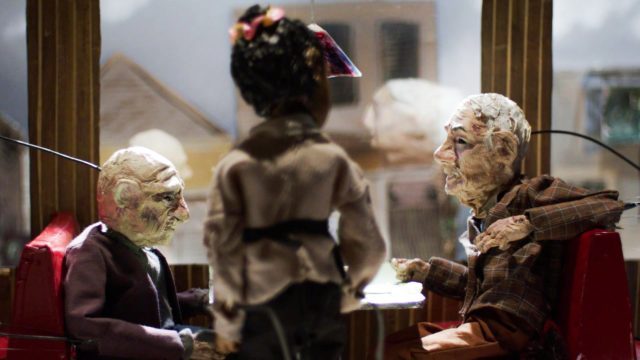
Tracy Letts’s The Old Country is reimagined as a virtual puppet show (photo by Christopher Rejano)

The Old Country, from 2019, begins with atmospheric establishing shots that situate us inside a diner made of papier-mâché and clay, from a spinning dessert tray to ketchup and mustard squeeze bottles to a pile of dirty dishes. Two old men sit at a table, clearly puppets controlled by visible black cords. “That was a damn good sandwich,” Ted (William Petersen) tells a soup-slurping Landy (ninety-seven-year-old Mike Nussbaum), who shortly replies, “I’ll feel safer when we’ve left this deadly place.”

Over the course of ten minutes, they share memories and complain about how things are today. “This isn’t grumpy old man talk,” Ted says. “There’s a principle, right? A scientific principle that explains why everything turns to shit.” Of course, it is grumpy old man talk, but he’s not necessarily wrong, either. Zakem makes you forget you’re watching puppets as they discuss food, sex, the waitress (Karen Rodriguez), and mold spores, their lives now dominated by their aging, death taunting them with every cup of coffee.

Tracy Letts keeps a lookout for life’s twists and turns in The Stretch (photo by Anna D. Shapiro)

Pulitzer and Tony winner Letts takes the acting reins in The Stretch, a fifteen-minute monologue from 2016, directed by Tony winner Anna D. Shapiro and set at the 108th running of the $1 million El Dorado Stakes; Shapiro has helmed several of Letts’s plays, including August: Osage County, Mary Page Marlowe, and Man from Nebraska. The hotly contested race becomes a metaphor for life as Letts, playing the announcer, calls the event, featuring such horses as My Enormous Ego, Bold Defender, a Horse Called Man, Wudjacudja, Hold My Beer, Fata Morgana, and Canadian Navy, leading to such exclamations as “A Horse Called Man appears angry and confused, then retreats in impotent rage,” “Whistlin’ Pete seems completely focused on Sweet Sweet Sue,” and “Here comes My Enormous Ego!”

Something wholly unexpected happens at the finish line, and soon the announcer is delving into humanity’s failings, sharing doom and gloom about the future of all living creatures, prognosticating on interdependence and impermanence while a lullaby plays on the soundtrack. Letts, who has appeared in such television series as Homeland and The Sinner, such Broadway plays as Who’s Afraid of Virginia Woolf? and All My Sons, and such Oscar-nominated films as Lady Bird and Ford v. Ferrari, goes from hyped up and excited to measured and foreboding as he essentially turns his binoculars on himself and the human race.

“These plays share at least one thread: a world off-kilter,” he explains in a program note. “But since I wrote these pieces, the actual world has undergone some hair-raising transformations, which have cast mysterious new light on these plays. They feel very much like stories for 2021.” The Stretch feels particularly relevant now, a gripping accounting of what our lives have been like since March 2020, with no finish line in sight.

BUSHWICK FILM FESTIVAL 2021

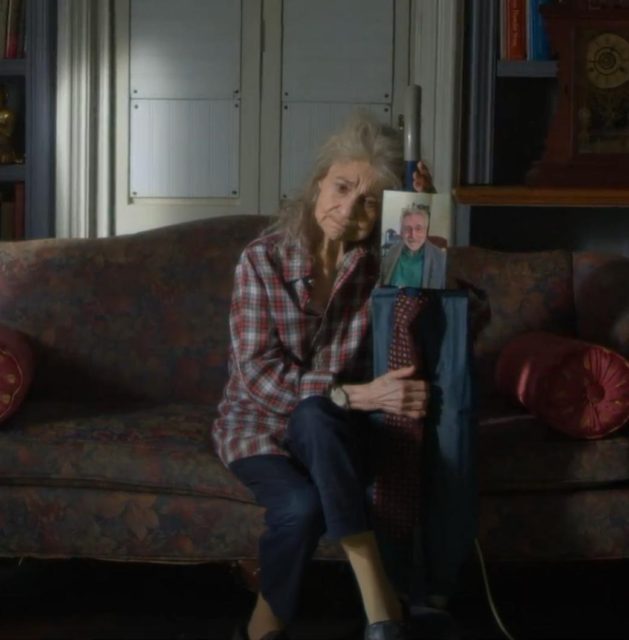
Lynn Cohen uncovers a secret about her late husband in Emma without Edmund

BUSHWICK FILM FESTIVAL
Online, Lot45, Regal Cinema, Circa Brewing Co.
October 20-24, $5-$7 per virtual film, $60-$250 per bundle, $15 in-person screenings
www.bushwickfilmfestival.com

One of my favorite shorts in the fourteenth annual Bushwick Film Festival, running online and in person October 20-24, is Nicolas Minas’s thirteen-minute heart-tugger, Emma without Edmund. Part of the “Defining Stages” program, the film stars Lynn Cohen as a widow who discovers that her recently deceased husband had an affair when they were much younger and insists on finding out more about it. Her husband is played by her real-life spouse, Ronald Cohen. I used to see the two of them regularly at the theater, always making sure to say hello. I saw her many times onstage and onscreen as well; she appeared in such television shows as Law & Order, Damages, and Sex and the City, such films as Vanya on 42nd St., Munich, and The Hunger Games, and such plays as Hamlet with Kevin Kline, Macbeth with Liev Schreiber, and I Remember Mama with an all-star cast of older actresses.

With theaters opening up again, I miss Cohen, who passed away in February 2020 at the age of eighty-six; she and Ronald had been married for fifty-five years, so seeing them together in Emma without Edmund is a special moment. The touching film is being shown October 23 at the Regal Cinema on Court St. with Erica Eng’s Americanized, Naaji Sky Adzimah’s 27 Candles, Ashley Paige Brim’s The Goldfish, and Sarah Kamaras and Harry Spitzer’s The Two Bees, an adorable documentary about longtime roommates Bette and Bonnie, who are ninety-five and recount details from their seventy-year friendship.

The film festival gets under way with an opening-night reception on October 20 at Lot45 and is highlighted by several in-person shorts programs on October 23 at Regal, including “Defining Stages,” “Art as Resistance,” “Family Lies,” and “Campy Comedies” in addition to Kate Beacom and Louis Legge’s full-length Rehab Cabin and a BFF Happy Hour from 2:00 to midnight at Circa Brewing Co. All films are also available online, either individually or in packaged bundles, including all 133 shorts and features from more than two dozen countries for $250. On October 24 from 11:00 am to 5:00 pm, the free, online Movie Industry Conference consists of such panel discussions as “Dive into Development/Production/Distribution,” “Heard City Presents Uplifting Underrepresented Voices,” “Meet the Producers,” and “NFTs and the Creative Future.”