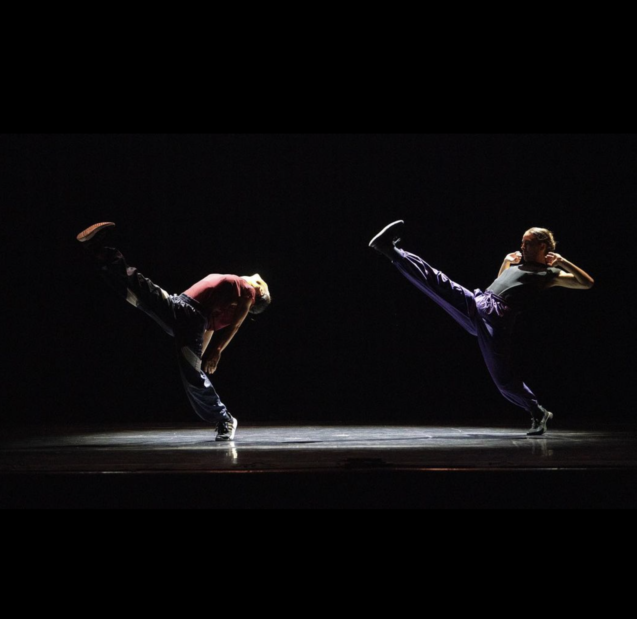
Yin Yue Dance Company presents gorgeous new work at 92nd St. Y and online (photo by Richard Termine)
Who:Yin Yue Dance Company What: Streaming performance and discussion Where:92Y online When: November 19-21, $15 Why: Yin Yue Dance Company’s Ripple is one of the most gorgeous works I’ve seen during the pandemic — from the comfort of my apartment, where I’ve watched hundreds over the last twenty months. The thirty-six-minute piece was filmed live in front of an audience on November 18 at Kaufmann Concert Hall as part of the 92nd St. Y’s Mainstage Series. The world premiere, featuring Kristalyn Gill, Jordan Lang, Grace Whitworth, Nat Wilson, and Yin Yue performing on a dark stage, was essentially developed over the previous five days, and the company didn’t even meet in person in full until the dress rehearsal on the day of the show, when Yin was still finalizing the choreography.
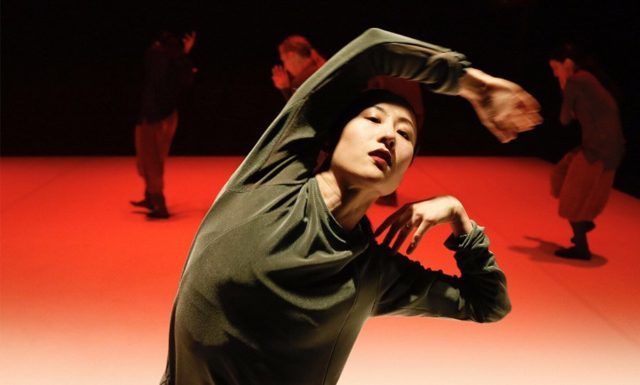
Yin Yue leads her company in streaming performance (photo by Paul B. Goode)
You wouldn’t know it from how beautifully the work flows from one section to the next, highlighted by a dramatic solo by Yin, confined to an oval spotlight, her arms alternately reaching out and cradling herself. The music ranges from romantically cinematic to a pulsating electronic score, along with some spoken text, as the dancers form duets and trios, coming together for several emotional passages, bathed occasionally in blue, then red. If you’ve been reluctant to watch dance onscreen, Ripple is a great place to start. The performance is followed by a discussion with the dancers moderated by Harkness director Taryn Kaschock Russell.
On December 6, Yin (A Trace of Inevitability,A Glimpse Inside a Shared Story) will be at the Guggenheim to receive the Harkness Promise Award along with Alethea Pace at the sixty-fourth annual 2021 Dance Magazine Awards, which will be livestreamed. The Mainstage Series continues December 16–19 with Michelle Dorrance and Dormeshia with special guests, February 24–27 with Baye & Asa and Passion Fruit Dance Company, and March 3–6 with Caleb Teicher and Conrad Tao.
Kurt Vonnegut travels through his extraordinary life in Unstuck in Time,
KURT VONNEGUT: UNSTUCK IN TIME (Robert B. Weide & Don Argott, 2021)
IFC Center
323 Sixth Ave. at West Third St.
Opens Friday, November 19 www.ifccenter.com
“I had never seen him so at ease; they had found each other, as the subject and the filmmaker. It felt like a friendship,” Nanny Vonnegut says about her father, author Kurt Vonnegut Jr., and director Robert Weide in Kurt Vonnegut: Unstuck in Time, an extraordinary documentary opening November 19 at the IFC Center.
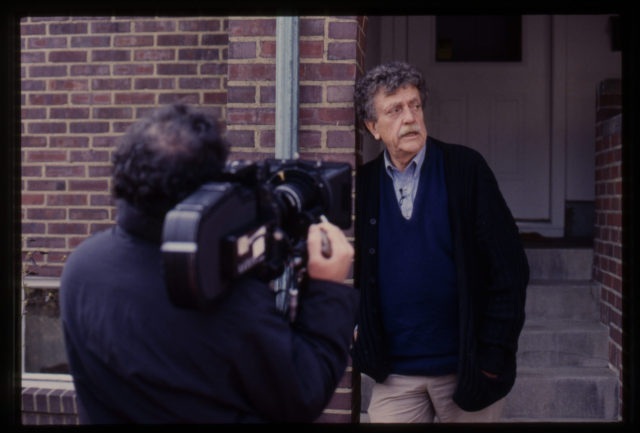
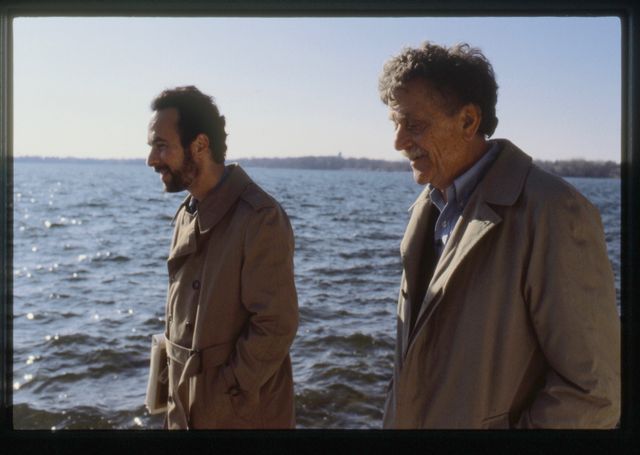
In 1982, twenty-three-year-old Weide wrote a letter to Vonnegut, wanting to make a film about him. Much to Weide’s surprise, the award-winning author of such novels as Slaughterhouse-Five and Cat’s Cradle wrote him back, agreeing to the project. Shooting began in 1988 and continued through Vonnegut’s death in 2007 at the age of eighty-four and beyond. During those years, the two men became good friends, so much so that Weide began doubting his ability to complete the film. “I don’t even like documentaries where the filmmakers has to put himself in the film. I mean, who cares?” he asks in one of several sections where he talks to the camera, concerned that he was becoming too much a part of the story.
After a moving moment in which he discusses putting the camera down and simply enjoying his time with Vonnegut, Weide admits, “Prior to that, I had always been concerned that the friendship might infringe on the film; this was the first time I realized that things had flipped so entirely now that I was worried about the film infringing on the friendship. That was a realization for me that I was maybe in trouble.”
Fortunately, however, Weide and codirector Don Argott, who was brought in to help navigate through Weide’s fears of having grown too close to Vonnegut, keep the main focus on Vonnegut, who opens up about his childhood, his schooling, his early jobs, and, ultimately, his writing career, reflecting on a life well lived yet filled with tragedy, from the death of his sister and her husband to his mother’s suicide and his experiences in Dresden during WWII. Vonnegut is shown giving a lecture in a church, taking a train with Weide, driving through his hometown of Indianapolis, visiting the house where he grew up — and getting sentimental when he sees the casts of his and his siblings’ hands on the top of a small cement wall — and attending his sixtieth high school reunion.
Vonnegut’s brother, Bernard, gives Weide boxes and boxes of home movies and slides, while their sisters, Nanny and Edie, and Vonnegut’s nephews, Jim, Steve, and Kurt Adams — who Vonnegut and his first wife, Jane Marie Cox, took in after the deaths of his beloved sister, Alice, and her husband, James Adams — speak openly and honestly about him, including their extreme disappointment when, upon finally gaining success as a writer, he dumped the devoted Jane for younger photographer Jill Krementz. Over the years, Vonnegut kept sending Weide tapes of his numerous public appearances, so the film includes a treasure trove of clips from speeches, television appearances, and commencement addresses as well as early, annotated drafts of Vonnegut’s writing.
The film discusses the aforementioned books in addition to The Sirens of Titan,Breakfast of Champions, and Mother Night, which was turned into a 1996 movie written by Weide, and explores such favorite Vonnegut characters as the author’s alter ego, Kilgore Trout, and Billy Pilgrim. The title of the film comes from the first line of the second chapter of Slaughterhouse-Five: “Listen: Billy Pilgrim has come unstuck in time.” The concept of time is a leitmotif of the documentary, highlighted by the comparison between the decades it took Weide to complete the film, which is significantly about the making of the film itself, and the years it took Vonnegut to finish his last novel, Timequake, which ended up being significantly about the writing of the book. And just as Vonnegut and his children share poignant memories, Weide inserts some of his own, particularly about his wife, Linda. The parallels between Weide and Vonnegut are striking. “How fucked up is that?” Weide says after noting another coincidence.
Robert B. Weide and Kurt Vonnegut became close friends while making documentary over several decades
Weide also speaks with Vonnegut’s friends and fellow writers John Irving and Sidney Offit, his publisher Dan Simon, his biographer Gregory Sumner, novelist Dan Wakefield, and In These Times editor Joel Bleifuss, who gave Vonnegut a forum in his final years. Actor Sam Waterston reads from several of Vonnegut’s works. “He made literature fun. That was huge,” critic David Ulin says.
Along the way, two elements stand out: Vonnegut’s love of laughing — his infectious laughter is sprinkled throughout the film — and his ever-present Pall Mall. In a cute touch, Emmy winner and Oscar nominee Weide (Curb Your Enthusiasm,Lenny Bruce: Swear to Tell the Truth) and Argott (The Art of the Steal,Believer) animate smoke coming out of his cigarettes in still photos.
On the first page of chapter two of Slaughterhouse-Five, Vonnegut also writes of Billy Pilgrim, “He has walked through a door in 1955 and come out another one in 1941. He has gone back through that door to find himself in 1963. He has seen his birth and death many times, he says, and pays random visits to all the events in between. He says. Billy is spastic in time, has no control over where he is going next, and the trips aren’t necessarily fun. He is in a constant state of stage fright, he says, because he never knows what part of his life he is going to have to act in next.” Weide and Argott have captured the essence of Vonnegut the person and Vonnegut the writer in Unstuck in Time, a must-see, utterly fun portrait of a man who never knew what part of his life he was going to have to act in next but always did so with a contagious sparkle.
Four Black men from different times meet in unusual circumstances in Mansa Ra’s In the Southern Breeze
IN THE SOUTHERN BREEZE
Rattlestick Playwrights Theater
224 Waverly Pl.
Wednesday – Monday through December 12, $40 in person or livestreamed www.rattlestick.org
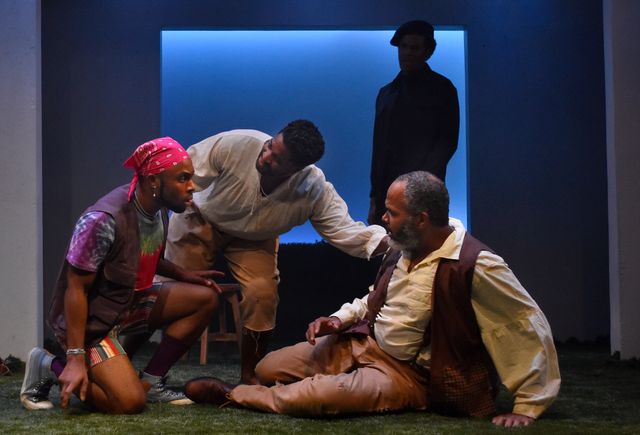
The central section of Mansa Ra’s In the Southern Breeze, which opened last night at Rattlestick, is a compelling fever dream in which four Black men from different time periods meet in a kind of bardo, trying to make sense of their existential situation. Unfortunately, that narrative is framed by a moralizing, didactic story involving a contemporary Black man (Allan K. Washington) literally at the end of his rope, as he considers hanging himself, suffering from severe depression because of pandemic isolation and systemic racism in America.
“It’s so stressful being black. And I don’t mean in some hypothetical way,” he says. The confinement of lockdown is also getting to him. “I honestly have no idea what’s gonna happen anymore. It’s been a while since I’ve interacted with people. Like a super long time. I was already depressed before the ’rona. Everybody was freaking out about quarantine cooped up with nowhere to go. But I was glad. I finally had a real excuse for not leaving my apartment. I know a lot about isolation. It feels like the walls are closing in around you. All day. And all night.”
While he contemplates his fate (offstage), a barefoot man in tatters enters. Madison (Charles Browning) is a runaway slave, just trying to stay alive while looking for his wife. He is soon joined by Lazarus (Victor Williams), a sharecropper who wants to know where his family is. Next, a Black Panther named Hue (Biko Eisen-Martin) arrives, calling out desperately for his wife. And finally, gay activist Tony (Travis Raeburn) shows up fresh from a protest march. As a group they represent such societal ills as racism, homophobia, injustice, inequality, and disenfranchisement, in search of their identity, separated from their wives and children as so many Black men have been throughout the history of the United States. “Unnatural fo’ a man to be taken ’way from his family. Just unnatural,” Madison says. It is critical to note that there are no women in the play; they exist on the periphery, longed-for sources of strength and ancestral continuity. Emmie Finckel’s set is a series of ever-smaller white-framed doorways on lush green grass, the promise of freedom closing fast.
In the Southern Breeze looks at loneliness, depression, racism, and isolation
Earnestly directed by Christopher D. Betts, In the Southern Breeze’s frame story ends up feeling like a cliched diatribe of platitudes lacking dramatic nuance; what the man is experiencing is horrific, something that no one should have to endure, but it comes off as more of an intense therapy session. A rant about holes, from the noose to anal sex to the planet Saturn, feels forced and unnecessary. The body of the play is powerful; Mansa Ra (fka Jiréh Breon Holder) should have more faith in his audience. For example, there is a moment near the end that could have made a memorable conclusion, but instead the narrative extends with a coda that plots out too easy a path for what is a complicated future. One of the smartest choices is to never show an actual noose, serving as a potent metaphor for what has lurked dangerously for centuries.
In her essay “Moral Inhabitants,” which influenced Mansa Ra, Nobel Prize winner Toni Morrison writes, “Our past is bleak. Our future dim. But I am not reasonable. A reasonable man adjusts to his environment. And unreasonable man does not. All progress, therefore, depends on the unreasonable man. I prefer not to adjust to my environment. I refuse the prison of ‘I’ and choose the open spaces of ‘we.’” In the Southern Breeze works best when it deals with the “we” as opposed to the “I.”
In conjunction with the seventy-five-minute play, which runs through December 12 (both at the theater and streaming live) and is presented in partnership with Black Boys Do Theater, the Boys’ Club of New York, the Eastern Group Psychotherapy Society, and the National Alliance on Mental Illness, Rattlestick is hosting a series of community talks, on November 22 at 5:00 (on Zoom, before the livestream, about safe and private spaces), November 28 at 4:00 (an in-person postshow discussion exploring the intersection of mental health and the political and social climate), and December 6 at 5:00 (on Zoom, before the livestream).
Allison Charney and Errin Brooks star in virtual adaptation of Verdi’s Otello
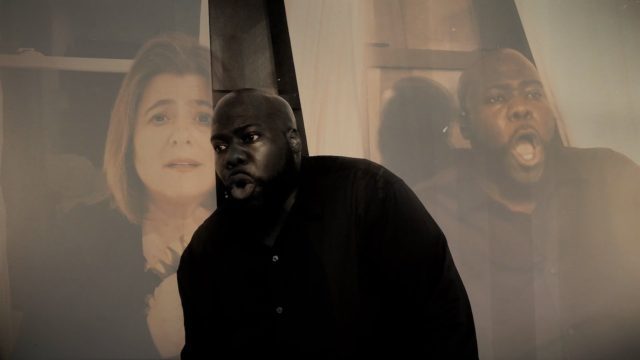
Who:The Town Hall,PREformances Chamber Music Collaborative What: Virtual performance of Giuseppe Verdi’s Otello Where:The Town Hall online When: November 18-25, $20-$35 Why: The Town Hall’s new Opera at Home series, consisting of abridged versions of classic works shot in quarantine during the pandemic lockdown, kicks off with Giuseppe Verdi’s 1887 Otello, an adaptation of one of Shakespeare’s most beloved tragedies that is streaming November 18-25. The Town Hall is teaming up with the PREformances Chamber Music Collaborative for the sixty-minute presentation, which features tenor Errin Brooks as Otello, soprano and PREformances artistic director Allison Charney as Desdemona, actor Jordan Charney (Allison’s father) as the Narrator, and Craig Ketter on piano. There will also be a live Zoom talkback with the artists and creative team on November 22 at 8:00.
“The Town Hall, once the home of the classical music debut, is very excited to bring accessible opera to the masses,” artistic director Melay Araya said in a statement. “The history of classical vocalists at the hall is one of great pride, and diversity in classical music has been a thread throughout the hall’s one-hundred-year history. With a legacy that includes the debuts of Marian Anderson and Leontyne Price, the Town Hall is excited to bring diverse voices and high-quality, accessible classical programming to a wider audience.” Brooks, the Charneys, and Ketter performed scenes from Otello as part of PREformances’ Like the Wind concert at Merkin Concert Hall in March 2020; in addition, during the pandemic, PREformances and the Town Hall collaborated on the seven-part online free series The Season of Hope.
Genealogy will stream for free from Wisconsin on November 19 (photo by Steve Noll)
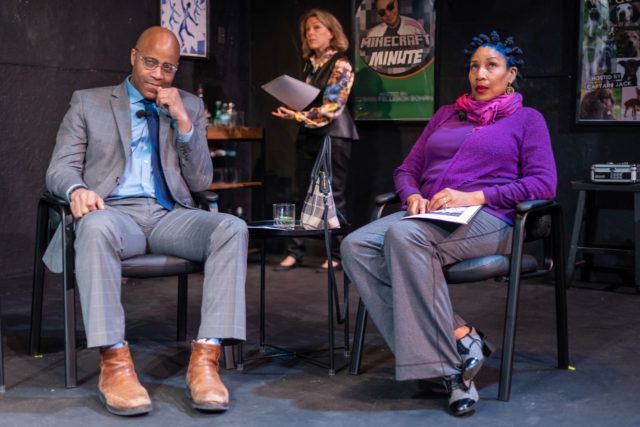
Who:Broom Street Theater,Knowledge Workings Theater What: Free livestream of Genealogy Where:Broom Street Theater YouTube When: Friday, November 19, free with RSVP (donations accepted), 9:00 Why: The latest play by T. J. Elliott and Joe Queenan of Knowledge Workings Theater is currently being performed live at Broom Street Theater in Madison, Wisconsin, but the November 19 performance will be streamed live, and for free, on YouTube. Directed by Dana Pellebon, Genealogy is about a podcast, Chasing the Dead, that one night reveals ancestral connections that shake up the guests, a pair of married couples, one a former football player and his activist professor wife, the other a homemaker and former prosecutor and her high-powered lawyer husband. The cast of the show, which is subtitled A Satire of Inconvenient Family Ties and delves into slavery and reparations, features Karl Reinhardt, Jamie England, Quanda Johnson, Atticus Cain, and Jackson Rosenberry.
Who: Zhang Yang, Peter Loehr, Richard Peña What: Film conversation Where:China Institute online When: Wednesday, November 17, $10, 8:30 Why: China Institute’s ten-part “Seeing China Through Film” continues November 17 with a discussion about Zhang Yang’s 1999 Shower, a touching tale of a family-run bathhouse in Beijing, starring Zhu Xu as the father and Pu Cunxin and Jiang Wu as his sons. Zhang (Sunflower,Paths of the Soul) will be talking online about changes in China since the late 1990s and the battle between tradition and modernity with series curator and Columbia film professor Richard Peña, the former head of the New York Film Festival, and Peter Loehr, whose Imar Film Co. has produced several of Zhang’s works, including Shower,Quitting, and Spicy Love Soup. The series previously featured Jia Zhangke discussing his debut film, The Pickpocket, film historian Christopher Rea on Yuan Muzhi’s Street Angels, Chen Kaige on his debut, Yellow Earth, and associate professor Weihong Bao on Zheng Junli’s Crows and Sparrows. Note that the films are not screened with the conversation but should be watched in advance; free links are usually provided.
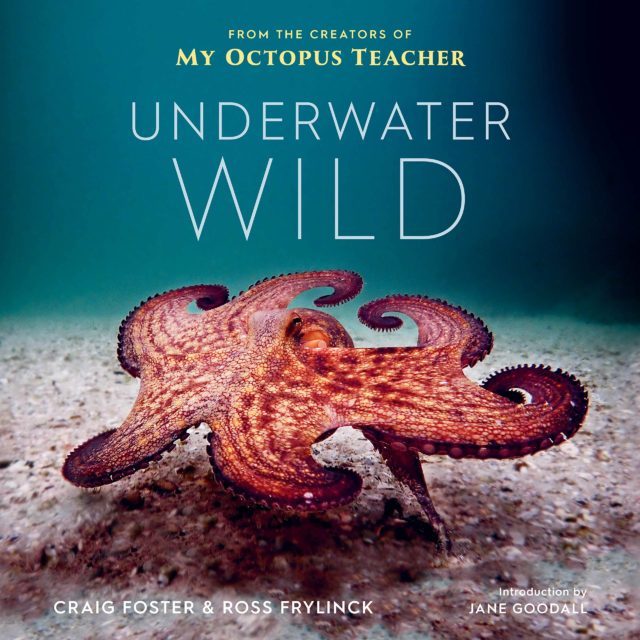
Craig Foster, Ross Frylinck, and Sy Montgomery will discuss new book at virtual 92Y talk
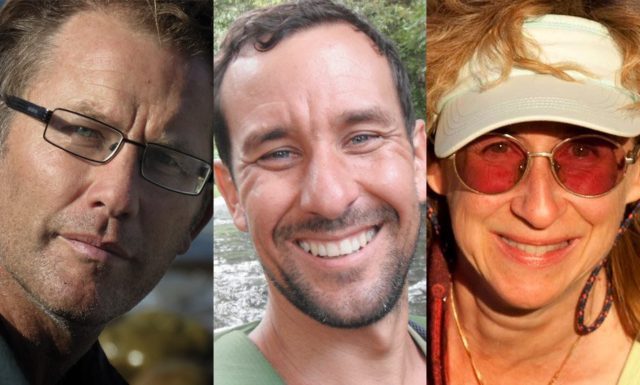
Who: Craig Foster, Ross Frylinck, Sy Montgomery What: Virtual discussion as part of 92Y Recanati-Kaplan Talks Where:92Y online When: Tuesday, November 16, $20, 7:00 Why: One of the most popular and poignant films of the pandemic era has been Pippa Ehrlich and James Reed’s Oscar-winning documentary My Octopus Teacher. The film details the incredible friendship between South African filmmaker Craig Foster and an extraordinary octopus in a kelp forest at the bottom of the ocean and how that affects his relationship with his son, Tom; while we were all locked in our homes, it offered a beautiful respite from our loneliness. Foster (The Great Dance: A Hunter’s Story,Touching the Dragon) and his diving partner Ross Frylinck have now written the book Underwater Wild, which shares stories of their undersea adventures with sea hares, cuttlefish, limpets, and many other marine creatures that can teach humans a thing or two.
In her introduction, Jane Goodall writes, “A friend of mine, knowing of my fascination with octopuses, sent me a link to the film My Octopus Teacher. I knew I was in for a treat, but there was no way I could have imagined what a transformative and entrancing experience was in store for me.” On November 16 at 7:00, Foster and Frylinck, cofounders of the Sea Change Project, which “tells stories that connect people to the wild, motivating them to become part of the regeneration of our planet,” will discuss the book in a 92nd St. Y virtual talk with Sy Montgomery, author of such books as The Soul of an Octopus,Tamed and Untamed: Close Encounters of the Animal Kind, and The Good Good Pig: The Extraordinary Life of Christopher Hogwood.