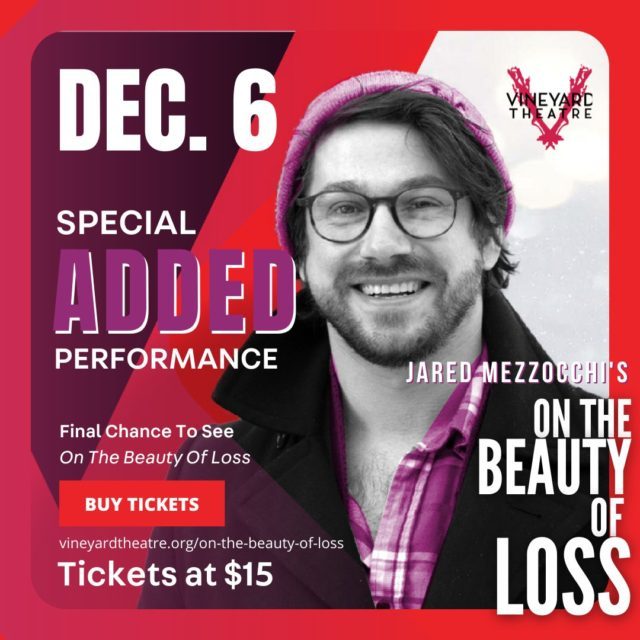
Who:Jared Mezzocchi What: Interactive virtual presentation Where:Vineyard Theatre Zoom When: Monday, December 6, $15, 8:00 Why: From November 11 to 21, the Vineyard Theatre presented Jared Mezzocchi’s interactive Zoom show On the Beauty of Loss, in which the Obie-winning director, actor, playwright, associate professor, and designer (The Curious Incident of the Dog in the Night-Time,How to Catch a Star) reflects on personal and communal grief, relating the 2004 death of his father to the 2020 passing of his grandfather. In the show, he re-creates the same road trip north that he made on both those occasions, putting them in context with the tragedies we’ve all endured during the coronavirus crisis, set to an original score by Lee Kinney.
In the above trailer, Mezzocchi, who codirected the virtual hit Russian Troll Farm, explains, “I was thinking to myself, it would be pretty cool to have a digital road trip where I invited a bunch of people in a car that was driving in real time and we worked together to figure out how to process grief while we are all still apart from one another. I’ve been writing this piece my whole life.” The Vineyard has added a special encore performance on December 6 at 8:00, the seventeenth anniversary of Mezzocchi’s father’s death; audience members can choose to either watch the livestream or participate over Zoom.
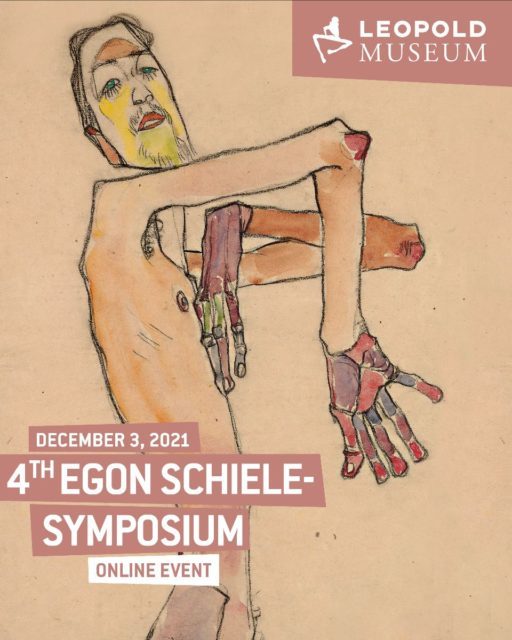
Who: Hans-Peter Wipplinger, Verena Gamper, Franz Smola, Sandra Tretter, Elisabeth Leopold, Elisabeth Dutz, Christian Bauer, Jane Kallir, Gemma Blackshaw, Stefan Kutzenberger, Karin Maierhofer, Sandra Maria Dzialek What: Fourth Egon Schiele Symposium Where:Leopold Museum online When: Friday, December 3, free with advance RSVP, 3:45 – 11:30 am Why: The Leopold Museum, whose Egon Schiele collection comprises 42 paintings, 184 watercolors, drawings, and prints, and numerous writings and miscellaneous texts, will be hosting its fourth Egon Schiele Symposium on December 3, streaming live from Vienna beginning at 3:45 am EST. Interest in Schiele, who died in 1918 at the age of twenty-eight of the Spanish flu, has continued to grow over the last decade, from a centennial exhibition at St. Galerie Etienne to the documentary Portrait of Wally to John Kelly’s remounting of his one-man show Pass the Blutwurst, Bitte.
The symposium, the first of which was held in 2016, features twelve presentations, including one in English by Galerie St. Etienne head and Kallir Research Institute director Jane Kallir, “Reconfiguring Gender: Egon Schiele and the Gay Subculture.” If, like me, you miss Kallir’s extraordinary essays about the gallery’s exhibits, her talk should be a special treat. Below is the full schedule; the symposium will be available for on-demand viewing following the livestream, which will have an interactive Zoom chat.
9:45 am: Welcoming Remarks, with Leopold Museum director Hans-Peter Wipplinger and Leopold Museum Research Center head Verena Gamper
10:00 am: Egon Schiele’s Painting Jugendströmung [Current of Youth] – New Findings About Schiele’s Contribution at the International Art Show Vienna 1909, with Österreichische Galerie Belvedere curator Franz Smola
10:30 am: Gustav Klimt and Egon Schiele at the Vienna Art Show in Berlin 1916, with Klimt Foundation deputy director Sandra Tretter
11:00 am: “I Went Through Klimt”: On Egon Schiele’s Painting Hermits and the Faculty Paintings of Gustav Klimt, with Elisabeth Leopold of the Leopold Museum Private Foundation
11:30 am: Schiele’s Death Masks – New Findings of the Ongoing Research at the Albertina’s Egon Schiele Archive, with Albertina curator Elisabeth Dutz
1:30 pm: The Body Electric: Erwin Osen – Egon Schiele, with Leopold Museum Research Center head Verena Gamper
2:00 pm: Erwin Dominik Osen: An Approach, with Egon Schiele Museum curator Christian Bauer
2:30 pm: Reconfiguring Gender: Egon Schiele and the Gay Subculture (English), with Kallir Research Institute director Jane Kallir
3:00 pm: “Dear Curator …”: Correspondence as Care for Erwin Osen’s Lustknabe [Catamite] (English), with art historian and curator Gemma Blackshaw and architectural historian and artist Adam Kaasa
4:00 pm: Blue Lady in Green Nature: A Workshop Report from Silicon Valley – Egon Schiele and Artificial Intelligence, with writer, curator, and literary scholar Stefan Kutzenberger
4:30 pm: Egon Schiele’s Painting Young Mother – Insights into the Research and Restoration Project, with Wien Museum restorer Karin Maierhofer
5:00 pm: Egon Schiele’s Towns – the Leopold Museum Holdings from a Material-Technology Perspective, with Leopold Museum restorer Sandra Maria Dzialek
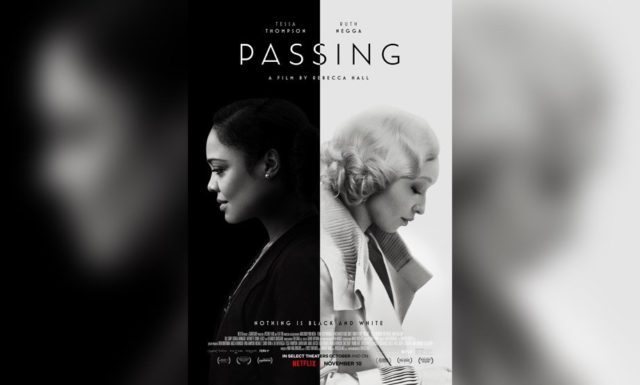
Who: Rebecca Hall, Ruth Negga, André Holland, David Nugent What:Screening and conversation Where:92nd St. Y, 1395 Lexington Ave. at 92nd St., Buttenwieser Hall and 92Y online When: Friday, December 3, $25 in person, 6:30; $20 online, 8:20 Why: In her directorial debut, Passing, award-winning actress Rebecca Hall (Vicky Cristina Barcelona,Machinal) makes her father, the late Sir Peter Hall of the RSC and the National Theatre, proud. The black-and-white Netflix drama stars Tessa Thompson as Irene “Reenie” Redfield, a Black woman living in Harlem who meets up with an old friend, Clare Kendry (Ruth Negga), who is living her life passing as a white woman. Although Reenie is uncomfortable with Clare’s decision, she takes advantage of certain situations where she can pass as well. As Clare starts spending more time with Reenie, her secret threatens to be exposed. Set during the Harlem Renaissance, the tense, beautifully photographed Passing, based on Nella Larsen’s 1929 novel, also features André Holland as Reenie’s husband, Brian Redfield, Alexander Skarsgård as Clare’s bigoted spouse, John Bellew, and Bill Camp as Hugh Wentworth, a friend and mentor to Reenie. On December 3, the 92nd St. Y is hosting a rescheduled hybrid event in which the Ethiopian-Irish Negga (Loving,Shirley), Alabama-born Holland (Selma,Moonlight), and London native Hall will screen and discuss the film with Hamptons International Film Festival artistic director David Nugent at Buttenwieser Hall; the conversation can be livestreamed beginning at 8:20.
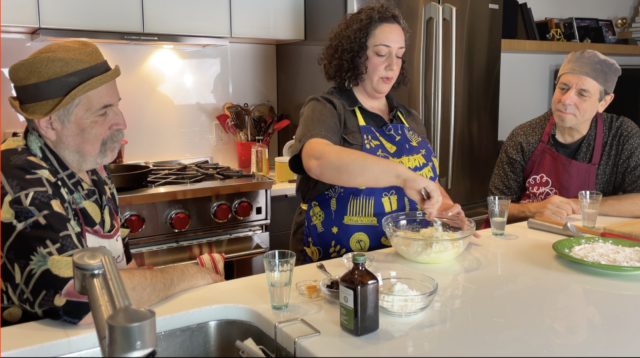
Lorin Sklamberg, Sarah Gordon, and Frank London celebrate a Yiddish Chanukah with food and music
Who: Sir Frank London, Lorin Sklamberg, Sarah Gordon What: Streaming Chanukah event Where:National Yiddish Theatre Folksbiene online When: November 28 – December 6, free (donations accepted) Why: Named for the Yiddish word for eat, “essen,” National Yiddish Theatre Folksbiene’s ESN series combines cooking and music. It now turns to the Festival of Lights for a special presentation available on demand November 28 through December 6. The show, in English and Yiddish, features ESN creators Frank London and Lorin Sklamberg of the Klezmatics and fourth-generation Yiddish singer Sarah Mina Gordon sharing holiday music and cooking demonstrations. Directed and edited by Stephanie Lynne Mason and Adam B. Shapiro, “Songs from the Kitchen — Chanukah Edition!” will feature latkes, syrniki, varenikes, banya pontschkes, and schmaltz and gribnenes alongside fun, festive tunes.
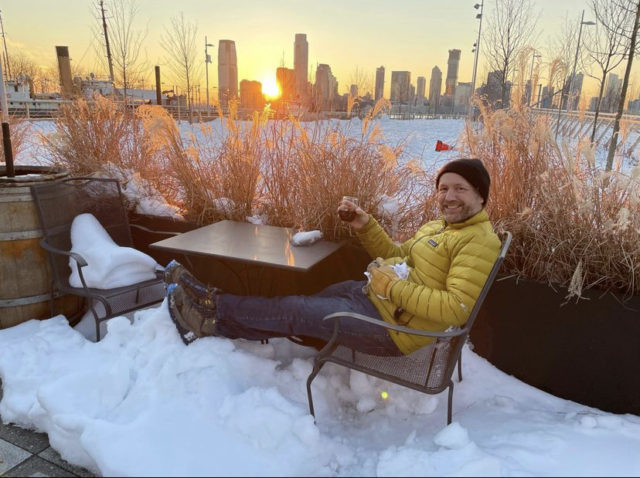
In Indulge Your Senses: Scaling Intimacy in a Digital World, music entrepreneur and philanthropist Michael Dorf writes about opening night at his new club, City Winery: “By then, the smartphone and social-media revolution was underway, and I realized why music fans were showing up in droves. Like me, they had inadvertently let technology disrupt their connection to music — and now they were coming to City Winery to get away from their devices. They were eager to escape their hermetic digital bubble, excited to watch their favorite musicians pluck real guitar strings and slam actual drum skins while also nourishing their other senses — the dramatic sight of a legendary performer up close, the aroma of the winery, the taste of great food and wine, the touch of a nearby friend. . . . Man, it feels great to be back in the real world.”
The Wisconsin-born longtime New Yorker and married father of three wrote those words in 2019 about a 2008 New Year’s Eve concert by Joan Osborne, but he could just as easily have written them today, as the country emerges from a lengthy pandemic lockdown. The amiable and driven Dorf started the much-loved Knitting Factory in 1986 with Louise Spitzer, when he was a twenty-three-year-old Washington University psychology and business graduate. (“We had no idea what we were doing!” he has admitted.) In 2008 he opened City Winery on Varick St., an intimate venue where fans came for food, wine, and music. Among the many acts who played there were Richard Thompson, Kasey Chambers, Robyn Hitchcock, the Mountain Goats, Living Colour, Bob Mould, Nanci Griffith, Eric Burdon, Los Lonely Boys, Lucinda Williams, Todd Rundgren, Steve Earle, Ian Hunter, Ed Sheeran, and Prince. Dorf has also presented “The Music Of” concerts at Carnegie Hall, paying tribute to such musicians as Bruce Springsteen, R.E.M., Led Zeppelin, Aretha Franklin, David Bowie, Bob Dylan, the Who, and Joni Mitchell with all-star lineups, raising money for music education in schools.
In 2020, just before the coronavirus crisis stopped the world, City Winery moved to a thirty-two-thousand-square-foot space on Pier 57 in Hudson River Park. During the pandemic, Dorf and City Winery hosted special livestreamed holiday concerts for Mother’s Day, Valentine’s Day, and Father’s Day and virtual seders for Passover. Early on, Dorf, who also runs City Vineyard, became a vocal advocate for the reopening of bars, restaurants, and music venues, citing numerous inconsistencies and incongruities in government regulations. Following strict CDC guidelines, City Winery is back in business, with music, food, and wine flowing. The upcoming schedule includes Suzanne Vega, John Waters, Betty, Los Lobos, Aimee Mann, and David Broza.
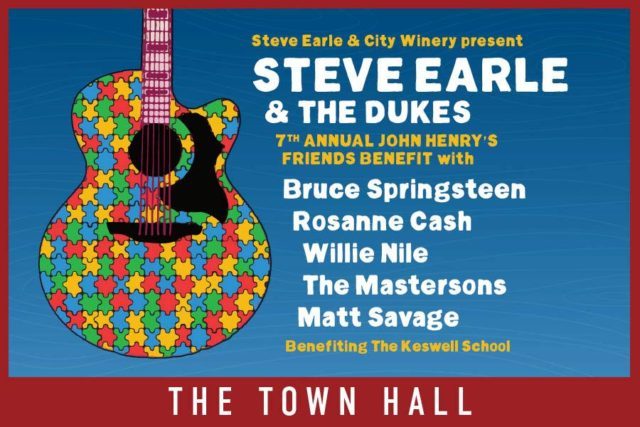
On December 13, City Winery and the Town Hall are joining forces for the seventh annual John Henry’s Friends benefit to raise funds for the educational needs of autistic children; the concert features Steve Earle and the Dukes with special guests Bruce Springsteen, Rosanne Cash, Willie Nile, and the Mastersons.
Dorf recently shared his thoughts with twi-ny on coming out of the lockdown, charity concerts, the future of livestreamed shows, and how great it feels to be back in the real world.
twi-ny: You were one of the leading advocates for reopening New York City, especially entertainment venues. What were the major issues that you felt the government wasn’t getting?
michael dorf: We all agreed, we needed to do things safe. But in the bureaucratic fear in the beginning, there was no practical thinking around seating vs. standing, paid tickets vs. just free music, etc. We wanted to take the smart Dr. Fauci approach to the gatherings, whether it was rapid testing, social distancing, and provide real world producer input so that we could follow what was being advised but dovetailed for live performances.
twi-ny: A lot of people like to knock Sen. Schumer, but he really pushed Save Our Stages. What was his involvement like?
md: People like to bash everyone and that is unfortunate. Chuck Schumer and several others helped enormously to push for our industry. He understood live music, theater, dance, and the impact it was having, not just on our venues, but on all our people, the ecosystem of the live entertainment world. I have tremendous respect for him because of this.
twi-ny: Your virtual seders were a blast. Going forward, will you do some kind of hybrid Passover?
md: Breaking bread (in this case matzah) around the table with other human beings is the essence of the seder. Now, my Passover event, which I’ve been doing in New York City for over twenty-five years now, is certainly not your normal seder. So, I think a hybrid is our future, three hundred people live in on our room in NYC and another few thousand around the globe.
twi-ny: You also hosted several special holiday streaming shows with artists from around the country, and you have livestreams coming up with Jacob Whitesides, Sa-Roc, the Empty Pockets, and Woofstock. Will you be doing more of that in the future, or do you see that coming to an eventual end?
md: Again, our business is to create live, intimate gatherings of people and sell them food, wine, great service, and an experience they will remember. We can’t do that as well virtually (especially the selling of wine), but certainly when it is practical for us to add the livestream for shows and events so that people who can’t travel to any of our venues can partially experience the event.
twi-ny: When you first reopened, what was the reaction of artists and audiences? Was there any initial hesitancy on the part of either or both?
md: Audiences are still a bit hesitant, especially as we live in a world where breakthrough cases happen, even with all our strict protocols of vaccine-only admissions and masks for all unless eating and drinking. Nevertheless, people miss the magic of live entertainment and when you get to it, it is an emotional experience that one misses. Artists are so grateful to be working again and audiences grateful to be entertained. Together, we are seeing lovefests every night with very happy fans and artists.
twi-ny: Were those reactions different at your various locations? Or was the situation pretty much the same in Boston, Chicago, Nashville, Atlanta, Philly, the Hudson Valley, and DC?
md: It is similar. In Nashville, perhaps a little weirder given the local political insanity and freer laws. But for the most part, we have worked hard to push smart policies on admission and staff throughout the pandemic. It’s not over either.
twi-ny: No, it’s not. City Winery is renowned for its vintages. Has the pandemic, as well as climate change, affected your vineyards?
md: Well, thanks for the positive on the wine. The pandemic has only made working in the winery and harvest more difficult from a labor perspective. However, global warming, the fires and temperature out west and in Europe, has severely affected the crop, the yield. The lack of water has made some vineyards not be able to deliver their grapes. It is only going to get more difficult for a supply of grapes, and prices on wine will be going up.
twi-ny: Are you loving your new location on the Hudson? What do you think of your neighbor, Little Island?
md: Love our new location; the entire neighborhood is filled with the arts — architecture, visual arts, cool businesses, and, yes, Little Island is very cool. We are also near the Whitney Museum, the Meatpacking District, the High Line, and so many other cool buildings.
twi-ny: City Winery has always put on terrific benefit shows, raising money for music education in schools with your annual “The Music Of” concerts at Carnegie Hall. Next up is Carly Simon in March, with Darlene Love, Livingston Taylor, Bettye Lavette, Jimmy Webb, and more to be announced. Can you share who might be feted in the future?
md: I’m a kid in a candy shop, thinking about the future shows at Carnegie. The music of Stevie Wonder, CSN, Dolly Parton, U2, Sting, so many other great songwriters out there to do. There are so many artists that love them and want to pay homage to them. And there remains much-needed cash to the music programs that serve undersupported youth in schools around the country.
twi-ny: On December 13, you’re teaming up with the Town Hall for the seventh annual John Henry’s Friends Benefit, featuring Steve Earle & the Dukes and several of his amazing colleagues. What can you tell us about that show and the charity?
md: We have done this to support our friend Steve Earle, who is really the hero of this evening. His son is autistic and goes to the Keswell School, which this benefits. Steve makes the importance of this real by explaining to the audience the severity and challenges and why we need to support this program. It’s very powerful stuff, and this year’s show is going to blow people away. It feels great for all of us at City Winery to help raise these important funds.
twi-ny: You seem to have been going nonstop for decades; do you ever take a break? When you’re not at City Winery, what cultural things are you doing elsewhere?
md: I like to hike, need to hike. I like to golf, need to golf. I like wine, I like my kids, I like my friends. But I love what I do. I love creating spaces where people can gather, indulge their senses, and creating lasting memories. It keeps me going, and we have a lot more still to do and grow. Five new locations in 2022 and many more before I am done.
Yin Yue Dance Company presents gorgeous new work at 92nd St. Y and online (photo by Richard Termine)
Who:Yin Yue Dance Company What: Streaming performance and discussion Where:92Y online When: November 19-21, $15 Why: Yin Yue Dance Company’s Ripple is one of the most gorgeous works I’ve seen during the pandemic — from the comfort of my apartment, where I’ve watched hundreds over the last twenty months. The thirty-six-minute piece was filmed live in front of an audience on November 18 at Kaufmann Concert Hall as part of the 92nd St. Y’s Mainstage Series. The world premiere, featuring Kristalyn Gill, Jordan Lang, Grace Whitworth, Nat Wilson, and Yin Yue performing on a dark stage, was essentially developed over the previous five days, and the company didn’t even meet in person in full until the dress rehearsal on the day of the show, when Yin was still finalizing the choreography.
Yin Yue leads her company in streaming performance (photo by Paul B. Goode)
You wouldn’t know it from how beautifully the work flows from one section to the next, highlighted by a dramatic solo by Yin, confined to an oval spotlight, her arms alternately reaching out and cradling herself. The music ranges from romantically cinematic to a pulsating electronic score, along with some spoken text, as the dancers form duets and trios, coming together for several emotional passages, bathed occasionally in blue, then red. If you’ve been reluctant to watch dance onscreen, Ripple is a great place to start. The performance is followed by a discussion with the dancers moderated by Harkness director Taryn Kaschock Russell.
On December 6, Yin (A Trace of Inevitability,A Glimpse Inside a Shared Story) will be at the Guggenheim to receive the Harkness Promise Award along with Alethea Pace at the sixty-fourth annual 2021 Dance Magazine Awards, which will be livestreamed. The Mainstage Series continues December 16–19 with Michelle Dorrance and Dormeshia with special guests, February 24–27 with Baye & Asa and Passion Fruit Dance Company, and March 3–6 with Caleb Teicher and Conrad Tao.
Kurt Vonnegut travels through his extraordinary life in Unstuck in Time,
KURT VONNEGUT: UNSTUCK IN TIME (Robert B. Weide & Don Argott, 2021)
IFC Center
323 Sixth Ave. at West Third St.
Opens Friday, November 19 www.ifccenter.com
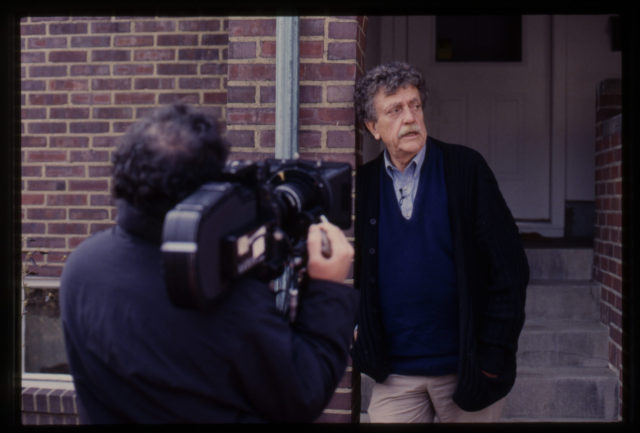
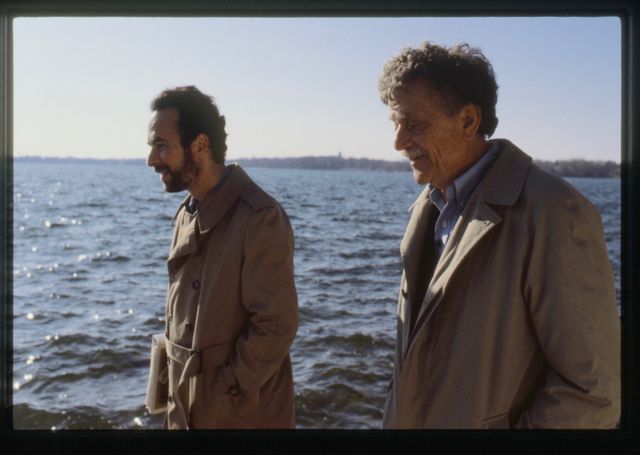
“I had never seen him so at ease; they had found each other, as the subject and the filmmaker. It felt like a friendship,” Nanny Vonnegut says about her father, author Kurt Vonnegut Jr., and director Robert Weide in Kurt Vonnegut: Unstuck in Time, an extraordinary documentary opening November 19 at the IFC Center.
In 1982, twenty-three-year-old Weide wrote a letter to Vonnegut, wanting to make a film about him. Much to Weide’s surprise, the award-winning author of such novels as Slaughterhouse-Five and Cat’s Cradle wrote him back, agreeing to the project. Shooting began in 1988 and continued through Vonnegut’s death in 2007 at the age of eighty-four and beyond. During those years, the two men became good friends, so much so that Weide began doubting his ability to complete the film. “I don’t even like documentaries where the filmmakers has to put himself in the film. I mean, who cares?” he asks in one of several sections where he talks to the camera, concerned that he was becoming too much a part of the story.
After a moving moment in which he discusses putting the camera down and simply enjoying his time with Vonnegut, Weide admits, “Prior to that, I had always been concerned that the friendship might infringe on the film; this was the first time I realized that things had flipped so entirely now that I was worried about the film infringing on the friendship. That was a realization for me that I was maybe in trouble.”
Fortunately, however, Weide and codirector Don Argott, who was brought in to help navigate through Weide’s fears of having grown too close to Vonnegut, keep the main focus on Vonnegut, who opens up about his childhood, his schooling, his early jobs, and, ultimately, his writing career, reflecting on a life well lived yet filled with tragedy, from the death of his sister and her husband to his mother’s suicide and his experiences in Dresden during WWII. Vonnegut is shown giving a lecture in a church, taking a train with Weide, driving through his hometown of Indianapolis, visiting the house where he grew up — and getting sentimental when he sees the casts of his and his siblings’ hands on the top of a small cement wall — and attending his sixtieth high school reunion.
Vonnegut’s brother, Bernard, gives Weide boxes and boxes of home movies and slides, while their sisters, Nanny and Edie, and Vonnegut’s nephews, Jim, Steve, and Kurt Adams — who Vonnegut and his first wife, Jane Marie Cox, took in after the deaths of his beloved sister, Alice, and her husband, James Adams — speak openly and honestly about him, including their extreme disappointment when, upon finally gaining success as a writer, he dumped the devoted Jane for younger photographer Jill Krementz. Over the years, Vonnegut kept sending Weide tapes of his numerous public appearances, so the film includes a treasure trove of clips from speeches, television appearances, and commencement addresses as well as early, annotated drafts of Vonnegut’s writing.
The film discusses the aforementioned books in addition to The Sirens of Titan,Breakfast of Champions, and Mother Night, which was turned into a 1996 movie written by Weide, and explores such favorite Vonnegut characters as the author’s alter ego, Kilgore Trout, and Billy Pilgrim. The title of the film comes from the first line of the second chapter of Slaughterhouse-Five: “Listen: Billy Pilgrim has come unstuck in time.” The concept of time is a leitmotif of the documentary, highlighted by the comparison between the decades it took Weide to complete the film, which is significantly about the making of the film itself, and the years it took Vonnegut to finish his last novel, Timequake, which ended up being significantly about the writing of the book. And just as Vonnegut and his children share poignant memories, Weide inserts some of his own, particularly about his wife, Linda. The parallels between Weide and Vonnegut are striking. “How fucked up is that?” Weide says after noting another coincidence.
Robert B. Weide and Kurt Vonnegut became close friends while making documentary over several decades
Weide also speaks with Vonnegut’s friends and fellow writers John Irving and Sidney Offit, his publisher Dan Simon, his biographer Gregory Sumner, novelist Dan Wakefield, and In These Times editor Joel Bleifuss, who gave Vonnegut a forum in his final years. Actor Sam Waterston reads from several of Vonnegut’s works. “He made literature fun. That was huge,” critic David Ulin says.
Along the way, two elements stand out: Vonnegut’s love of laughing — his infectious laughter is sprinkled throughout the film — and his ever-present Pall Mall. In a cute touch, Emmy winner and Oscar nominee Weide (Curb Your Enthusiasm,Lenny Bruce: Swear to Tell the Truth) and Argott (The Art of the Steal,Believer) animate smoke coming out of his cigarettes in still photos.
On the first page of chapter two of Slaughterhouse-Five, Vonnegut also writes of Billy Pilgrim, “He has walked through a door in 1955 and come out another one in 1941. He has gone back through that door to find himself in 1963. He has seen his birth and death many times, he says, and pays random visits to all the events in between. He says. Billy is spastic in time, has no control over where he is going next, and the trips aren’t necessarily fun. He is in a constant state of stage fright, he says, because he never knows what part of his life he is going to have to act in next.” Weide and Argott have captured the essence of Vonnegut the person and Vonnegut the writer in Unstuck in Time, a must-see, utterly fun portrait of a man who never knew what part of his life he was going to have to act in next but always did so with a contagious sparkle.