this week in film and television

TRIBECA FILM FESTIVAL MIDNIGHT SECTION: KNIVES AND SKIN

Carolyn Harper (Raven Whitley) goes missing in teen noir Knives and Skin

Carolyn Harper (Raven Whitley) goes missing in teen noir Knives and Skin

KNIVES AND SKIN (Jennifer Reeder, 2019)
Regal Cinemas Battery Park
102 North End Ave.
Thursday, May 2, 8:00
Festival continues through May 5
www.tribecafilm.com
www.chicagofilmproject.com

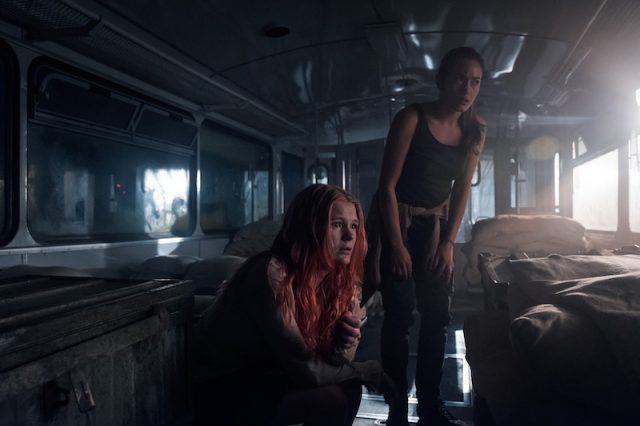
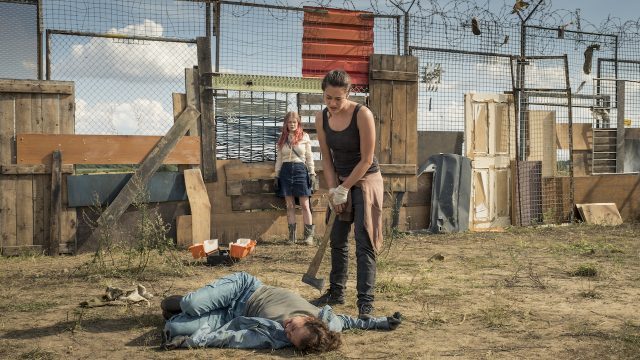
Knives and Skin, Jennifer Reeder’s feature-length debut as a writer-director, is a creepy coming-of-age tale of girlhood, loss, and consent set in small-town America where the disappearance of a teenage girl tilts an already off-balance community even more on edge. Marching band member Carolyn Harper (Raven Whitley) has decided to lose her virginity to jock Andy Kitzmiller (Ty Olwin), but when she suddenly changes her mind, he becomes angry, pushes her to the ground, and leaves her in the woods. When she doesn’t come home, her mother, Lisa (Marika Engelhardt), quickly goes off the deep end, obsessed with her daughter’s clothes and smell. Fellow marching band members Charlotte Kurtich (Ireon Roach), April Martinez (Aurora Real de Asua), and Afra Siddiqui (Haley Bolithon), each of whose identities lie firmly outside old-fashioned mainstream America’s idea of girlhood, are preparing for homecoming, but Carolyn’s situation has cast a damper over everything.

Knives and Skin

Charlotte Kurtich (Ireon Roach) faces a harsh reality in Jennifer Reeder’s Knives and Skin

Reeder focuses on two families over the course of the film, which was inspired by the work of such feminist auteurs as Chantal Akerman and Catherine Breillat in addition to such indie faves as Todd Solondz and Todd Haynes, with the heaviest debt to David Lynch’s Twin Peaks as she uses our generic societal anxiety about female teen sexuality to reveal the hidden underbelly of a typical midwestern town, complete with surreal moments. (There’s also bits of Fast Times at Ridgemont High, Mean Girls, and The Breakfast Club embedded in its DNA.) Andy’s mother, Lynn (Audrey Francis), can’t face reality; his father, Dan (Tim Hopper), is an out-of-work clown fooling around with pregnant waitress Renee Darlington (Kate Arrington); his sister, Joanna (Grace Smith), sells underwear to the principal (Tony Fitzpatrick); and he is closest to his unusual grandmother (Marilyn Dodds Frank). Renee is married to Doug (James Vincent Meredith), the local sheriff in charge of the Carolyn Harper case; their son, Jesse Darlington (Robert T. Cunningham), is the school mascot and friends with Joanna; and their daughter, Laurel Darlington (Kayla Carter), is exploring her sexuality with Colleen (Emma Ladji). Racism, misogyny, sexual harassment, bullying, and more lie at the center of a community unable to come to grips with what’s really going on every day.

Cinematographer Christopher Rejano bathes the film in richly saturated blues, reds, greens, and pinks, accompanied by a lurking score by Nick Zinner of the Yeah Yeah Yeahs. There are several scenes that feature hauntingly beautiful a cappella versions of such 1980s hits as Modern English’s “I Melt with You,” New Order’s “Blue Monday,” the Go-Go’s “Our Lips Are Sealed,” Naked Eyes’ “Promises, Promises,” and Icicle Works’ “Birds Fly (Whisper to a Scream),” lending the film a stark poignancy that overrides some of the inconsistent acting and over-the-top absurdities and singlehandedly makes it worth watching. Knives and Skin is screening in the Midnight section of the Tribeca Film Festival on May 2 at 8:00.

REEL PIECES WITH ANNETTE INSDORF: AN EVENING WITH GLENDA JACKSON

Glenda Jackson (photo by Brigitte Lacombe) will sit down with Annette Insdorf and talk film at the 92nd St. Y on April 29

Glenda Jackson (photo by Brigitte Lacombe) will sit down with Annette Insdorf and talk film at the 92nd St. Y on April 29

Who: Annette Insdorf, Glenda Jackson
What: 92Y Talks
Where: 92nd St. Y, Kaufmann Concert Hall, 1395 Lexington Ave. at 92nd St., 212-415-5500
When: Monday, April 29, $20-$40, 7:30
Why: While all is falling apart around her in Sam Gold’s misguided Broadway production of King Lear at the Cort Theatre, one thing shines through: the stark, riveting performance of master actress Glenda Jackson in the lead role. On Monday night, April 29, when her show is dark, Jackson will be at the 92nd St. Y to discuss her film career as part of the ongoing series “Reel Pieces with Annette Insdorf.” Jackson has won two Oscars, for Ken Russell’s Women in Love and Melvin Frank’s A Touch of Class, and was also nominated for John Schlesinger’s Sunday Bloody Sunday and Trevor Nunn’s Hedda, all between 1971 and 1976. She hasn’t made a movie since 1990’s King of the World, having spent twenty-three years in Parliament before returning to the stage in 2016. The evening will include clips from such films as Women in Love, Marat/Sade, The Music Lovers, Sunday Bloody Sunday, A Touch of Class, The Return of the Soldier, The Romantic Englishwoman, Hopscotch, and Mary, Queen of Scots. Jackson is a frank speaker, so it should be a special night as she talks about her unusual, celebrated career.

IF THE DANCER DANCES

If the Dancer Dances

Meg Harper works with Dava Fearon in If the Dancer Dances

IF THE DANCER DANCES (Maia Wechsler, 2018)
Quad Cinema
34 West 13th St. between Fifth & Sixth Aves.
Opens Friday, April 26
212-255-2243
quadcinema.com
ifthedancer.com

Shortly before the opening credits roll in Maia Wechsler’s lovely documentary If the Dancer Dances, Newark-born, New York City-based choreographer Stephen Petronio says, “The beauty and tender and amazing thing about dance is that it gets passed from one body and one soul to another. There’s something so precious and beautiful about that, yet it’s very fragile. It comes out of the body, it goes into the air, and then it disappears.” In 2014, Petronio announced his “Bloodlines” initiative, in which his company would restage iconic works by Merce Cunningham, Trisha Brown, Anna Halprin, Yvonne Rainer, and Steve Paxton. The series began with Cunningham’s 1968 masterpiece, RainForest, and writer, director, and producer Maia Wechsler and writer and producer Lise Friedman followed the production from the casting stage to three weeks of intense rehearsals with former Cunningham dancers through to the first public presentation of the work at the Joyce in 2015. “I was shocked. I said, Stephen would never in a million years do any other choreographer’s work,” Stephen Petronio Company dancer Dava Fearon says.

If the Dancer Dances

Stephen Petronio wonders just what he has gotten himself into in If the Dancer Dances

She is joined by fellow company members Gino Grenek, Nicholas Sciscione, Emily Stone, Joshua Tuason, Barrington Hines, and Jaqlin Medlock and special guest Melissa Toogood, a former Cunningham dancer, as they rehearse the piece at DANY Studios on West Thirty-Eighth St., led by former Cunningham stagers Meg Harper, Rashaun Mitchell, and Andrea Weber, who painstakingly go over every intricate motion with the dancers, training Petronio’s team as Cunningham trained them. Petronio’s dancers desperately try to learn Cunningham’s very different, unique movement language, which is clearly not easy, as it requires them to use unfamiliar muscle memory and timing that they find extremely frustrating. “Merce never told us any of these images. He never, ever, ever told us what to think or what to feel,” Mitchell explains about Cunningham’s method, which was done without music. Wechsler speaks with former Cunningham dancers Albert Reid, Silas Reiner, Sandra Neels, and Gus Solomons Jr, several of whom were in the original production of RainForest at Buffalo State College in March 1968. “It was the quintessence of stripped-down abstraction,” Reid says of the piece. Wechsler also includes rare footage of performances of RainForest from 1968, 1970, 1977, and 2011, the earlier ones featuring Cunningham, who is a treat to watch onstage, in cut-up costumes by Jasper Johns and moving amid the Mylar balloons of Andy Warhol’s Silver Clouds floating around his body. The film is edited by Mary Manhardt with Adam Zucker, who imbue the film with the pace of a dance as they shift between rehearsals, interviews, and archival clips. As opening night approaches, the cast has a lot of work still to do, everyone concerned whether they’ll be ready to perform in front of the highly knowledegable New York City audience. Through it all, Petronio, who considers Cunningham and Brown his “artistic parents” — he was the first male to be in the Trisha Brown Dance Company — primarily works with Harper from the sidelines, sitting and watching as she gets deep into worry mode, doing whatever she can to protect Cunningham’s treasured, and carefully controlled, legacy. In that way, If the Dancer Dances unfolds like a thriller about the creative process; you don’t have to be a dance fan to get caught in its grip.

If the Dancer Dances — the title comes from the start of a Cunningham quote — features an enchanting score by Paul Brill, including the beautiful song “Everything I Believe In” that plays over the closing credits, so don’t be so quick to leave the theater. The film opens April 26 at the Quad, enriched with special appearances by the creators all weekend. Wechsler, Friedman, and Petronio will participate in a Q&A moderated by Alastair Macaulay after the 7:00 screening April 26, and Wechsler and Friedman will introduce the 9:00 show; on April 27, there will be Q&As with Wechsler, Friedman, Grenek, Solomons jr, and Mitchell, moderated by Julie Malnig, at the 1:00 show and with Wechsler, Friedman, Solomons jr, and Harper, moderated by Deborah Jowitt, at the 7:00 screening, while Wechsler and Friedman will introduce the 9:00 show; and on April 28 there will be a Q&A with Wechsler, Friedman, and Fearon, moderated by Macaulay, after the 1:00 screening.

TRILOGIES: THE PUSHER TRILOGY

Mads Mikkaelsen has a tough go of it in the Pusher trilogy

Mads Mikkelsen has a tough go of it in Nicolas Winding Refn’s Pusher trilogy

THE PUSHER TRILOGY (Nicolas Winding Refn, 1996, 2004, 2005)
Film Forum
209 West Houston St.
April 26 & 27, May 4
Series runs April 19 – May 16
212-727-8110
filmforum.org

Danish filmmaker Nicolas Winding Refn’s Pusher trilogy is a gritty, violent, brutal, and brilliant look at the devastation wrought by drugs. In Pusher (1996), Kim Bodnia stars as Frank, a small-time hood who loses both the money and the drugs when a deal goes bad. Over the course of a week, he grows more and more desperate as druglord Milo (Zlatko Buric) and his henchman, Radovan (Slavko Labovic), grow more and more impatient, preparing to do some serious damage to Frank. Pusher II: With Blood on My Hands (2004) focuses on Tonny (Mads Mikkelsen), Frank’s former partner who has just been released from prison. Addled by a beating he took, Tonny gets lost in a drug haze, trying to prove himself a worthy criminal to his big-time father, the Duke (Leif Sylvester Petersen), while also refusing to accept that he might be the father of Charlotte’s (Anne Sorensen) child. With the whole world crashing in on him, Tonny goes to extreme measures that affect everybody in his sphere. The gritty, powerful trilogy concludes with Refn’s masterwork, Pusher III: I’m the Angel of Death (2005), this time with Milo in the forefront.

Nicolas Winding Refn’s Pusher trilogy concludes with

Nicolas Winding Refn’s Pusher trilogy concludes with Milo (Zlatko Buric) taking center stage in Pusher III: I’m the Angel of Death

While preparing for his daughter’s (Marinela Dekic) twenty-fifth birthday party, he discovers that a major score has changed significantly, and he is forced to deal directly with a new generation of drug dealers — and by himself, because his cooking has made his crew sick. Shuttling between the ever-worsening situation, NA meetings, and his daughter’s party, Milo is faced with some deadly choices. Buric is spectacular as the aging druglord who does not like what he sees as he takes stock of his life. While the first two films feature hard-driving punk music, classical music slows things down in the far more contemplative conclusion. To add to the remarkable realism, many of the supporting actors were actual criminals. The grand finale is unforgettable, a multilayered, deeply philosophical, and extremely violent statement on the nature of drugs and the men and women addicted to that life. You can see all three films April 26-27 and May 4 in Film Forum’s Trilogies series, which continues through May 16 with other three-packs from Mark Donskoy, John Ford, Fritz Lang, Carol Reed, Hou Hsiao-Hsien, and Krzysztof Kieslowski, among many others.

TRIBECA TALKS 2019

Martin Scorsese and Robert De Niro will talk about their work together at the Beacon

Martin Scorsese and Robert De Niro will talk about their work together at the Beacon as part of the 2019 Tribeca FIlm Festival

Tribeca Film Festival
Multiple locations
April 24 – May 5, free – $50
www.tribecafilm.com

One of the most exciting parts of the Tribeca Film Festival is the Tribeca Talks section, which features discussions with actors, directors, writers, and other film-crew members talking about their craft. Divided into “Directors Series,” “Future of Film,” “Master Class,” and “Storytellers,” the talks include such cool programs as Sarah Silverman with Mike Birbiglia, Martin Scorsese with Robert De Niro, Michael J. Fox with Denis Leary, David O. Russell with Jennifer Lawrence, Questlove with Boots Riley, Guillermo del Toro with Alec Baldwin, and Hideo Kojima with Norman Reedus along with such topics as “The Art of Adaptation,” “Is Anyone Home? Location-Based Entertainment,” “The Journey of Digital Storytelling to TV,” and “10 Years of 30 for 30.” The events, some of which are free with advance registration, take place at BMCC TPAC, the Tribeca Festival Hub, the Marriott Bonvoy Boundless Theater, the SVA Theater, and the Beacon.

Thursday, April 25
Tribeca Games Presents: Hideo Kojima with Norman Reedus, Stella Artois Theatre @ BMCC TPAC, $40, 6:00

Directors Series: Guillermo del Toro with Alec Baldwin, Stella Artois Theatre @ BMCC TPAC, $40, 8:00

Friday, April 26
Future of Film: The Art of Adaptation, with Mathias Chelebourgh, Pete Billington, and Jessica Shamash, Tribeca Festival Hub, free with advance ticket, 1:00

Future of Film: Building the New Storytellers, with Ken Perlin, Lance Weiler, Alfredo Salazar-Caro, and Jeremy Bailenson, Tribeca Festival Hub, free with advance ticket, 2:30

Queen Latifah with Dee Rees with the Premiere of the Queen Collective Shorts, screening preceded by discussion with Queen Latifah and Dee Rees, Marriott Bonvoy Boundless Theater, $40, 5:30

Saturday, April 27
Future of Film: Is Anyone Home? Location-Based Entertainment, with Coline Delbaere, Ethan Stearns, and Antoine Cayrol, moderated by Loren Hammonds, Tribeca Festival Hub, free with advance ticket, 1:00

Storytellers: Jaron Lanier, Marriott Bonvoy Boundless Theater, $40, 2:00

Directors Series: David O. Russell with Jennifer Lawrence, Stella Artois Theatre @ BMCC TPAC, rush, 6:00

Sunday, April 28
Directors Series: Martin Scorsese with Robert De Niro, Beacon Theatre, 2:00

Monday, April 29
Future of Film: Immersive Storytelling Across the Mediums, with Jessica Brillhart and Aaron Katz, Tribeca Festival Hub, free with advance ticket, 1:00

Future of Film — Sharing Is Caring: Shared Experiences in Mixed Reality, with Adam May, Lucy Hammond, May Abdalla, and Amy Rose, Tribeca Festival Hub, free with advance ticket, 2:30

Master Class: The Art of Cinematic Sound, with Walter Murch, Ben Burtt, Gary Rydstrom, and Midge Costin, moderated by Glenn Kiser, SVA Theater 2 Beatrice, $40, 5:00

Storytellers: Sarah Silverman with Mike Birbiglia, Stella Artois Theatre @ BMCC TPAC, $40, 8:00

Questlove will be interviewed by Boots Riley at the Tribeca Film Festival

Questlove will be interviewed by Boots Riley at the Tribeca Film Festival

Tuesday, April 30
Storytellers: Michael J. Fox with Denis Leary, Stella Artois Theatre @ BMCC TPAC, $40, 6:00

Storytellers: Questlove with Boots Riley, Marriott Bonvoy Boundless Theater, rush, 2:00

Wednesday, May 1
Storytellers: Rashida Jones, Stella Artois Theatre @ BMCC TPAC, $40, 6:00

Friday, May 3
Master Class: Irwin Winkler on the Art and Craft of Producing, SVA Theater 2 Beatrice, free with advance ticket, 3:30

Tribeca Disruptive Innovation Award, Stella Artois Theatre @ BMCC TPAC, $50, 4:00

Prune Nourry and Serendipity, screening followed by discussion with Prune Nourry, Rita Charon, and Nina Collins, Marriott Bonvoy Boundless Theater, $24, 8:00

Saturday, May 4
Tribeca Celebrates Pride Day, with Jeffrey Winter, Wade Davis, River Gallo, Sadé Clacken Joseph, Raul Castillo, Tanya Saracho, Ser Anzoategui, Roberta Colindrez, Kevin Huvane, Lesli Klainberg, John Cameron Mitchell, Leilah Weinraub, Simon Halls, Rivianna Hyatt, Fabrice Houdart, Alok Vaid-Menon, Tre’vell Anderson, Joanna Lohman, Sarah McBride, Malcolm Kenyatta, Stacy Lentz, Kathy Tu, Staceyann Chin, Twiggy Pucci Garçon, and many others, Marriott Bonvoy Boundless Theater, $30, 10:00 am

Directors Series: Marielle Heller, SVA Theater 2 Beatrice, $40, 1:00

Master Class — The Journey of Digital Storytelling to TV: A Discussion with HBO Talent, SVA Theater 2 Beatrice, free with advance ticket, 5:30

Sunday, May 5
10 Years of 30 for 30, with Connor Schell, Ezra Edelman, Alex Gibney, and Marina Zenovich, moderated by Chris Connelly, SVA Theater 2 Beatrice, $30, 3:30

CARMINE STREET GUITARS

Carmine Street Guitars

Rick Kelly and Cindy Hulej are a mutual admiration society in Carmine Street Guitars

CARMINE STREET GUITARS (Ron Mann, 2018)
Film Forum
209 West Houston St.
Opens Wednesday, April 24
212-727-8110
filmforum.org
www.sphinxproductions.com

In the second half of Ron Mann’s utterly delightful and unique documentary Carmine Street Guitars, a well-dressed, well-groomed young man enters the title store in Greenwich Village and identifies himself as Adam Shalom, a Realtor who is selling the building next door. Shalom tries to talk about square footage, but Carmine Street Guitars founder and owner Rick Kelly barely looks up as he continues cleaning a fret. It’s a critical, uncomfortable moment in an otherwise intimate and inviting film; throughout the rest of the eighty-minute documentary, the soft-spoken Kelly talks guitars and craftsmanship with a stream of very cool musicians and his punk-looking young apprentice, Cindy Hulej. But Shalom’s arrival hearkens to one of the main reasons why Mann made the movie: to capture one of the last remaining old-time shops in a changing neighborhood, a former bohemian paradise that has been taken over by hipsters and corporate culture, by upscale stores and restaurants and luxury apartments. You’ll actually cheer that Kelly gives Shalom such short shrift, but you’ll also realize that Shalom and others might be knocking again at that door all too soon.

Carmine Street Guitars

Rick Kelly welcomes “instigator” Jim Jarmusch to his Greenwich Village shop in Carmine Street Guitars

The rest of the film is an absolute treat. Mann follows five days in the life of Carmine Street Guitars; each day begins with a static shot of the store from across the street, emphasizing it as part of a community as people walk by or Kelly, who was born in Bay Shore, arrives with a piece of wood he’s scavenged. The camera then moves indoors to show Kelly and Hulej making guitars by hand, using old, outdated tools and wood primarily from local buildings that date back to the nineteenth century. Kelly doesn’t do computers and doesn’t own a cell phone; he leaves all that to Hulej, who posts pictures of new six-strings on Instagram. Meanwhile, Kelly’s ninetysomething mother, Dorothy, works in the back of the crazily cluttered store, taking care of the books with an ancient adding machine. Over the course of the week, they are visited by such musicians as Dallas and Travis Good of the Sadies (who composed the film’s soundtrack), “Captain” Kirk Douglas of the Roots, Eleanor Friedberger, Dave Hill of Valley Lodge, Jamie Hince of the Kills, Nels Cline of Wilco, Christine Bougie of Bahamas, Marc Ribot, and Charlie Sexton. Bill Frisell plays an impromptu surf-guitar instrumental version of the Beach Boys’ “Surfer Girl.” Stewart Hurwood, Lou Reed’s longtime guitar tech, talks about using Reed’s guitars for the ongoing “DRONES” live installation. “It’s like playing a piece of New York,” Lenny Kaye says about the guitars made from local wood while also referring to the shop as part of the “real village.”

Mann, the Canadian director of such previous nonfiction films as Grass, Know Your Mushrooms, and Comic Book Confidential, was inspired to make the movie at the suggestion of his friend Jarmusch, who in addition to directing such works as Stranger Than Paradise (which featured Balint), Down by Law, and 2016 NYFF selection Paterson is in the New York band Sqürl. Plus, it was Jarmusch who first got Kelly interested in crafting his guitars with wood from buildings, “the bones of old New York,” resulting in Telecaster-based six-strings infused with the history of Chumley’s, McSorley’s, the Chelsea Hotel, and other city landmarks. Carmine Street Guitars, which is far more than just mere guitar porn, opens April 24 at Film Forum, with Mann, Kelly, and Hulej participating in Q&As following the 7:45 show on Wednesday night, joined by Jarmusch, and after the 6:00 screening on Friday and 4:10 show on Saturday.

TRILOGIES: SERGIO LEONE’S DOLLARS TRILOGY

(images  courtesy  of  MGM  /  Cineteca  di  Bologna  /  Park  Circus)

Clint Eastwood introduces the Man with No Name in Sergio Leone’s A Fistful of Dollars (photo courtesy MGM / Cineteca di Bologna / Park Circus)

A FISTFUL OF DOLLARS (PER UN PUGNO DI DOLLARI) (Sergio Leone, 1964)
Film Forum
209 West Houston St.
Saturday, April 20, 4:30, and Monday, April 22, 4:40
Series runs April 19 – May 16
212-727-8110
filmforum.org

Clint Eastwood made a name for himself on the big screen playing the Man with No Name in Sergio Leone’s 1964 spaghetti Western, A Fistful of Dollars, which is being shown April 20-23 at Film Forum as part of its awesome Trilogies series. In his first lead movie role, Eastwood, the costar of the television series Rawhide, is a gunslinger draped in a poncho and smoking a small cigar who rides on a mule into San Miguel, a tiny town in the middle of nowhere, home to an ongoing feud between the gun-running Baxters and the liquor-dealing Rojos. The stranger decides to play both sides against the middle, caring only that he earns lots of cash. “Never saw a town as dead as this one,” the stranger tells saloon owner Silvanito (Jose Calvo), who explains, “The place is only widows. Here you can only get respect by killing other men, so nobody works anymore.” The stranger hears the sound of banging outside and says, “Somebody doesn’t share your opinion.” Silvanito opens the window to reveal old man Piripero (Joe Edger) making coffins. “You’ll be a customer,” Silvanito tells the stranger with assurance. The stranger goes back and forth between the Baxters, led by the sheriff (W. Lukschy), and the Rojos, who follow the dangerous, unpredictable Ramón (Gian Maria Volontè). Also caught up in the Hatfield-McCoy battle are the sheriff’s wife, Consuelo (Margherita Lozano), and brother, Antonio (Bruno Carotenuto), along with Rojo brothers Benito (Antonio Prieto) and Esteban (S. Rupp) and their enforcer, Chico (Richard Stuyvesant). Ramón, meanwhile, has his eyes set on Marisol (Marianne Koch), who is married to Julio (Daniel Martín), who does not want to get involved in any fighting. Carefully watching it all is Juan de Díos (Raf Baldassarre), who rings the church bell at every death.

The Italian-German-Spanish production is a remake of Akira Kurosawa’s Yojimbo, which led to legal entanglements when the Japanese auteur demanded, well, a fistful of dollars in financial compensation. According to Christopher Frayling’s Sergio Leone — Something to Do with Death, Leone received a note from Kurosawa that read, “Signor Leone — I have just had the chance to see your film. It is a very fine film, but it is my film. Since Japan is a signatory of the Berne Convention on international copyright, you must pay me.” Frayling also suggests that Leone was influenced by Dashiell Hammett’s Red Harvest and Carlo Goldoni’s Servant of Two Masters and did not feel he was stealing only from Kurosawa. In The BFI Companion to the Western, Frayling quotes Leone as saying, “Kurosawa’s Yojimbo was inspired by an American novel of the serie-noire so I was really taking the story back home again.” (For a montage of similarities between the two films, check out this video.). Regardless, A Fistful of Dollars, made for about two hundred grand, set the standard for the new genre, and Eastwood was its antihero. He and Leone would team up again on the sequel, For a Few Dollars More, which is not a direct remake of Kurosawa’s Yojimbo follow-up, Sanjuro, as well as The Good, the Bad, and the Ugly, the best of the Dollars Trilogy.

(photo courtesy  MGM / Cineteca di Bologna / Park Circus)

Clint Eastwood watches his back in first of the Dollars Trilogy (photo courtesy MGM / Cineteca di Bologna / Park Circus)

Fistful is steeped in violence and death, from Iginio Lardani’s rad title sequence of silhouettes in black, white, and blood red to an early shot of the stranger riding under a noose and giving it a long look. Whereas Toshirô Mifune played the bodyguard in Yojimbo with a devilish glee, Eastwood — in a role that had been previously offered to Henry Fonda, Charles Bronson, James Coburn, and others — is much more serious as the Man with No Name, who would become more sympathetic in future outings. The extremely poor dubbing only adds to the film’s magnificence. To enhance its foreign appeal to American audiences, several members of the cast and crew appear under pseudonyms in the credits, including Leone (Bob Robertson), cinematographer Massimo Dallamano (Jack Dalmas), actor Gian Maria Volontè (John Wells), and composer Ennio Morricone (Leo Nichols or Dan Savio). There is no mention of Kurosawa or Yojimbo anywhere.

Sergio Leone

Rival bounty killers colonel Douglas Mortimer (Lee Van Cleef) and Manco (Clint Eastwood) join forces in Sergio Leone’s For a Few Dollars More

FOR A FEW DOLLARS MORE (PER QUALCHE DOLLARO IN PIÙ) (Sergio Leone, 1965)
Saturday, April 20, 4:30, and Tuesday, April 23, 4:40
filmforum.org

Determined to capitalize on the immediate success of A Fistful of Dollars, director and cowriter Sergio Leone and stars Clint Eastwood and Gian Maria Volonté quickly got back in the saddle to make the initially underrated, now celebrated follow-up, For a Few Dollars More. In the 1965 spaghetti Western, filmed in Almería, Spain, and at Rome’s Cinecittà Studios — and featuring a town doubling as El Paso built by production designer Carlo Simi that still stands today, part of the MiniHollywood theme park in Tabernas — Eastwood is a bounty killer that some call Manco, but he is essentially the Man with No Name again. He travels from wretched place to wretched place with his horse, poncho, cigar, squinty eyes, and guns, shooting criminals and collecting rewards. When he encounters a rival, former Confederate colonel Douglas Mortimer (Lee Van Cleef), they are initially at odds, going after the same trophies, but they ultimately decide to join forces to capture and kill El Indio (Volonté), a murderous psychopath who likes to use a pocket watch that plays a gentle tune when opened when he is getting ready to shoot someone, an element from his past (involving a mystery woman played by Rosemary Dexter) that haunts him. Manco embeds himself with Indio’s mangy gang, which includes Groggy (Luigi Pistilli), Niño (Mario Brega), Cuchillo (Aldo Sambrell), Tomaso (Lorenzo Robledo), Sancho Perez (Panos Papadopulos), Slim (Werner Abrolat), Blackie (Frank Braña), Chico (José Canalejas), Frisco (Antonio Molino Rojo), Hughie (Benito Stefanelli, who was in all three Dollars films), and Wild (the one and only Klaus Kinski). As Indio prepares to rob a bank in El Paso, a series of double crosses and personal vengeance lead to a memorable ending.

For a Few Dollars More

Manco (Clint Eastwood) becomes part of Indio’s (Gian Maria Volonté) gang in For a Few Dollars More

Written by Leone and Luciano Vincenzoni with added dialogue by Sergio Donati, For a Few Dollars More fits right in between A Fistful of Dollars and The Good, the Bad, and the Ugly, from its overall look and mood to Ennio Morricone’s stupendous score and Massimo Dallamano’s beautiful cinematography, both veterans of Fistful. Eastwood further established his ability to carry a film as a compelling antihero, Van Cleef (How the West Was Won, Escape from New York) earned one of the three title roles in Ugly, and Volonté, who would go on to make such classics as A Bullet for the General, Investigation of a Citizen Above Suspicion, and Christ Stopped at Eboli, is superbly grimy as a brutal villain hiding a soft spot. Genre tropes abound, highlighted by Leone’s love of close-ups of his characters’ eyes, shifting from one side to the other as they face their destinies.

Clint Eastwood is the Good in classic Sergio Leone operatic oater

THE GOOD, THE BAD AND THE UGLY (Sergio Leone, 1966)
Saturday, April 20, 9:00, and Sunday, April 21, 4:40
filmforum.org

One of the all-time-great spaghetti Westerns, Sergio Leone’s dusty three-hour operatic oater stars Clint Eastwood as the Good (Blondie), Lee Van Cleef as the Bad (Angel Eyes), and Eli Wallach as the Ugly (Tuco Benedicto Pacifico Juan Maria Ramirez, whose list of criminal offenses is a riot), three unique individuals after $200,000 in Confederate gold buried in a cemetery in the middle of nowhere. Nearly twenty minutes of never-before-seen footage was added to the film several years ago, with Wallach and Eastwood overdubbing brand-new dialogue, so if you haven’t seen it in a while, it might just be time to catch it again. Ennio Morricone’s unforgettable score and Torino delli Colli’s gorgeous widescreen cinematography were also marvelously enhanced; their work in the scene when Tuco first comes upon the graveyard will make you dizzy with delight. And then comes one of the greatest finales in cinema history. The Film Forum trilogy series continues through May 16 with official and unofficial hat tricks by Fritz Lang, Wim Wenders, Carol Reed, Whit Stillman, Lucretia Martel, Michelangelo Antonioni, Rainer Werner Fassbinder, and many others.