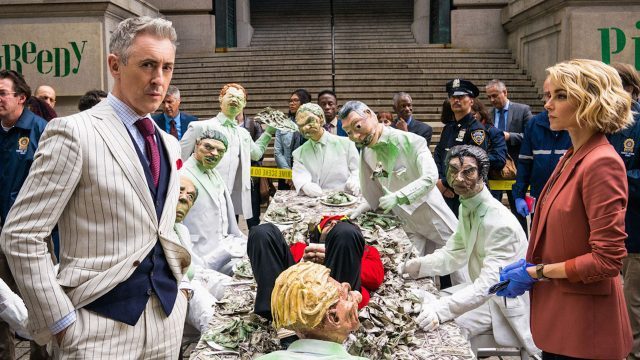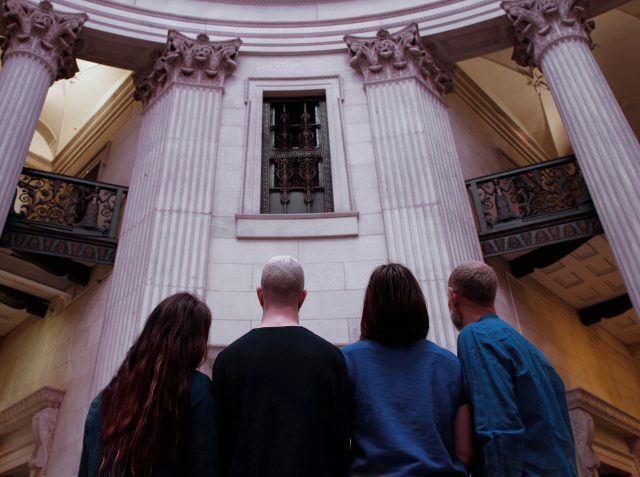
Ernesto Pujol’s The Listeners invites attendees to speak for as long as they want to an artist at Federal Hall (photo by Nisa Ojalvo)
R2R
Multiple downtown locations
June 18-29, free
lmcc.net
The Lower Manhattan Cultural Council’s eighteenth annual River to River Festival comprises a host of exciting downtown events, from dance and immersive art to film and interactive performance. Running June 18-29, the festival is free, but many events require advance RSVP. “Our contemporary reality is rushed, and nowhere is this more apparent than in New York—the city that keeps moving,” curator and LMCC executive director of artistic programs Lili Chopra said in a statement. “There is always somewhere to go, something to see and more to achieve, creating a frenetic energy that makes this city fabulous and exhausting in equal parts. Increasingly, external stimulation seems to be stifling internal introspection as we anxiously charge forward blinkered to our surroundings and, in this digital age, hardened towards the very people that make up our physical community. In response to this, the River to River Festival addresses the experience of the individual within the urban setting by making space for balance.”
Among the artists participating in this year’s iteration are Yoko Ono, Sarah Michelson, Ernesto Pujol, Pam Tanowitz, Kamau Ware, Jennifer Monson, Carol Becker & Mark Epstein, and NIC Kay, at such locations as the Oculus, Federal Hall, Rockefeller Park, the Seaport District, the African Burial Ground National Monument, and the East River Esplanade. You can take a walking tour through the black experience, reveal your innermost desires to a stranger, meet with emerging artists in a studio setting, and add your thoughts to a refugee boat.
Tuesday, June 18
through
Saturday, June 29
Yoko Ono: Add Color (Refugee Boat) (1960/2019), interactive installation, 203 Front St., Seaport District, noon –8:00
Yoko Ono: The Reflection Project, instructional text works by Yoko Ono at such locations as 28 Liberty, the Fulton Transit Center, the Oculus at the WTC Transportation Hub, and the Seaport District
Elia Alba: The Supper Club, NYC DOT Art Display Cases on Water St. and Maiden Ln. and Gouverneur Ln. between Water & Front Sts.
Ezra Wube: Fulton Flow, Fulton Transit Center
Tuesday, June 18
Pam Tanowitz: Time is forever dividing itself toward innumerable futures, with live music by composer and vocalist Ted Hearne, guitarist Taylor Levine, and Rachel Drehmann, Daniel Salera, Kate Sheeran, and Colin Weyman on French horns, costumes by Reid Bartelme and Harriet Jung, and sound design by Garth MacAleavey, performed by Sara Mearns, Taylor Stanley, Reid Bartelme, Jason Collins, Zachary Gonder, Victor Lozano and Melissa Toogood, Nelson A. Rockefeller Park, Battery Park City, 7:45
Wednesday, June 19
Pam Tanowitz: Time is forever dividing itself toward innumerable futures, with live music by composer and vocalist Ted Hearne, guitarist Taylor Levine, and Rachel Drehmann, Daniel Salera, Kate Sheeran, and Colin Weyman on French horns, costumes by Reid Bartelme and Harriet Jung, and sound design by Garth MacAleavey, performed by Sara Mearns, Taylor Stanley, Reid Bartelme, Jason Collins, Zachary Gonder, Victor Lozano and Melissa Toogood, Nelson A. Rockefeller Park, Battery Park City, 7:45
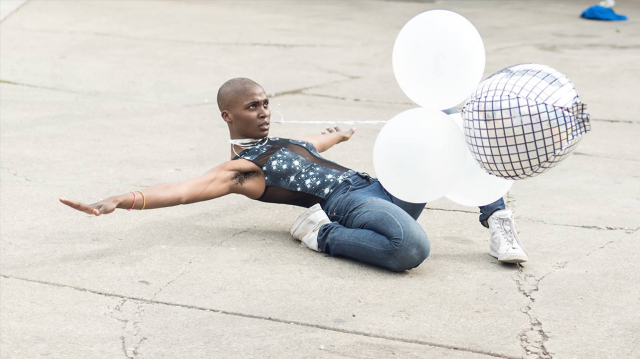
NIC Kay’s pushit!! is a site-responsive meditation walk through Lower Manhattan (photo by Sarah-ji Rhee)
Thursday, June 20
Tribeca Art + Culture Night, with AIM—Bronx Museum of the Arts, Anita Rogers Gallery, apexart, Barney Savage Gallery, BM Franklin, Cheryl Hazan, Church Street School for Music and Art, Double Knot, Leslie-Lohman Museum, New York Academy of Art, Pearl River Mart, Postmasters Gallery, R & Company, SAPAR Contemporary, Shirley Fiterman Art Center, Soho Photo Gallery, the Drawing Center, the Untitled Space, Twenty First Gallery / White Space, White Street Studio, and Y2K group, 6:00 – 9:00
NIC Kay: pushit!!, site-responsive moving performance from Albert Capsouto Park at Varick & Laight Sts. to the African Burial Ground National Monument, 7:00
Friday, June 21
Workspace Artists-in-Residence: Open Studios, with Golnar Adili, Jennifer Bartlett, Eliza Bent, Keisha Bush, André Daughtry, Jonathan González, Zac Hacmon, Terrance James Jr., NIC Kay, Ying Liu, Asif Mian, Kenneth Pietrobono, Orlando Tirado, and Zhiyuan Yang, LMCC’s Workspace Studios, 101 Greenwich St., fifteenth floor, 6:00 – 9:00
Saturday, June 22
Workspace Artists-in-Residence: Open Studios, with Golnar Adili, Jennifer Bartlett, Eliza Bent, Keisha Bush, André Daughtry, Jonathan González, Zac Hacmon, Terrance James Jr., NIC Kay, Ying Liu, Asif Mian, Kenneth Pietrobono, Orlando Tirado, and Zhiyuan Yang, LMCC’s Workspace Studios, 101 Greenwich St., fifteenth floor, 1:00 – 8:00
Sunday, June 23
Jennifer Monson: ditch, with music and sound by Jeff Kolar, costumes by Susan Becker, and dancers Evie Allison, Madeline Mellinger, and Kaitlin Fox, Pier 35, East River Esplanade by Rutgers Slip, sunrise
iLANDing: Researching Urban Ecologies with Movement Based Scores, workshop with Jennifer Monson, Pier 35, East River Esplanade by Rutgers Slip, 11:00
Monday, June 24
Ernesto Pujol: The Listening School, Anderson Contemporary in the Atrium at 180 Maiden Ln. and the Plaza at 88 Pine St., 11:30 am – 2:30 pm
Sarah Michelson: june2019:/\, location revealed with RSVP, 1:30, 4:00, 7:00
Tuesday, June 25
Ernesto Pujol: The Listening School, Liberty Park, 155 Cedar St., and South Oculus Plaza, Church & Greenwich Sts. at Dey St., 11:30 am – 2:30 pm
Night at the Museums, free admission to the African Burial Ground National Monument, China Institute, Federal Hall National Memorial, Fraunces Tavern Museum, Lower Manhattan Tours, Museum of Jewish Heritage—A Living Memorial to the Holocaust, National Archives at New York City, National Museum of the American Indian—Smithsonian Institution, National September 11 Memorial Museum, NYC Municipal Archives Visitor Center, 9/11 Tribute Museum, Poets House, the Skyscraper Museum, and the South Street Seaport Museum, 4:00 – 8:00
Black Gotham Experience: Sarah’s Fire, walking tour and story about black rebellion of 1712, 192 Front St., 4:00, 5:00, 6:00
Black Gotham Experience: Talk with BGX Creator and Artist Kamau Ware, 192 Front St., 8:00
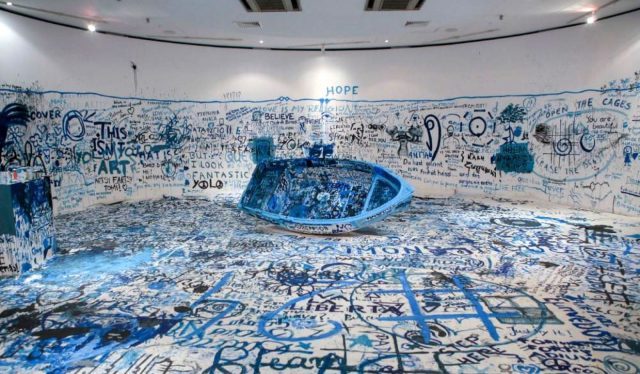
Yoko Ono, Add Color (Refugee Boat), 1960/2016, installation view: Macedonian Museum of Contemporary Art, Thessaloniki, Greece, 2016
Wednesday, June 26
Ernesto Pujol: The Listening School, 28 Liberty: Fosun Plaza, 11:30 am – 2:30 pm
Sarah Michelson: june2019:/\, location revealed with RSVP, 1:30, 4:00
Jennifer Monson: ditch, with music and sound by Jeff Kolar, costumes by Susan Becker, and dancers Evie Allison, Madeline Mellinger, and Kaitlin Fox, Melville Gallery, South Street Seaport Museum, 7:00
Thursday, June 27
The Agitated Now: A Lecture Performance by Mark Epstein + Carol Becker, Federal Hall, 26 Wall St., 7:00
Ernesto Pujol: The Listeners, Federal Hall, 26 Wall St., 9:00
Friday, June 28
Jennifer Monson: ditch, with music and sound by Jeff Kolar, costumes by Susan Becker, and dancers Evie Allison, Madeline Mellinger, and Kaitlin Fox, Melville Gallery, South Street Seaport Museum, 7:00
Rooftop Films: The Sound of Silence (Michael Tyburski, 2019), preceded by live music and followed by a Q&A, New Design High School, 350 Grand St., 8:00
Saturday, June 29
WorldPride NYC: Drag Queen Story Hour, for families and kids, Seward Park Library, 192 East Broadway, 11:00 am & 3:30 pm
WorldPride NYC: Workshop on the Street, with Amy, Jennifer, & Noah Khoshbin, for families and kids, Oculus Plaza, 1:30
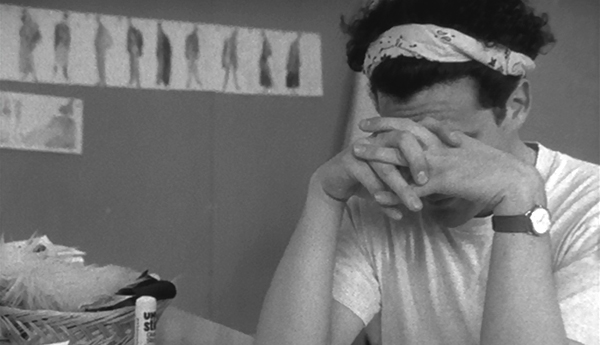
 About halfway through Unzipped, Douglas Keeve’s thrilling 1995 documentary, which follows fashion designer extraordinaire Isaac Mizrahi as he puts together his fall 1994 collection following a critical disaster, Mizrahi says, “Everything’s frustrating; every single thing is frustrating. Except designing clothes. That’s not frustrating. That’s really liberating and beautiful. I don’t know, being overweight and not being able to lose weight, you know, that’s a problem. Anything you’re really working hard at and that’s not working, that’s a problem. But frankly, designing clothes is never a problem.” Of course, the statement doesn’t exactly ring true as Mizrahi, usually with his trademark bandanna wound around his wild, curly hair, encounters his fair share of difficulties as he meets with Candy Pratts and André Leon Talley from Vogue and Polly Mellen from Allure, expresses his hopes and fears with Mark Morris, Sandra Bernhard, Eartha Kitt, and his mother, and works with such supermodels as Kate Moss, Naomi Campbell, Cindy Crawford, Shalom Harlow, Linda Evangelista, Carla Bruni, Christy Turlington, and Amber Valletta. Along the way he makes endless pop-culture references, singing the theme song from The Mary Tyler Moore Show, citing scenes from The Red Shoes, Marnie, Valley of the Dolls, and Whatever Happened to Baby Jane? and using Nanook of the North and The Call of the Wild as creative inspiration.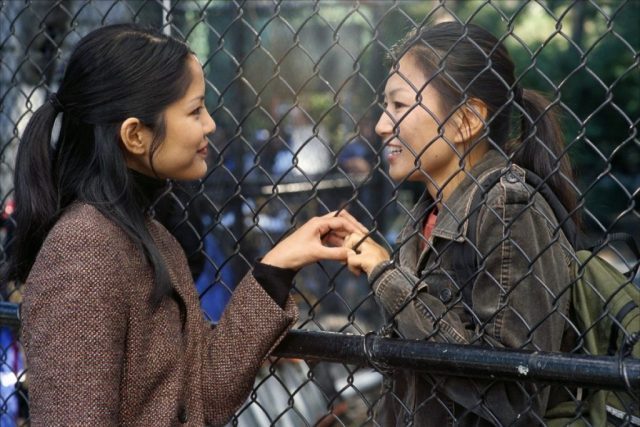
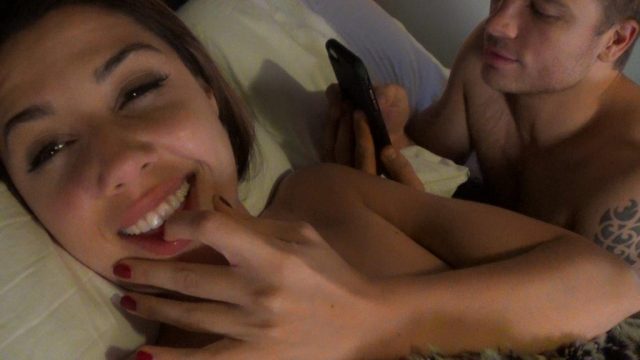
 Fiction and reality collide in kinky ways in Julian Shaw’s thriller Use Me, making its world premiere at the twenty-second annual Brooklyn Film Festival. New Zealand-born director Shaw initially set out to make a documentary about Ceara Lynch, a professional humiliatrix who welcomes people to her website by proclaiming, “Here you will find a wide array of fetish and femdom POV videos specially designed to exacerbate your inexplicable urge to have a pretty girl ruin your life.” Ultimately, he decided to create a fictionalized tale in which it is often difficult to tell what is real and what is not. Lynch makes her living by humiliating men, who pay for the privilege; the film’s original title was Ruin Me. Shaw and Lynch, and various other characters, play themselves as he delves into her salacious business of sexual obsession. She has a clear set of guidelines, but when they breach a few key ground rules, Shaw finds himself trapped in a dangerous nightmare involving Lynch, her client Luke Adore (Joseph Reitman), and her protégée Princess Cassie (Jazlyn Yoder).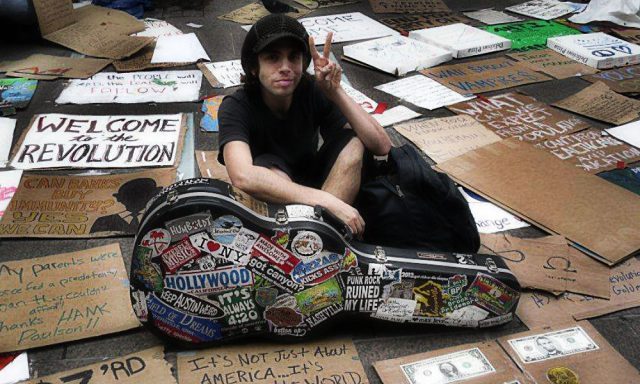
 Filmmaker Karen Kramer spent seven years on Renegade Dreamers, including four years following a group of young contemporary spoken word artists and protest singers. She could have done something better with her time. A longtime downtown New Yorker who made The Ballad of Greenwich Village in 2005, Kramer initially set out to make a documentary about the coffeehouse scene around MacDougal and Bleecker Streets in the 1950s and ’60s, and the sections of Renegade Dreamers about the post–World War II Beat poets and folk singers, including Allen Ginsberg, Bob Dylan, Jack Kerouac, Gregory Corso, Pete Seeger, Joan Baez, Len Chandler, and others, as well as Woody Guthrie, are terrific, with rarely seen archival footage that is stirring and exciting. She speaks with such key figures as Wavy Gravy, Hettie Jones, Eric Andersen, Ronnie Gilbert of the Weavers, Maria Muldaur, David Amram, Izzy Young, Tom Paxton, and Richie Havens (some interview footage was completed for her previous film), who share intimate stories about their struggle against McCarthyism, the Vietnam War, anti-unionism, consumerism, and conformity. “They considered progressive thinking to be anti-American,” Peter Yarrow says of 1960s mainstream America, something that is true again today.