this week in film and television

DELANYMANIA

Samuel R. Delany will be at Metrograph for a pair of special programs

Samuel R. Delany will be at Metrograph for a pair of special programs

Metrograph
7 Ludlow St. between Canal & Hester Sts.
May 17-19
212-660-0312
metrograph.com
www.samueldelany.com

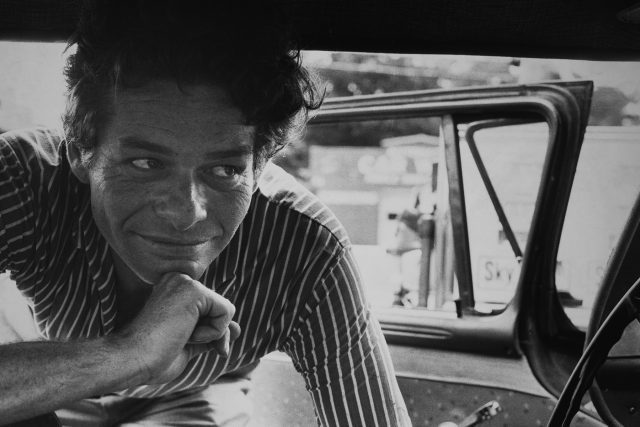
In Fred Barney Taylor’s 2009 documentary The Polymath, about writer, filmmaker, and social historian Samuel R. “Chip” Delany, Jonathan Lethem explains, “He embraces the whole of intellectual curiosity while remaining committed to an artistic practice. He’s a philosophical, confessional, and fictional genius. How often is this encountered in American literature? I don’t know that there’s any precedent. Geniuses are usually monomaniacs; they do one thing to the utmost. Well, Chip does several things to the utmost.” Metrograph is honoring the seventy-seven-year-old Delany’s life and career with the three-day series “Delanymania,” featuring films by and about him or that made an impact on him. “They’re films I liked early, and they contributed to my own appreciation of science fiction, films, and writing (This Island Earth), and an appreciation of the cost of difference (The Boy with Green Hair, Touch of Evil), and what I wanted to do with the movement of bodies in The Orchid (Gold Diggers of 1937, The Seventh Seal),” he notes about the program. Delany, a New York City native and the author of such science-fiction tomes as Dhalgren and Babel-17, will be at Metrograph for several screenings, introducing shows and participating in Q&As for The Polymath with Taylor on May 17 at 6:00 and for “3 Films by Samuel R. Delany” on May 18 at 3:30. The latter consists of his only film as a director, the controversial 1971 experimental work The Orchid, and two extremely low-budget DIY shorts by his then-partner, Frank Romeo, Bye, Bye Love and The Aunts.

The Orchid

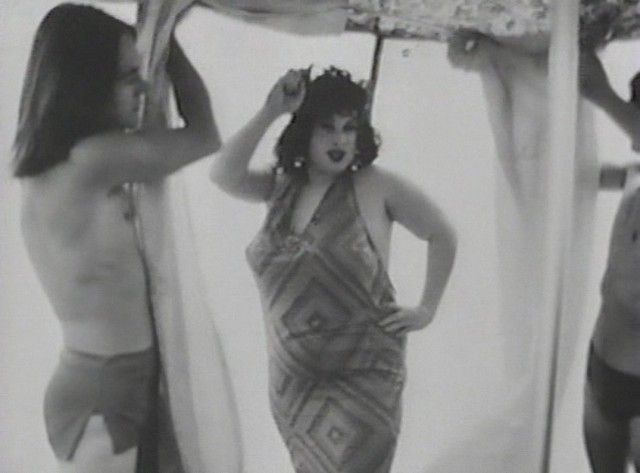
Metrograph will show Samuel R. Delany’s only film as a director, The Orchid

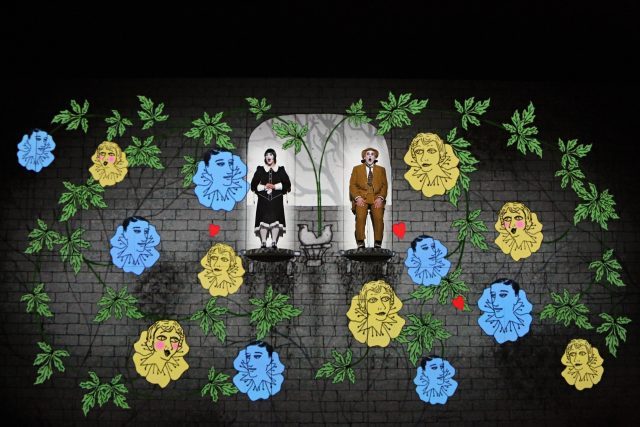
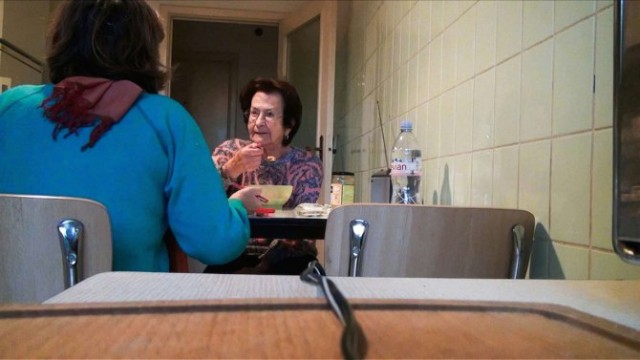
The Orchid is Delany’s Un Chien Andalou, a bizarre, surreal, delightfully amateurish tale of a businessman with a thing for protractors and other basic mathematical equipment who has strange encounters on the streets of New York City with a little boy, a man carrying a microphone, and members of a cultlike group than don bizarre masks, take off their clothes, and take part in odd rituals. Produced by Barbara Wise, the film features a playful score by John Herbert McDowell; Adolfas Mekas, brother of Jonas, was the production coordinator. Writing as K. Leslie Steiner, Delany opined that when the film “primiered [sic] at the World Science Fiction Convention in Chicago that September (Delany himself was not present), it caused a riot. Outraged fans tried to shout the film off and even pulled down the screen.” Chip Delany is credited as script boy for Bye, Bye Love, in which two brothers (Frank De Fay and Martin Zone) from upstate head to the Big Apple to become famous by recording their version of the Everly Brothers classic “Bye Bye Love,” and The Aunts, in which a group of women (Cass Morgan, Katie McDonough, Mayda Sharrow, and Pat Tortorici) gossip away in a small kitchen as a young girl (Jocelyn Mason) listens in from her bedroom. Delany’s father was an undertaker and his mother was a library clerk, which explains a lot. In conjunction with “Delanymania” and other cinematic literary events, Metrograph is hosting a Spring Film Book Fair on May 18 and 19 from 11:00 to 6:00, promising “thousands of rare, vintage, and out of print items, including biographies, monographs, hundreds of periodicals, plus memorabilia, scripts, novelizations, and other extraordinary pieces of ephemera.”

JEAN-CLAUDE CARRIÈRE: YOYO / HEREUX ANNIVERSAIRE

YOYO

All the wealth in the world can’t make a lonely millionaire (Pierre Étaix) happy in Yoyo

YOYO (Pierre Étaix, 1965) / HEREUX ANNIVERSAIRE (Pierre Étaix & Jean-Claude Carrière, 1962)
MoMA Film, Museum of Modern Art
11 West 53rd St. between Fifth & Sixth Aves.
Thursday, May 9, 4:30, and Wednesday, May 15, 7:00
Series runs May 9 – June 16
www.moma.org

French auteur Pierre Étaix’s strange and beautiful films were long inaccessible, the subject of nearly two decades of legal wrangling, but on May 9 and 15, MoMA will be presenting his 1965 bittersweet black-and-white slapstick charmer, Yoyo, as part of its “Jean-Claude Carrière” series, celebrating the screenwriter and master collaborator who worked with such legends as Luis Buñuel, Louis Malle, Miloš Forman, Jean-Luc Godard, Andrzej Wajda, Nagisa Oshima, and Peter Brook; the eighty-seven-year-old Carrière will introduce the May 9 screening. (In April 2010, Étaix was finally able to once again bring his films to the public, his entire output restored and making their New York debut at a festival at Film Forum in October 2012.) Étaix, who wrote Yoyo with Carrière, stars as a ridiculously wealthy but extremely bored man who lives alone in an ornately decorated, absurdly large chateau. It’s 1925, and he has servants for absolutely everything, as well as his own private band and flappers, but he pines for his lost love, Isolina (Claudine Auger). One day she arrives with a traveling circus, along with a young boy (Philippe Dionnet) who turns out to be his son. She at first rejects the multimillionaire, but when he loses it all on Black Tuesday, the three of them form their own traveling circus, with the boy ultimately turning into a popular clown named Yoyo (played as an adult by Étaix) and seeking to restore the chateau and his family.

YOYO

French auteur Pierre Étaix takes clowning around very seriously in rediscovered classic

The first section of the film is a glorious homage to the silent film era and other cinematic comedians, with Étaix evoking his mentor, Jacques Tati; Charlie Chaplin; Buster Keaton; and, later, Jerry Lewis, with whom he’d appear as Gustav the Great in Lewis’s never-to-be-seen Holocaust film The Day the Clown Died. Nouvelle Vague cinematographer Jean Boffety (An Occurrence at Owl Creek Bridge; Je t’aime, je t’aime) shoots Yoyo in a sharp, gorgeous black-and-white, composing breathtaking shots that boast a dazzling symmetry that must make Wes Anderson giddy with delight, while Étaix fills the film with ingenious sight gags that would make Ernie Kovacs proud (just wait till you see the supposed still-life painting), all anchored by Jean Paillaud’s memorable musical theme. But once the stock market crashes and talkies take over, dialogue enters the picture, and the camera is often off balance, the perfect symmetry a thing of the past. With Yoyo, Étaix, who had previously made Le Soupirant and would go on to make The Great Love and En pleine forme, was influenced by the sudden, tragic death of his father, his love of the circus — he had already worked under the big tent, and he would leave films to become a clown in a traveling circus in the early 1970s — and his viewing of Fellini’s (look for the La Strada poster) resulting in a film that sometimes gets a little lost and too surreal, but he ultimately brings things back around as Yoyo grows into a star and the story travels through the arc of twentieth-century entertainment, from the silent era to talkies to television. Truffaut called it “a beautiful film in which I loved every shot and every idea, and which taught me many things about movies.”

MoMA festival pairs

Pierre Étaix and Jean-Claude Carrière’s Heureux Anniversaire kicks off Carrière festival at MoMA with Yoyo

It’s a real treat that Étaix’s work is undergoing this rediscovery; lovers of Michel Hazanavicius’s The Artist will particularly enjoy Yoyo, which is being shown with Heureux Anniversaire, Étaix and Carrière’s deliriously funny black-and-white short that won the 1963 Oscar for Best Live Action Short Subject. As a woman (Laurence Lignières) prepares a special anniversary dinner at home, her husband (Étaix) gets trapped in all kinds of craziness as he desperately tries to make it home in time, but the traffic and parking gods are against him. Hysterical slapstick ensues virtually without dialogue, like a classic silent film with a wacky score. And you’ll never be able to look at Mr. Bean the same way again. “Jean-Claude Carrière” runs May 9 to June 16 and includes such other works Carrière wrote and/or directed as Philip Kaufman’s The Unbearable Lightness of Being, Godard’s Every Man for Himself, Buñuel’s The Phantom of Liberty, and Wajda’s Danton, with Carrière introducing several screenings.

TRIBECA FILM FESTIVAL DOCUMENTARY COMPETITION: 17 BLOCKS

17 Blocks

A Washington family deals with pain and tragedy in the shadow of the US Capitol in 17 Blocks

17 BLOCKS (Davy Rothbart, 2019)
Tribeca Film Festival
Regal Cinemas Battery Park 11-1
102 North End Ave.
Saturday, May 4, 12 noon
www.tribecafilm.com

Davy Rothbart follows a Washington, DC, family trying to break the cycle of drugs, gun violence, and poverty over twenty years in 17 Blocks, a powerful documentary making its world premiere at the Tribeca Film Festival, where it won Best Editing in a Documentary Film. “The award for best editing goes to a film for its profound treatment of vast amounts of honest, often raw footage. The film is structured in a way that renders some of the most affecting moments with great subtlety. Viewers are transformed over the course of the film, a testament to the choices made in its making,” the jury said in its official announcement. Written, produced, and directed by Rothbart and written and edited by Jennifer Tiexiera, 17 Blocks features footage shot in 1999, 2009, and more recently, much of it taken by members of the Sanford family, including Cheryl Sanford, her sons Emmanuel Durant Jr. and Akil “Smurf” Sanford, and her daughter Denice Sanford-Durant, in addition to Rothbart and cinematographer Zachary Shields. Rothbart became friends with fifteen-year-old Smurf in 1999 and taught nine-year-old Emmanuel how to use a video camera, so the family was comfortable sharing intimate, deeply personal details of their lives over the years.

The Sanfords grew up just seventeen blocks from the US Capitol, but their experiences are all-too-representative of the country’s most vulnerable communities, which are ignored or misunderstood by the government. In 1999, nine-year-old Emmanuel has dreams of a bright future as Smurf starts getting involved with drugs. In 2009, Emmanuel wants to be a firefighter and marry his high school sweetheart, Carmen Payne; Denice is a single mother; and Smurf is living a dangerous life. Tragedy strikes, and two decades later the repercussions are still being felt in a big way. “I believe in hope,” Cheryl, one of the film’s producers, says despite all that happens to them. They don’t blame society as they try to understand and accept their own responsibilities for what has transpired and vow to get on with their lives, but opportunity is limited.

The film is seen primarily through Cheryl’s eyes; another tragedy is how she went from a smart kid going to private school to a drug addict who cannot stop a sad downward spiral. In his director’s statement, Rothbart, who considers himself to be an “adopted” Sanford, notes that after the tragedy, Cheryl came to him and said, “Where is your video camera? So many people are killed by guns in our neighborhood, but none have had their entire lives documented as thoroughly as my family.” It’s a brave decision to open up as much as they do. There are two key moments in the film that will stay with viewers for a long time. At one point, family members visit a shop that specializes in making T-shirts with the images of young people who were murdered on them, which are worn at funerals. And the closing credits begin with a list of all the DC homicide victims since the Sanford tragedy in 2009, with screen after screen showing hundreds of names. 17 Blocks is screening on May 4 at noon at Regal Cinemas Battery Park, with journalist and author Rothbart (This American Life, Medora) on hand to discuss the film and the nonprofit he started, Washington to Washington, an annual hiking adventure for DC kids to show them more of what the world has to offer.

TRIBECA FILM FESTIVAL THIS USED TO BE NEW YORK: OTHER MUSIC

Documentary goes behind the scenes of one of New York City’s most beloved record stores

Documentary goes behind the scenes of one of New York City’s most beloved record stores

OTHER MUSIC (Puloma Basu & Rob Hatch-Miller, 2019)
Village East Cinema
181-189 Second Ave. at 12th St.
Sunday, May 5, 8:45
www.tribecafilm.com
www.othermusicdocumentary.com

It’s a shame that Puloma Basu and Rob Hatch-Miller’s new documentary, Other Music, is part of the Tribeca Film Festival section “This Used to Be New York,” because that means that their subject, the much-loved Other Music independent record store, is a “Used to Be,” no longer part of the city’s landscape. From 1995 to 2016, Other Music was an oasis for music lovers and musicians of all types, an escape from the mainstream; in fact, when the shop first opened, a giant Tower Records chain store was across the street, but OM thrived because it offered so much that was different. “Other Music was the quintessential place in New York City for people that appreciated music. It just was a place where you were able to search out things you had never heard of,” JD Samson of Le Tigre says in the film.

Basu and Hatch-Miller (Syl Johnson: Any Way the Wind Blows) not only focus on customers and performers but also on the devoted, fanatical OM staff that formed a kind of family, including Dave, Nicole, Clay, Amanda, Duane, Katie, Daniel, Jo Ann, Michael, Maris, Karen, Jenny, Geoff, and Stephanie, led by owners and cofounders Josh Madell and Chris Vanderloo. (Third cofounder Jeff Gibson did not participate in the film but is seen in old clips.) “People who just listen to records all day deserve to have a job where they can do that. People who work in record shops are always weirdos. Weirdos need jobs,” Stuart Braithwaite of Mogwai jokes. Longtime employee Kris, noting that live shows weren’t enough for him when he first came to New York, explains why he worked at OM: “I wanted to be bombarded constantly. I wanted to have my ideas challenged, and I wanted to be fucked with.”

The documentary follows the store’s countdown to its closing on June 25, 2016, as customers come by to chat and buy records there for the last time and current and former employees share memories about their time at the shop, discussing OM’s unique categorization of music, the handwritten cards for recommended records, the confounding Decadanse section, the local musical response to 9/11, and their online business and epically detailed newsletters (which we at twi-ny relied on heavily). Josh’s wife, Dawn, and Chris’s wife, Lydia, add their thoughts on the impact the store’s two-decade run had on their lives. There are lots of old photos and archival footage, including snippets of in-store live appearances by Mogwai, Interpol, Yo La Tengo, Neutral Milk Hotel, No Age, the Go-Betweens, and cult favorite Gary Wilson; high praise from Meet Me in the Bathroom author Lizzie Goodman, Daniel Kessler of Interpol, Ezra Koenig of Vampire Weekend, Matt Berninger of the National, Dean Wareham of Luna and Galaxie 500, Brian Chase of Yeah Yeah Yeahs, Regina Spektor, Jason Schwartzman, and former store employee Dave Portner of Animal Collective; a celebration of onetime OM staffer Beans of Antipop Consortium; and others who will make you regret either never having gone there or not having gone — or bought — enough. “It’s kind of like a religious experience,” Benicio del Toro says. Other Music has one more screening remaining at the Tribeca Film Festival, on May 5 at 8:45.

FIRST SATURDAYS: CELEBRATE SPRING

 Liz Johnson Artur (born Bulgaria, 1964). Josephine, Peckham, 1995. Chromogenic photograph, 20 x 24 in. (50.8 x 60.9 cm). Courtesy of the artist. © Liz Johnson Artur

Liz Johnson Artur, Josephine, Peckham, chromogenic photograph, 1995 (Courtesy of the artist. © Liz Johnson Artur)

Brooklyn Museum
200 Eastern Parkway at Washington St.
Saturday, May 4, free (some events require advance tickets), 5:00 – 11:00
212-864-5400
www.brooklynmuseum.org

Spring is in the air at the May edition of the free First Saturdays program at the Brooklyn Museum. There will be live performances by Descarrilao, Arooj Aftab, the Fadara Group (True to Our Native Land, featuring Chief Ayanda Clarke), and Kaleta & Super Yamba Band; an artist and curator talk on “Nobody Promised You Tomorrow: Art 50 Years After Stonewall” with Park McArthur, Constantina Zavitsanos, and Allie Rickard; a hands-on workshop in which participants can make print design artwork inspired by several current exhibitions; a screening of the fifteen-minute short Dreams from the Deep End (Modupeola Fadugba, 2018), followed by a discussion with Fadugba, Kristen Windmuller-Luna, and swim team members; an artist and curator tour of “Liz Johnson Artur: Dusha” with Liz Johnson Artur and Drew Sawyer; and teen gallery talks on “One: Egúngún.” In addition, the galleries will be open late so you can check out “Frida Kahlo: Appearances Can Be Deceiving,” “Nobody Promised You Tomorrow: Art 50 Years After Stonewall,” “Eric N. Mack: Lemme walk across the room,” “One: Do Ho Suh,” “One: Egúngún,” “Something to Say: Brooklyn Hi-Art! Machine, Deborah Kass, Kameelah Janan Rasheed, and Hank Willis Thomas,” “Infinite Blue,” “A Woman’s Afterlife: Gender Transformation in Ancient Egypt,” “Kwang Young Chun: Aggregations,” and more.

ABEL FERRARA — UNRATED: PASOLINI / MS. 45

Willem Dafoe

Willem Dafoe stars as Pier Paolo Pasolini on the last day of his life in Abel Ferrara film

PASOLINI (Abel Ferrara, 2014)
MoMA Film, Museum of Modern Art
11 West 53rd St. between Fifth & Sixth Aves.
Friday, May 3, 7:00
Series runs May 1-31
212-708-9400
www.moma.org

Director Abel Ferrara packs a whole lot into controversial Italian writer and filmmaker Pier Paolo Pasolini’s last day on earth in the multinational coproduction Pasolini. Unfortunately, it all ends up a rather confusing jumble, with Ferrara (Bad Lieutenant, The Addiction) and screenwriter Maurizio Braucci (Gomorrah, Black Souls) squeezing too much into too little. Willem Dafoe stars as Pasolini on November 2, 1975, as the director is interviewed by a journalist, reads the newspaper on the couch, sits down at his typewriter to work on his novel Petrolio, edits what would be his final film (Salò, or the 120 Days of Sodom), and goes cruising to pick up a young stud. Ferrara adds enactments of scenes from the never-realized Porno-Teo-Kolossal, with Pasolini’s real-life lover, Ninetto Davoli, playing the fictional character Epifanio. (Davoli was supposed to play the younger Nunzio in the hallucinatory tale, about a search for faith and the messiah. Davoli is played by Riccardo Scamarcio in Ferrara’s film.) Ferrara never really delves into the internal makeup of Pasolini (The Gospel According to Matthew, Teorema), an openly gay outspoken social and political activist, poet, Marxist, Christian, and documentarian, instead using brief episodes that only touch the surface, as if Dafoe is playing a character based on Pasolini rather than the complex man who was indeed Pasolini. But Ferrara does get very specific about Pasolini’s mysterious, brutal death. Pasolini is screening May 3 at 7:00 in the MoMA series “Abel Ferrara: Unrated” and will be followed by a Q&A with the director and Dafoe.

MS. 45

A mute rape victim (Zoë Tamerlis Lund) seeks revenge Death Wish–style in Abel Ferrara’s Ms. 45

MS. 45 (Abel Ferrara, 1981)
MoMA Film, Museum of Modern Art
11 West 53rd St. between Fifth & Sixth Aves.
Tuesday, May 7, 7:00, and Saturday, May 11, 7:00
Series runs May 1-31
212-708-9400
www.moma.org

Abel Ferrara’s third film, following the 1976 pornographic 9 Lives of a Wet Pussy Cat and the 1979 gorefest The Driller Killer, is a low-budget grindhouse female revenge fantasy set on the gritty streets of New York City. In Ms. 45 (also known as Angel of Vengeance), Zoë Tamerlis Lund makes her screen debut as Thana, a mute woman working as a seamstress in the Garment District. After being raped twice in one day on separate occasions, she soon goes all Death Wish / Taxi Driver on men seeking a little more from women. Thana — named after Freud’s death instinct, Thanatos, the opposite of the sex instinct, Eros — grabs herself a .45 and quickly proves she is one helluva shot as she goes out in search of potential victims in Chinatown, Central Park, and the very place where Woody Allen and Diane Keaton sat on a bench, romantically looking out at the Queensboro Bridge in an iconic moment from Manhattan. Ferrara, who plays the masked rapist, captures the nightmarish feel of the city at the time, where danger could be lurking around any corner, with the help of James Lemmo’s lurid, pornlike cinematography and Joe Delia’s jazz-disco soundtrack. Lund would go on to cowrite Ferrara’s Bad Lieutenant, in which she plays a junkie named Zoë, before drugs killed her in 1999 at the age of thirty-seven. Ms. 45 is a cult classic that keeps getting better with age — and yes, that is a man dressed as Mr. Met at the Halloween party. A new digital restoration will be screening May 7 and 11 in the MoMA series “Abel Ferrara: Unrated,” which runs May 1-31 and includes such other Ferrara works as The Addiction, Welcome to New York, Body Snatchers, King of New York, Fear City, Bad Lieutenant, The Funeral, and his latest, The Projectionist. Ferrara will be at MoMA to participate in discussions following several screenings the first week.

TRIBECA FILM FESTIVAL MOVIES PLUS — MAKING WAVES: THE ART OF CINEMATIC SOUND

making waves

MAKING WAVES: THE ART OF CINEMATIC SOUND (Midge Costin, 2019)
Tuesday, April 30, Regal Battery Park 6, 8:00
Thursday, May 2, Village East Cinema 4, 3:45
Festival continues through May 5
www.makingwavesmovie.com
www.tribecafilm.com

Longtime sound editor and teacher Midge Costin pays tribute to her discipline in the eye- and ear-opening documentary Making Waves: The Art of Cinematic Sound, having its world premiere this week at the Tribeca Film Festival. The celebration of sound focuses on three of the best in the business: three-time Oscar winner Walter Murch (Apocalypse Now, The English Patient), four-time Oscar winner Ben Burtt (E.T. the Extra-Terrestrial, Star Wars), and seven-time Oscar winner Gary Rydstrom (Saving Private Ryan, Toy Story). “Before we were born, you’re looking at darkness. Sound is the first sense that’s plugged in,” Murch says at the beginning of the film. “Six months, seven months into the womb, it’s hearing the mother’s heartbeat, it’s hearing her breathing, it’s hearing Dad shouting from the garage. It’s making sense of the world. You have emerged into a kind of consciousness using only sound. And then you’re born. Sound affects us in a deeper way almost than image does. It goes deeper. And yet we’re naturally, seemingly oblivious to that.”

Documentary shows Ben Burtt recording a bear that will become the voice of Chewbacca in Star Wars

Documentary shows Ben Burtt recording a bear that will become the voice of Chewbacca in Star Wars

Costin was the sound editor on such major Hollywood films as Crimson Tide, The Rock, and Armageddon but left to become the Kay Rose Professor in the Art of Sound Editing at the USC School of Cinematic Arts, a position endowed by famous USC grad George Lucas. Lucas is among the many directors raving in the film about the magical work performed by sound editors, along with Steven Spielberg, David Lynch, Barbra Streisand, Christopher Nolan, Sofia Coppola, Robert Redford, Ang Lee, Peter Weir, and Ryan Coogler. They are joined by Murch, Burtt, Rydstrom, and such other sound editors as Pat Jackson, Teresa Eckton, Greg Hedgepath, Bobbi Banks, Victoria Rose Sampson, Mark Mangini, Ioan Allen, Karen Baker Landers, Richard Hymns, and Cece Hall, who describe the process of creating and adding sound, including redubbing dialogue, as well as the impact of stereo and, later, digital technology. Among the coolest scenes are those illustrating Burtt’s childhood fascination with science fiction, a look at the importance of the Beatles’ White Album, the transition from silent pictures, and the working relationship between PIXAR cofounder John Lasseter and the inventive Rydstrom. It’s a crash course in the art of sound, where viewers also learn about such key elements as production recording, dialogue editing, ADR, SFX, foley, ambience, and music. It’s also a big-time commercial for the art form and occasionally feels like an ad to study the craft in film school.

Writer, producer, and director Costin, a self-described technophobe who has a passion for teaching people how to listen, and writer and producer Bobette Buster, author of Do Story: How to Tell Your Story So the World Listens, take a deep dive into such films as Saving Private Ryan, Citizen Kane, A Star Is Born, THX 1138, Star Wars, Apocalypse Now, Ordinary People, Funny Girl, A League of Their Own, Top Gun, and Singin’ in the Rain, revealing some major tricks of the trade. But perhaps the most important thing in Making Waves is that all of the sound editors appear to love their job, smiling like children with candy when talking about certain sounds they captured and collaborating with directors. You’ll never look at — or listen to — a film the same way again. Making Waves: The Art of Cinematic Sound is screening April 30 and May 2 in the Movies Plus section of the Tribeca Film Festival, followed by Q&As with Costin, Buster, and producer Karen Johnson.