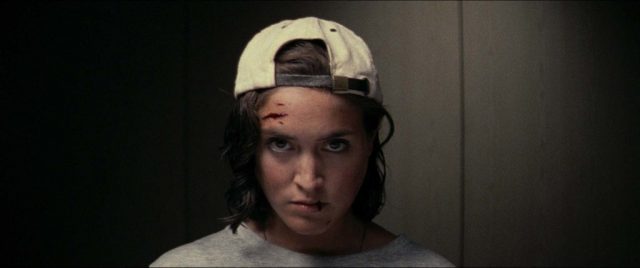
Luz (Luana Velis) has a strange story to tell, told in a strange way, in debut feature by Tilman Singer
LUZ (Tilman Singer, 2018)
IFC Center, Alamo Drafthouse Downtown Brooklyn, Nitehawk Cinema Williamsburg
Opens Friday, July 19
yellowveilpictures.com/luz
 German director Tilman Singer’s feature film debut, Luz, is a mesmerizingly dark and moody psychothriller, a thickly atmospheric seventy-minute foray into the unknown. Made on an extremely low budget as his thesis project at the Academy of Media Arts Cologne, the film is about — well, I’m not sure I really know what it’s about, but I also cannot stop thinking about it. The film, which takes place in the late 1980s/early 1990s, opens with a long shot of an office reception area and hallway. A man is working behind the desk when a young woman in a baseball cap walks in agonizingly slowly, buys a soda from a vending machine, and says to the man, “Is this how you wanna live your life? Is this seriously what you want?”
The next scene is set in a gloomy bar where Dr. Rossini (Jan Bluthardt), a psychologist who is being repeatedly paged, and a mysterious woman, Nora Vanderkurt (Julia Riedler), are the only ones drinking. She approaches him, takes a sniff of what appears to be coke, mixes some strange cocktails, and tells him about her girlfriend, who has jumped out of her taxi. He eventually answers his pager; two cops, Bertillon (Nadja Stübiger) and Olarte (Johannes Benecke), have called him in to help interrogate a young woman in a baseball cap who has had an accident in her cab. Her name is Luz (Luana Velis), and she is prone to scream out a unique and profane version of the Lord’s Prayer at any moment. After a few more bizarre moments, Dr. Rossini joins the cops in one of the strangest interrogations you’ll ever see, a brilliantly staged spectacle involving hypnosis, suggestion, and a genius use of sound and image as Luz relates exactly what happened to her, going back to a bizarre ritual held at her Catholic school when she was a girl. (Olarte’s reactions are particularly memorable.) “What you see is distorted,” Luz says at one point, and indeed, everything we see is distorted, and convoluted, and twisted, but all in a captivating way as Singer channels David Cronenberg, David Lynch, John Carpenter, Dario Argento, and Lucio Fulgi, creating a wholly unpredictable work of gleeful madness that immerses you in a hypnotic, demonic labyrinth.
Luz was originally meant to be a thirty-minute short centered around the interrogation, which was filmed first, but writer-director-producer Singer kept expanding it, inspired initially by police sketch artists and then by tales of his wife’s experience in a Catholic girls school in Colombia. He admits that he is not one for scripts, but it doesn’t really matter in this case. Shooting on 16mm film completely indoors and often in claustrophobic spaces, cinematographer Paul Faltz employs a stark palette of muted colors with sparse camera movement, while composer Simon Waskow harkens back to 1970s horror with his ever-threatening score. There’s a theatrical quality to the look of the film — the eerie production design, reminiscent of Stranger Things and Assault on Precint 13, is by Dario Méndez Acosta, who is also one of the producers — as well as the acting. In fact, Singer trained as a theater actor, as did most of the cast; the long interrogation scene is set in a room with rows and rows of chairs, as if an empty theater. Luz opens July 19 at IFC Center, Alamo Drafthouse Downtown Brooklyn, and Nitehawk Cinema, where all the seats deserve to be filled.
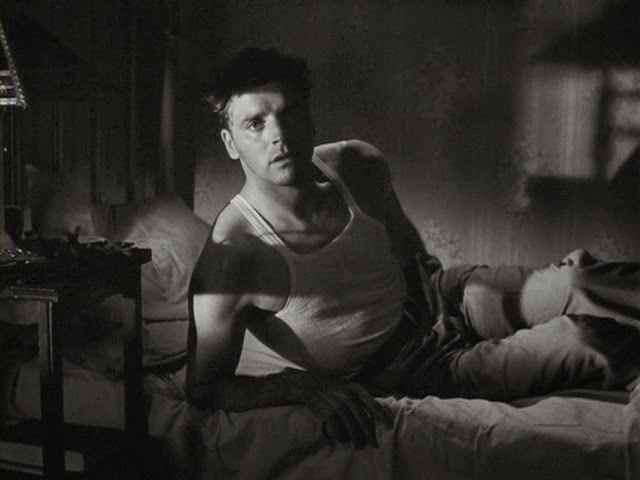
 In 1950, Edmond O’Brien starred as auditor Frank Bigelow in Rudolph Maté’s classic noir D.O.A., a story told in flashback as Bigelow tries to figure out why someone has poisoned him. Four years earlier, O’Brien dealt with another kind of fatalism in Robert Siodmak’s The Killers, playing insurance agent Jim Reardon, who is investigating why a gas station attendant was brutally gunned down in his bed in suburban Brentwood, New Jersey. The film — which kicks off Film Forum’s four-week salute to Manhattan-born Hollywood star Burt Lancaster on July 19 in a new 4K restoration — opens with cold-hearted contract killers Al (Charles McGraw) and Max (William Conrad) arriving in town, looking for the Swede (Lancaster), aka Pete Lund and Ole Andreson. They waltz into Henry’s Diner, giving orders and exchanging mean-spirited dialogue with no fears or worries. When Nick Adams (Phil Brown) warns the Swede that the men are coming to kill him, the former boxer knows there’s nothing he can do about it anymore; he’s tired of running, and he’s ready to meet his end.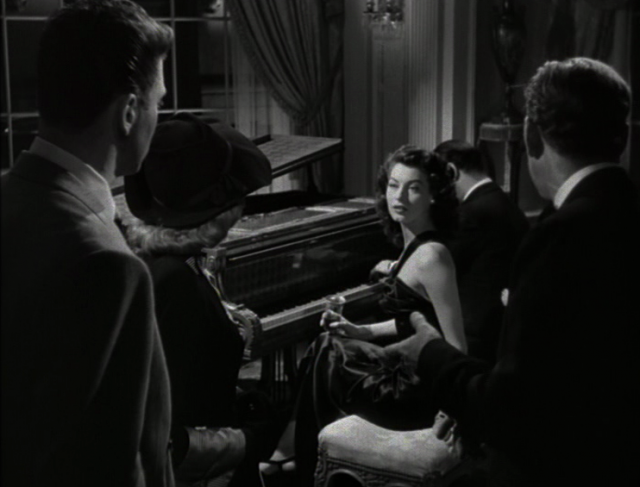
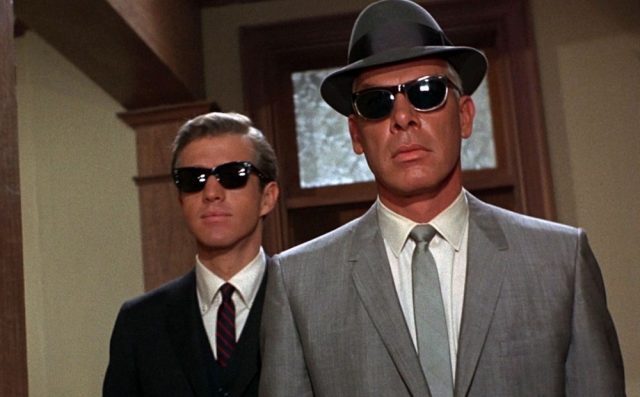
 In conjunction with the screening of the 1946 version of The Killers kicking off Film Forum’s four-week Burt Lancaster festival, the downtown institution is also presenting Don Siegel’s 1964 remake July 20-22. Siegel, who at one point was supposed to direct the 1946 original, sets this adaptation of Ernest Hemingway’s 1927 short story in a bright, candy-colored world that is a far cry from the intricate, shadowy darkness of Robert Siodmak’s earlier noir version; in fact, it’s so luminous that hitmen Charlie Strom (Lee Marvin) and Lee (Clu Gulager) are often wearing dark sunglasses (à la Jake and Ellwood Blues), and the film opens with them walking into a home for the blind, passing by two blind boys playing their own version of cops and robbers. The men are there to kill former race-car driver Johnny North (John Cassavetes), who is now a teacher. Despite being warned by an old man (longtime character actor Burt Mustin) that they are coming, Johnny waits for them, choosing not to run. His lack of a survival instinct confounds Charlie, who goes on a search to find out why Johnny didn’t fight for his life but instead essentially welcomed a brutal death.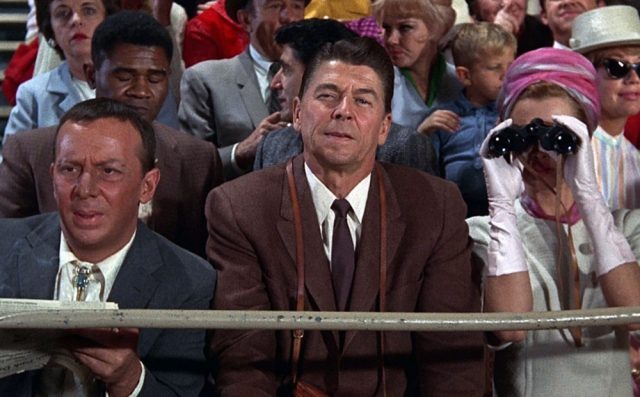

 On summer Wednesdays at 6:00, the Film Society of Lincoln Center is hosting “50th Mixtape: Free Double Features,” celebrating the institution’s golden anniversary by pairing older favorites with newer ones. The series kicked off June 27 with Agnés Varda’s Cleo from 5 to 7 and Jane Campion’s The Portrait of a Lady and concludes on Wednesday, September 11, with an audience choice. On Thursday, July 18, King Hu’s 1966 Hong Kong wuxia classic from the Shaw Brothers,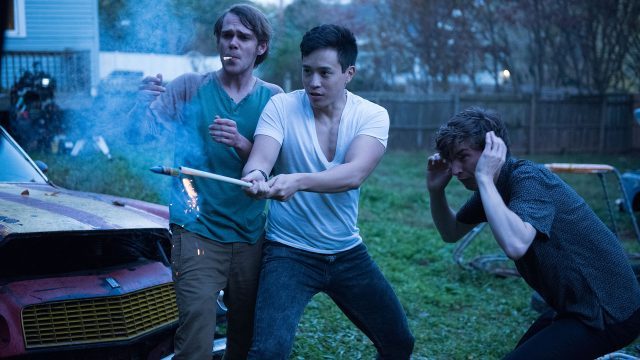
 Summer Night, actor Joseph Cross’s directorial debut, offers a twist on the standard ensemble coming-of-age flick: Its protagonists are not a bunch of high school teens looking to get stoned and laid before leaving for college (or not) but a group of older twenty-somethings facing more serious choices about their future. The film, which opens this weekend at Cinema Village, still has to fight genre clichés and mundane digressions as it tells the stories of close-knit friends gathering at a music bar appropriately called the Alamo in their small-town American community on the last night of summer. Jameson (Ellar Coltrane) is the film’s centerpiece, an all-around-good dude with a sound perspective on life who surprises everyone that night by arriving at the show with the impossibly hot, black-leather-clad Harmony (Victoria Justice), who’s not the kind of woman he usually dates. The less-flashy Corin (Elena Kampouris), who is working the door at the Alamo, is more his speed, but as we will learn, most of the characters are deeper than the usual genre stereotypes.
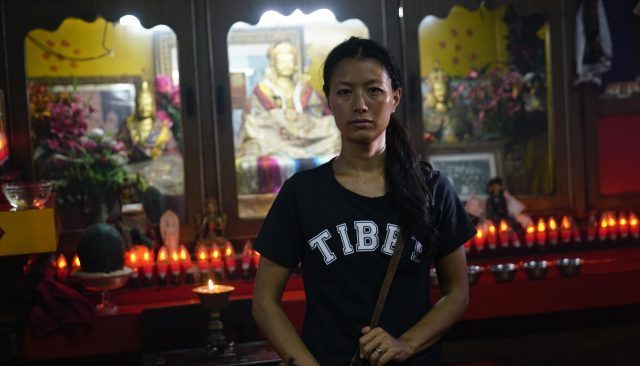
 The immigration and refugee crisis is at the heart of husband-and-wife filmmaking team Tenzing Sonam and Ritu Sarin’s The Sweet Requiem, opening July 12 at IFC. Unfortunately, the film gets bogged down in its agenda-driven narrative. Writer-director Sonam and producer-director Sarin, who were both born in India — Sonam’s parents were Tibetan refugees — have been outspoken regarding the treatment of Tibetans by the Chinese government, as depicted in such earlier works as 2007’s fictional