this week in film and television

JAY MYSELF

Jay Myself

Photographer Jay Maisel goes through decades of stuff as he moves out of longtime East Village home in Jay Myself

JAY MYSELF (Stephen Wilkes, 2018)
Film Forum
209 West Houston St.
Opens Wednesday, July 31
212-727-8110
filmforum.org

In 1966, Brooklyn-born photographer Jay Maisel moved into the 1898 Germania Bank Building on the corner of Bowery and Spring, purchased with a now astonishing $25,000 down payment. Nearly fifty years later, in early 2015, after decades of taking pictures and collecting tens of thousands of random items, he was forced to sell the graffiti-laden, six-floor, 36,000-square-foot property because of rising maintenance costs; at fifty-five million dollars, it was the largest private real estate deal in New York history. One of his protégés, Stephen Wilkes — who back in the 1970s knocked on Maisel’s door and showed him his portfolio — documents Maisel’s months-long exit from the landmark building as he and a team of assistants sift through the maelstrom and Maisel regales him with stories from his career, which has included shooting for advertising agencies, Sports Illustrated, New York magazine, and jazz legends. “Objects are there for you only if you really see them. If you don’t, they don’t exist. And a lot of people don’t see things,” Maisel philosophizes. “Before you’re going to be able to see, you have to look. And before you can look, you have to want to look. And art is, to some effect, trying to make others see what you see.”

Jay Myself

Documentary follows Jay Maisel’s nearly fifty-year history in the Bank on Spring & Bowery

Maisel, a calm man with a penchant for littering his sentences with curses, leads Wilkes through the six floors, showing items from his vast collection, one that borders on hoarding. “Each floor represented a certain partition of his mind,” Wilkes explains. Wilkes speaks with such other photographers as Jeff Dunas, Duane Michals, Dan Winters, Peter Murphy, Matt Dean, Hale Gurland, Barbara Bordnick, Jamie Smith, and Melchior DiGiacomo, who rave about Maisel’s influence and his iconoclastic personality. “He sees all this potential in things that no one else would. He just has such a sense of play,” his daughter, Amanda, says. Maisel, who carries a camera everywhere he goes, constantly snapping pictures, adds, “What I’m trying to do all the time is to try and see things anew, to see things the way a child would see them.”

The quintessentially New York documentary doesn’t dig too deep into his personal life and tends to be overly worshipful, but Maisel, who turned eighty-eight earlier this year, is an engaging character, chomping on a cigar, telling of his studies at Yale with Josef Albers, and going through boxes and boxes (and boxes and boxes) of stuff — what many would call junk — that he refuses to part with as the team from Moishe’s is faced with a virtually impossible situation. “I think there’s a delight in the perception and the enjoyments of objects,” he notes. There’s also a delight and enjoyment in watching this mensch over the course of seventy-eight minutes. Jay Myself opens at Film Forum on July 31, with Maisel and Wilkes participating in Q&As at several shows from July 31 to August 4.

WE CAN’T EVEN — MILLENNIALS ON FILM: FRANCES HA

FRANCES HA

Frances (Greta Gerwig) has to reexamine her life when her best friend moves on in Frances Ha

FRANCES HA (Noah Baumbach, 2012)
BAMfilm, BAM Rose Cinemas
30 Lafayette Ave. between Ashland Pl. & St. Felix St.
Saturday, August 3, 4:30 & 9:15
Series continues through August 6
718-636-4100
www.franceshamovie.com
www.bam.org

Lena Dunham meets Woody Allen and François Truffaut in Noah Baumbach’s utterly delightful and frustratingly believable Frances Ha, screening August 3 in BAM’s “We Can’t Even: Millennials on Film” series. Breakout mumblecore star Greta Gerwig (Hannah Takes the Stairs, Nights and Weekends) plays the title character, a twenty-seven-year-old New York dancer living with her best friend from college, Sophie (Mickey Sumner). They tell each other everything and even sleep in the same bed. “The coffee people are right — we are like a lesbian couple that doesn’t have sex anymore,” Frances playfully tells Sophie. But when Sophie suddenly announces that she’s moving in with her boyfriend, Patch (Patrick Heusinger), Frances’s life starts going on a downward spiral, her childlike manner and carefree attitude no longer as charmingly quirky as it used to be.

She first moves in with hot stud Lev (Adam Driver) and Benji (Michael Zegen), who nicknames her “Undateable.” She suffers a serious setback in the dance company where she apprentices, she’s running out of money, and Sophie is becoming more and more distant. But as Frances grows more and more desperate, she also finally starts taking a longer look at who she is — and who she wants to be. Shot in a deep, penetrating black-and-white by cinematographer Sam Levy, Frances Ha wonderfully captures the life of millennial twentysomethings, from their dependence on texting and self-involvement to their often bewildering inability to think about a real future.

Greta Gerwig cowrote and stars in Noah Baumbachs delightful FRANCES HA

Greta Gerwig cowrote and stars in partner Noah Baumbach’s delightful Frances Ha

Baumbach (The Squid and the Whale, Margot at the Wedding) follows Frances as she moves around New York City and goes back to her alma mater, Vassar (which is Baumbach’s also), marking each location as a new phase in her life. Gerwig, who took dance as a child and studied the discipline at Barnard (the choreography in the film is by Max Stone and Travis Waldschmidt), cowrote the script with Baumbach — they are romantic partners as well and had a son in March 2019. Although Gerwig initially did not consider herself for the title role, she is terrific as Frances, sort of the illegitimate daughter of Annie Hall and Antoine Doinel. The soundtrack features music by indie duo Dean + Britta — Dean Wareham and Britta Phillips also play the hosts of a dinner party Frances attends — in addition to Georges Delerue, the French composer of hundreds of films, including many by Truffaut. And yes, Gerwig’s real parents play her mother and father in the film. “We Can’t Even: Millennials on Film” continues at BAM through August 6 with such other works as Gerwig’s directorial debut, Ladybird, Xavier Dolan’s I Killed My Mother, Sean Baker’s Tangerine, and Laura Poitras’s Citizenfour.

FOR SAMA

For Sama

Waad al-Kateab documents daily life under constant bombardment in Aleppo in For Sama

FOR SAMA (Waad al-Kateab & Edward Watts, 2019)
Quad Cinema
34 West 13th St. between Fifth & Sixth Aves.
Opens Friday, July 26
212-255-2243
quadcinema.com
www.forsamafilm.com

“You’re the most beautiful thing in our life, but what a life I’ve brought you into. You didn’t choose this. Will you ever forgive me?” Waad al-Kateab asks in the extraordinary documentary For Sama. In 2012 during the Arab Spring, Waad, a marketing student at Aleppo University, joined the protests against the regime of President Bashar al-Assad. She started taking photos and cell-phone video, then got a film camera as she became a citizen journalist, documenting the escalating conflict, trying to find moments of joy amid the brutal, senseless murders of innocent men, women, and children. She met and fell in love with heroic doctor Hamza al-Kateab, who was determined to keep his hospital running as the bombings got closer. Waad and Hamza got married, and on January 1, 2016, she gave birth to a healthy girl, Sama.

The film, directed by Waad (who also served as cinematographer and producer) and Edward Watts (Escape from ISIS), is a poignant, unflinching confession from mother to daughter, explaining in graphic detail what the families of Aleppo are going through as Russian and Syrian forces and Islamic extremists maintain a constant attack. “We never thought the world would let this happen,” Waad explains as the body count rises — which she intimately shows, not shying away from shots of bloodied victims being brought into the hospital, a pile of dead children, or a desperate attempt to save the life of a mother and a newborn after an emergency caesarean. “I keep filming. It gives me a reason to be here. It makes the nightmares feel worthwhile,” Waad says.

She captures bombings as they happen, films families huddled inside their homes while machine guns can be heard outside, talks to a child who says he wants to be an architect when he grows up so he can rebuild Aleppo. Because she is a woman, Waad gains access to other women that would not be available to a male filmmaker as they share their stories of love and despair. Waad and Hamza plant a lovely garden to bring color to the dank, brown and gray city. A snowfall covers the turmoil in a beautiful sheet of white. The pitter-patter of rain offers a brief respite. But everything eventually gets destroyed as Waad and Hamza struggle with the choice of leaving with Sama or staying to continue their critical roles in the rebellion, she depicting the personal, heart-wrenching images of war — in 2016, her Inside Aleppo reports aired on British television — he tending to the ever-increasing wounded. “The happiness you brought was laced with fear,” Waad tells Sama in voiceover narration. “Our new life with you felt so fragile, as the freedom we felt in Aleppo.” Winner of the Prix L’Œil d’Or for Best Documentary at Cannes among other awards, For Sama opens at the Quad on July 26; on July 27, Waad, Hamza, and Watts will participate in Q&As with Nermeen Shaikh after the 4:45 show and with Tomris Laffly at the 7:00 screening.

ABBAS KIAROSTAMI: A RETROSPECTIVE

Abbas Kiarostami

Abbas Kiarostami is subject of comprehensive retrospective at IFC, featuring three talks with Godfrey Cheshire

IFC Center
323 Sixth Ave. at West Third St.
July 26 – August 15
212-924-7771
www.ifccenter.com

“During Godfrey’s several visits to Iran throughout a decade, he formed a relationship with my father that I had rarely seen him having with other writers. I believe this is because of Godfrey’s ability to go beyond the surface, his unique views and interpretations,” Ahmad Kiarostami writes in the foreword to film critic Godfrey Cheshire’s latest book, Conversations with Kiarostami (Film Desk, July 29, $18). In the 1990s, Cheshire went to Iran on multiple occasions to interview writer-director Abbas Kiarostami, helping introduce the new Iranian cinema to the West. Cheshire will be at IFC Center for three special presentations during the fab festival “Abbas Kiarostami: A Retrospective,” a three-week series comprising virtually all of Kiarostami’s shorts and full-length works, from award-winning, well-known tales to rarely screened gems, many in 2K or 4K restorations. Among the films being shown are the Koker Trilogy (Where Is the Friend’s House?, And Life Goes On, Through the Olive Trees), Palme d’Or winner Taste of Cherry, Silver Lion winner The Wind Will Carry Us, the early documentaries First Graders and Homework, and Kiarostami’s first two features, The Traveler and The Report.

Abbas Kiarostami retrospective will feature three special events with critic Godfrey Cheshire (photo by twi-ny/mdr)

Abbas Kiarostami looks ever-so-cool at MoMA show in 2007 (photo by twi-ny/mdr)

In his Criterion essay on Taste of Cherry, Cheshire writes, “In Abbas Kiarostami’s universe, it might be said, there are no things, only relations between things. Likewise, in his cinema: no films, only relations between films—and within them. And between them and us.” Cheshire will delve into those relations at a trio of talks, beginning July 27 at 7:10 with “Kiarostami and Koker,” focusing on the trilogy and showing Through the Olive Trees. On August 3 at 5:10, for “Unseen Kiarostami,” Cheshire will screen the 1976 comedy A Wedding Suit and talk about that film as well as such other early works as Bread and Alley, Experience, and Fellow Citizen. And on August 4 at 5:20, for “Cinema in Revolution,” Cheshire will be joined by film professor Jamsheed Akrami for a screening of the initially banned Case No. 1, Case No. 2 and a discussion. In his online bio of Kiarostami, Cheshire calls the auteur “the most acclaimed and influential of Iran’s major filmmakers” and notes how in the twenty-first century “Kiarostami broadened his creative focus, devoting more time to forms including photography, installation art, poetry, and teaching,” exemplified by his 2007 exhibition “Image Maker” at MoMA and MoMA PS1. Keep watching twi-ny for reviews of individual films during this must-see retrospective.

JAPAN CUTS: BLUE HOUR

Blue Hour

Kiyoura (Shim Eun-Kyung) and Sunada (Kaho) wonder what’s next in Yuko Hakota’s Blue Hour

FESTIVAL OF NEW JAPANESE FILM: BLUE HOUR (BURU AWA NI BUTTOBASU) (ブルーアワーにぶっ飛ばす) (Yuko Hakota, 2019)
Japan Society
333 East 47th St. at First Ave.
Sunday, July 28, 8:00
Festival runs July 19-28
212-715-1258
www.japansociety.org

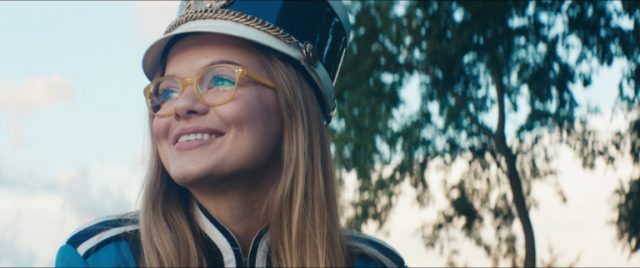
The Japan Cuts festival at Japan Society concludes July 28 with the North American premiere of Yuko Hakota’s beautiful, wistful Blue Hour. The movie is named after one of the two magic times of day, particularly for filmmakers: The golden hour occurs right after sunrise and before sunset, when the sky turns a warm, golden color, while the blue hour takes place right before sunrise and after sunset, when a colder, deep blue permeates. In the film, Kaho stars as Sunada, a television commercial director with a habit of making poor decisions in her life and career. She’s just turned thirty and wants to do more than produce ads but does not appear to be driven enough. She is married to a kindhearted man-child (Daichi Watanabe) but is having an affair with the married Togashi (Yusuke Santamaria). At a party, she drinks to excess, embarrassing herself in front of her crew. And she hasn’t been home to visit her family in several years. She seemingly could have it all, but she lacks ambition and often seems chilly and aloof to others. “I don’t like people who like me,” she says at one point. Later, she admits, “I don’t know what it’s like to be close.”

Blue Hour

Sunada (Kaho) has trouble finding happiness in Blue Hour

When Sunada mentions to one of her only friends, the impulsive, unemployed, and very charming Kiyoura (Shim Eun-Kyung), that she is getting ready to go home to see her grandmother, Kiyo proclaims that she will drive them there right away, so they get into her car and away they go. We learn a lot about the two women on the road trip — although this is no Thelma and Louise — but even more when they arrive at Sunada’s family’s small farm in the boondocks, where her oddball brother, Sumio (Daisuke Kuroda), lives with their sweet mother (Kaho Minami) and eclectic father (Denden). Sunada looks like she would rather be anywhere else. As Sunada refuses to relate to her significantly un-Ozu-like clan, Kiyo fits right in, always seeking fun in whatever she does, the polar opposite of her friend.

Lovingly photographed in soft hues by Ryuto Kondo, Hakota’s debut is a moving and poignant tale of a woman who has, sadly, apparently given up too soon; she’s an unusual protagonist in that just as she says that she doesn’t like people who like her, she herself is difficult to like. It’s hard not to see her as emblematic of Japan’s current troubled younger generation, one noted for its failure to socialize, date, marry, get a job, or even leave the house. Former teen model Kaho (A Gentle Breeze in the Village, Our Little Sister) wonderfully captures the character’s ennui, while award-winning South Korean actress and former child star Shim (Happy Killers, Miss Granny) is radiant as the ever-positive Kiyo, who is in love with life no matter where it takes her. Blue Hour is a small gem, quirky and insightful, delicate and alluring. The screening will be followed by a Q&A with Hakota, Kaho, and Shim. Among the other films playing at Japan Cuts are Mitsuaki Iwago’s The Island of Cats, Hiroshi Okuyama’s Jesus, and Makoto Sasaki’s Night Cruising in addition to the free panel discussion “The Current State of Film Restoration in Japan” on July 26 at 4:30, which will examine the industry itself and the restoration of Kenji Mizoguchi’s masterpiece Ugetsu.

ROOFTOP FILMS / MoMA POPRALLY x STATEN ISLAND: SPLASH

poprally

Snug Harbor Cultural Center
1000 Richmond Terrace, Staten Island
Saturday, July 27, $10 (free for children sixteen and under), 7:00
www.rooftopfilms.com
snug-harbor.org
www.moma.org

With MoMA’s main digs in Midtown under renovation, the second summer PopRally is going across the river to Staten Island on July 27. Partnering with Rooftop Films, MoMA is holding the festivities at one of the city’s genuine treasures, Snug Harbor Cultural Center & Botanical Garden, for food, drink, music, film, and more. The main event is a 9:00 screening of Ron Howard’s classic 1984 comedy, Splash, starring Tom Hanks as Allen Bauer, a single guy who falls in love with a mermaid (Daryl Hannah) who is being tracked by a scientist (Eugene Levy); John Candy is Hanks’s crazy brother. The evening will also include giveaways, trivia contests, music from DJ Tom of Maker Park Radio and the Gotham Easy Brass Band, beverages from Five Boroughs Brewing Co., and food from Staten Island vendors Ho’ Brah Tacos and Egger’s Ice Cream Parlor. Free shuttle bus service will be provided between Snug Harbor and the Staten Island Ferry terminal before and after the screening. Attendees are encouraged but not required to show up in aquatic costumes; you can bring a blanket (limited chairs will be available) that you can spread out on the South Meadow. Go early and check out the lovely Snug Harbor itself; admission is only five dollars and it’s open till five. PopRally will be traveling to the Bronx next.

“I DO NOT CARE IF WE GO DOWN IN HISTORY AS BARBARIANS”

“I Do Not Care If We Go Down in History as Barbarians”

How the 1941 Odessa massacre has been remembered is the central focus of Radu Jude’s “I Do Not Care If We Go Down in History as Barbarians”

“I DO NOT CARE IF WE GO DOWN IN HISTORY AS BARBARIANS” (ÎMI ESTE INDIFERENT DACĂ ÎN ISTORIE VOM INTRA CA BARBARI) (Radu Jude, 2018)
IFC Center
323 Sixth Ave. at West Third St.
Opens Friday, July 19
212-924-7771
www.ifccenter.com
bigworldpictures.org

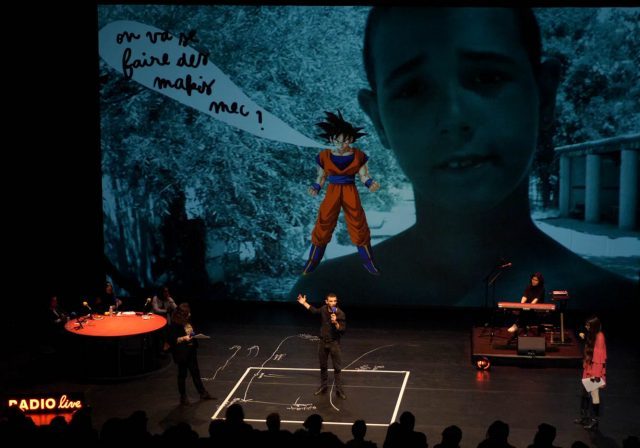
Romanian writer-director Radu Jude follows up his 2017 documentary, The Dead Nation, with “I Do Not Care If We Go Down in History as Barbarians,” a bold, provocative fiction film with nonfiction elements that explores continuing anti-Semitism and bigotry in Romania, Eastern Europe, and the world. The title is taken from a statement made by Romanian military dictator Marshal Ion Antonescu to the Council of Ministers in the summer of 1941, just a few months before the Odessa massacre in which tens of thousands of Jews were killed by Romanian troops. The film is set in contemporary times, as theater director Mariana Marin (Ioana Iacob) is preparing for a live, one-time-only massacre reenactment in the town square. Marin is determined to show what really happened during those days, complete with brutal murders and hangings, but Constantin Movilă (theater director Alexandru Dabija), her connection with the local government, insists that she leave out the gruesome parts, that the show should be a celebration of Romanian heroes. She argues that it would not be fair to the nearly four hundred thousand Jews that were ethnically cleansed by the Romanian military, but he quibbles over what’s true and what the community wants to see. As the show approaches, Movilă threatens to cancel it while numerous actors complain about the negative aspects being depicted, displaying affection for “Uncle Hitler” and a lack of empathy for the exterminated Jews.

“I Do Not Care If We Go Down in History as Barbarians” is like a post-Nouvelle Vague film, echoing elements of French cinema from Jean-Luc Godard and Jacques Rivette to Olivier Assayas and Arnaud Desplechin, with debates of texts by Isaac Babel, Ludwig Wittgenstein, Joseph Goebbels, Nicolae Steinhardt, and others. But instead of becoming pedantic, the discussions serve to enlighten the arguments and define such characters as Movilă and, in particular, Marin, who not accidentally shares the same name with a Romanian poet who wrote, “Serene and bitter, I hurry across my native land / As if tomorrow had already been.” The entire film is seen from Marin’s determined point of view, whether she’s reading in bed with her lover, Ștefan (Șerban Pavlu), getting support from her lead actor, Traian (Alex Bogdan), and right-hand assistant, Oltea (Ilinca Manolache), or smoking and drinking in a bubbles-free bath. She’s mad at the state of the world and disgusted that people don’t want to know the truth of their history; she’s like the tank she insists she must have for the production — and like the tank, which has to stand still, Marin refuses to budge, understanding the difference between compromise and censorship.

In her first leading role, Iacob is mesmerizing throughout the film’s 140 minutes, giving a tour-de-force performance that lays it all out there as she portrays a bold and brash woman who won’t back down from her personal and professional desires; she’s so immersed in the part that at times you’ll think you’re watching a documentary, enhanced by cinematographer Marius Panduru’s wandering, unpredictable camera. Jude (Scarred Hearts, Aferim!) tackles such critical issues as governmental whitewashing of history, the public’s selective memory, and the definition of patriotism itself, a debate raging across America under the current administration as well as in other nations. Whether Marin gets to stage the show or not ends up being besides the point as the people around her reveal their biases and hatreds, something a play is not about to change. “I Do Not Care If We Go Down in History as Barbarians” is a necessary film, but it’s also a frightening one.