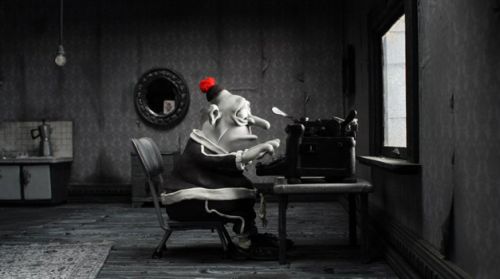
Max becomes friends with an Australian girl in charming claymation film
MARY AND MAX (Adam Elliot, 2009)
Film Society of Lincoln Center, Walter Reade Theater
70 Lincoln Center Plaza, 65th St. at Amsterdam Ave.
Saturday, January 23, 9:00
Sunday, January 24, 8:45
212-875-5601
www.maryandmax.com
www.filmlinc.com
 Winner of numerous awards at film festivals all over the world, Adam Elliot’s stop-motion animated MARY AND MAX is the touching, unforgettable tale of two loners who become pen pals, sharing the details of their hopes and dreams over decades. Mary (voiced by Bethany Whitmore as a young girl and Toni Collette when she gets older) is an oddball child living in a small town in Australia. Seeking a friend, she sends a letter to a random person she finds in a phone book. Max (Philip Seymour Hoffman) is a childlike middle-aged man suffering from Asperger’s Disorder in New York City. Through the years, their long-distance relationship goes through emotional ups and downs, building to a surprising ending that still has us scratching our heads. Elliot, who won an Oscar for his short film HARVIE KRUMPET in 2003, wrote, directed, and designed the sets and characters for MARY AND MAX, inspired by the photography of Diane Arbus. He brings Mary and Max to life in charming ways, adding little details and flourishes that will endear you to them even though they both are very, very strange. The film, wonderfully narrated by Barry “Dame Edna” Humphries, required more than 130,000 individual frames and 212 puppets and took 57 weeks to shoot; the result is simply charming. MARY AND MAX is being shown this weekend at Lincoln Center as part of the New York Jewish Film Festival; executive producer Paul Hardart will be in attendance at the January 23 screening. (The film is also part of the Reel Abilities: NY Disabilities Film Festival running January 28 – February 2, presented by the JCC in Manhattan.)
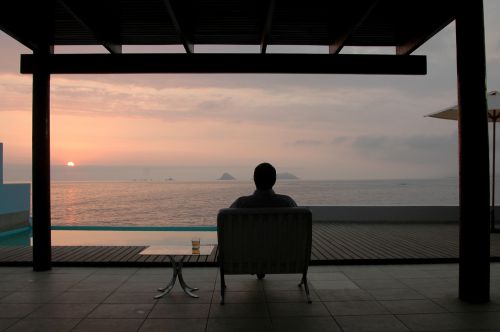
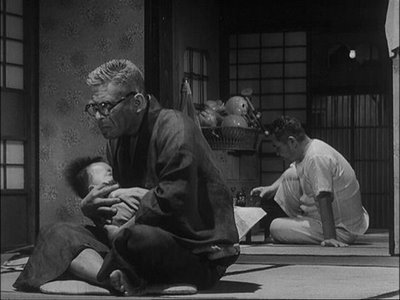
 Akira Kurosawa’s powerful psychological drama begins with a jazzy score over shots of a bustling Japanese city, people anxiously hurrying through as a Theremin joins the fray. But this is no Hollywood film noir or low-budget frightfest; Kurosawa’s daring film is about the end of old Japanese society as the threat of nuclear destruction hovers over everyone. A completely unrecognizable Toshiro Mifune stars as Nakajima, an iron foundry owner who wants to move his large family — including his two mistresses — to Brazil, which he believes to be the only safe place on the planet where he can survive the H bomb. His immediate family, concerned more about the old man’s money than anything else, takes him to court to have him declared incompetent; there he meets a dentist (the always excellent Takashi Shimura) who also mediates such problems — and fears that Nakajima might be the sanest one of all.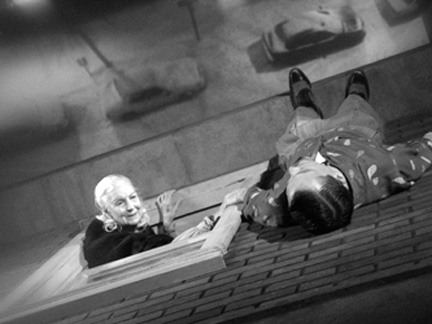
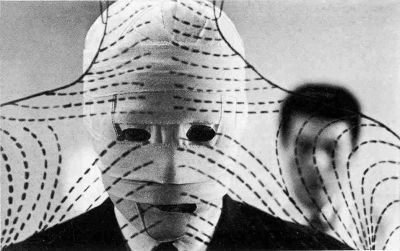
 Japanese novelist Kôbô Abe and director Hiroshi Teshigahara collaborated on five films together, including the marvelously existential WOMAN OF THE DUNES in 1964 and THE FACE OF ANOTHER two years later. In THE FACE OF ANOTHER, Tatsuya Nakadai (THE HUMAN CONDITION, KILL!) stars as Okuyama, a man whose face has virtually disintegrated in a laboratory accident. He spends the first part of the film with his head wrapped in bandages, a la the Invisible Man, as he talks about identity, self-worth, and monsters with his wife (Machiko Kyo), who seems to be growing more and more disinterested in him. Then Okuyama visits a psychiatrist (Mikijirô Hira) who is able to create a new face for him, one that would allow him to go out in public and just become part of the madding crowd again. But his doctor begins to wonder, as does Okuyama, whether the mask has actually taken control of his life, making him as helpless as he was before.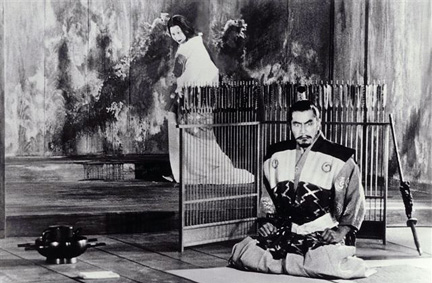

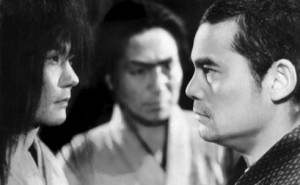
 Akira Kurosawa might be one of the greatest filmmakers of the twentieth century, but the Japanese master wasn’t immune from laying an egg or two along the way. His debut film, SANSHIRO SUGATA, released in 1943, and its sequel, made two years later (THE MOST BEAUTIFUL was released in between), are a deadly dull duo that pits two styles of fighting, judo and jujitsu, against one another. The relatively straightforward genre film, based on the novel by Tsuneo Tomita that was inspired by the real life of Shiro Saigo, stars Susumu Fujita as Sanshiro Sugata, a hesitant judo champion who is forced back into the ring by politics. While Kurosawa does show flashes of the director he would soon become, the two-part saga is far too worshipful of its subject, lacking any sense of nuance or actual drama, hitting viewers over the head with its very basic themes. The extremely rare double feature is part of the Kurosawa Festival at Film Forum, which continues through February 18 with such upcoming classics as IKIRU, I LIVE IN FEAR, HIGH AND LOW, and DRUNKEN ANGEL.