
“Anthropoid Coffin of the Servant of the Great Place, Teti,” Egypt, from Thebes, wood, painted box with lid in place, circa 1339-1307 BCE
Brooklyn Museum
200 Eastern Parkway
Saturday, April 3, free, 5:00 – 11:00 (some events require free tickets distributed at the Visitor Center)
212-864-5400
www.brooklynmuseum.org
In conjunction with the exhibition “To Live Forever: Art and the Afterlife in Ancient Egypt,” the Brooklyn Museum’s free monthly First Saturdays program on April 6 will feature such special events as a discussion with curators Edward Bleiberg and Lisa Bruno, live music by Arab group Zikrayat, a Hands-On Art workshop in which you can create an Egyptian-style amulet, a book talk with Joshua Cohen about his novel A HEAVEN OF OTHERS, a dance party hosted by DJ Nickodemus and the Spy from Cairo, and a screening of the Oscar-winning Japanese film DEPARTURES. In addition, all of the museum’s exhibitions will be open late, including “Kiki Smith: Sojourn,” “Healing the Wounds of War: The Brooklyn Sanitary Fair of 1864,” “Body Parts: Ancient Egyptian Fragments and Amulets,” and the aforementioned “To Live Forever.”
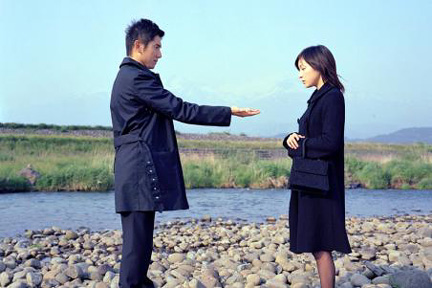
Japanese Oscar winner takes unusual look at death
DEPARTURES (Yojiro Takita, 2008)
Brooklyn Museum
200 Eastern Parkway
Saturday, April 3, free, 6:30 (free tickets distributed at the Visitor Center at 5:00)
212-864-5400
www.departures-themovie.com
 After the orchestra in which he plays cello is dissolved, Daigo Kobayashi (Masahiro Motoki) and his wife, Mika (Ryoko Hirosue) leave Tokyo and head back to his hometown in Yamagata. Seeing a classified ad in the local paper listing a job in “departures,” Daigo schedules an interview, thinking it is a travel agent position. But as it turns out, the boss, Sasaki (Tsutomu Yamazaki), claims it was a typo — it should have read “the departed” — and immediately hires Daigo as his assistant encoffinor. Daigo quickly learns that he and Sasaki attend to the newly dead, picking them up for funeral directors and then preparing the bodies, in front of grieving friends and family, for the coffins and cremation through an elaborate, detailed ceremony. Daigo takes the job out of financial desperation — Sasaki throws money at him to come on board — but doesn’t tell anyone, including Mika, what he is doing, since people who work in businesses involving corpses are shunned in Japan, considered dirty. But as Daigo grows to appreciate the importance of what Sasaki does, everything he has built threatens to fall apart when his secret starts getting out. Winner of the 2008 Oscar for Best Foreign Language Film (As well as ten Japan Academy Prizes), DEPARTURES is a moving portrait of life and death, told beautifully by director Yojiro Takita (WHENT THE LAST SWORD IS DRAWN, ONMYOJI) and screenwriter Kundo Koyama. Motoki, who had the original idea for the film, gives a wonderfully subtle performance as a Daigo, while Yamazaki is a riot as the stern boss with a sly sense of humor. Despite an embarrassingly unnecessary montage scene and sappy music by Joe Hisaishi (who’s never met an emotion he couldn’t overexploit), DEPARTURES is a moving portrait of a man searching for his place in the world — and meeting personal and professional obstacles when he thinks he might have found it.


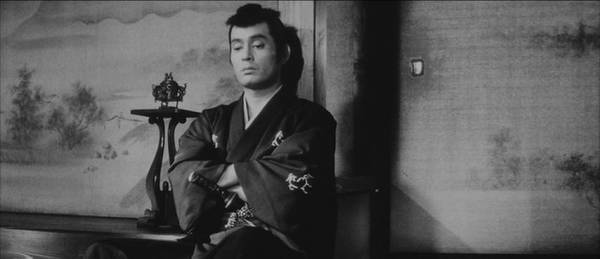
 Kihachi Okamoto’s goofy, fun Eastern Spaghetti Western, with lots of references to other samurai flicks, is based on the novel PEACEFUL DAYS by Shugoro Yamamoto, which was also turned into Akira Kurosawa’s 1962 Asian oater SANJURO. But this time around, it’s played more for laughs. Tatsuya Nakadai, one of the main villains in both SANJURO and YOJIMBO, stars as former samurai Genta, a laid-back dude who gets caught up in the middle of an inner struggle of a split clan (one group of which contains seven rogue samurai). He meets up with former peasant farmer Hanjiro (Etsushi Takahashi), who dreams of becoming a brave samurai and involves himself in the same battle, though on an opposing side. As the plot grows more impossible to follow, with lots of betrayals, double crosses, would-be yakuza, and romantic jealousy, so does the riotous relationship between Genta and Hanjiro. Masaru Sato’s score is fab as well. This special screening at 92YTribeca, part of the Closely Watched Films series, will be hosted by Elliot Kalan with comic book artist Evan Dorkin.


 Short-story writer and children’s book author Etgar Keret and playwright and kids’ book writer Shira Geffen, who are life partners, teamed up in 2007 for their feature-film directorial debut, JELLYFISH (MEDUZOT), a small, charming Israeli film that won the Camera D’Or at Cannes. Written by Geffen, the story follows three women dealing with family problems that threaten to leave them lost and lonely. After her boyfriend dumps her, Batya (Sarah Adler) heads off to her job working for a wedding caterer, where she is surrounded by happy people celebrating a marriage while she contemplates her own bleak future. But her life changes when she is sitting on the beach and a silent young girl (Nikol Leidman) comes walking out of the ocean and approaches her. When a policeman says that no one has reported the girl missing or is looking for her, Batya decides to take care of the child herself, perhaps as a reaction to the offhanded way in which her own wealthy, successful mother treats her. Meanwhile, Keren (Noa Knoller), who broke her leg at her wedding reception after being trapped in the bathroom, has to spend her honeymoon in a local seaside hotel instead of jetting off to the Caribbean; her unhappiness is soon magnified when she suspects her husband (Gera Sandler) might have eyes for an older woman who is staying alone in the deluxe penthouse suite. And Joy (Ma-nenita De Latorre) is a Filipino guest worker who has come to Israel to make money to send back to her son in the Philippines, but because she cannot speak Hebrew, it is difficult for her to communicate with anyone, especially one old woman (Zharira Charifai) she has been hired to care for. Like the multiple-character drama BABEL, Keret and Geffen’s film focuses on complex family relationship and the challenges of interpersonal communication, with water — whether it’s the leak in Batya’s ceiling, the ocean rumbling outside Keren’s hotel room, the sea the young girl mysteriously emerges from, or the large expanse that separates Joy from her family — serving as a metaphor for both life and death, joy and sorrow. This sweet, painful, and somewhat surreal examination of four generations of women might be set in Tel Aviv, but its themes are universal.