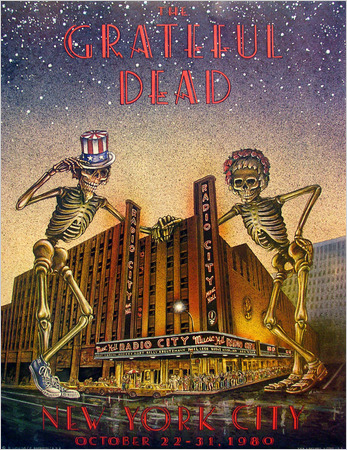
Dennis Larkin and Peter Barsotti, “Radio City Music Hall poster Oct. 22-31, 1980” (courtesy Grateful Dead Archive)
THE BERNARD AND IRENE SCHWARTZ DISTINGUISHED SPEAKERS SERIES
Thursday, May 27, New York Society for Ethical Culture, 2 West 64th St., $20, 6:30
“Grateful Dead: Now Playing at the New-York Historical Society” exhibition continues through July 4, 2 West 77th St., $12
212-873-3400
www.nyhistory.org
Although they are most closely aligned with their hometown of Haight-Ashbury in San Francisco, the Grateful Dead had a special relationship with New York City. Every year, usually in the fall in the 1980s and ’90s, the psychedelic, free-flowing rock band would come to Radio City, Madison Square Garden, and other local venues for extended stays as Dead Heads came out of the woodwork to join in the annual celebration of life and music. So it is not nearly as strange as it might first appear for “The Grateful Dead: Now Playing at the New-York Historical Society” to be held at the venerable Upper West Side institution. The small but concentrated exhibit focuses on the group’s interaction with their dedicated fans through film, video, photographs, ticket stubs, concert posters, backstage guest lists and passes, and other cool paraphernalia. The display includes the group’s first record contract, a tour rider, designs for their 1974 Wall of Sound speaker system, the life-size marionettes used in their breakthrough “Touch of Grey” video, Dick Latvala’s notebooks evaluating specific shows (some of which would later be released as a Dick’s Pick), and dozens of envelopes people decorated when sending in ticket requests. Jerry Garcia, Bob Weir, Phil Lesh, Mickey Hart, Bill Kreutzmann, Ron “Pigpen” McKernan, and other Dead members were way ahead of the curve when it came to dealing with their fans, creating a human social network well before Facebook, MySpace, and Twitter, although they were always on the cutting edge of technology as well. Music continually flows through the exhibit, and you can take a break by grabbing a seat and watching clips from 1977’s THE GRATEFUL DEAD MOVIE.
On May 27 at 6:30, longtime progressive rock deejay Pete Fornatale and “Tales from the Golden Road” radio host Gary Lambert, along with surprise guests, will participate in “Tales of the Grateful Dead and New York,” an intimate look at the band’s unique ties to the city, which include appearances at such legendary venues as the Fillmore East in addition to Tompkins Square Park, Central Park, and other locations. The event will take place at the New York Society for Ethical Culture; tickets are $20.
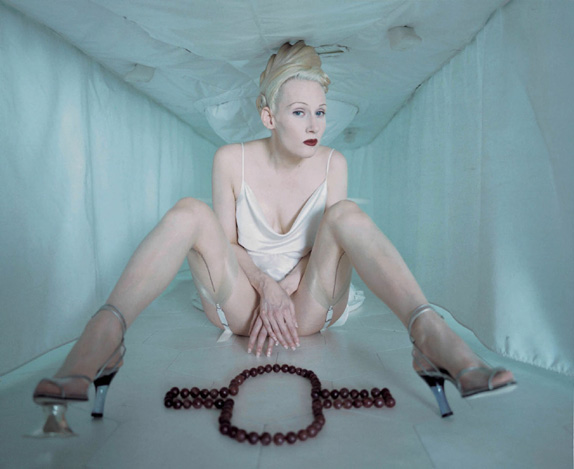
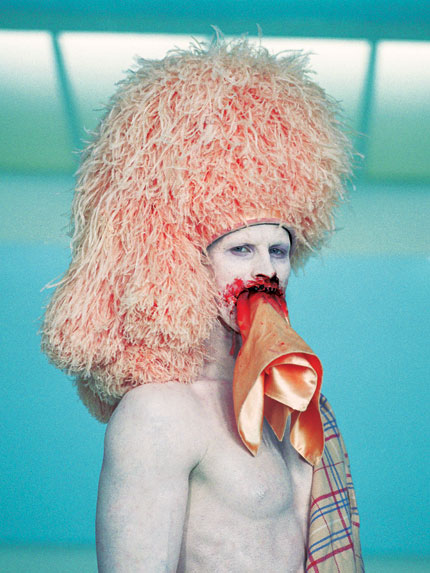
 Matthew Barney’s CREMASTER CYCLE is so much more than five essentially incomprehensible films totaling seven hours made over the course of eight years out of chronological order; it’s a state of mind, a whole other level of consciousness. The complete series, which is shown at art houses and museums and will never, according to Barney, be available on DVD or any other salable personal format, hasn’t been seen in its entirety in New York City since October 2003, when it screened at Anthology Film Archives shortly after the exciting Matthew Barney survey held at the Guggenheim earlier that year. Ostensibly following the ascension and descension of the cremaster muscle, which raises and lowers the testicles as sexual differentiation takes place inside the human body, the films feature strange characters in odd metaphorical situations that are rarely immediately apparent; we found ourselves continually referring to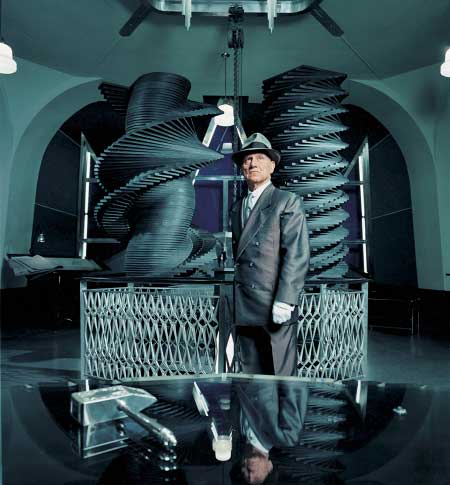

 In British-born Israeli author and filmmaker Igal Bursztyn’s absurdist romantic comedy, Shabtai (Alon Abutbul) and Herzel (Moshe Ivgy) are a sad-sack Don Quixote and Sancho Panza, going through life in their own unique, bizarre way. Low-grade junk dealers who putt-putt around the outskirts of Tel-Aviv in a ramshackle motorcycle/cart contraption, Shabtai dreams of local cosmetics queen Lily Dekel (Dorit Bar-Or), while Herzel has a crush on his partner’s daughter, Batya (Zehavit Passi), who is still in school. Determined to meet his red-haired beauty, Shabtai decides to bring her a legless Ping-Pong table as a gift; meanwhile, Herzel spends many an afternoon watching Batya play Ping-Pong from behind the school gates. It takes a while to warm up to Shabtai, who is a rather unpleasant fellow, but Herzel is charming from the get-go, wearing a simplistic, never-ending smile the whole way through. Igvy and Abutbul shared the Best Actor prize at the 2008 Jerusalem Film Festival, while the film garnered seven nominations at the Israeli Film Academy Awards, including Best Actor (Igvy), Best Supporting Actor (Abutbul), Best Screenplay (Burstyn), and Best Film, taking home Best Music (Israel Bright). OUT OF THE BLUE will be screening on May 20 at the Bryant Park Hotel as part of the Dor Chadash Israeli Film Series, preceded by a reception at 7:30 and a discussion with Bursztyn, “Escaping Israeli Reality Through Israeli Cinema,” at 8:00.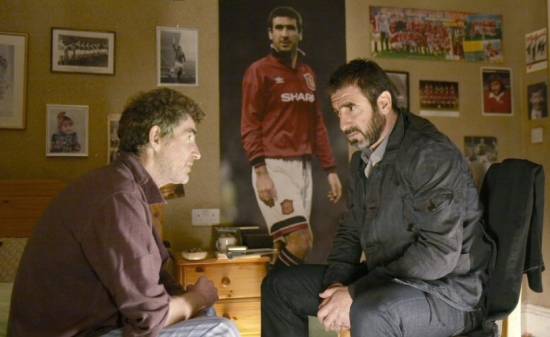
 With his life in freefall, postal employee Eric Bishop (Steve Evets) gazes up at his poster of soccer legend Eric Cantona and wonders what the Manchester United star would do – and then, like magic, Cantona (played by Cantona himself) appears in his room, to lend advice and help him through his myriad problems. Reminiscent of how Bogie (Jerry Lacy) guides Allan (Woody Allen) in PLAY IT AGAIN, SAM, Cantona hangs out with Bishop, talking about how he dealt with adversity on the field and off and sharing joints while discussing life. Bishop’s stepsons don’t listen to him, his second wife has left him, and he ends up in the hospital after driving the wrong way through a traffic circle. But his close group of motley friends – Spleen (Justin Moorhouse), Jack (Des Sharples), Monk (Greg Cook), Judge (Mick Ferry), Smug (Smug Roberts), Travis (Johnny Travis), and leader Meatballs (John Henshaw) – stick by him through thick and thin, especially when his son Ryan (Gerard Kearns) gets into serious trouble with a local gangster (Steve Marsh). A light-hearted, tender comedy that turns somewhat goofy at the end, LOOKING FOR ERIC was directed by, remarkably enough, British iconoclast Ken Loach, who has previously offered up such dour, serious tales as KES, RIFF-RAFF, CARLA’S SONG, and THE WIND THAT SHAKES THE BARLEY. Loach and screenwriting partner Paul Laverty were looking for a sweet, innocent film to make when Cantona actually approached them with an idea that they turned into LOOKING FOR ERIC, a nod to such charmers as WAKING NED DEVINE and THE FULL MONTY that includes clips of many of Cantona’s most spectacular goals as well as his infamous farewell press conference.