Cary Grant 2, BAMcinématek, July 9-29
The Complete Clint Eastwood, Film Society of Lincoln Center, July 9-29
www.bam.org
www.filmlinc.com
It’s the battle of the big men this month, the fight for the heavyweight championship, as two of Hollywood’s all-time hunksters, the machoest of movie stars, go mano a mano in Brooklyn and Manhattan. From July 9 to 29, the Walter Reade Theater will be hosting “The Complete Clint Eastwood,” screening every single one of the Man with No Name’s directorial efforts, from 1971’s PLAY MISTY FOR ME and 1973’s HIGH PLAINS DRIFTER and BREEZY (with William Holden as an old lech!) to 2008’s CHANGELING and GRAN TORINO and last year’s INVICTUS. Lincoln Center is upping the ante — and cheating more than a bit — by throwing in three of Eastwood’s Sergio Leone Westerns, A FISTFUL OF DOLLARS (1964), FOR A FEW DOLLARS MORE (1965), and THE GOOD, THE BAD, AND THE UGLY (1966), in addition to the first DIRTY HARRY (Don Siegel, 1971). The eighty-year-old Eastwood will participate in a live conversation and Q&A via Skype following the 2:30 screening of FISTFUL on July 10.
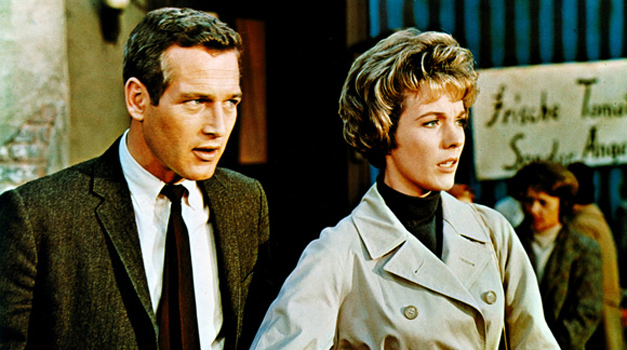
Meanwhile, over in Brooklyn, British-American film legend Archibald Alexander Leach will be flexing his muscles in nineteen of his finest works, the second part of a tribute BAM began last year. Grant, who died in 1986 at the age of eighty-two, can be seen in such unforgettable classics as CHARADE (Stanley Donen, 1963), the best Hitchcock film not directed by Sir Alfred; Howard Hawks’s 1938 screwball comedy BRINGING UP BABY, alongside the Great Kate and a tiger; George Stevens’s 1939 epic, GUNGA DIN, one of the grandest adventure movies ever made; and the romantic heartbreaker AN AFFAIR TO REMEMBER (Leo McCarey, 1957), with Deborah Kerr. While Eastwood does most of his talking with his eyes, rifles, and a carefully placed expectoration here and there, Grant almost never shuts his mouth, words tumbling out at a frantic pace that would challenge the Gatling gun. But while Eastwood is still starring in and directing pictures as an octogenarian, Grant called it quits near the top of his game, retiring from the industry while in his mid-sixties after appearing in Charles Walters’s WALK, DON’T RUN in 1966, just when Clint was moving along from western cowboy to eastern cop and military man. Although they didn’t make any films together, the five-time-married Grant, who also had flings with many a starlet, did appear with the twice-married Eastwood, who kept himself rather busy as well, fathering numerous children with multiple women, in the 1986 television special ALL-STAR PARTY FOR CLINT EASTWOOD; no fisticuffs ensued.


For the next two weeks, MoMA will be celebrating the eclectic career of iconoclastic sixty-year-old British director Sally Potter with a retrospective of her work, from her 1969 short JERK through the new digitized version of her most well known feature, ORLANDO (1992), to her latest, 2009’s RAGE, which was first available on mobile devices before hitting art houses last September. RAGE is set in the world of high fashion, as an unseen teenager who goes by the name Michelangelo is interviewing a group of fourteen people involved in one way or another with a runway show introducing a new perfume known simply as “M.” As the movie proceeds, the carefully crafted characters reveal more and more intimate thoughts and reactions, in front of different-colored screens, as mystery, mayhem, and murder ensue. Among the participants are transvestite model Minx (Jude Law), wartime photographer Frank (Steve Buscemi), cynical critic Mona Carvell (Judi Dench), former “face of the year” Lettuce Leaf (Lily Cole), financier Tiny Diamonds (Eddie Izzard), his bodyguard, Jed (John Leguizamo), and pizza deliveryman Vijay (Riz Ahmed). The lurid tale is slowly unveiled as the mostly self-centered men and women talk about themselves, looking directly into the camera and staying within the same frame as the action can be heard offscreen. The cast, which also includes Bob Balaban, Dianne Wiest, and Simon Abkarian, is exceptional throughout, bringing everything to life even though Potter, who is operating the camera, never leaves the claustrophobic confines of the single tiny space. The story is rather mundane and the themes somewhat clichéd, but the way it all comes together borders on the dazzling. “I don’t want to be famous,” seamstress Anita (Adrian Barraza) says at one point. “I want to be invisible.” She’s the only one. Potter will be at MoMA for Q&As following the July 7 screening of ORLANDO (8:00), the July 8 screening of RAGE (8:00), and the July 9 screenings of THE GOLD DIGGERS (4:30) and YES (8:00).
Japanese writer-director Yuki Tanada made quite a cinematic debut in 2004 with ELECTRIC BUTTON (MOON & CHERRY), a romantic sex comedy that was part of the Love Collection Project. Shortly after shy virgin Tadokoro (Tasuka Nagaoka) joins the university erotic literature club, he finds himself being used over and over again as sexual fodder by the small club’s lone female, Mayama (Noriko Eguchi), who is doing a rather unique kind of research for her latest novel. Meanwhile, Tadokoro meets the sweetly innocent Akane (Misato Hirata) at the bookstore where they both work and wonders if he can have a real relationship with her. What follows is a funny, heated battle between Tadokoro’s heart, mind, and nether regions as he delves into his own writing and sense of self-worth. Recalling Pinku Eiga films, ELECTRIC BUTTON is playfully sexual and insightfully honest, a work that earned the female director well-deserved accolades. (She has gone on to make such films as 2006’s HAVE A NICE DAY and 2008’s AINT’ NO TOMORROWS.) Although the titillating ELECTRIC BUTTON was made back in 2004, the July 7 screening at the Japan Society, in the “Best of the Unreleased Naughties” section of the Japan Cuts festival, is its U.S. premiere. (Look for Akira Emoto as elder statesman Sakamoto, erstwhile leader of the club of oddballs; Emoto also appears in the festival’s MEMORIES OF MATSUKO and GOLDEN SLUMBER and was the irrepressible title character of Shohei Imamura’s DR. AKAGI.)

A precursor to such emotional, intense examinations of the contemporary Japanese family as Hirokazu Kore-eda’s STILL WALKING and Kiyoshi Kurosawa’s TOKYO SONATA, Toshiaki Toyoda’s HANGING GARDEN is a smart, surreal look at the dark underbelly building beneath a seemingly happy family. Eriko Kyobashi (Kyôko Koizumi) has one rule for her husband, Takashi (Itsuji Itao), son, Ko (Masahiro Hirota), and daughter, Mana Kyobashi (Anne Suzuki): that there are no secrets. The family that shares together, stays together. But there are secrets galore, with Dad sleeping with the younger Mina (Sonim), soon to become Ko’s tutor; Mana frequenting the love hotel where she was conceived; and Eriko harboring thoughts of bloody murder. Based on the novel by Mitsuyo Kakuta, HANGING GARDEN is a superb character study, a cynical, funny, and at times horrific look at a dysfunctional family ready to implode at any moment. After making HANGING GARDEN, Toyoda was arrested on drug charges and reemerged four years later with 
In a close-knit rural village far from the hustle and bustle of Tokyo, the police have arrived, investigating the mysterious disappearance of Dr. Ino (Tsurube Shofukutei), the local doctor who takes care of everyone’s medical needs, running the clinic and making regular house calls, a trusted figure often seen riding around on his motorized bike, greeting the citizens like an old friend. As the detectives question the residents, flashbacks depict the special relationship that existed between the well-compensated doctor — the town pays him $200,000 a year — and the people. Dr. Ino had recently been joined by an intern, med-school graduate Keisuke Soma (Eita), who showed up in a flashy convertible, upset he didn’t get a position in a Tokyo hospital, but even he was soon won over by Dr. Ino’s charm and skill. But when nurse Akemi Ohtake (Kimiko Yo) has to guide Ino through a difficult procedure and city doctor Ritsuko Torikai (Haruka Igawa) has doubts about how Ino is treating her ill mother (Kaoru Yachigusa), questions arise that bring some surprising answers. Winner of three major categories at the 2009 Hochi Film Awards — Best Director, Best Supporting Actor (Eita), and Best Supporting Actress (Yachigusa) — DEAR DOCTOR is a warm, tender-hearted story written and directed by Miwa Nishikawa, who also earned accolades for her first two films, 2003’s WILD BERRIES and 2006’s SWAY. Shofukutei is terrific as Dr. Ino, a cross between Akira Emoto’s Dr. Akagi and Robin Williams’s Patch Adams (and we mean that in a good way). The solid cast also includes the ubiquitous Teruyuki Kagawa (SWAY, TOKYO SONATA, GOLDEN SLUMBER) as pharmaceutical supplier Masayoshi Saimon. DEAR DOCTOR is a real charmer.