this week in film and television

FILM CLUB: LEBANON ADVANCE PREVIEW SCREENING

Israeli film offers claustrophobic view of 1982 war

LEBANON (Samuel Moaz, 2009)
Museum of Jewish Heritage, Edmond J. Safra Hall
36 Battery Pl.
Monday, July 19, 6:30
Free with suggested donation of $1 to $20
www.mjhnyc.org

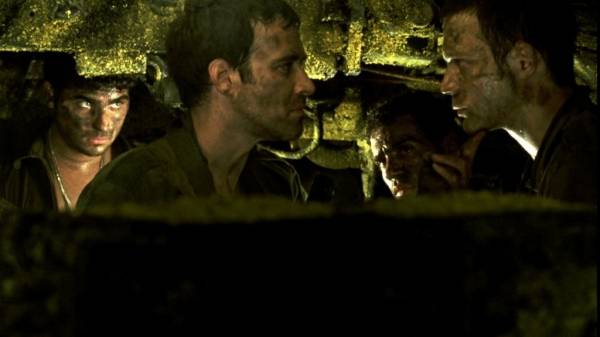
Claustrophobics, beware. Nearly all of Samuel Moaz’s microcosmic examination of the first day of the 1982 Israel-Lebanon war — the same struggle recently tackled by Ari Folman in the animated WALTZ WITH BASHIR — takes place within a dark, grungy tank. In this tiny space, audiences get to experience the fear building inside company leader Yigal (Michael Moshonov), driver Hertzel (Oshri Cohen), weapons loader Assi (Itay Tiran), and gunner Shmulik (Yoav Donat) as they are suddenly put in the middle of a secret, dangerous mission by commander Jamil (Zohar Strauss) and meet action head-on almost immediately, having to deal with the prospects of killing for the first time. The world outside the tank is seen only through the cross-hairs of Shmulik’s telescopic lens, making everyone outside a potential victim. At times the tension mounts at a breathtaking pace, although the film gets bogged down in too much melodrama as the characters get further developed. As a teenager, writer-director Moaz actually fought in the war, and it was his memories of having killed a man on that very day — June 6, 1982 — that led him to make the movie, which won the Silver Bear at the Venice Film Festival. LEBANON is quite a ride. This special Film Club advance screening at the Museum of Jewish Heritage will be followed by a discussion between Moaz and film critic Leonard Quart; LEBANON opens in theaters August 6.

ASIAN AMERICAN INTERNATIONAL FILM FESTIVAL

Abhishek Pathak’s rural drama BOOND is part of Back to the Future Shorts Program at 2010 AAIFF

Quad Cinema, 34 West 13th St.
Clearview Chelsea Cinemas, 260 West 23rd St.
Museum of Chinese in America, 215 Centre St.
July 15-24
www.aaiff.org/2010

As regular twi-ny readers know, we can’t get enough of Asian cinema. With the Japan Cuts series finishing up at the Japan Society, part of the New York Asian Film Festival that recently concluded at Lincoln Center, it’s now time for the Asian American International Film Festival, ten days of films from the Philippines, Malaysia, Taiwan, Nepal, Thailand, Korea, Australia, and the U.S. Held at the Quad, the Clearview Chelsea, and the Museum of Chinese in America, the AAIFF, which is not quite as wild as the NYAFF, features films that examine such topics as adoption, drug addiction, the LGBT community, poverty, and the war in Iraq. But don’t worry; there are also movies about a wacky theater company, mutilated bodies, goofy romance, and a woman who really, really likes sex. Many of the screenings will be followed by Q&As with the director, star, or documentary subject. Raymond Red’s MANILA SKIES opens the festival on Thursday night; among the works that we’re looking forward to are MAO’S LAST DANCER, Bruce Beresford’s biopic of Cunxin Li; Yeon-woo Lee’s Korean action thriller RUNNING TURTLE; Xiaolu Guo’s SHE, A CHINESE, which follows a young woman who leaves the mainland China countryside seeking a better life in London; and Yuhang Ho’s Philippine drama AT THE END OF DAYBREAK, about a twenty-three-year-old man’s controversial relationship with a high school student. There will also be several programs of short films in addition to shorts preceding some of the feature films.

JAPAN CUTS: MEMORIES OF MATSUKO

Miki Nakatani won Japanese Academy Award for her starring role in Tetsuya Nakashima’s MEMORIES OF MATSUKO

MEMORIES OF MATSUKO (KIRAWARE MATSUKO NO ISSHO) (Tetsuya Nakashima, 2006)
Japan Society
333 East 47th St. at First Ave.
Thursday, July 15, 6:15
www.japansociety.org/japancuts
www.subwaycinema.com

We called Tetsuya Nakashima’s 2005 hit, KAMIKAZE GIRLS, the “otaku version of Jean-Pierre Jeunet’s AMELIE,” referring to it as “fresh,” “frenetic,” “fast-paced,” and “very funny.” His following film, the stunningly gorgeous MEMORIES OF MATSUKO, also recalls AMELIE and all those other adjectives, albeit with much more sadness. Miki Nakatani stars as Matsuko, a sweet woman who spent her life just looking to be loved but instead found nothing but heartbreak, deception, and physical and emotional abuse. But MEMORIES OF MATSUKO is not a depressing melodrama, even if Nakashima incorporates touches of Douglas Sirk every now and again. The film is drenched in glorious Technicolor, often breaking out into bright and cheerful musical numbers straight out of a 1950s fantasy world. As the movie begins, Matsuko has been found murdered, and her long-estranged brother (Akira Emoto) has sent his son, Sho (Eita), who never knew she existed, to clean out her apartment. As Sho goes through the mess she left behind, the film flashes back to critical moments in Matsuko’s life — and he also meets some crazy characters in the present. It’s difficult rooting for the endearing Matsuko knowing what becomes of her, but Nakashima’s remarkable visual style will grab you and never let go. And like Audrey Tatou in AMELIE, Nakatani — who won a host of Japanese acting awards for her outstanding performance — is just a marvel to watch. The film was shown at the 2007 Japan Cuts festival and is being brought back this year by popular demand.

THE TIBETAN BOOK OF THE DEAD BOOK CLUB

“Bardo: Tibetan Art of the Afterlife” looks at death at the Rubin Museum

Rubin Museum of Art
150 West 17th St. at Seventh Ave.
Wednesdays through August 25, $20 per session, 7:00
212-620-5000
www.rmanyc.org/bookofthedead

Last Wednesday the Rubin Museum of Art began its seven-part series on the THE TIBETAN BOOK OF THE DEAD, led by Dr. Ramon Prats, by examining “Addiction and Attachments” with Dr. Gabor Maté. This week, the discussion of the eighth-century funerary text also known as PROFOUND DHARMA OF SELF-LIBERATION THROUGH THE INTENTION OF THE PEACEFUL AND WRATHFUL ONES turns to “The Near-Death Experience” with Prof. Lee W. Bailey and continues with future talks on “The Analysis of Dreams” with psychoanalyst Morgan Stebbins (July 21), “The Death of Death” with Rabbi Neil Gillman (July 28), “The Egyptian Book of the Dead” with Brooklyn Museum curator Edward Bleiberg (August 11), “Channeling the Dead” with medium Jesse Bravo (August 18), and “How to Die” with Roshi Enkyo O’Hara (August 25). Actually, just about everything at the Rubin right now is about death. “Memento Mori,” the Cabaret Cinema series of Friday night films (free with $7 bar minimum), begins this week with Jean-Luc Godard’s 1965 noir PIERROT LE FOU and also features Robin Hardy’s awesome 1973 horror classic, THE WICKER MAN (July 23), Ingmar Bergman’s very funny THE SEVENTH SEAL (July 30), Pier Paolo Pasolini’s IL DECAMERON (August 6) and IL FIORE DELLE MILLE E UNA NOTTE (August 20), Frank Capra’s LOST HORIZON (August 27), and Philip Kaufman’s excellent 1978 remake, INVASION OF THE BODY SNATCHERS (September 3).

Several of the current exhibitions at the museum also take a fascinating look at the end of physical being. “Bardo: Tibetan Art of the Afterlife,” which runs through September 6, delves into the BARDO THODROL, aka THE TIBETAN BOOK OF THE DEAD, with original illuminated manuscripts, ritual cards, and other items than take visitors into different worlds of existence. Through August 9, “Remember That You Will Die: Death Across Cultures” explores the art of death as seen in European Christianity and Tibetan Buddhism, including a topography of the afterlife, an intriguing video installation by Bill Viola, and paintings, sculpture, and ritual objects. (Also on view is the excellent “In the Shadow of Everest,” Tom Wool’s photographs taken in May 2001; the terrific “From the Land of the Gods: Art of the Kathmandu Valley”; and “Tradition Transformed: Tibetan Artists Respond,” featuring works by contemporary Tibetan artists.)

SUMMER FILM SERIES: ANDREI TARKOVSKY

A triple play of the work of Andrei Tarkovsky, including the original SOLARIS, will screen at the Philoctetes Center this month

A triple play of the work of Andrei Tarkovsky, including the original SOLARIS, will screen at the Philoctetes Center this month

The Philoctetes Center
247 East 82nd St.
Wednesday, July 14, 21, 28, suggested donation $5, 7:00
646-422-0544
www.philoctetes.org

Russian master Andrei Tarkovsky made only seven feature films in his too-brief career, as he died from lung cancer in 1986 at the age of fifty-four. But what a resume he compiled, creating his own visual language and style in such seminal works as THE SACRIFICE, NOSTALGHIA, STALKER, and IVAN’S CHILDHOOD. His three other films will be part of a summer series running this month at the Philoctetes Center for the Multidisciplinary Study of the Imagination. Prepare to be amazed.

The long, meditative ANDREI RUBLEV kicks off Tarkovsky series at the Philoctetes Center

The long, meditative ANDREI RUBLEV kicks off Tarkovsky series at the Philoctetes Center

ANDREI RUBLEV (Andrei Tarkovsky, 1966)
Wednesday, July 14, suggested donation $5, 7:00
www.kino.com

Andrei Tarkovsky’s marvelous — and very long, at nearly three and a half hours — study of Russian religious painter and monk Andrei Rublev is breathtaking in its epic scope and sublime beauty. Anatoli Solonitsyn stars in this primarily black-and-white tale that has the look and feel of an old classic Russian film from the 1930s (or earlier). It is about faith, about the earth, and about as slow moving as a film can get. The section about the bell is unforgettable. As with several of Tarkovsky’s films, it was cowritten by Andrei Konchalovsky, who made an attempt at Hollywood in the 1980s, churning out such terrible fare as HOMER & EDDIE and TANGO & CASH following a decent start with MARIA’S LOVERS and RUNAWAY TRAIN.

SOLARIS (Andrei Tarkovsky, 1972)
Wednesday, July 21, suggested donation $5, 7:00
www.kino.com

Natalya Bondarchuk and Donatus Banionis star in the Russian 2001: A SPACE ODYSSEY, in which something strange is going on in outer space that is unexplainable to both the characters in the film and the people in the audience. Banionis plays Chris Kelvin, who is sent to the Solaris space station to decide whether to put an end to the solaristics project that Burton (Vladislav Dvorzhetsky) complicated twenty years before. What he discovers is one death, two possibly insane men, and his supposedly dead wife (Bondarchuk). Ambiguity reigns supreme in this gorgeously shot (in color and black and white) and scored film that, while technically sci-fi, is really about the human conscience, another gem from master Russian director Andrei Tarkovsky (IVAN’S CHILDHOOD, ANDREI RUBLEV, NOSTALGHIA). See it whether or not you checked out Steven Soderbergh’s underrated remake with George Clooney and Natascha McElhone.

THE MIRROR completes Tarkovsky hat trick at Philoctetes Center

THE MIRROR completes Tarkovsky hat trick at Philoctetes Center

THE MIRROR (ZERKALO) (Andrei Tarkovsky, 1975)
Wednesday, July 28, suggested donation $5, 7:00
www.kino.com

”Words can’t really express a person’s emotions. They’re too inert.” So says Andrei Tarkovsky in his dream-filled, surreal masterpiece THE MIRROR, which features long scenes with little or no dialogue. Tarkovsky turns the mirror on himself and his childhood to tell the fragmented and disjointed story of WWII-era Russia through his own personal experiences with his family. Tarkovsky was obsessed with film as art, and this nonlinear film is his poetic masterpiece; he even includes his father’s poems read over shots that are crafted as if paintings. Many of the actors play several roles; have fun trying to figure out who is who and what exactly is going on at any one moment.

IMAGENATION OUTDOOR FILM & MUSIC FESTIVAL

Chris Hair takes a look at African American style in GOOD HAIR, which opens the ImageNation Outdoor Film & Music Festival on July 12

St. Nicholas Park
135th St. & St. Nicholas Ave.
July 12- August 16, music at 7:30, film screening at 8:30
212-340-1874
www.imagenation.us

The ImageNation Outdoor Film & Music Festival begins July 12, kicking off eleven free programs of live music and film screenings held over five weeks, several nights of which are also part of the Historic Harlem Parks Coalition Film Festival. ImageNation, which “fosters media equity, media literacy, solidarity, cross-cultural exchange, and highlights the humanity of Pan-African people worldwide,” will be pairing live performances with select films, held primarily in St. Nicholas Park, in addition to one special evening in Marcus Garvey Park. The series gets under way tonight with Black Sheep, followed by Jeff Stilson’s award-winning 2009 documentary GOOD HAIR, in which Chris Rock examines African American hairstyles, and continues with such duos as STILL BILL, Damani Baker and Alex Vlack’s 2009 doc about Bill Withers, with Jeremy Jones performing live July 15 in Marcus Garvey Park; Stanley Nelson’s FREEDOM RIDERS with Nokie Henry; DJA-RARA playing on July 28 before Jeremy Robins’s 2008 documentary, THE OTHER SIDE OF THE WATER, about the Haitian band; and the Bandroids rocking out prior to the August 15 screening of Bill Guttentag and Don Sturman’s SOUNDTRACK FOR A REVOLUTION.

WEEKEND CLASSICS: YASUJIRO OZU

Eighteen-film festival honors master auteur Yasujiro Ozu at IFC Center

IFC Center
323 Sixth Ave. at Third St.
Weekends at 11:00 am, July 9 – November 7
212-924-7771
www.ifccenter.com

No one understood the Japanese family like master filmmaker Yasujiro Ozu. The Tokyo-born writer, cameraman, and director made poignant dramas that penetrated deeply into the relationships among husbands and wives, children and parents, bosses and employees, presenting honest portraits with care and intelligence. Interestingly, Ozu never married and never had kids of his own. A sake lover who died on his sixtieth birthday in 1963, Ozu made magnificent, meditative films featuring long interior takes, little action, and few camera movements, letting the story unfold at its own pace. The IFC Center is honoring his career and its own fifth anniversary by screening eighteen of his films on consecutive weekend mornings at 11:00 from July 9 through November 7. Shown chronologically, the series begins with the silent film AN INN AT TOKYO and includes such influential gems as EARLY SUMMER (1951), LATE SPRING (1949), TOKYO TWILIGHT (1957), FLOATING WEEDS (1959), and LATE AUTUMN (1960). Keep watching twi-ny for specific reviews as the series continues.