
Andrea Mastrovito’s cutout installation brings paper creatures to life in “The Sixth Borough” exhibit on Governors Island (photo by twi-ny/mdr)
THE SIXTH BOROUGH
Governors Island, Colonels’ Row
Film series: July 16-18, 12 noon – 5:00 pm
Exhibit continues Friday – Sunday through September 25
Admission: free
www.nolongerempty.com
www.govisland.com
sixth borough slideshow
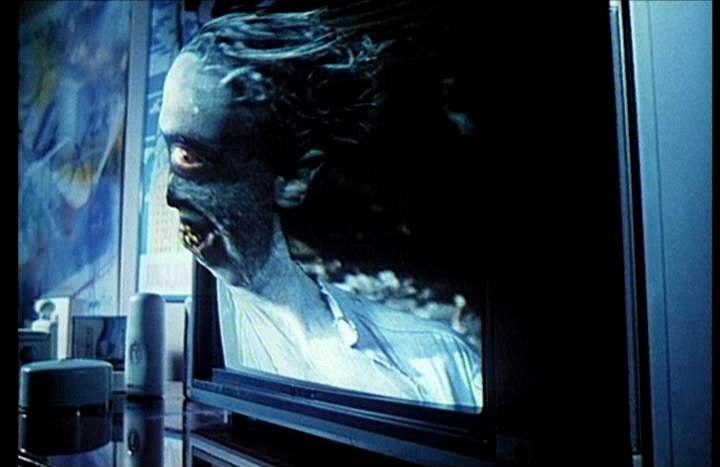
While the city, state, and federal governments debate over what to do with Governors Island, we continue to be the beneficiaries, as the island has become a home away from home for lovers of art, music, history, nature, and just about everything else under the sun. This weekend, July 16-18, from 12 noon to 5:00 each afternoon, No Longer Empty, which has organized the excellent site-specific installation “The Sixth Borough” in the rooms along Colonels’ Row, will be presenting “Not a Place, an Outlook,” short films that examine the relationship between place and the mind, with works by Julieta Aranda, Javier Tellez, Erin Shirreff, Steve Roden, Luke Fowler, and others. (The series repeats August 13-15 and September 10-12 and 17-19.) Also as part of the “The Sixth Borough,” Mary Walling Blackburn continues to offer tutorials on the second floor of Building 408 dealing with “Radical Citizenship,” one-on-one discussions between a visitor and such tutors as Regine Basha and Amir El Saffar (“Tuning Baghdad,” July 17), TV on the Radio’s Kyp Malone and Blackburn (“Our Bad Relationship: The Revolutionary + the Policeman,” September 4), and A. B. Huber (“Due Vigilance: One Nation, Under God, Indivisible, on Alert,” September 17). Among the other highlights of the exhibit are Adam Cvijanovic’s trompe l’oeil paintings that imagine worlds beyond the walls; Andrea Mastovito’s massive “The Island of Dr. Mastrovito,” consisting of thousands of animals cut out of some seven hundred books, lining the walls and floor of one room, while a video of playfully re-created famous horror scenes screens in another; Teresa Diehl’s haunting projected video “Return of Pleasure,” which casts shadows of memories across scrims in the middle of a room; and Trong G. Nguyen’s “Marcel Duchamp Versus Bobby Fischer,” a three-channel video installation depicting a chess match as seen from above. And as long as you’re on the island already, you might also want to check out Ivy Baldwin Dance on Friday at 2:00, the free Gone to Governors concert with Caribou and Phantogram on Water Taxi Beach on Friday at 7:00, Let’s Fly a Kite! at noon on Saturday, the Big Apple Circus Family Fun Fest and the Jazz Age Dance Party with Michael Arenella and the Dreamland Orchestra on Saturday and Sunday, the Figment Sculpture Garden (complete with mini-golf course), and other special events and activities, most of which are free.

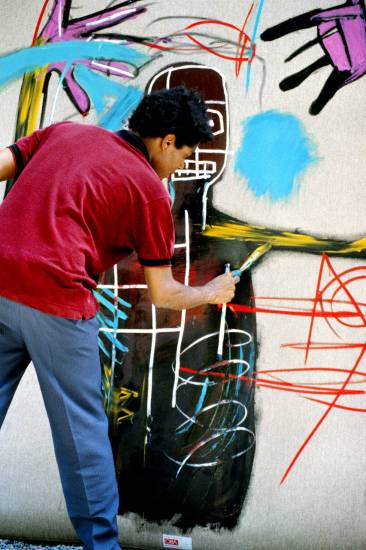
 Director Tamra Davis (GUNCRAZY) transports viewers back to the 1980s New York art scene in the intimate documentary JEAN-MICHEL BASQUIAT: THE RADIANT CHILD. In 1986, just as the career of street artist Jean-Michel Basquiat was exploding, Davis filmed him being interviewed by designer Becky Johnson, a revealing portrait that she put away in a drawer for more than twenty years. Davis finally brings out that footage, making it the centerpiece of this new examination of the ambitious, influential artist and musician who experienced massive success before falling hard and fast and dying of a drug overdose at the age of twenty-seven in 1988. Davis, a friend of Basquiat’s, conducts new interviews with many of the people from his inner circle, including art dealers Jeffrey Deitch, Larry Gagosian, Annina Nosei, Tony Shafrazi, and Bruno Bischofberger; Basquiat’s girlfriends Suzanne Mallouk and Kelle Inman; close Basquiat friends Diego Cortez and Fab 5 Freddy; NEW YORK BEAT cable TV host Glenn O’Brien; and fellow artist Julian Schnabel, who directed Basquiat in DOWNTOWN 81. Davis has also dug up amazing footage from the 1980s of Basquiat that shows him to be a unique, driven figure who used whatever he could — from broken windowframes and doors he’d find on the street to immense canvases — to spread his art and world view, which began with drawings in which he identified himself as Samo, criticizing contemporary art as “the same old shit.” Ultimately, though, it was his relationship with Andy Warhol that was the beginning of the end. JEAN-MICHEL BASQUIAT: THE RADIANT CHILD is a dazzling document of a fascinating time and a cautionary tale of success that comes too fast, too soon. Davis will be at Film Forum for the 8:00 shows on July 21-22, with Fab 5 Freddy appearing at the 8:00 screening on July 23.
 “Life is not easy for everyone,” Olga Bowman says about midway through Andrew Jacobs’s spectacular cinéma vérité documentary, FOUR SEASONS LODGE. “But life can be beautiful even when it’s not so easy.” For twenty-five summers, a group of Holocaust survivors, mostly Polish Jews, would meet at the Four Seasons Lodge in the Catskills, where they would talk, dance, argue, eat, hug, discuss their latest aches and pains, and primarily revel in life despite the horrific things they suffered through and witnessed at such concentration camps as Auschwitz and Bergen-Belsen. Jacobs discovered this heartwarming community while researching a series of articles for the New York Times; when he heard that the lodge was being sold and that the 2006 season might be the group’s last, he decided to make a movie about it. Seeking advice from the legendary Albert Maysles, Jacobs actually landed the master documentarian as his chief cameraman, giving FOUR SEASONS LODGE the feel of such classic Maysles brothers’ works as SALESMAN and GREY GARDENS.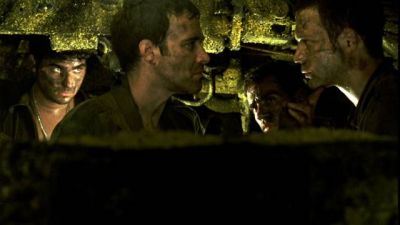
 Claustrophobics, beware. Nearly all of Samuel Moaz’s microcosmic examination of the first day of the 1982 Israel-Lebanon war — the same struggle recently tackled by Ari Folman in the animated WALTZ WITH BASHIR — takes place within a dark, grungy tank. In this tiny space, audiences get to experience the fear building inside company leader Yigal (Michael Moshonov), driver Hertzel (Oshri Cohen), weapons loader Assi (Itay Tiran), and gunner Shmulik (Yoav Donat) as they are suddenly put in the middle of a secret, dangerous mission by commander Jamil (Zohar Strauss) and meet action head-on almost immediately, having to deal with the prospects of killing for the first time. The world outside the tank is seen only through the cross-hairs of Shmulik’s telescopic lens, making everyone outside a potential victim. At times the tension mounts at a breathtaking pace, although the film gets bogged down in too much melodrama as the characters get further developed. As a teenager, writer-director Moaz actually fought in the war, and it was his memories of having killed a man on that very day — June 6, 1982 — that led him to make the movie, which won the Silver Bear at the Venice Film Festival. LEBANON is quite a ride. This special Film Club advance screening at the Museum of Jewish Heritage will be followed by a discussion between Moaz and film critic Leonard Quart; LEBANON opens in theaters August 6.