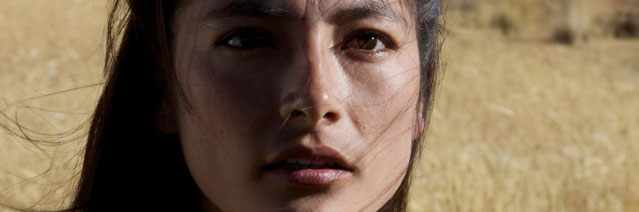
Magaly Solier is heartbreaking as Saturnina in Brosens & Woodworth’s brilliant ALTIPLANO
ALTIPLANO (Brosens & Woodworth, 2009)
Village East Cinema
181-189 Second Ave.
Opens Friday, August 20
212-529-6799
www.firstrunfeatures.com/altiplano
www.villageeastcinema.com
 In a small village in the Peruvian Andes, children are playing with pockets of silver liquid that have emerged from belowground. During an outdoor religious celebration, the statue of the Virgin Mary comes crashing down, shattering into pieces. The statue’s caretaker, Saturnina (Magaly Solier), lets out a piercing cry. Meanwhile, Grace (Jasmin Tabatabai), an award-winning war photographer from Belgium, puts away her camera for good after being forced at gunpoint to take a picture of her Iraqi guide as he is brutally murdered in cold blood. The lives of these two women are soon thrust together as the people in the village begin losing their eyesight and Grace’s husband, Max (Olivier Gourmet), a doctor, tries to find out why. Written, directed, and coproduced by Peter Brosens and Jessica Woodworth (KHADAK), ALTIPLANO is a masterful, brilliant film. The meditative pace, elegiac score, and surreal imagery — each stunning shot, courtesy of cinematographer Francisco Gózon, is composed like an individual work of art — combine to create an unparalleled cinematic experience that is nothing short of breathtaking. ALTIPLANO is not just about mercury poisoning, based on an actual mining spill that occurred in 2000; it’s about the very act of seeing and believing. “Without an image,” Saturnina says, “there is no story.” Grace no longer looks at the world through her camera, whereas Max is a relentless videographer, constantly sending his wife video messages. While the villagers continue to lose their sight, a blind man works hard to repair the Virgin Mary statue in time for Saturnina’s wedding. And audiences are not seeing double; the directors cast the same actor, Edgar Condori, as Saturnina’s fiancée and Grace’s guide, furthering the connection between the two women. ALTIPLANO melds Bergman and Fellini with Kubrick and Solanas, resulting in an unforgettable portrait of love and loss, faith and fate, made by two fiercely independent filmmakers.

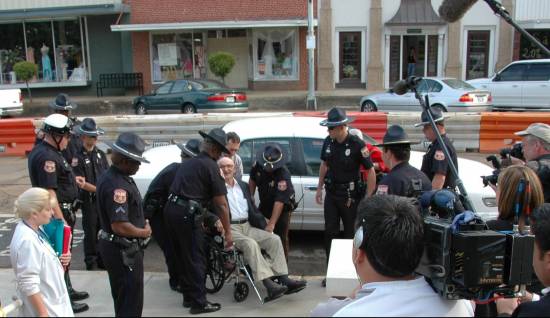
 In 1964, civil right workers James Chaney, Andrew Goodman, and Michael Schwerner were murdered in cold blood in Neshoba, a small county in Mississippi. Although everyone in the town seemed to know that the atrocity was committed by a group of twenty-one members of the Ku Klux Klan, no one had been convicted of the crimes, which were famously fictionalized in Alan Parker’s 1988 film MISSISSIPPI BURNING. In 1999, Carolyn Goodman, Andrew’s mother, approached documentary filmmaker Micki Dickoff and shared her story and her continuing battle for justice. Five years later, as the fortieth anniversary of the killings led to new investigations, Dickoff (DEADLY AMBITION, STEP BY STEP) teamed up with cinematographer Tony Pagano (20/20) and turned their cameras on the citizens of Neshoba and the families of the victims as state attorney general Jim Hood and local activist group the Philadelphia Coalition sought to reveal the truth about what had happened and bring those responsible to justice. They focused their attention on eighty-year-old preacher Edgar Ray Killen, believed by many to have incited the mob to murder. Killen, who gave the filmmakers unlimited access to himself, boldly declares his innocence — while also proclaiming that Goodman and Schwerner, who were white New Yorkers, and Chaney, a black Mississippi native, got what they deserved. Dickoff and Pagano meet with an alarming number of elderly white locals who feel exactly the same way, in addition to younger Neshobans who would rather let the story go away, seeing no reason to go after the eight surviving alleged perpetrators. NESHOBA: THE PRICE OF FREEDOM, which has won awards at film festivals all around the country, is a frightening, disturbing look into the heart of racism, which is still alive and well in such places as Neshoba, Mississippi. It is also a fascinating examination of a courageous battle for justice, closure, and the truth. As Barack Obama has said about the victims, “Their legacy is our heritage.”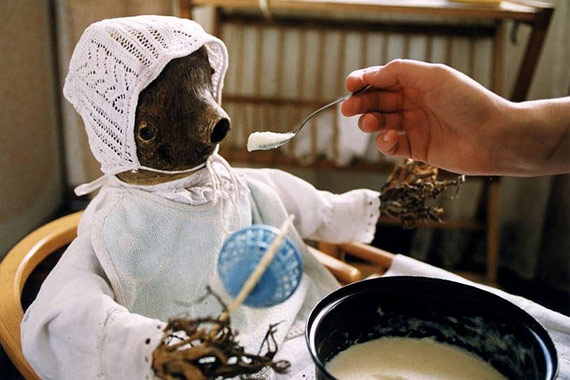
 Poor Bozena (Veronika Zilková) and Karel (Jan Hartl) are unable to have a baby, so Karel decides to carve one out of a tree for his desperate wife. Bozena showers her wooden child with lots of love — and soon the little tyke is crying and very, very hungry. Based on a poem by Czech writer Karel Jaromír Erben, LITTLE OTIK was written and directed by master stop-motion animator Jan Svankmajer, who has made such feature-length films as ALICE (1988) and FAUST (1994) as well as myriad shorts, including PUNCH AND JUDY (1966), DON JUAN (1969), MEAT LOVE (1988), and FOOD (1992). In LITTLE OTIK, Svankmajer mixes live action and animation to create a delightful, if disturbingly bizarre, fairy tale. The film will screen on August 17 as part of BAMcinématek’s “Emotional Sloppy Manic Cinema,” a two-week series curated by brothers Josh and Benny Safdie The diverse group of works range from Robert Bresson’s A MAN ESCAPED to Jafar Panahi’s THE MIRROR, from Olivier Assayas’s COLD WATER to François Truffaut’s SMALL CHANGE, from Ulu Grosbard’s STRAIGHT TIME to Ralph Bakshi’s HEAVY TRAFFIC, and from Woody Allen’s HUSBANDS AND WIVES to Elaine May’s MIKEY AND NICKY. Of course, the brothers have also included their own DADDY LONGLEGS and Red Bucket Shorts and will be on hand to introduce several of the screenings, including the 6:30 showing of LITTLE OTIK.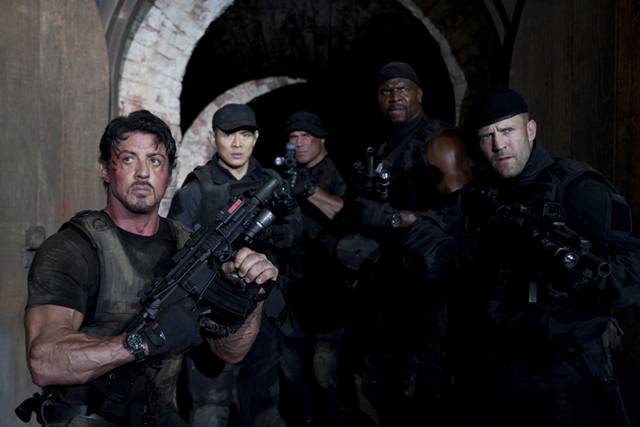
 Sylvester Stallone’s action thriller THE EXPENDABLES coulda been a contender but instead turns out to be, well, expendable. Sly, who cowrote, directed, and stars in the film, gathered an impressive all-star lineup, including Jason Statham, Jet Li, UFC champ Randy Couture, pro wrestling icon Stone Cold Steve Austin, kickboxer Gary Daniels, Eric Roberts, the one and only Dolph Lundgren, Mickey Rourke, and, most excitingly, Bruce Willis and Arnold Schwarzenegger. Unfortunately, Willis and Ahnold are in but one brief scene, the plot has more holes than a game of Whack-a-Mole, the testosterone level can practically be seen oozing off the screen, and the audience spends much of the movie wondering whether Stallone has had any eye work done. The violent picture is filled with major explosions, an endless supply of bullets, hard-to-believe hand-to-hand combat, ridiculous car chases, and big-time stunts that serve more as show-off set pieces than necessary scenes to advance the story, although there are some pretty cool weapons that blow bad guys’ heads right off in a bloody splatter. (Keep a sharp look-out for when Hale Caesar, played by Terry Crews, shows off his shiny blade with his last name on it because, yes indeed, he misspelled it.) Oh, and as far as story goes, it involves Barney Ross (Stallone) getting hired to eliminate a rogue CIA operative (Roberts) who has taken over the small South American country of Vilena, running drugs and killing anyone who gets in his way, with Ross determined to save the sell-out general’s (David Zayas) beautiful, rebellious daughter (Giselle Itié). THE EXPENDABLES wants to be THE WILD GEESE meets THE GUNS OF NAVARONE via SPACE COWBOYS mixed with THE WILD BUNCH and DOGS OF WAR, but it turns out to be more like THE NOT REALLY THAT DIRTY HALF DOZEN meets THE WILD GEEZER HOGS by way of BANANAS (in which Sly himself played a small part as a subway thug). Ah, what could have been…