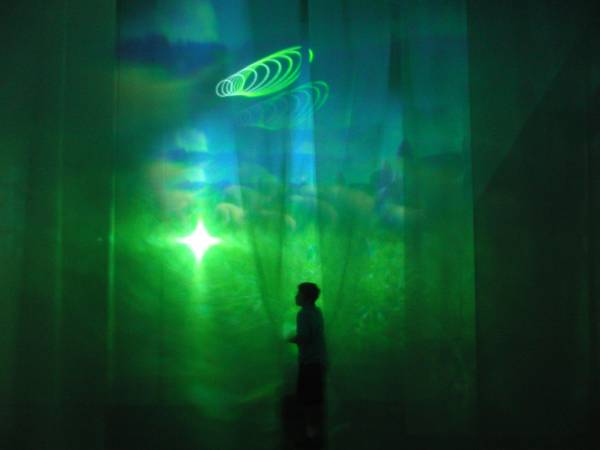
Visitors get lost in a dreamlike immersive environment in Pipilotti Rist show at Luhring Augustine (photo by twi-ny/mdr)
Luhring Augustine
531 West 24th St. between Tenth & Eleventh Aves.
Through October 16
Admission: free
212-206-9100
www.luhringaugustine.com
www.pipilottirist.net
heroes of birth slideshow
In fall 2008, Swiss artist Pipolotti Rist transformed MoMA’s Marron Atrium into a meditative multimedia immersive environment with “Pour Your Body Out (7354 Cubic Meters),” a twenty-five-foot-high, two-hundred-foot-long site-specific video installation about the interrelationship between nature, humanity, and the animal kingdom that could be seen while resting in a specially designed central island. Rist has now transformed Chelsea’s Luhring Augustine gallery with “Layers Mama Layers,” an immersive environment in which film of grazing sheep and futuristic green laser swirls are projected onto both sides of rows of translucent sheets of fabric hanging from the ceiling. Visitors become part of the installation as they walk through the rows, the film beaming onto their bodies. Whereas the projections are sharp on the outside sheets, they become more and more diluted and abstract the closer to the center you get, with the people walking past turning into eerie, otherworldly shadows. Meanwhile, a hypnotic lullaby plays, furthering the dreamlike atmosphere. (Don’t start counting those sheep.)
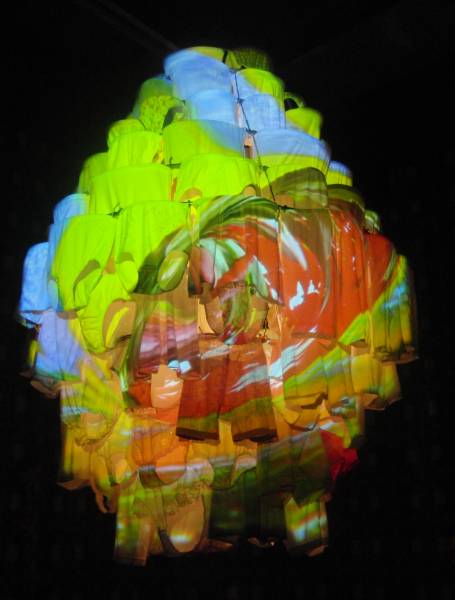
Pipilotti Rist’s “Massachusetts Chandelier” lights up the back room at Luhring Augustine with glowing underwear (photo by twi-ny/mdr)
In the back gallery, Rist has installed “Massachusetts Chandelier,” a video sculpture composed of underwear she collected from friends and family, arranged as a large light, hanging from the ceiling, onto which she projects brightly colored images that makes it look alive. Be sure to check out the wallpaper as well, although you might have a bit of trouble explaining to children what one of the repeated images is. In the front room, “All or Nothing” is a small, three-panel video of the wallpaper, along with an altar of flowers and a watercooler where you can grab a drink. Rist’s work is always engaging, and “Heroes of Birth” is no exception, a fun show guaranteed to please.
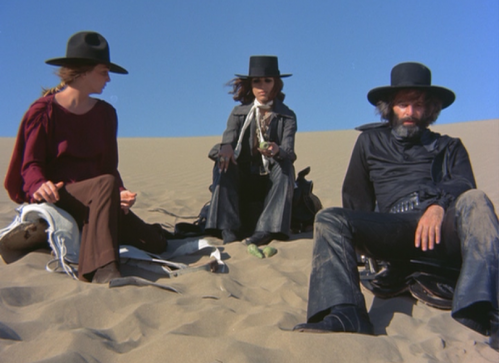
 Following the screening of several of his films and a personal appearance by the man himself at the Museum of Arts & Design, the New York City celebration of all things Alejandro Jodorowsky continues with a free double feature at Rabbitholestudio in DUMBO. It begins with the Chilean-born Mexican filmmaker’s acid Western EL TOPO, a psychedelic head trip that will blow your mind. Jodorowsky stars as the title character, a gunslinger traveling through a deserted landscape accompanied by his naked young son, who already knows his way around a firearm. After coming upon a town that has been decimated by a nasty group of marauders working for the Colonel, El Topo seeks violent revenge, eventually taking off with a woman and leaving his boy behind as he meets four masters on his path to proving he is the best there is. But soon El Topo is praying for redemption with a community of inbred cripples trapped in a cave. EL TOPO is a wild and bizarre journey through religious imagery, romance, and vengeance, a surreal spaghetti Western strained through the mad mind of Jodorowsky, widely hailed as the creator of the midnight movie. The film melds Bergman with Leone, Tod Browning’s FREAKS with Hiroshi Inagaki’s Samurai Trilogy, filtered through Kazuo Koike and Goseki Kojima’s LONE WOLF AND CUB. It’s like nothing you’ve ever seen before and, despite your better instincts, will lure you into the cult of Jodorowsky.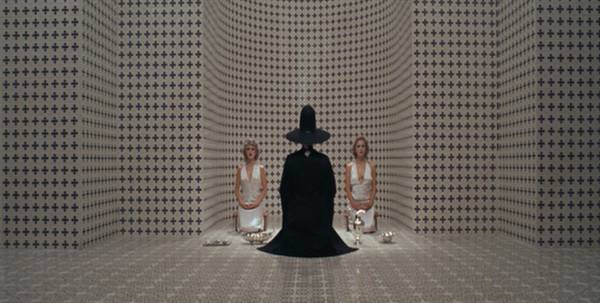
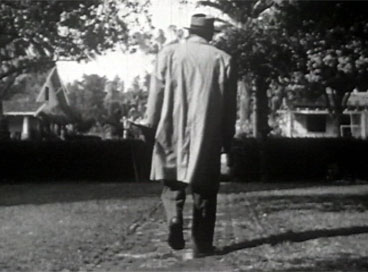
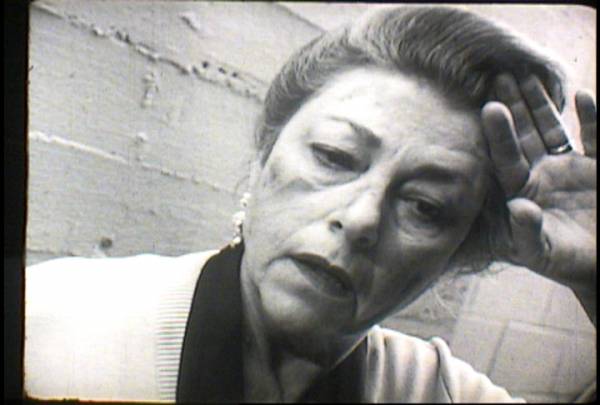
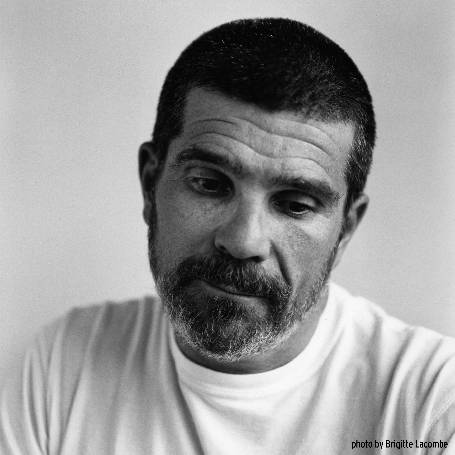
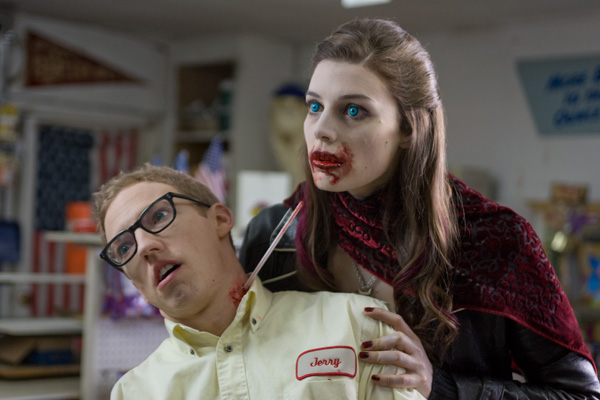
 Writer, director, songwriter, and star Rob Stefaniuk (PHIL THE ALIEN) was well aware that he was daring critics and audiences to attack his sophomore effort by titling the vampire rock-and-roll horror comedy SUCK. Well, it doesn’t. SUCK, whcih is screening on Sunday afternoon at 3:30 at New York Comic Con, is a playful little piffle about the Winners, a loser of a group that is taking its last shot at the big time, going on a road trip from Toronto to New York City for a supposed CMJ showcase gig set up by their pitiful manager, Jeff (Kid in the Hall Dave Foley). But when bass player Jennifer (Jessica Paré) gets seduced and turned by master vampire Queeny (Dimitri Coats), the band starts getting popular, much to the chagrin of lead singer and songwriter Joey (Stefaniuk), who is not sure this is the best way to make it. Drummer Sam (Mike Lobel), guitarist Tyler (Paul Anthony), and Renfield-as-roadie Hugo (Alex Lifeson) have different ideas, as does afraid-of-the-dark vampire hunter Eddie Van Helsig (Malcolm McDowell). With teeth in neck – er, tongue in cheek – SUCK spoofs several genres in silly but fun ways, throwing in a little ROCKY HORROR here, some THIS IS SPINAL TAP there, and a dash of GET CRAZY over there, with hysterical guest appearances by Alice Cooper as a demonic bartender, Iggy Pop as a suburban record producer, Henry Rollins as an annoying radio host, and well-known vegan Moby as Beef Bellows, the lead singer of the Buffalo-based punk-rock band the Secretaries of Steak.
 Written, directed, and edited by Julia Bacha, who also served as one of the producers, BUDRUS has been having an impact at film festivals around the world, including Sydney, Dubai, San Francisco, London, Berlin, Jerusalem, and Tribeca. The documentary follows a small group of protesters in the village of Budrus, population 1,500, as they battle the Israeli military, which has been charged with protecting construction workers who are bulldozing the people’s lifeblood, hundreds of acres of olive trees, in order to put up the wall known as the separation barrier, isolating the Palestinians in the West Bank; the “red line” also goes right through the village’s cemetery. But local leader Ayed Morrar decides to try something relatively different for the Middle East, emphasizing nonviolence and even permitting women, including his fifteen-year-old daughter, to participate in their dangerous movement. The Popular Committee Against the Wall’s mission appears destined to fail until they are joined by Jews who believe that the Israeli government needs to reconsider where they are putting up the fence and allow the Palestinians to keep their land and preserve their history. Bacha talks to people on both sides of the struggle, including the Morrars as well as Israeli soldiers Doron Spielman and Yasmine Levi, who all speak honestly about their complex situation. Made by a team of Jews and Palestinians who have formed Just Vision, an organization dedicated to bringing to light nonviolent peacebuilding efforts in the Middle East, BUDRUS could have easily turned into propaganda, but in the end its agenda is something difficult to argue with. The film opens at the Quad on October 8, with Bacha and producer Avni Ronit participating in Q&As following the 8:10 show every night.