PAPRIKA is part of two-film tribute to the late Satoshi Kon at Lincoln Center
PAPRIKA (Satoshi Kon, 2006)
Film Society of Lincoln Center, Walter Reade Theater
165 West 65th St. at Amsterdam Ave.
Wednesday, December 22, 8:15 (preceded by PERFECT BLUE at 6:30)
Individual tickets: $12, $18 for both films
212-875-5601
www.filmlinc.com
www.sonyclassics.com/paprika
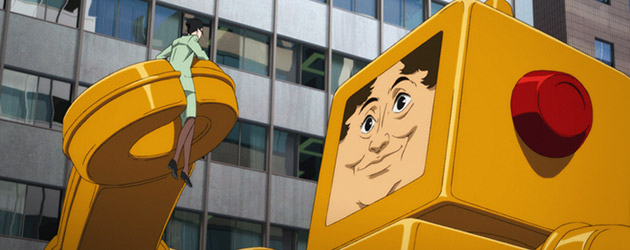
 Based on the novel by Yasutaka Tsutsui, PAPRIKA is an animated, futuristic sci-fi thriller in which reality and dreams merge in clever and confusing ways. The title character is a superhero psychotherapist who can enter people’s dreams by using cutting-edge technology known as the DC MINI, which was invented by Dr. Tokita, a huge man with a baby face and a tremendous appetite. When one of the prototypes is stolen, Paprika, whose alter ego is Dr. Atsuko Chiba of the Foundation for Psychiatric Research, sets out to find the thief, who is using the invaluable — and not fully tested and approved — equipment for seemingly evil purposes. Other central characters include Torataro Shima, the adorable old chief of the lab; the ruthless, wheelchair-bound foundation chairman, Seijiro Inui; Detective Konakawa, who develops a liking for Paprika; Dr. Osanai, a hunky researcher; and lab assistant Himuro, who has gone missing but can be seen in dreams. Adapted by Satoshi Kon, the director of MILLENNIUM ACTRESS and TOKYO GODFATHERS, and featuring the voices of Megumi Hayashibara, Toru Emori, Katsunosuke Hori, Toru Furuya, and Akio Ohtsuka, PAPRIKA is an entertaining, if at times hard to follow, anime with lots of cute characters and some very beautiful scenes. The film is being screened along with Kon’s 1998 animated work, PERFECT BLUE, at Lincoln Center in tribute to the innovative director, who died of cancer in August at the age of forty-six. “His untimely death robs us all of an enormous talent and unparalleled imagination,” notes program director Richard Peña. “This brief tribute is our way of saying thank you for your wonderful art, that will be with us forever.”

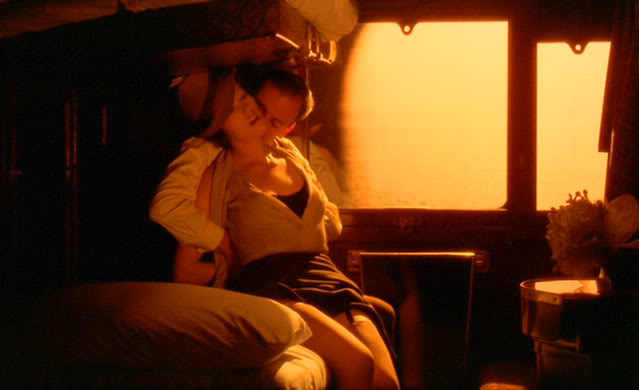
 Based on the novel by Alberto Moravia, Bernardo Bertolucci’s gorgeous masterpiece, THE CONFORMIST, is a political thriller about paranoia, pedophilia, and trying to find one’s place in a changing world. Jean-Louis Trintignant (AND GOD CREATED WOMAN, Z, MY NIGHT AT MAUD’S) stars as Marcello Clerici, a troubled man who suffered childhood traumas and is now attempting to join the fascist secret police. To prove his dedication to the movement, he is ordered to assassinate one of his former professors, the radical Luca Quadri (Enzo Tarascio), who is living in France. He falls for Quadri’s much younger wife, Anna (Dominique Sanda), who takes an intriguing liking to Clerici’s wife, Giulia (Stefania Sandrelli), while Manganiello (Gastone Moschin) keeps a close watch on him, making sure he will carry out his assignment. THE CONFORMIST, made just after THE SPIDER’S STRATAGEM and followed by LAST TANGO IN PARIS, captures one man’s desperate need to belong, to become a part of Mussolini’s fascist society and feel normal at the expense of his real inner feelings and beliefs. An atheist, he goes to church to confess because Giulia demands it. A bureaucrat, he is not a cold-blooded killer, but he will murder a part of his past in order to be accepted by the fascists (as well as Bertolucci’s own past, as he makes a sly reference to his former mentor, Jean-Luc Godard, by using the French auteur’s phone number and address for Quadri’s). Production designer Ferdinando Scarfiotti and cinematographer Vittorio Storaro bathe the film in lush Art Deco colors as Bertolucci moves the story, told in flashbacks, through a series of set pieces that include an erotic dance by Anna and Giulia, a Kafkaesque visit to a government ministry, and a stunning use of black and white and light and shadow as Marcello and Giulia discuss their impending marriage. THE CONFORMIST is a multilayered psychological examination of a complex figure living in complex times, as much about the 1930s as the 1970s, as the youth of the Western world sought personal, political, and sexual freedom. In addition to this one-week presentation of a new 35mm print of THE CONFORMIST at Film Forum,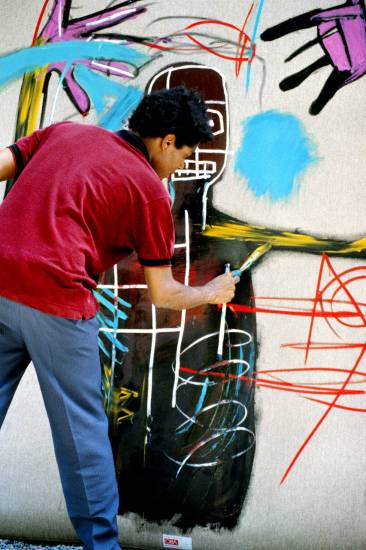
 Director Tamra Davis (GUNCRAZY) transports viewers back to the 1980s New York art scene in the intimate documentary JEAN-MICHEL BASQUIAT: THE RADIANT CHILD, which is having a special return engagement at Film Forum by popular demand. In 1986, just as the career of street artist Jean-Michel Basquiat was exploding, Davis filmed him being interviewed by designer Becky Johnson, a revealing portrait that she put away in a drawer for more than twenty years. Davis finally brings out that footage, making it the centerpiece of this new examination of the ambitious, influential artist and musician who experienced massive success before falling hard and fast and dying of a drug overdose at the age of twenty-seven in 1988. Davis, a friend of Basquiat’s, conducts new interviews with many of the people from his inner circle, including art dealers Jeffrey Deitch, Larry Gagosian, Annina Nosei, Tony Shafrazi, and Bruno Bischofberger; Basquiat’s girlfriends Suzanne Mallouk and Kelle Inman; close Basquiat friends Diego Cortez and Fab 5 Freddy; NEW YORK BEAT cable TV host Glenn O’Brien; and fellow artist Julian Schnabel, who directed Basquiat in DOWNTOWN 81. Davis has also dug up amazing footage from the 1980s of Basquiat that shows him to be a unique, driven figure who used whatever he could — from broken windowframes and doors he’d find on the street to immense canvases — to spread his art and world view, which began with drawings in which he identified himself as Samo, criticizing contemporary art as “the same old shit.” Ultimately, though, it was his relationship with Andy Warhol that was the beginning of the end. JEAN-MICHEL BASQUIAT: THE RADIANT CHILD is a dazzling document of a fascinating time and a cautionary tale of success that comes too fast, too soon.