this week in film and television

CULTUREMART ’11

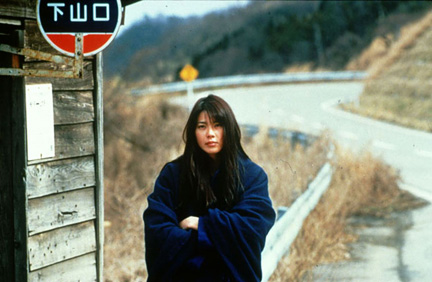
Ximena Garnica and Shige Moriya's FLOATING POINT WAVES is part of HERE's annual Culturemart festival

HERE Arts Center
145 Sixth Ave. at Dominick St.
January 7-23, $15
212-647-0202
www.here.org

Culturemart, the annual festival of workshop productions by HERE’s resident artists, is celebrating its tenth anniversary this year with another slate of diverse experimental shows incorporating theater, dance, film, music, and audience interaction. Things get under way January 7-8 with Laura Peterson’s GROUND, the second part of her Wooden trilogy, in which a dance quartet performs within living grass and trees. Ximena Garnica and Shige Moriya, artistic directors of the New York Butoh Festival, will present the immersive, multimedia FLOATING POINT WAVES. Betty Shamieh makes the murdered Arab from Albert Camus’s THE STRANGER the main character in the mysterious THE STRANGEST. A community of artists — as well as the audience — are all part of the interactive LUSH VALLEY, which seeks to reclaim the American dream. THE VENUS RIFF riffs on the Venus Hottentot. Democracy takes center stage in Aaron Landsman’s participatory CITY COUNCIL MEETING. Deborah Stein and Suli Holum investigate a woman who is her own twin in CHIMERA. Kamala Sankaram’s chamber opera MIRANDA mixes reality television with hip-hop and Hindustani classical music. And Lindsay Abromaitis-Smith uses puppetry to look at the sacred in EPYLLION, among other shows running through January 23, with all tickets a mere $15.

DR. MABUSE, DER SPIELER (DR. MABUSE, THE GAMBLER)

DR. MABUSE, THE GAMBLER is an epic document of its time

WEIMAR CINEMA, 1919-1933: DAYDREAMS AND NIGHTMARES
DR. MABUSE, DER SPIELER (DR. MABUSE, THE GAMBLER) (Fritz Lang, 1922)

MoMA Film
Museum of Modern Art
11 West 53rd St. between Fifth & Sixth Aves.
Monday, January 3, 7:30
Saturday, January 8, 7:00
Tickets: $10, in person only, may be applied to museum admission within thirty days, same-day screenings free with museum admission, available at Film and Media Desk
212-708-9400
www.moma.org

Fritz Lang’s 1922 expressionist epic, DR. MABUSE, THE GAMBLER, is one of the most thrilling crime dramas ever made. Written by Lang and his wife, Thea von Harbou, based on the popular novel by Norbert Jacques, the film focuses on the title character (Rudolf Klein-Rogge), a criminal mastermind who is a sort of Nietzschean superman able to control his victims using hypnosis and psychoanalysis. Putting his evil gaze on such easy prey as the wealthy Edgar Hull (Paul Richter) and Count Told (Alfred Abel), Mabuse tries to ruin them through a series of card games he manipulates, with the help of nightclub singer Cara Carozza (Aud Egede-Nissen) and a motley crew of assistants that includes Spoerri (Robert Forster-Larrinaga), Georg (Hans Adalbert Schlettow), Hawasch (Charles Puffy), and Pesch (Georg John). Meanwhile, steadfast prosecutor Norbert von Wenk (Bernhard Goetzke) is on the case, attempting to track down and capture the mystery man who is leaving a trail of death and destruction behind him. Divided into two sections, “The Great Gambler, a Picture of Our Time” and “Inferno — A Play of People in Our Time,” DR. MABUSE is indeed a story of its time, a document of the state of mind of the German populace between the two world wars. Mabuse, representing both chaos and tyranny, is a master of disguise, portraying numerous middle-class figures fighting against the upper class and authority. The film is not only about one evil man’s grab for power but the power of cinema itself; just as Mabuse can change characters within the film, all of the characters are merely actors in costume, performing a fiction on stunning sets created by production designer Karl Vollbrecht and photographed by cinematographer Carl Hoffmann. In fact, at one point Mabuse stares directly into the camera, his face hurtling toward the viewer, attempting a kind of mass hypnosis that, presciently, can be said to predict the rise of Nazism in Germany. But most of all, DR. MABUSE, THE GAMBLER, which was followed by THE TESTAMENT OF DR. MABUSE in 1933 and THE THOUSAND EYES OF DR. MABUSE in 1960, is a film about fear — fear of the unknown, fear of technology, fear of psychoanalysis, and fear of what the future holds. The film is screening as part of MoMA’s Weimar Cinema, 1919–1933: Daydreams and Nightmares series, comprising eighty-one films made between World War I and World War II; upcoming screenings include G. W. Pabst’s PANDORA’S BOX, Richard Eichberg’s THE MASKED MANNEQUIN, Wilhelm (William) Dieterle’s SEX IN CHAINS / SEX IN FETTERS, Walther Ruttmann’s IN DER NACHT and MELODY OF THE WORLD, Ernst Lubitsch’s MADAME DUBARRY (PASSION) and THE OYSTER PRINCESS, and Slatan Dudow’s WHITHER GERMANY?

JOHN BALDESSARI: PURE BEAUTY

John Baldessari, “The Duress Series: Person Climbing Exterior Wall of Tall Building / Person on Ledge of Tall Building / Person on Girders of Unfinished Tall Building,” digital prints with acrylic on Sintra, 2003 (Ringier Collection, Switzerland / © John Baldessari)

Metropolitan Museum of Art
The Iris and B. Gerald Cantor Exhibition Hall, second floor
1000 Fifth Ave. at 82nd St.
Tuesday – Sunday through January 9 (open Monday, September 6)
Recommended admission: $20 adults, children under twelve free
212-535-7710
www.metmuseum.org

California-based artist and teacher John Baldessari helped put the capital “C” in Conceptual art. For more than half a century, the seventy-nine-year-old Baldessari has been creating a fascinating mélange of visual and text-based imagery, a vaunting vocabulary all his own incorporating paintings, found objects, photographs, videos, and an anarchistic philosophy into collages and installations that examine popular culture, sociopolitical ideology, and the making and perception of art itself. “Pure Beauty,” on view at the Metropolitan Museum of Art through January 9, is an engaging retrospective of more than one hundred works from throughout Baldessari’s continually evolving career. “Cremation Project” houses the ashes from early paintings that he purposely destroyed in a mortuary. In the short film “I Am Making Art,” Baldessari repeats the title over and over as he rearranges himself in different positions, while in “I Will Not Make Any More Boring Art” he writes the title statement again and again, and the exhibition supports both declarations. He appropriates images from the news and Hollywood and adds unique touches in such pieces as “Violent Space Series: Two Stares Making a Point but Blocked by a Plane (for Malevich),” “Heel,” and “The Duress Series: Person Climbing Exterior Wall of Tall Building / Person on Ledge of Tall Building / Person on Girders of Unfinished Tall Building.” In such works as “Kiss/Panic,” “Man and Woman with Bridge,” and “Pelicans Staring at Woman with Nose Bleeding,” Baldessari juxtaposes images from different sources, resulting in brand-new noirish narratives filled with Hitchcockian delight. He often adds color elements to black-and-white photographs and collages, as in “The Overlap Series: Jogger (with Cosmic Event),” while color becomes the primary subject in such works as “Six Colorful Inside Jobs” and “Prima Facie (Fifth State): Warm Brownie / American Cheese / Carrot Stick / Black Bean Soup / Perky Peach / Leek.” Even when Baldessari comes off as simply cheesy or silly, as in a series of framed pictures intentionally hung unevenly, it’s still fun to look at. “Artists are better at finding a way to kill their time,” Baldessari once said. There are a lot worse ways to kill some time by immersing yourself in this beguiling survey at the Met.

OSCAR WATCH: THE KING’S SPEECH

Colin Firth and Geoffrey Rush excel in Tom Hooper’s thrilling THE KING’S SPEECH

THE KING’S SPEECH (Tom Hooper, 2010)
www.kingsspeech.com

Britain’s Royal Family is notoriously protective of their personal lives, and for many years they were somehow able to keep from the public the fascinating story of Prince Albert’s difficult battle against a severe stammer. A serious stutterer himself as a child, screenwriter David Seidler (TUCKER: THE MAN AND HIS DREAM), who looked to the man known as Bertie as a role model, uncovered the dramatic tale and even got permission from the Queen Mum herself to pursue a cinematic version, as long as it came out after her death. So after gestating for decades, THE KING’S SPEECH is now a reality, a thrilling film that follows the prince’s (a marvelously vulnerable Colin Firth) struggle to find his voice as his aging father, King George V (Michael Gambon), falls ill and the prince of Wales (a wonderfully snide Guy Pearce) jeopardizes the possibility of his wearing and keeping the crown by falling in love with flirtatious, twice-divorced socialite Wallis Simpson (Eve Best). After having explored numerous ways to cure him of his debilitating and embarrassing stutter, Bertie and his loyal wife, Elizabeth (the resplendent Helena Bonham Carter), turn to an odd, failed actor, Australian speech therapist Lionel Logue (a pitch-perfect Geoffrey Rush), who uses extremely unusual methods that eventually force Bertie to reexamine his childhood while also preparing for a future that could put him on the throne as the country goes to war. Director Tom Hooper (THE DAMNED UNITED, HBO’s JOHN ADAMS miniseries) keeps the tension mounting as Bertie gains more and more public responsibility and his stage fright grows; the scenes between Firth and Rush in Logue’s rather low-rent basement office are thoroughly mesmerizing, a pair of bravura performances built around the slightest mouth twitch from Firth and knowing looks from the craggy-faced Rush. The strong cast also includes Derek Jacobi as Archbishop Cosmo Lang, Jennifer Ehle as Logue’s wife, Myrtle, Timothy Spall as Winston Churchill, Anthony Andrews as Stanley Baldwin, and Claire Bloom as Queen Mary. The only drawback is Alexandre Desplat’s overly melodramatic score, which insists on squeezing unnecessary, treacly emotion from a story where words take center stage.

OSCAR WATCH: TRUE GRIT

Jeff Bridges and Hailee Steinfeld star in Coen brothers remake of John Wayne classic

TRUE GRIT (Joel & Ethan Coen, 2010)
www.truegritmovie.com

Since their 1984 debut feature, BLOOD SIMPLE, Coen brothers Joel and Ethan have tackled numerous genres with dazzling originality, resulting in such fresh, unusual, and intelligent fare as BARTON FINK (1991), FARGO (1996), THE BIG LEBOWSKI (1998), NO COUNTRY FOR OLD MEN (2007), and A SERIOUS MAN (2009). They’ve had some hiccups along the way, but their only true dud was also their only remake, 2004’s THE LADYKILLERS, an unwatchable version of the 1955 Alec Guinness original. Now they’re revisiting the 1969 classic Western TRUE GRIT, which earned Johny Wayne his only Oscar and has held up poorly over the years. For the 2010 reboot, the Coens turned to Jeff Bridges to step into the Duke’s shoes as U.S. marshal Reuben J. “Rooster” Cogburn, an aging lawman with a thing for the bottle, as well as for killing. He’s hired by determined fourteen-year-old Mattie Ross (Hailee Steinfeld) to hunt down her father’s murderer, a man named Tom Chaney (Josh Brolin), who’s also being tracked by ever-faithful Texas Ranger La Boeuf (Matt Damon) for other crimes against humanity. Instead of merely remaking the previous film, which was directed by Henry Hathaway (KISS OF DEATH, AIRPORT) and also starred musician Glen Campbell as La Boeuf and Kim Darby as Mattie, the Coens went back to Charles Portis’s 1968 novel, with the most important difference being the change in point of view; the new TRUE GRIT is told from Mattie’s perspective, including voice-over narration from the adult Mattie (Elizabeth Marvel), which breathes new life into the tired old horse. While Wayne played Cogburn with his tongue firmly in cheek, adding bits of silly comic relief, Bridges imbues the marshal with more seriousness and less hulking bravado as he continually — and more and more drunkenly — tells stories from his past. By going back to the book, the Coens also get to add more violence, especially near the end, as well as a coda about Mattie’s future. While the original featured a bombastic, overreaching score by Don Black, longtime Coen brothers composer Carter Burwell ratchets things down significantly, using the old hymn “Leaning on the Everlasting Arms” as his central musical theme. As much as the Coens want the new film to be viewed in its own right, there are still too many similarities to avoid comparisons with the original, but their TRUE GRIT does turn out to be a better executed, less predictable, and more entertaining genre piece.

DARREN ARONOFSKY’S DREAMS AND NIGHTMARES: THE WRESTLER

Darren Aronofsky will participate in a postscreening conversation after Mickey Rourke wrestles his demons in comeback flick


THE WRESTLER (Darren Aronofsky, 2008)

Film Society of Lincoln Center, Walter Reade Theater
165 West 65th St. at Amsterdam Ave.
Wednesday, January 5, $20, 6:15
212-875-5601
www.filmlinc.com
www.thewrestlermovie.com

Brooklyn native Darren Aronofsky, writer-director of the brilliant PI (1998) and REQUIEM FOR A DREAM (2000) and the muddled mess THE FOUNTAIN (2006), scores a major takedown with the marvelous comeback film THE WRESTLER. Former boxer Mickey Rourke, who made a name for himself in such 1980s films as DINER, RUMBLE FISH, THE POPE OF GREENWICH VILLAGE, 9 1/2 WEEKS, and BARFLY, stars as the Christ-like figure Randy “the Ram” Robinson, an aging professional wrestler who was the sport’s biggest name in the 1980s but is now a washed-up has-been living in a trailer park wrestling for embarrassingly small paydays at tiny local venues, still lured by the love of the sparse crowds and the respect of his opponents. After suffering a heart attack following one of his matches, the fifty-something Ram is suddenly faced with a life outside the ring. He tries to get back in his daughter’s (Evan Rachel Wood) life, attempts a relationship with stripper Cassidy (Marisa Tomei), and even gets a regular job in a supermarket, but the possibility of returning to the ring for the twentieth anniversary of his biggest match ever, his 1989 battle against the Ayatollah (Ernest Miller) in Madison Square Garden, weighs hard on his mind. Winner of the Golden Lion at the Venice Film Festival, THE WRESTLER, shot in an arresting grainy style, is a masterfully told tale with multiple layers, with the Ram’s potential comeback mimicking Rourke’s own return to his acting glory days. Rourke, who won a Golden Globe and was nominated for an Oscar for his effort, is such a natural in the role that it is hard to believe it was not written specifically for him; in fact, Nicolas Cage was first attached to the project. (Bruce Springsteen’s title song, which plays over the closing credits, took home the Golden Globe for Best Original Song but failed to garner an Oscar nod.) The film is set in the real-life world of Combat Zone Wrestling and the Ring of Honor, featuring such actual wrestlers as the Necro Butcher, who has a thing for barbed wire and staple guns. The heart-wrenching, beautiful, brutal film is screening at the Walter Reade Theater on January 5 at 6:15 as part of the Film Society of Lincoln Center’s two-day series, “Darren Aronofsky’s Dreams and Nightmares,” and will be followed by a conversation with the director. The brief festival, being held in conjunction with the release of Aronofsky’s latest, BLACK SWAN, begins on January 4 at 6:30 with the harrowing REQUIEM FOR A DREAM and continues at 9:00 with the ambitious flop THE FOUNTAIN. Aronofsky’s creepy mathematical debut, PI (π), concludes the festivities at 9:15 on January 5.

THE BOOTLEGGERS’ BALL

Irondale Performing Arts Center
85 South Oxford St., Fort Greene
Friday, December 31, $20-$35
www.geminiandscorpio.com

Jamie Kiffel-Alcheh and Larisa Fuchs, better known as Miss Gemini and Miss Scorpio, know how to throw parties. Throughout the year they put together unique, themed events in unusual locations, and they’ve got another crazy one planned for New Year’s Eve. “The contraband has been ordered, authorities paid off, and performers lined up for a New Year’s Eve speakeasy ball in a historic former church with soaring ceilings and wraparound balcony,” they explain on their website. “Expect the intimacy of a daring cabaret mixed with the intrigue of a vintage costumed ball, expansiveness of a warehouse dance party, excitement of live brass, a splash of fine cocktails, and just a dash of illicit adventure and unpredictable moments.” The party will feature the Dixieland steamboat soul of Roosevelt Dime, the circus-gypsy parlor-jazz of the Drunkard’s Wife, the saucy dance moves of Zahra Hashemian, the vintage visuals of Sebastian Patane Masuelli, and the awesome aerial stunts of Marisa Maffia and Dana Abrassart as well as music, dance, burlesque, magic, and numerology from Spiff Wiegand, Renata and Irina Kom, Kinetic Architecture, Crooked Disco DJs, Painteresse Elysabeth, Marcy Currier, Katelan Foisy, and others, hosted by GD Falksen. The dress code is “depression glamour, evening ball on the Titanic, hobo formal, desperation derring-do,” ensuring what should be a very different kind of New Year’s Eve spectacular.