JCC in Manhattan (and other venues)
334 Amsterdam Ave. at 76th St.
February 3-8
646-505-4444
www.jccmanhattan.org
www.reelabilities.org
The third annual ReelAbilities NY Disabilities Film Festival returns to the JCC in Manhattan and other locations throughout the city February 3-8, “dedicated to promoting awareness and appreciation of the lives, stories, and artistic expressions of people with different disabilities.” The 2011 lineup includes eleven feature films and documentaries that examine Down syndrome (Marcos Carnevale’s ANITA and Antonio Naharro and Álvaro Pastor’s ME TOO), brain damage (Paul Nadler’s BRAIN DAMADJ’D . . . TAKE II), mental illness (Ken Paul Rosenthal’s CROOKED BEAUTY), blindness (Lu Yang’s MY SPECTACULAR THEATER), manic depression (Ofir Trainin’s WANDERING EYES), war injuries (Craig and Brent Renaud’s WARRIOR CHAMPIONS), and autism (Geraldine Wurzburg’s WRETCHES & JABBERERS), among other psychological and physical ailments. All screenings will be followed by discussions with the filmmakers, experts, and/or subjects, in addition to such special panels as “Diversity on Sesame Street,” with writer Emily Perl Kingsley, whose son was born with Down syndrome, as well as concerts by Flame and the FREE Players, a performance by Heidi Latsky Dance, “Navigating Disability” and “Seeing with Photography” art exhibits, an interactive Music for Autism program, a presentation by the Our Time Theater Company, and an American Sign Language tour of “Charles LeDray: workworkworkworkwork” at the Whitney.
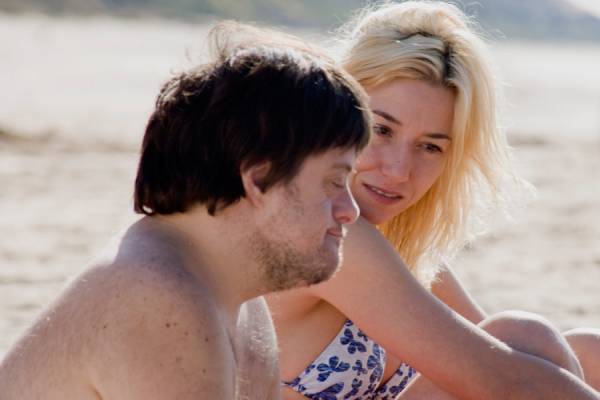
Daniel (Pablo Pineda) and Laura (Lola Dueñas) develop a unique relationship in YO, TAMBIÉN
YO, TAMBIÉN (ME, TOO) (Antonio Naharro & Álvaro Pastor, 2009)
Saturday, February 5, JCC in Manhattan, 9:15
Sunday, February 6, Cinema Arts Centre, Huntington, 1:00
www.yotambienlapelicula.com
 Written and directed by first-time feature filmmakers Antonio Naharro and Álvaro Pastor, ME, TOO is a beautifully told story about a man with Down syndrome trying to make it in the so-called normal world. When Daniel (Pablo Pineda) first shows up for work at a government disability agency in Sevilla, Laura (Lola Dueñas) mistakes him for someone who has come seeking help, not the person who will be occupying the desk next to hers on a daily basis. Daniel does not see himself as a victim, and he is clearly not a charity case; instead, he has earned a university degree and refuses to allow his disease — or, more important, the way his disease is viewed by others — to limit the things he can accomplish in life. Soon Daniel and Laura grow very close, but she is unable to let their relationship reach the next level, regardless of how much they care for each other — and how many times she instead goes to a local bar and picks up strangers. Meanwhile, Luisa (Lourdes Naharro) and Pedro (Daniel Parejo), who both have Down syndrome and are members of the Danza Mobile dance company, which works with people suffering from intellectual disabilities, have fallen in love, but they feel free to express it, even in public, which gets them in trouble with Luisa’s mother (Catalina Lladó). The contrast between the two romances, one of which is “mixed” but both of which are complicated, is well handled by Naharro (who also plays Daniel’s older brother in the film) and Pastor, steering clear of the kind of sappy melodrama that could have compromised the film’s point of view. They deal with the issue of the infantilization and stereotyping of people with Down syndrome with just the right amount of honesty and subtlety to avoid becoming a pedantic message movie. Both Dueñas, an Almodóvar regular, and Pineda, making his cinematic debut, won Silver Shells for their acting at the 2009 San Sebastian Film Festival. Pineda is in fact the first person with Down syndrome in Europe to earn a major university degree, and he is endearing in the lead role, never overly sentimental, and the script avoids treacly moments, as does Guille Milkyway’s soundtrack. ME, TOO will be screening as part of the ReelAbilities NY Disabilities Film Festival on February 5 at the JCC in Manhattan and on February 6 at the Cinema Arts Centre in Huntington.


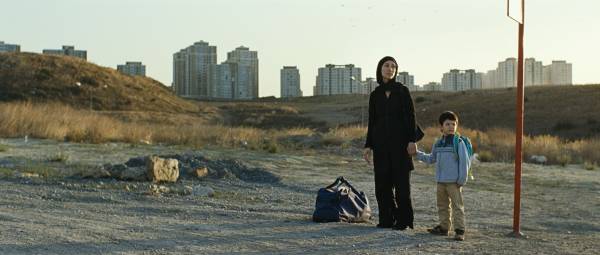
 Viennese actress Feo Aladag makes a powerful directorial debut with her heartbreaking melodrama, WHEN WE LEAVE. Inspired by her work with Amnesty International’s Stop Violence Against Women campaign, Aladag tells the story of a young mother, Umay (HEAD-ON’s Sibel Kekilli), who leaves her abusive husband, Kemal (Ufuk Bayraktar), in Istanbul and returns with her son, Cem (Nizam Schiller), to her family in Germany. But her father, Kader (Settar Tanriogen), her mother, Halime (Derya Alabora), and especially her older brother, Mehmet (Tamer Yigit), insist she return to Kemal despite his mistreatment of her, since she has now brought shame to her family among the tight-knit Turkish community in Berlin. But as Umay refuses their demands and tries to put her life back together, Kader and Mehmet steadfastly turn away from her pleas to be accepted by them and instead conspire to return her and Cem to Kemal, no matter the cost. Winner of the Best Narrative Feature and Best Actress Award (for Kekilli) at the 2010 Tribeca Film Festival and Germany’s official entry for the 2011 Academy Awards for Best Foreign Language Film, WHEN WE LEAVE is a heart-tugging tale of misguided tradition, familial obligation, and the basic need to be loved. The film falters a bit as Umay continues going back to her parents time and time again, risking her life and that of her son, but it’s still a poignant, moving tale reminiscent of Abdullah Oguz’s 2007 film MUTLULUK (BLISS), which brilliantly dealt with the theme of honor killings in Turkey. One of the most frightening aspects of the film is that the crimes of honor it deals with are all too real in numerous societies around the world, although Aladag wisely avoids getting overly preachy and pedantic.