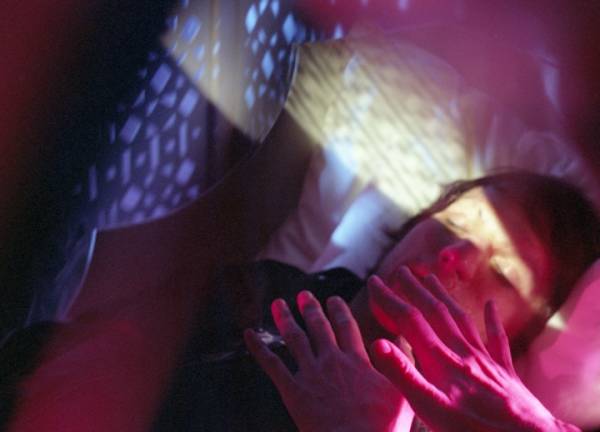
Barnard grad Greta Gerwig is one of the honorees at the inaugural Athena Film Festval, held at her alma mater this weekend
Barnard Campus
Broadway between 116th & 120th Sts.
February 11-13, $10 (Festival Pass $50)
www.athenafilmfestival.com
The inaugural Athena Film Festival: A Celebration of Women’s Leadership kicks off a weekend of exciting events tomorrow, with a bevy of film screenings, honorees, panel discussions, Q&As, and more. Hosted by Barnard College’s Athena Center for Leadership Studies, the festival was founded by Kathryn Kolbert and Melissa Silverstein; the initial Honorary Host Committee includes such groundbreaking movers and shakers as Molly Haskell, Delia Ephron, Mira Nair, Anna Quindlen, Sheila Nevins, and Gale Anne Hurd in addition to a couple of men, Kevin Haft and Mark Urman. This year’s Athena Award winners are breakout mumblecore star Greta Gerwig, director Debra Granik, producer Debra Martin Chase, screenwriter Ephron, and documentarian Chris Hegedus, all of whom will be on hand to discuss their work. The festival opens Friday night at 6:00 with Tim Chambers’s THE MIGHTY MACS, which will be followed by a discussion with former WNBA star Kym Hampton, Women’s Sports Foundation CEO Kathryn Olson, and Chambers. Also on the Friday-night schedule are Sherry Hormann’s DESERT FLOWER, followed by a Q&A with fashion model and actress Liya Kebede and film critic Karen Durbin, and Granik’s Oscar-nominated WINTER’S BONE, followed by a discussion with Granik and cowriter and coproducer Anne Rosellini, moderated by film writer Anne Thompson. Among the movies screening Saturday and Sunday are BHUTTO (Duane Baughman & Johnny O’Hara, 2009), followed by a talk by political commentator Mona Eltahawy; REAL WOMEN HAVE CURVES (Patricia Cardoso, 2002), followed by a discussion with Cardoso and editor Sloane Kelvin; and CHISHOLM ’72: UNBOUGHT & UNBOSSED (Shola Lynch, 2004), followed by an audience Q&A with Lynch. On Saturday, Barnard grad Gerwig will participate in “A Hollywood Conversation” with Vanity Fair’s Leslie Bennetts at 1:00, Dodai Stewart, Margaret Nagle, and Barnard grad Ephron will examine “The Bechdel Test — Where Are the Women Onscreen” at 4:00, and Pulitzer Prize winner Lynn Nottage will offer a sneak peek at her upcoming play, BY THE WAY, MEET VERA STARK, at 4:30. On Sunday at 2:00, Penelope Jagessar Chaffer, Ricki Stern, and Chris Hegedus will explore “Women Documentarians — Stories That Change the World” with film critic Caryn James. It’s an ambitious festival, promising to “examine the values women leaders share — vision, courage, resilience — and explore leadership across race, class, and culture.” More than a century after women started making movies, it seems a shame that we still need a festival that separates the girls from the boys to celebrate and foster women in film. But alas, we do.
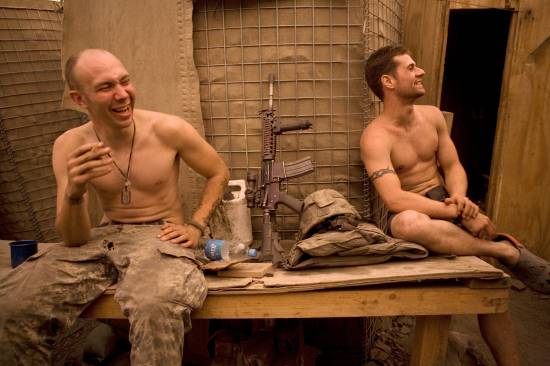
 From June 2007 to July 2008, journalists Sebastian Junger (THE PERFECT STORM) and Tim Hetherington (LIBERIA: AN UNCIVIL WAR) made a total of ten trips to the dangerous Korengal Valley in Afghanistan, documenting the full deployment of Battle Company of the 173rd Airborne Brigade. With snipers hidden all around them, the fifteen soldiers of Second Platoon built a remote, strategic outpost they named Restrepo after PFC Juan Restrepo, the well-liked company medic who was killed early on. Junger and Hetherington film such men as Captain Dan Kearney, Staff Sergeant Kevin Rice, and Sergeant Brendan C. O’Byrne as they go about their daily duties, joking around, playing the guitar, meeting with Afghan locals to get information about the Taliban, and digging trenches while prepared to be shot at at any moment. The journalists took more than 150 hours of footage, supplemented with interviews with several of the soldiers after they were safely back at home base in Italy, talking about what they went through. There is nothing political about RESTREPO, nor does it pull at the heartstrings with melodramatic, overemotional scenes; instead, it depicts the harsh realities of battle, including the long stretches of boredom punctuated by sudden life-or-death situations. There is no narration, no one discusses the possible merits of the war, and no generals or politicians are on hand to defend America’s involvement in the region. There’s no ethnocentric yahooism, nor is there racist treatment of the mostly unseen enemy. It’s just war, pure and simple, seen from the perspective of men who chose to join the army and risk their lives for their country. The film won the documentary Grand Jury Prize at last year’s Sundance Festival and also screened at the Human Rights Watch Film Festival at Lincoln Center. Nominated for an Oscar for Best Documentary, RESTREPO is having a special presentation February 10 at the Paley Center, followed by a panel discussion with Junger, Hetherington, and THE WRONG WAR author Bing West, moderated by Foreign Affairs’ Gideon Rose.

 Indie writer, actor, and director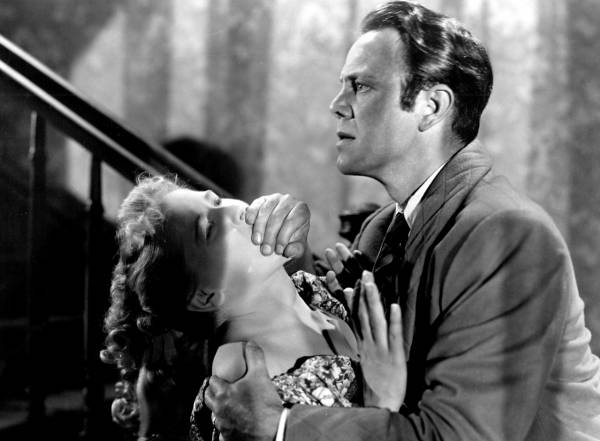
 The 1950 lurid Gothic noir melodrama HOUSE BY THE RIVER might be midlevel Fritz Lang, but even second-rate Lang is worth watching. Louis Hayward stars as Stephen Byrne, a novelist who lives on the riverside of a small town with his wife, Marjorie (Jane Wyatt), and young maid, Emily (Dorothy Patrick), next to a very nosy neighbor, Mrs. Ambrose (Ann Shoemaker). On a lonely, unproductive afternoon, Stephen gets excited while allowing Emily to use the master bathroom to bathe and makes a creepy play for her that ends up with him accidentally strangling her. He forces his older brother, John (Lee Bowman), to help him dump the body in the river, and as the lies build, John is wracked with guilt but Stephen takes advantage of his suddenly newfound writing success and popularity. Based on the novel by A. P. Herbert, HOUSE BY THE RIVER is a dark psychological crime mystery that melds Robert Siodmak with Douglas Sirk, with shadowy black-and-white camerawork by Edward J. Cronjager and Lang’s sure hand lifting it above its B-movie elements, with creepy surprises waiting around every corner. HOUSE BY THE RIVER is screening with Lang’s 1953 murder mystery THE BLUE GARDENIA, starring Raymond Burr, Anne Baxter, and Richard Conte, as part of Film Forum’s Fritz Lang in Hollywood series, which continues through February 10 with the twin bill YOU ONLY LIVE ONCE (1937) and YOU AND ME (1938).