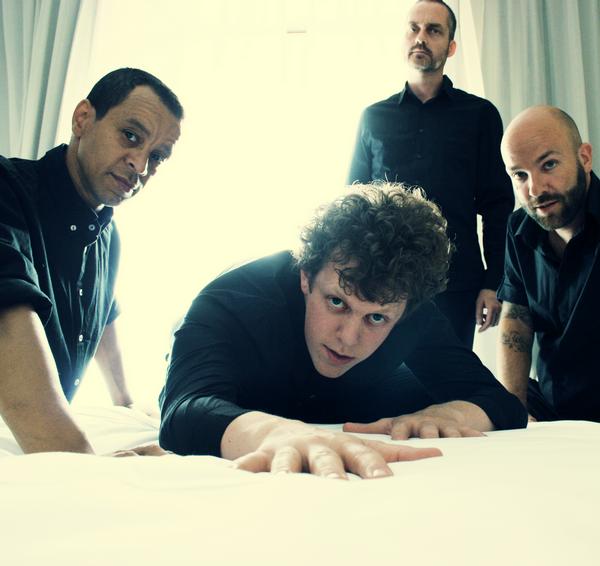
The Skull Defekts are headlining a special Unsound Festival show at Littlefield on April 6
Goethe-Institut, Wyoming Building (and other venues)
5 East Third St. between Bowery & Second Ave.
April 1-10, free – $30
www.unsound.pl/en
www.goethe.de
After a successful debut last year, the Unsound Festival is back with an amazing lineup of concerts, lectures, discussions, and film presentations that explore the past, present, and future of electronic music. Focusing primarily on European performers, the festival begins tonight at 8:00 with “Collaborations 1” ($12) at the Issue Project Room, with HATI + Z’ev, Anna Zaradny, MERCE, Dawid Szcsesny, and Aki Onda. Tomorrow at 5:00 at the Goethe-Institut, the BFI DVD project MisinforMation will screen for free, consisting of clips of public-information shorts rescored by Mordant Music. On April 3, sound artist Stephen Vitiello will give a free talk at 1:00 at the festival’s home base, the Goethe-Institut, about his High Line installation, “A Bell for Every Minute,” in addition to other of his public projects. On April 5 at the Walter Reade Theater, Clay Gold, Demdike Stare, Felix Kubin, Peter Kutin, Raime, and Rob Eggers collaborate on the five-channel horror-sound program Cinema for the Ear ($12). Among the many other participants in the festival are Deaf Center, Henryk Gorecki, Alan Howarth, Harald Grosskopf, Emeralds, Carlos Giffoni, C. Spencer Yeh, Robert Piotrowicz, Marcus Schmickler, COH, Instant Coffee, Lustmord, and Void ov Voices. There are plenty of other special events; below are some of our favorites.
Gospel of the Skull: On Sunday night at 8:00 at Littlefield ($10), the Skull Defekts will premiere songs from its latest disc, Peer Amid (Thrill Jockey). If you’re going to call yourself the Skull Defekts, you better play loud, crazy-ass music. Fortunately, this Swedish experimental rock group does just that on such songs as “No More Always,” “In Majestic Drag,” and “Fragrant Nimbus,” with Henrik Rylander, Joachim Nordwall, Jean-Louis Huhta, and Daniel Fagerstroem joined by Lungfish vocalist Daniel Higgs, who brings a whole new dimension to the group. Also on the bill is Thrill Jockey labelmate Zomes, the solo project of Lungfish guitarist Asa Osborne, who are touring behind their 2011 record Earth Grid, which was made on a cassette tape, and Polish-born German electronic percussion specialist Paul Wirkus.
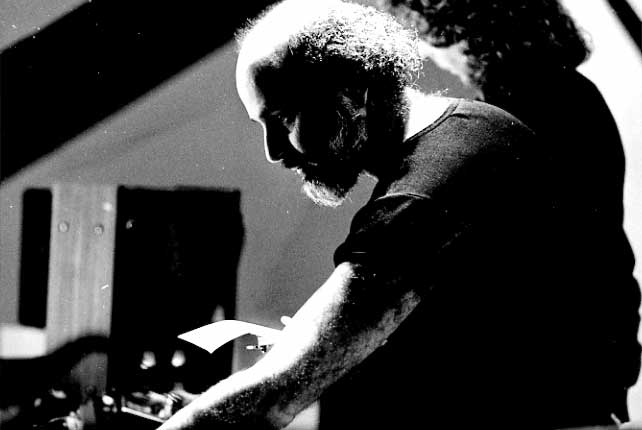
Legendary electronic music pioneer Morton Subotnick will make two heavily anticipated appearances at the Unsound Festival
Unsound Labs: Nosferatu, Symphony of Fear: On April 4 at 7:30 ($15), BAMcinématek will screen F. W. Murnau’s classic 1922 horror film, Nosferatu, accompanied by a live score performed by acoustic doom creator Svarte Greiner and Wirkus.
Music for Solaris: On April 6 at 8:00 at Alice Tully Hall ($20-$25), the Unsound Festival New York Opening, held in conjunction with the Krakow festival Sacrum Profanum, celebrates the fiftieth anniversary of Stanislaw Lem’s 1961 novel, Solaris — famously turned into films in 1971 by Andrei Tarkovsky and 2002 by Steven Soderbergh — with a specially commissioned score by Ben Frost and Daniel Bjarnason performed by Sinfonietta Cracovia and with film manipulations by Brian Eno and Nick Robertson. Sinfonietta Cracovia will also play works by Steve Reich and Krzysztof Penderecki.
Morton Subotnick: American electronic music pioneer Morton Subotnick will take part in a pair of very cool events at the Unsound Festival. On April 7 at 7:30 (free), he will present “Modular Dreams” at the David Rubenstein Atrium, revisiting his 1967 debut record, the seminal Silver Apples of the Moon, with video supplied by Lillevan. (Atom™ is also on the bill.) On April 8 at 6:00 ($15), Subotnick will give the lecture and demonstration “The Transistor, the Tape Recorder, and the Credit Card: The Technological Big Bang” at the Greenwich House Music School, focusing on his groundbreaking work with the Buchla voltage-controlled modular synthesizer.
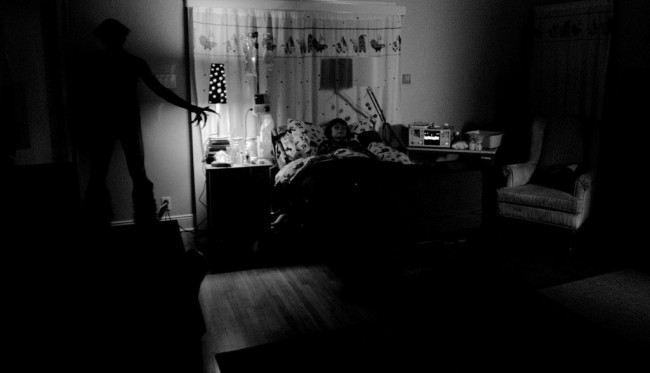
 James Wan was very clear what he intended with his latest film, declaring, “I want Insidious to be this generation’s Poltergeist.” Teaming up with the producers of the surprise hit Paranormal Acitivity, Wan and writer-actor Leigh Whannell, who previously collaborated on the first Saw movie (the good one), have come damn close to achieving their goal. Paying homage to such scary movies as The Exorcist, The Shining, and The Legend of Hell House while outright stealing from Tobe Hooper and Steven Spielberg’s 1982 Poltergeist, Wan and Whannell have delivered a PG-13 frightfest that will have audiences jumping out of their seats. Shortly after moving into a new house, Renai (Rose Byrne) and Josh (Patrick Wilson) are devastated when one of their children, Dalton (Ty Simpkins), suddenly slips into an unexplainable coma. Rose soon begins seeing strange things, including shadowy figures outside her window and in the baby’s room, so they move to another house, but it turns out that the ghosts aren’t attached to the physical structure; they’re after Dalton. Josh’s mother, Lorraine (Barbara Hershey), recommends the family bring in a psychic, and after Josh’s initial reluctance, Elise (Lin Shaye) and her two-person crew (Whannell and Angus Sampson) are making their way through the second house, using special equipment — including a hysterical gas mask — to get to the bottom of it all. And of course, they don’t like what they find. Insidious is a creepy, classic haunted-house flick filled with genuine shocks, red herrings, a silly back story, and a pretty stupid, unconvincing ending, but that doesn’t stop it from being a helluva lot of fun.
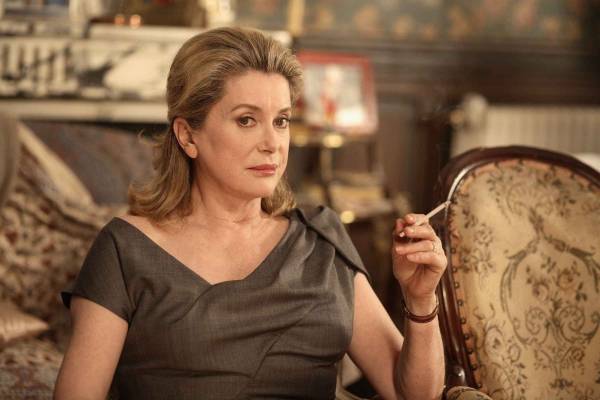
 One of the best films of 2008, A Christmas Tale (Un Conte de Noël) is yet another extraordinary work from French filmmaker Arnaud Desplechin (La Sentinelle, Esther Kahn). Desplechin, who examined family dysfunction in the masterful Kings and Queen (one of the best films of 2006), brings back much of that film’s cast in A Christmas Tale. Catherine Deneuve stars as Junon, the family matriarch who has just discovered she has leukemia and is in need of a bone-marrow transplant. Although it is rare for children to donate bone marrow to their mother (or grandmother), Junon insists that they all take the test to see if they are compatible. Soon they gather at Junon and Abel’s (Jean-Paul Roussilon) house for the holidays: oldest daughter Elizabeth (Anne Consigny), a dark and depressed woman whose teenage son, Paul (Emile Berling), has been institutionalized with mental problems and whose husband, Claude (Hippolyte Girardot), is rarely home; Ivan (Melvil Poupaud), the youngest son, a carefree sort married to Sylvia (Chiara Mastroianni, Deneuve’s real-life daughter), whom Junon strongly distrusts; and black sheep Henri (Mathieu Almaric), the middle child who was initially conceived primarily to save Abel and Junon’s first son, Joseph, who ended up dying of the same leukemia that Junon has contracted. Henri, who shows up with a new girlfriend, the very direct Faunia (Emmanuelle Devos), is a philandering ne’er-do-well who is deeply estranged from Elizabeth and not close with his mother, leading to much strife as Christmas — and a possible transplant — nears. Desplechin, who wrote the script with Emmanuel Bourdieu, once again has created powerful, realistic characters portrayed marvelously by his extremely talented cast; despite the family’s massive dysfunction, you’ll feel that even spending more than two and a half hours with them is not enough. A Christmas Tale concludes BAMcinématek’s month-long “Deneuve” series in high style.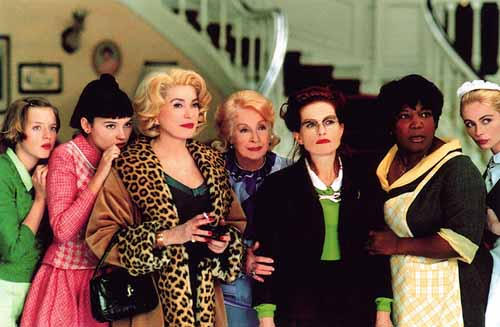
 This should have been a great one, but controversial director François Ozon couldn’t leave well enough alone. Somewhere in 8 Women is a fabulously entertaining murder mystery set in a mansion in which the title characters are trapped — and any one of the eight could be guilty of the murder of the dude in the bedroom who has a knife in his back. The eight women embody much of the history of French cinema of the previous fifty years: Danielle Darrieux (who began making films in the early 1930s), Catherine Deneuve (who, when this movie was made, was nearly sixty!), Fanny Ardant (who had recently turned fifty), a nearly unrecognizable Isabelle Huppert (who was approaching fifty), the beguiling Emmanuelle Béart (who was nearing forty), twentysomethings Virginie Ledoyen and Ludivine Sagnier, and Firmine Richard. Inexplicably, Ozon has each of the characters perform a silly song-and-dance number that neither furthers the plot nor expands on the characters’ motives or mental state. He bit off more than he could chew; he made a compelling takeoff of the British drawing-room mystery and blew it by deciding to play off the Hollywood Technicolor musical as well. But Ardant’s lips, Deneuve’s eyelashes, and Béart’s curves are nearly worth the price of admission nonetheless. 8 Women is screening as part of BAMcinématek’s “Deneuve” series, which concludes March 31 with Arnaud Desplechin’s outstanding A Christmas Tale.