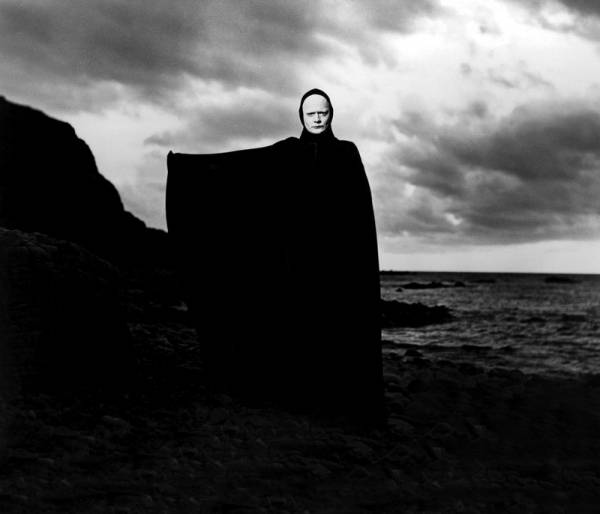
Death (Bengt Ekerot) is not exactly holding out the red carpet in Bergman classic
THE SEVENTH SEAL (Ingmar Bergman, 1957)
Film Society of Lincoln Center
Walter Reade Theater
165 West 65th St.
Tuesday, March 29, 1:00 & 3:00
Series runs through April 1
212-875-5610
www.filmlinc.com
 It’s almost impossible to watch Ingmar Bergman’s The Seventh Seal without being aware of the meta surrounding the film, which has influenced so many other works and been paid homage to and playfully mocked. Over the years, it has gained a reputation as a deep, philosophical paean to death. However, amid all the talk about emptiness, doomsday, the Black Plague, and the devil, The Seventh Seal is a very funny movie. In fourteenth-century Sweden, knight Antonius Block (Max von Sydow) is returning home from the Crusades with his trusty squire, Jöns (Gunnar Björnstrand). Block soon meets Death (Bengt Ekerot) and, to prolong his life, challenges him to a game of chess. While the on-again, off-again battle of wits continues, Death seeks alternate victims while Block meets a young family and a small troupe of actors putting on a show. Rape, infidelity, murder, and other forms of evil rise to the surface as Block proclaims “To believe is to suffer,” questioning God and faith, and Jöns opines that “love is the blackest plague of all.” Based on Bergman’s own play inspired by a painting of Death playing chess by Albertus Pictor (played in the film by Gunnar Olsson), The Seventh Seal, winner of a Special Jury Prize at Cannes, is one of the most entertaining films ever made. (Bergman fans will get an extra treat out of the knight being offered some wild strawberries at one point.) The film is screening on March 29 at 1:00 as part of the Film Society of Lincoln Center’s Janus Films Classics series and will be followed at 3:00 by Bergman’s Cries and Whispers (1972).
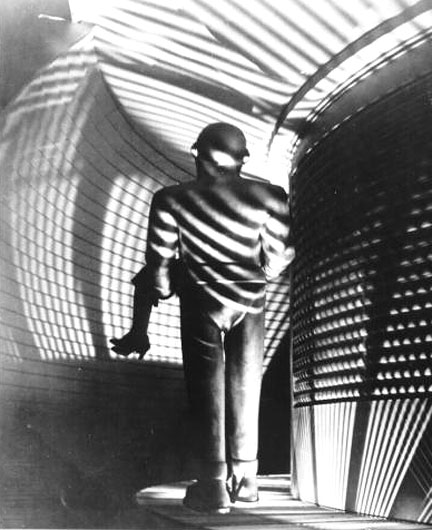
 This cold-war-era classic stars Michael Rennie as an alien who lands on earth with a very important message: No peace, no planet. He brings along with him one of the great robots in cinema history, Gort (Lock Martin), and later utters to Patricia Neal one of the ten best lines ever: “Klaatu borada nikto.” This science-fiction fave works on a number of different and fascinating levels; during a 1998 UC Berkeley interview, director Robert Wise even noted, “Some people read a religious connotation into the thing, the resurrection and all. If you want to put a beard on Rennie and all, he could be a Christ figure.” The Day the Earth Stood Still is screening Saturday and Sunday afternoon as the conclusion to the Museum of the Moving Image’s “Fantastic Voyages” series. Be sure to also check out the museum’s inaugural exhibits following its major remodeling, including “Real Virtuality,” Chiho Aoshima’s “City Glow,” Martha Colburn’s “Dolls vs. Dictators,” and the always engaging “Behind the Screen.”
 Don’t be fooled by the eye-popping trailers and hip ad campaign for the new action fantasy Sucker Punch; Zack Snyder’s second film as writer-director (after 2007’s 300) is a stupefyingly incomprehensible disaster. In a dark, doomed world, Babydoll (Emily Browning) is framed by her stepfather for the murder of her little sister so he can get their recently deceased mother’s money. Babydoll is sent to an asylum for the criminally insane, where she is scheduled to undergo a lobotomy. But just as the orbitoclast is about to be pounded into her brain, she mentally transports herself to another world, where she is the new girl at a club where hot babes are forced to take care of the needs of wealthy, degrading men. Determined to escape, Babydoll joins up with Sweet Pea (Abbie Cornish), Rocket (Jena Malone), Blondie (Vanessa Hudgens), and Amber (Jamie Chung) as they seek a series of items that will lead to their freedom from the evil Blue Jones (Oscar Isaac) and the conflicted Madam Vera Gorski (Carla Gugino). In order to obtain the map, fire, knife, and key, Babydoll performs a mesmerizing dance — which is never actually shown — that sends her and her four Charlie’s Angels wanna-bes into video-game-like scenarios where they are led by the Wise Man (Scott Glenn) as they battle giant samurai, zombie soldiers, and fire-breathing dragons in absurd, overly stylistic sequences that are remarkably lifeless and unexciting. Sucker Punch doesn’t even qualify as a so-bad-it’s-good camp movie; it’s just plain bad, and it’s PG-13 to boot. Snyder (Watchmen, Legend of the Guardians: The Owls of Ga’Hoole) aspires to the labyrinthine tales of Julio Cortázar and Jorge Luis Borges filtered through Quentin Tarantino and Robert Rodriguez but instead winds up with an overwrought, jaw-dropping mess. Even the soundtrack — including cover songs inexplicably performed by the cast — is head-scratchingly awful. And Jon Hamm, just what were you thinking?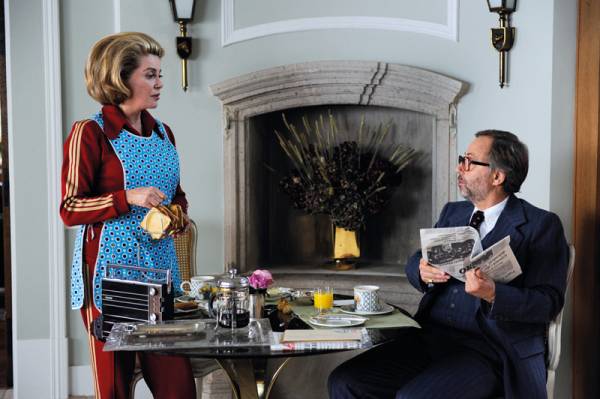
 Legendary French star Catherine Deneuve radiates a colorful glow throughout her latest film, Potiche (Trophy Wife), her smile lighting up the screen as it has throughout her long career, which now comprises more than one hundred movies over more than fifty years. Reunited with writer-director François Ozon (2002’s 8 Women) and Gérard Depardieu (they first appeared together in Claude Berri’s Je Vous Aime in 1980 and most recently in André Téchiné’s Les Temps Qui Changent in 2004), Deneuve was nominated for a César for her role as Suzanne Pujol, a trophy housewife who primarily serves as arm candy for her husband, Robert (Fabrice Luchini), who runs Suzanne’s family’s umbrella factory like a tyrant and is a little too close to his secretary, Nadège (César nominee Karin Viard). When Robert is taken hostage during a nasty strike at the plant, Suzanne is forced into action, deciding to run the business with the help of her counterculture son, Laurent (Jérémie Rénier), and her conservative daughter, Joëlle (Judith Godrèche). At first clashing with the mayor, Maurice Babin (Depardieu), Suzanne is soon considering rekindling her long-ago affair with the rather rotund Maurice as she realizes there’s so much more to life than being a wealthy appendage. Loosely adapted from a Theatre de Boulevard comedy by Pierre Barillet and Jean-Pierre Grédy, Potiche is a charming throwback to 1970s female-empowerment movies, depicting long-held-back women suddenly grabbing the reins and embracing their personal and professional freedom, getting out from under the thumb of repressive societal conventions. Ozon infuses the film with numerous references to Deneuve’s history, evoking such seminal works as The Young Girls of Rochefort, Belle de Jour, and, of course, The Umbrellas of Cherbourg, and the costumes — particularly Deneuve’s fabulous fashion sense, which often dominates the scene — are a hoot, earning costume designer Pascaline Chavanne a much-deserved César nomination, but things get haywire in the final section, getting too silly and going too far over the top when politics come into play. Still, Potiche ably represents its genre, having fun with itself, which rubs off on the audience, who will have plenty of fun as well.
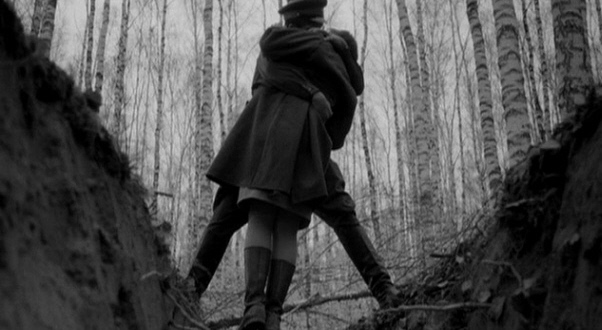
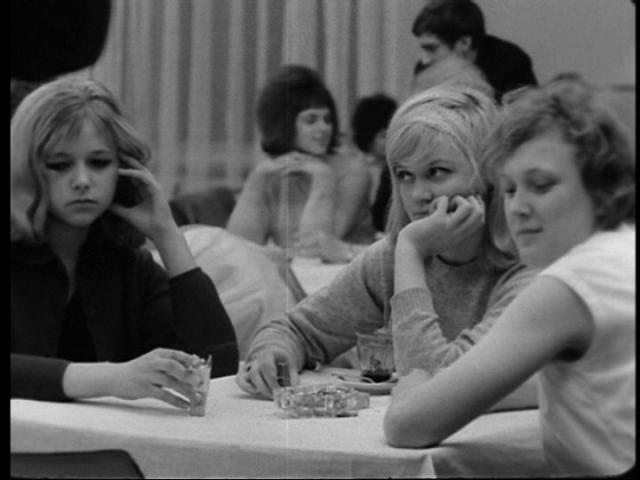
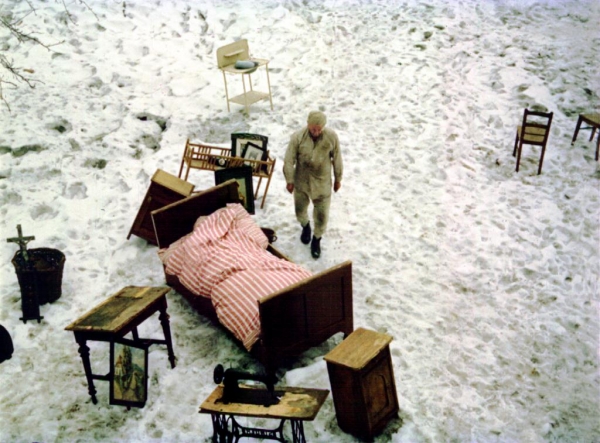
 Miloš Forman’s final Czechoslovakian film is an absurdist comedy about a local firemen’s ball and lottery, featuring a group of grumpy old clueless men who struggle through selecting contestants for the beauty contest so the winner can give the eighty-six-year-old former chairman a present before he dies of cancer and all the lottery gifts are stolen. This fun film has a charming element of silent slapstick that will have audiences laughing out loud. Loves of a Blonde and The Firemen’s Ball are screening March 25 as part of the Film Society of Lincoln Center’s Janus Classics series, followed by Jean Renoir’s The Golden Coach (1952) and The Rules of the Game (1939) on March 28, Ingmar Bergman’s The Seventh Seal (1957) and Cries and Whispers (1972) on March 29, and more.