
NYC ANARCHIST BOOK FAIR
Judson Memorial Church (and other venues)
55 Washington Square South
April 8-10, free
www.anarchistbookfair.net
NEW YORK ANTIQUARIAN BOOK FAIR
Park Avenue Armory
643 Park Ave. at 67th St.
April 8-10, $20/day, $30/two-day pass, $45/three-day pass (includes catalog)
www.armoryonpark.org
www.sanfordsmith.com
The publishing industry is currently going through revolutionary change as digital ebooks threaten the future of the physical book. Although there are still plenty of people who believe that the thrill of holding a book in their hands, putting it on their shelf in its proper place once finished, will never go away, there is a new generation of readers who might never care about that feeling of accomplishment. You are likely to find a lot more of the former rather than the latter at this weekend’s fifty-first annual NY Antiquarian Book Fair, being held April 8-10 at the Park Ave. Armory. More than two hundred exhibitors will be selling first editions, maps, illustrated books, manuscripts, and other literary treasures that would never be quite the same seen on a Kindle, Nook, or iPad. There’s no telling who will show up at the fifth annual New York City Anarchist Book Fair, which begins today with the Anarchist Film Festival ($10 suggested donation), taking place this afternoon and tonight at the Sixth St. Community Center and promising to “celebrate a global uprising and resistance to state repression.” On Saturday and Sunday, exhibitors will set up at Judson Memorial Church, where attendees can check out such workshops and panel discussions as “Food Not Bombs in New York City and Long Island: Diverse Tactics for a Singular Mission,” “Farmworker Justice, Green Capitalism, and Trader Joe’s: A Presentation on the Coalition of Immokalee Workers,” “Disarm and Hammer: Anarchist Pacifists in Nuclear Direct Disarmament Actions,” and “Sexuality, Surveillance, and Government Infiltrators: Fragmenting the Radical Left Through the Terrorization of Animal Advocacy.” In addition, the Anarchist Art Festival at the Living Theater will feature “Seven Meditations on Political Sado Masochism” today and tomorrow and the Anarchist Art Laboratory “Deconstructing Power, Creating New Routes” on Sunday.
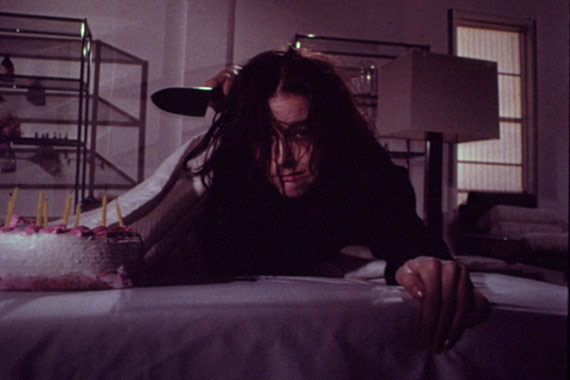
 Brian De Palma lets his Hitchcockian roots show in Sisters, even going so far as to hire Bernard Herrmann to compose the music for this low-budget horrorfest starring Margot Kidder as a detached Siamese twin and Jennifer Salt (Eunice from Soap) as a writer for the Staten Island Panorama, the author of such columns as “The Lost Borough,” “Save the Ferry,” and “Why We Call Them Pigs.” You’ll guess the twist about twenty minutes in, but you’ll still have a lot of fun with the usual load of De Palma sex, gore, and violence. Sisters is screening in a rare 35mm print at BAM on Friday at 7:30, kicking off the “De Palma Suspense” series, and will be introduced by writer-director Noah Baumbach (The Squid & the Whale). The series continues Saturday night with Paul Williams starring in De Palma’s cult favorite Phantom of the Paradise, which will be followed by a Q&A with producer Ed Pressman and costar William Finley. Carrie and Body Double screen on Sunday, with The Fury on Monday, Obsession on Tuesday, Blow Out on Wednesday, Raising Cain on April 18, Femme Fatale on April 19, and the great Dressed to Kill closing things out on April 20.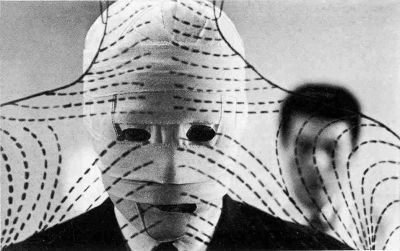
 Kôbô Abe and director Hiroshi Teshigahara collaborated on five films together, including the marvelously existential Woman of the Dunes in 1964 and The Face of Another two years later. In The Face of Another, Tatsuya Nakadai (The Human Condition, Kill!) stars as Okuyama, a man whose face has virtually disintegrated in a laboratory accident. He spends the first part of the film with his head wrapped in bandages, a la the Invisible Man, as he talks about identity, self-worth, and monsters with his wife (Machiko Kyo), who seems to be growing more and more disinterested in him. Then Okuyama visits a psychiatrist (Mikijirô Hira) who is able to create a new face for him, one that would allow him to go out in public and just become part of the madding crowd again. But his doctor begins to wonder, as does Okuyama, whether the mask has actually taken control of his life, making him as helpless as he was before. Abe’s remarkable novel is one long letter from Okuyama to his wife, filled with utterly brilliant, spectacularly detailed examinations of what defines a person and his or her value in society. Abe wrote the film’s screenplay, which tinkers with the time line and creates more situations in which Okuyama interacts with people; although that makes sense cinematically, much of Okuyama’s interior narrative, the building turmoil inside him, gets lost. Teshigahara once again uses black and white, incorporating odd cuts, zooms, and freeze frames, amid some truly groovy sets, particularly the doctor’s trippy office, and Tōru Takemitsu’s score is ominously groovy as well. As a counterpart to Okuyama, the film also follows a young woman (Miki Irie) with one side of her face severely scarred; she covers it with her hair and is not afraid to be seen in public, while Okuyama must hide behind a mask. But as Abe points out in both the book and the film, everyone hides behind a mask of one kind or another. The Face of Another is screening April 7 as part of Film Forum’s “5 Japanese Divas” series, featuring four weeks of films starring Kyo, Isuzu Yamada, Kimuyo Tanaka, Setsuko Hara, and Hideko Takamine, who play strong, determined women in such classic works as Yasujiro Ozu’s Early Summer (1951) and Tokyo Story (1953), Hiroshi Teshigahara’s The Face of Another (1966), Mikio Naruse’s Okaasan (1952) and Flowing (1956), Akira Kurosawa’s The Idiot (1951) and Throne of Blood (1957), Keisuke Kinoshita’s Carmen Comes Home (1951) and Twenty-Four Eyes (1954), and Kenji Mizoguchi’s Ugetsu (1953), Sansho the Bailiff (1954), and Street of Shame (1956), among others.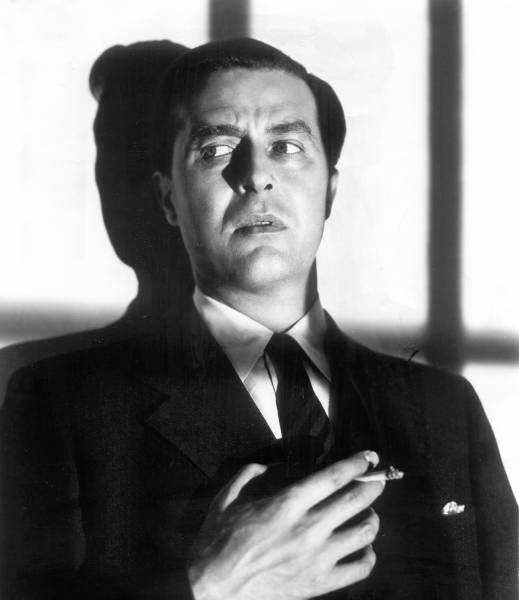
 Based on the 1943 novel by Graham Greene, Fritz Lang’s Ministry of Fear is a classic Hitchcockian noir about an innocent man caught up in a dangerous web of mystery and intrigue. Ray Milland stars as Stephen Neale, a man who, as the film opens, is being released from an asylum after serving time related to the death of his wife. His freedom doesn’t last long, as he stops at a local fair and visits the fortune-teller, who accidentally helps him win a guess-the-weight cake that some very bad people want to get their hands in. Out on the run, his only friends are Willi (Carl Esmond) and Carla (Marjorie Reynolds), foreign siblings who run the charity organization the Mothers of Free Nations, the sponsor of the fair. Throw in a séance, the Blitz, an old blind man, an alcoholic private investigator, a book called The Psychology of Nazism, a disbelieving Scotland Yard detective, and wonderfully shadowy camerawork and the result is a tense, exciting spy tale filled with plenty of twists and surprises. Ministry of Fear is screening as part of 92YTribeca’s Closely Watched Films series, hosted by Elliott Kalan and featuring special guest speaker Jackson Publick.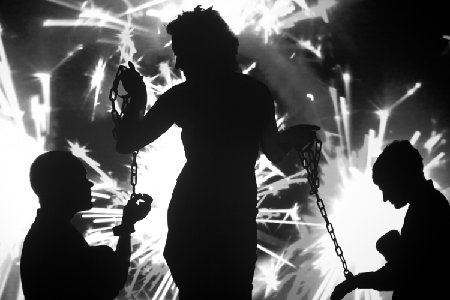


 Based on the Russian novel Yama (The Pit) by Aleksandr Kuprin, protofeminist director Kenji Mizoguchi’s Sisters of the Gion offers a poignant look at the changing desires of women in twentieth-century Japan. In the Gion District, geisha have become one-man prostitutes, taking up with one wealthy patron at a time. When Furusawa (Benkei Shiganoya) loses his business, the bankrupt man turns away from his wife and instead goes to Umekichi (Yōko Umemura), who takes him in, believing that it is her responsibility. Her younger sister, Omocha (Isuzu Yamada), is furious, arguing that geisha, and women in general, should be more than just the playthings of men. She wants her sister instead to find a rich patron who can take care of her in style. Omocha is a manipulative woman, willing to lie to get what she thinks she and Umekichi deserve, but she is not doing it for evil reasons as much as she wants to change the plight of the geisha and give more power to women. But Umekichi cannot break free of the old-fashioned ways as Omocha plays games with successful businessman Jurakudo (Fumio Okura) and his assistant, Kimura (Taizō Fukami), devising a plot that threatens to tear everything apart. Mizoguchi fills Sisters of the Gion with long shots of narrow passageways as characters try to escape from their situations but are unable to. Made in 1936, just before a war that would change Japan’s views on houses of ill repute, the film is virtually timeless for most of its too-brief sixty-nine minutes, until one man decides to take actions into his own hands and suddenly cars and the nearby city shift the overall perspective. In the end, it’s about more than just money, although it’s definitely about that, but it’s also about respect, about common decency, and about humanity, as seen from all sides. Sisters of the Gion is screening April 4 with Yasujiro Ozu’s 1933 silent crime drama, Dragnet Girl, starring Kinuyo Tanaka, as part of Film Forum’s “5 Japanese Divas” series, featuring four weeks of films starring Yamada, Tanaka, Machiko Kyo, Setsuko Hara, and Hideko Takamine, who play strong, determined women in such classic works as Ozu’s Early Summer (1951) and Tokyo Story (1953), Hiroshi Teshigahara’s The Face of Another (1966), Mikio Naruse’s Okaasan (1952) and Flowing (1956), Akira Kurosawa’s The Idiot (1951) and Throne of Blood (1957), Keisuke Kinoshita’s Carmen Comes Home (1951) and Twenty-Four Eyes (1954), and Mizoguchi’s Ugetsu (1953), Sansho the Bailiff (1954), and Street of Shame (1956), among others.