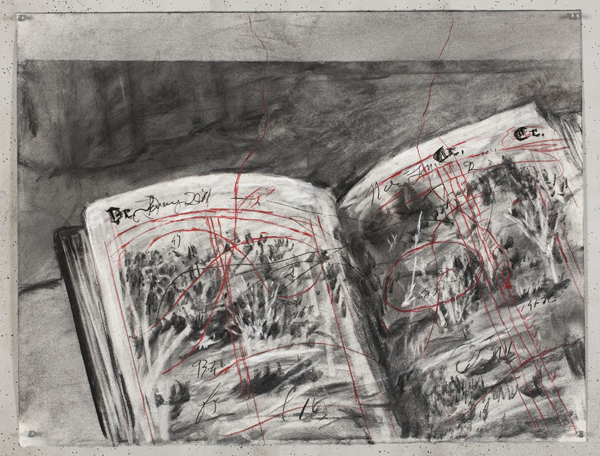
William Kentride will be signing books at Marian Goodman on Saturday as part of New York Gallery Week (William Kentridge, “Drawing for ‘Other Faces,’” charcoal and coloured pencil on paper, 2011; courtesy of the artist and Marian Goodman Gallery, New York / Paris)
Multiple locations
May 6-8, free
www.newyorkgalleryweek.com
More than sixty galleries and organizations will be participating in this weekend’s New York Gallery Week festivities, featuring a host of opening receptions, walking tours, and other special events, including being open late Friday night (till 8:00) and all day Sunday, when most galleries are closed. Among the many Saturday highlights are William Kentridge signing books at Marian Goodman from 11:00 to 1:00, Barnaby Furnas and Ivan Witenstein in conversation at Derek Eller at 12 noon, Amy Granat/Cinema Zero and a dance performance by Felicia Ballos at Nicole Klagsbrun at 1:00, an artist talk with Sara VanDerBeek at Leo Koenig at 2:30, the panel discussion “New Directions in Curatorial Models” at Sean Kelly at 3:00, and a live performance by Black Lake at David Nolan at 5:00. On Sunday, Louise Lawler’s Birdcalls will be screening at Metro Pictures from 11:00 to 6:00, Marianne Boesky will host a panel discussion on Salvatore Scarpitta’s “Trajectory” at 12 noon (with Germano Celant, Nicholas Cullinan, James Harithas, Jeff Koons, Nancy Rubins, and Paul Schmmel, moderated by Anne-Marie Russell), Hilton Als and Kara Walker will lead an artist walk-through of Walker’s “Dust Jackets for the Niggerati — and Supporting Dissertation” at Sikkema Jenkins at 2:00, Liam Gillick and Sean Landers will lead a walk-through of Landers’s “Around the World Alone” at Friedrich Petzel at 3:00, and Stephen Vincent will give a talk and poetry reading at Jack Hanley at 6:00.
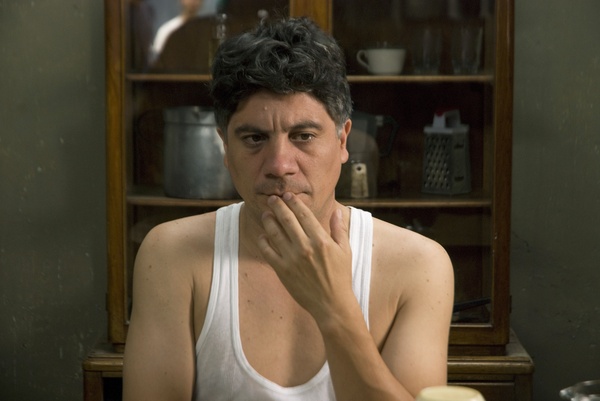
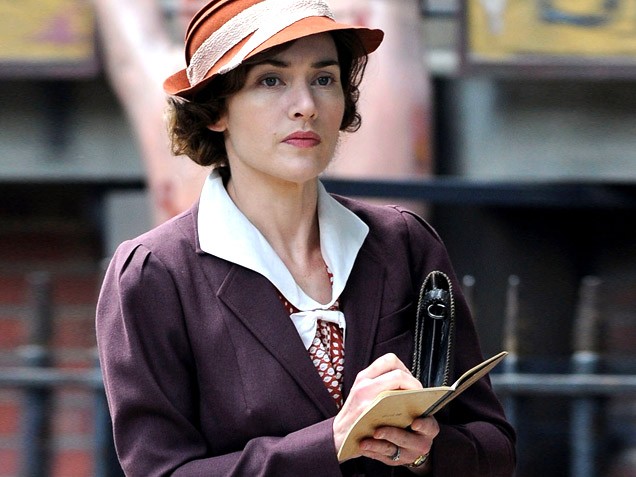
 Clearly, the Museum of the Moving Image has a wicked sense of humor. This Mother’s Day, the Astoria institution will be screening all five and a half hours of Todd Haynes’s splendid new version of Mildred Pierce, which recently premiered on HBO. This new Mildred Pierce is less a remake of Michael Curtiz’s 1945 noir original, which earned Joan Crawford a Best Actress Oscar for the title role, than a more faithful retelling of James M. Cain’s 1941 novel about a dedicated mother who cannot see through the deception of her awful, terrible, miserable, horrible, conniving daughter. Kate Winslet is stoic as Mildred, who, after her husband, Bert (Brian F. O’Byrne), leaves her for another woman, takes a job as a waitress to help take care of her two children, especially her piano-prodigy daughter, Veda (first played by Morgan Turner, then Evan Rachel Wood when she’s older). Soon after Mildred’s pies become extremely popular, she opens up her own restaurant, with the help of Bert’s former business partner, Wally Burgan (James LeGros), who doesn’t mind getting a little something extra from Mildred. Mildred starts living a more exciting life, gallivanting around with would-be playboy Monty Beragon (Guy Pearce), but her happiness is continually thwarted by her undying, undeserving love for her daughter, who does not return the feeling but is more than content to take her mother’s money. Haynes and cowriter Jon Raymond focus on the characters instead of the camp, coming up with a compelling and involving depression-era tale that will break your heart over and over again.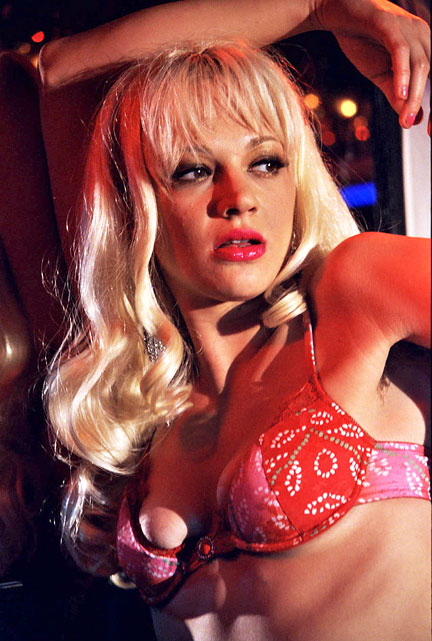
 Asia Argento wrote, directed, and stars in this inspired adaptation based on the supposedly autobiographical novel by the recently exposed JT Leroy (a mysterious writer who turned out to be an elaborate creation of a former sex-phone operator). Argento, whose long resume includes a trio of films directed by her cult-fave father, Italian horrormeister Dario Argento, plays Sarah, a drug-addled loser who reclaims her seven-year-old son, Jeremiah (the frightfully good Jimmy Bennett), from his loving and well-off foster parents. Sarah, one of the worst mothers to ever grace the silver screen, mistreats the boy horribly again and again, even allowing her stream of dangerous and weird boyfriends (which include Michael Pitt, Marilyn Manson, and Jeremy Sisto) to do the same — and worse. At one point Jeremiah winds up living with his grandparents (Peter Fonda and Ornella Muti), religious nutcakes who harbor their own secrets. With pulsating original music by Marco Castoldi and Sonic Youth, brutal, fast-paced action, and leather-and-chains sadomasochism, The Heart Is Deceitful Above All Things is reminiscent of Alex Cox’s Sid & Nancy (1986), with a little bit of Mommie Dearest (Frank Perry, 1981) thrown in. Argento’s compelling vision, which will grow on you if you let it, is not for everyone; at times it’s lurid, graphic, and hard to watch, but it’s also got its share of breathtaking moments. Just try your best to forget about the literary hoax that gave birth to this sordid story in the first place.

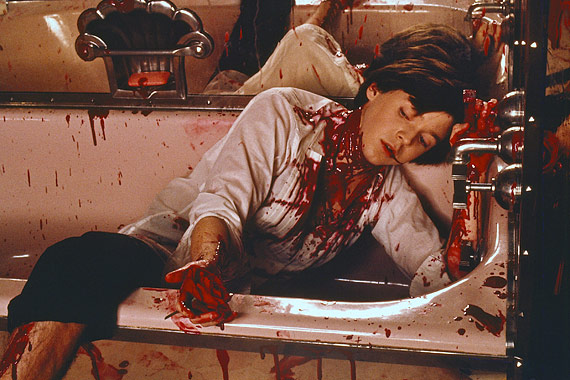
 Bud Cort (Harold) and Ruth Gordon (Maude) are magnificent in this glorious black comedy from director Hal Ashby (The Last Detail, Shampoo, Being There) and writer Colin Higgins. Harold is an eighteen-year-old rich kid obsessed with death, regularly flirting with suicide. Maude is a fun-loving, free-spirited senior citizen approaching her eightieth birthday. Ashby throws in just the right amount of post-1960s social commentary, including a very funny antiwar scene, without becoming overbearing, as this could have been a maudlin piece of sentimental claptrap, but instead it’s far from it. Even the Cat Stevens soundtrack (“If You Want to Sing Out, Sing Out,” “Tea for the Tillerman,” “Where Do the Children Play?”) works. Harold and Maude is a tender, uproarious, bittersweet tale that is one of the best of its kind, completely unforgettable, enlightening, and, ultimately, life-affirming in its own odd way. Ashby, who died in 1988 at the age of fifty-nine, made only eleven narrative films and two concert documentaries in his too-brief life and career, which is being honored at BAMcinématek with the retrospective Movies by Hal Ashby, featuring most of his directorial efforts in additional to several films he edited: Tony Richardson’s The Loved One (1965) and Norman Jewison’s The Cincinnati Kid (1965) and In the Heat of the Night (1967). The 6:50 screening of the underrated The Landlord on May 12 will be followed by a Q&A with filmmaker Robert Downey Sr. and star Lee Grant.