Apichatpong Weerasethakul’s Palme d’Or winner is a subtly beautiful meditation on death and rebirth, memory and transformation
UNCLE BOONMEE WHO CAN RECALL HIS PAST LIVES (LUNG BOONMEE RALUEK CHAT) (Apichatpong Weerasethakul, 2010)
Asia Society
725 Park Ave. at 70th St.
Sunday, May 22, $7, 5:00
Series runs May 13 – June 17
212-288-6400
www.asiasociety.org
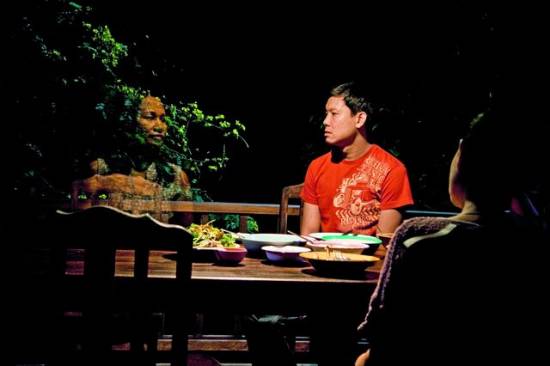
 Winner of last year’s Palme d’Or at Cannes, Thai writer-director Apichatpong Weerasethakul’s Uncle Boonmee Who Can Recall His Past Lives is an elegiac meditation on memory, transformation, death, and rebirth, a fascinating integration of the human, animal, and spirit worlds. Uncle Boonmee (Thanapat Saisaymar) is dying of kidney failure, being tended to by his Laotian helper, Jaai (Samud Kugasang). Boonmee is joined by his dead wife’s sister, Jen (Jenjira Pongpas), in his house in the middle of the jungle. Boonmee and Jen have nearly impossibly slow conversations that seem to go nowhere, just a couple of very simple people not expecting much excitement out of what’s left of their lives. Even when Boonmee’s long-dead wife, Huay (Natthakarn Aphaiwonk), and his long-missing son, Boonsong (Geerasak Kulhong), now a hairy ghost monkey covered in black fur and with two laserlike red eyes, suddenly show up, Boonmee and Jen pretty much just go with the flow. Weerasethakul maintains the beautifully evocative pace whether Jaai is draining Boonmee’s kidney, the characters discuss Communism, Tong (Sakda Kaewbuadee) questions his monkhood, a princess (Wallapa Mongkolprasert) has sex with a catfish, or they all journey to a cave in search of another of Boonmee’s past lives. The film, which was shot in 16mm and was inspired by a 1983 book called A Man Who Can Recall His Past Lives, is part of the Primitive Project, Weerasethakul’s multimedia installation that also includes the short films A Letter to Uncle Boonmee and Phantoms of Nabua. Weerasethakul, who gained a growing international reputation with such previous works as Blissfully Yours (2002), Tropical Malady (2004), and Syndrome and a Century (2006) and has a bachelor’s degree in architecture from Khon Kaen University and an MFA in filmmaking from the Art Institute of Chicago, is a master storyteller who continues to challenge viewers with his unique visual language and subtly effective narrative techniques.
Uncle Boonmee is being shown May 22 as part of Asia Society’s “Blissfully Thai” film series, with Weerasethakul participating in a Q&A following the screening. The series begins May 13 with Pen-ek Ratanaruang’s Ploy (followed by a Q&A with the director) and continues with Mingmongkol Sonakul’s I-San Special on May 20, Yongyoot Thongkongtoon’s The Iron Ladies on May 26, Ratanaruang’s Mon-Rak Transistor on June 3, Wisit Sasanatieng’s Tears of the Black Tiger on June 10, Aditya Assarat’s Hi-So on June 11 (followed by a Q&A with actress Cerise Leang), and Weerasethakul’s Blissfully Yours on June 17. Weerasethakul and Ratanaruang will also take part in a special discussion about the past, present, and future of Thai filmmaking on May 14 at 2:00, followed by a reception with the artists.
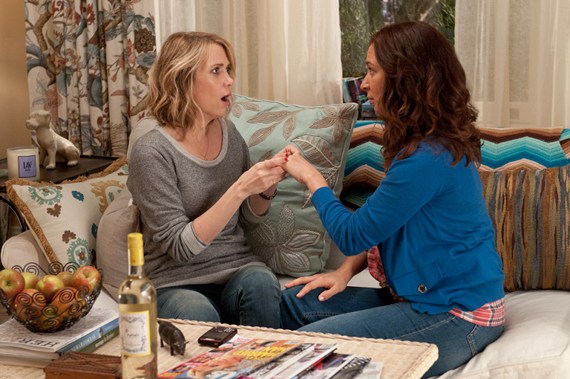
 First and foremost, don’t link Bridesmaids in with all those lousy Saturday Night Live one-note movies and the string of overrated and overhyped lowbrow trash streaming out of the Judd Apatow factory. And don’t assume it’s a silly chick flick either. As it turns out, Bridesmaids is one of the most consistently funny laugh-out-loud romps of this young century. Directed by Freaks and Geeks creator Paul Feig, Bridesmaids is an endlessly clever and insightful examination of love, loneliness, and friendship starring SNL’s Kristen Wiig, who cowrote the smart script with Groundlings member Annie Mumolo (who makes a cameo as a nervous flyer). Wiig shows surprising depth and range as Annie, a perennial screw-up whose closest childhood friend, Lillian (Maya Rudolph), is marrying into a very snooty upper-crust family. After agreeing to be Lillian’s maid of honor, Annie gets involved in a battle of wits with Lillian’s future sister-in-law, the elegant Helen (a radiant Rose Byrne), who is determined to outshine Annie in every way possible and steal Lillian away from her. Already a mess — she had to close her bakery, she shares an apartment with a bizarre pair of British siblings, she works in a jewelry store where she drives away potential customers with her sorry tales of woe, and she allows herself to be treated miserably as a late-night booty call for a self-centered businessman (Jon Lamm) — Annie experiences a series of hysterical, pathetic setbacks as she attempts to organize the bridal shower and bachelorette party, including a riotous potty-humor scene in a high-end boutique that is likely to go down in comedy history for its sheer relentlessness. The rest of the bridesmaids are quite a hoot — Becca (Ellie Kemper), the Disney-loving kewpie doll; Rita (Wendi McLendon-Covey), a foul-mouthed married mother who can’t wait to go crazy away from her family; and the groom’s burly sister, Megan (the hugely entertaining Melissa McCarthy), who lives life without a filter. Annie is so caught up in her own failures that she doesn’t recognize when something potentially good enters her life, in the form of state trooper Nathan Rhodes (Chris O’Dowd). Wiig gives the finest performance of her career as Annie, clearly a role that is very close to her heart. Despite the slapstick nature of many of the jokes, Bridesmaids is filled with heart and soul, making it one of the best comedies in years.
 Previously profiled in such documentaries as 2002’s Yves Saint Laurent: His Life and Times and Yves Saint Laurent 5 Avenue Marceau 751116 Paris, Algerian-born French fashion designer Yves Saint Laurent is seen from a very different perspective in L’Amour Fou (not to be confused with Jacques Rivette’s 1969 four-hour-plus tale of a marriage falling apart). On June 1, 2008, the iconic figure died of brain cancer at the age of seventy-one; the following February, the vast art collection Saint Laurent amassed with his longtime life and business partner, Pierre Bergé, was sold at a Christie’s auction. Director Pierre Thoretton tells Saint Laurent’s story chronologically as Bergé shares intimate details of their relationship while showing off the impressive soon-to-be-sold objets d’art displayed in their homes in Paris, Normandy, and Marrakech. A strong, direct man, Bergé admits to not being nostalgic as he relates his life with Saint Laurent, from Yves’s days as the successor to the House of Dior to the development of his own fashion empire, which made a name for itself with, among other things, his famed prêt-à-porter line and colorful Piet Mondrian dresses. Thoretton mixes in news footage, archival and family photographs, runway clips, and brief interviews with two of Saint Laurent’s muses, models Betty Catroux and Loulou de la Falaise, in addition to former French Minister of Culture Jack Lang, to draw an intimate portrait of the designer, but it’s most fascinating to watch Bergé as he talks about his friend and lover. “I know that tomorrow all of this will be gone,” he says about the art collection, but he could just as easily have been referring to Saint Laurent himself. “Which means what? A part of my soul, a part of my life.”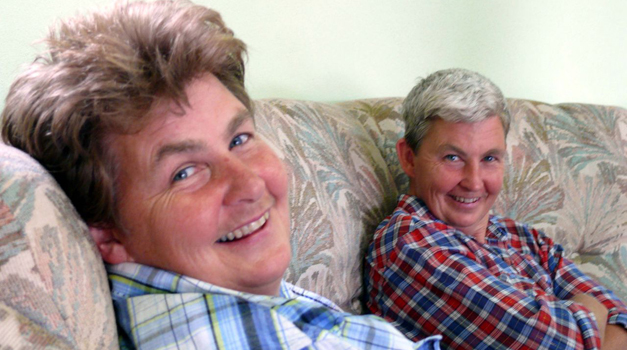
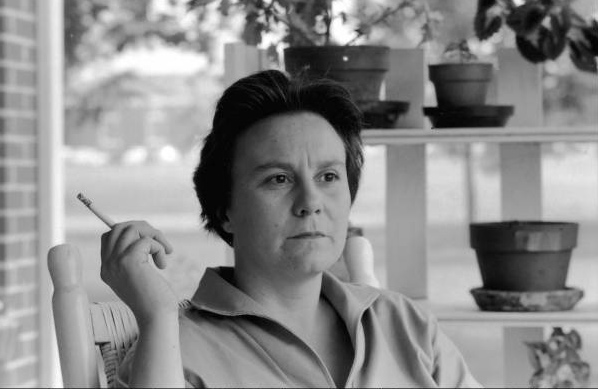
 On May 4, 1961, Harper Lee won the Pulitzer Prize for Fiction for what turned out to be her only novel and an enduring American classic, To Kill a Mockingbird. A captivating tale of racism in a small southern town based on her own, the book was made into a hit film the next year starring Gregory Peck as determined lawyer and single parent Atticus Finch, garnering eight Oscar nominations and three wins, including one for Peck for Best Actor. As famous as the book and film are, very little is known about Lee, who has not given an interview since 1964 and is rarely seen in public. In Hey, Boo: Harper Lee and To Kill a Mockingbird, documentarian Mary McDonagh Murphy sets out to uncover the story behind this mysterious figure. She speaks with Lee’s ninety-nine-year-old sister, Alice; actress Mary Badham, who played Scout in the movie; and Joy and Michael Brown, who helped Lee afford to quit her job as an airline reservation agent so she could concentrate on her book back in the late 1950s. Although they lend insight into Lee’s character and the creation of To Kill a Mockingbird, the rest of Hey, Boo consists primarily of a series of talking heads discussing what the book means to them, coming off more like a PBS special than a feature-length theatrical documentary. Murphy, who has indeed spent most of her career making television documentaries (for PBS, CNBC, and CBS), speaks with Oprah Winfrey, Tom Brokaw, Wally Lamb, Andrew Young, Rosanne Cash, Scott Turow, Richard Russo, James McBride, Anna Quindlen, Allan Gurganus, and other writers, historians, and public figures who discuss various aspects of the book, but it’s mostly filling the time the director — and the viewer — would have rather spent with Lee herself, who declined to participate. Murphy does play excerpts from the 1964 radio interview and reveals interesting tidbits about the editing process Lee and the novel went through, but there’s just not enough new information to sustain the film’s already-brief eighty-two minutes. You’re better off reading the novel again — or for the first time — if you really want to delve into its many wonders.