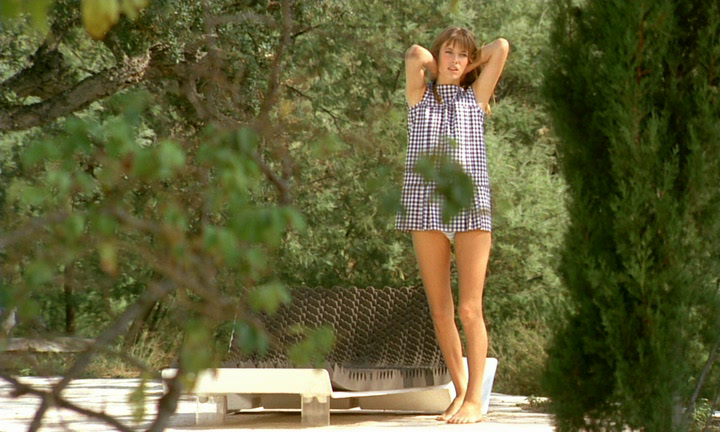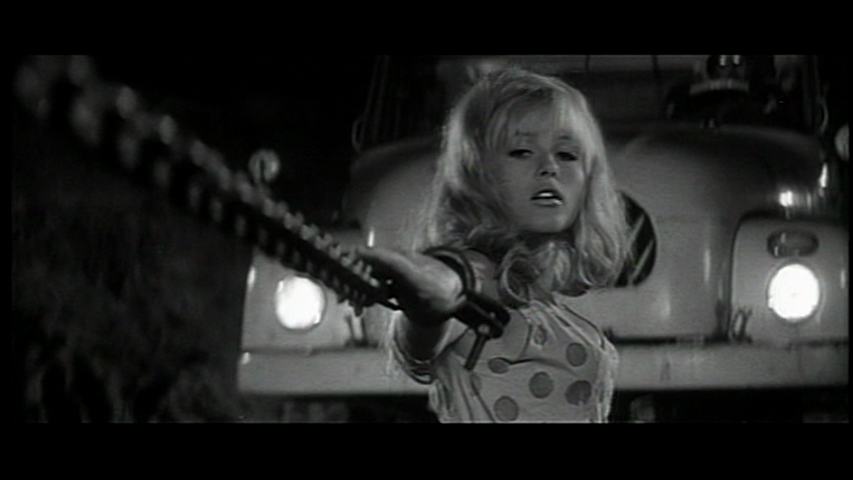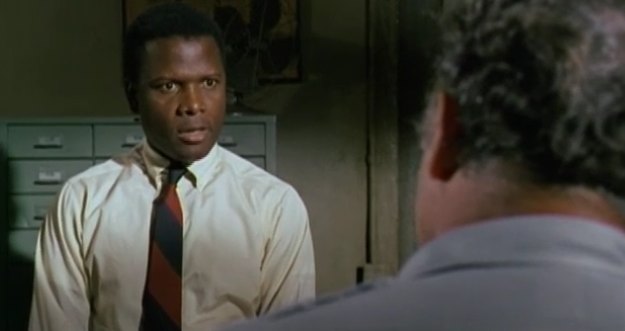
Jacques Deray’s THE SWIMMING POOL appropriately kicks off the Films on the Green series June 3 in Central Park
In general, all of the below film screenings begin around sunset, but you have to show up a lot earlier to grab a prime spot. For the River to River Movies on the Elevated Acre, free tickets are given out beginning at 6:00, and shorts precede the main feature. For the extremely popular HBO Bryant Park Summer Film Festival, the gravel section opens at 4:00, while the lawn opens at 5:00. Doors open for the Intrepid Summer Movie Series at 7:30. Live music at 6:00 kicks off Movies with a View in Brooklyn Bridge Park. Most of the events sponsored by Rooftop Films require a paid ticket, but they will be hosting several free shows as well this summer. Hudson River Park’s Wednesday River Flicks for Grown-ups moves to the Pier 63 Lawn, while the Friday River Flicks for Kids remains at Pier 46. Socrates Sculpture Park in Long Island City pairs international films with regional cuisine and live music and dance for its Outdoor Cinema series. Films on the Green, which celebrates French cinema, will be held at different locations throughout June and July. Please visit the respective websites for more specific information. And EPIX will be sponsoring weekly screenings in four city parks throughout the summer.
Friday, May 27
Intrepid Summer Movie Series — Heroes of the Big Screen: Top Gun (Tony Scott, 1986), Pier 86, 12th Ave. at 46th St.
Friday, June 3
Films on the Green — Summer Vacation: The Swimming Pool (La Piscine) (Jacques Deray, 1969), Cedar Hill, Central Park
Thursday, June 9
Rooftop Films: Battle for Brooklyn (Michael Galinsky, Suki Hawley, and David Beilinson, 2011), Myrtle Ave. Hill, Fort Greene Park, 9:00
Friday, June 10
Films on the Green — Summer Vacation: Those Happy Days (Nos Jours Heureux) (Olivier Nakache & Eric Toledano, 2006), Washington Square Park
Friday, June 17
Films on the Green — Summer Vacation: A Summer’s Tale (Conte d’été) (Eric Rohmer, 1996), Washington Square Park
Monday, June 20
HBO Bryant Park Summer Film Festival: One Flew Over the Cuckoo’s Nest (Milos Forman, 1975), Bryant Park lawn
Movie Nights on the Elevated Acre: Desperately Seeking Susan (Susan Seidelman, 1985), preceded by shorts by Marie Losier, 55 Water St., free tickets required
Friday, June 24
Intrepid Summer Movie Series — Heroes of the Big Screen: Spider-Man (Sam Raimi, 2002), Pier 86, 12th Ave. at 46th St.
Films on the Green — Summer Vacation: Contempt (Le Mépris) (Jean-Luc Godard, 1963), Tompkins Square Park
Saturday, June 25Outdoor Summer Movie Series: Iron Man 2 (Jon Favreau, 2010), Roosevelt Island
Monday, June 27
HBO Bryant Park Summer Film Festival: The 39 Steps (Alfred Hitchcock, 1935), Bryant Park lawn
Movie Nights on the Elevated Acre: The Godfather Part II (Francis Ford Coppola, 1974), preceded by shorts by Maria Niro Waiting, 55 Water St., free tickets required
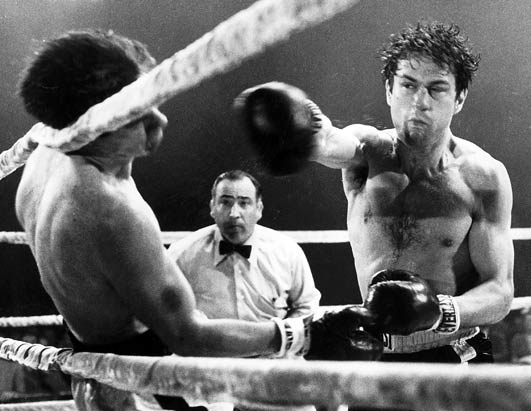
Martin Scorsese’s bruising RAGING BULL screens June 30 in Tompkins Square Park
Thursday, June 30
EPIX Movie Free-for-All: Raging Bull (Martin Scorsese, 1980), Tompkins Square Park
Friday, July 1
Films on the Green — Summer Vacation: Mr. Hulot’s Holiday (Les Vacances de Monsieur Hulot) (Jacques Tati, 1953), Tompkins Square Park
Monday, July 4
HBO Bryant Park Summer Film Festival: Easy Rider (Dennis Hopper, 1969), Bryant Park lawn
Wednesday, July 6
Summer of Music: Harlem Outdoor Music and Screening Series, with music by DJ Laylo & Eli Efi and screening of Jamel Shabazz: Street Photographer (Charlie Ahearn, 2011), Marcus Garvey Park, 7:00
River Flicks — Wednesdays for Grown-ups: The Social Network (David Fincher, 2010), Hudson River Park, Pier 63 lawn, West 23rd St.
EPIX Movie Free-for-All: Friday (F. Gary Gray, 1995), McCarren Park
Outdoor Cinema: Celebrating the Cultural Diversity of Queens, Socrates Sculpture Park, with regional cuisine and live music and dance
Thursday, July 7
Movies with a View: Manhattan (Woody Allen, 1979, Pier 1, Harbor View Lawn, Brooklyn Bridge Park, live music at 6:00, short by Jessica Edward, with DJ Emch
EPIX Movie Free-for-All: Coming to America (John Landis, 1988), Tompkins Square Park
Friday, July 8
Passport Fridays: Ecuador, with dance by Ayezamana, music by Sal y Mileto, and screening of Prometeo Deportado (Fernando Mieles, 2010), Queens Museum, Flushing Meadows Corona Park, 6:30
River Flicks — Fridays for Kids: The Karate Kid (Harald Zwart, 2010), Hudson River Park, Pier 63 lawn, West 23rd St.
Films on the Green — Summer Vacation: Towards Zero (L’ Heure Zéro), Pascal Thomas, 2007), Riverside Park
Saturday, July 9
Outdoor Summer Movie Series: The Goonies (Richard Donner, 1985), Roosevelt Island
Monday, July 11
HBO Bryant Park Summer Film Festival: Gentlemen Prefer Blondes (Howard Hawks, 1953), Bryant Park lawn
Movie Nights on the Elevated Acre: The Brother from Another Planet (John Sayles, 1984), preceded by shorts by Henry Hills, 55 Water St., free tickets required, 8:00
EPIX Movie Free-for-All: Saturday Night Fever (John Badham, 1977), Luna Park, Coney Island
Tuesday, July 12
Red Hook Summer Movies: Men in Black (Barry Sonnenfeld, 1997), Valentino Pier
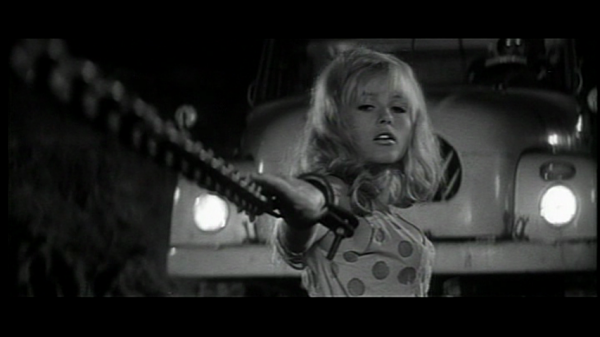
Václav Vorlícek’s 1966 flick WHO WANTS TO KILL JESSIE gets a rare screening on July 13 at Socrates Sculpture Park
Wednesday, July 13
River Flicks — Wednesdays for Grown-ups: Easy A (Will Gluck, 2010), Hudson River Park, Pier 63 lawn, West 23rd St.
Summer on the Hudson Movies Under the Stars — Terror Through the Decades: The Invisible Man (James Whale, 1933), Pier 1, Riverside Park at 70th St.
EPIX Movie Free-for-All: Wayne’s World (Penelope Spheeris, 1992), McCarren Park
EPIX Movie Free-for-All: Who Wants to Kill Jessie (Václav Vorlícek, 1966), Socrates Sculpture Park
Thursday, July 14
Movies with a View: Ghostbusters (Ivan Reitman, 1984), Pier 1, Harbor View Lawn, Brooklyn Bridge Park, live music at 6:00, Das Racist short by Thomas De Napoli, with DJ Ming
Summer Starz: Megamind (Tom McGrath, 2010), East River State Park
EPIX Movie Free-for-All: The Warriors (Walter Hill, 1979), Tompkins Square Park
Friday, July 15
Passport Fridays: Africa, with dance and music by Ballet African International and screening of Africa United (Debs Gardner-Paterson, 2010), Queens Museum, 6:30
River Flicks — Fridays for Kids: Despicable Me (Pierre Coffin & Chris Renaud, 2010), Hudson River Park, Pier 63 lawn, West 23rd St.
Bronx Museum of the Arts First Fridays! African Film Festival: All I Wanna Do (Michelle Medina, 2010) and Bongo Barbershop (Charlie Ahearn, 2005), Joyce Kilmer Park, Grand Concourse
Films on the Green — Summer Vacation: My Father’s Glory (La Gloire de Mon Père) (Yves Robert, 1990), Riverside Park
Movies Under the Stars: Antz (Eric Darnell & Tim Johnson, 1998), Snug Harbor Cultural Center and Botanical Garden
Monday, July 18
HBO Bryant Park Summer Film Festival: In the Heat of the Night (Norman Jewison, 1967), Bryant Park lawn
EPIX Movie Free-for-All: Rango (Gore Verbinski, 2011), Luna Park, Coney Island
Tuesday, July 19
Red Hook Summer Movies: Bring It On (Peyton Reed, 2010), Valentino Pier
Wednesday, July 20
River Flicks — Wednesdays for Grown-ups: The Kids Are All Right (Lisa Cholodenko, 2010, Hudson River Park, Pier 63 lawn, West 23rd St.
Summer on the Hudson Movies Under the Stars — Terror Through the Decades: Invasion of the Body Snatchers (Don Siegel, 1956), Pier 1, Riverside Park at 70th St.
EPIX Movie Free-for-All: Caramel (Nadine Labaki, 2007), Socrates Sculpture Park
EPIX Movie Free-for-All: Ghost World (Terry Zwigoff, 2001), McCarren Park
Thursday, July 21
Reel Harlem Historic Harlem Parks Film Festival: live music by Abby Dobson at 7:30, followed by Night Catches Us (Tanya Hamilton, 2010) at 8:30, St. Nicholas Park
Movies with a View: Sweet Smell of Success (Alexander Mackendrick, 1957), Pier 1, Harbor View Lawn, Brooklyn Bridge Park, live music at 6:00, short by Felix Massie, with DJ April White
Summer Starz: Free Willy (Simon Wincer, 1993), East River State Park
EPIX Movie Free-for-All / Outdoor Cinema: Star Trek (J. J. Abrams, 2009), Tompkins Square Park
Friday, July 22
Passport Fridays: Haiti, with dance by the Legros Cultural Arts Dance Project, music by Jocelyne Dorismé, and screening of Children of Haiti (Alexandria Hammond, 2010), Queens Museum, Flushing Meadows Corona Park, 6:30
River Flicks — Fridays for Kids: The Princess Bride (Rob Reiner, 1987), Hudson River Park, Pier 63 lawn, West 23rd St.
Movies Under the Stars: Singin’ in the Rain (Gene Kelly & Stanley Donen, 1952), Snug Harbor Cultural Center and Botanical Garden
Saturday, July 23
Outdoor Summer Movie Series: Star Trek (J. J. Abrams, 2009), Roosevelt Island
Monday, July 25
HBO Bryant Park Summer Film Festival: The Lady Eve (Preston Sturges, 1941), Bryant Park lawn
EPIX Movie Free-for-All: Top Gun (Tony Scott, 1986), Luna Park, Coney Island
Tuesday, July 26
Red Hook Summer Movies: Lords of Dogtown (Catherine Hardwicke, 2005), Valentino Pier
Wednesday, July 27
Summer on the Hudson Movies Under the Stars — Terror Through the Decades: The Birds (Alfred Hitchcock, 1963), Pier 1, Riverside Park at 70th St.
EPIX Movie Free-for-All: The Good, the Bad, the Weird (Kim Jee-woon, 2008), Socrates Sculpture Park
EPIX Movie Free-for-All: Ferris Bueller’s Day Off (John Hughes, 1986), McCarren Park
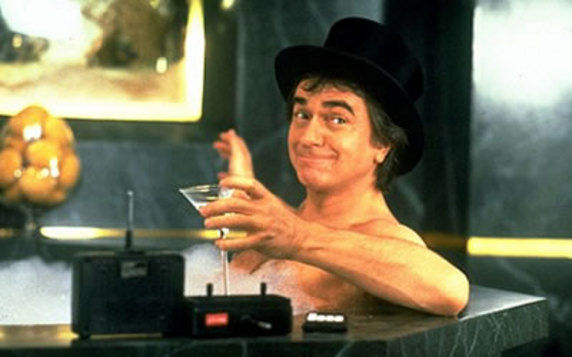
Forget the sequel and the remake — the original ARTHUR will be screening July 27 in Tompkins Square Park
Wednesday, July 27
Reel Harlem Historic Harlem Parks Film Festival: live music by DJ Cool Gee at 7:30, followed by Gasland (Josh Fox, 2010) at 8:30, West Harlem Piers Park
River Flicks — Wednesdays for Grown-ups: The Other Guys (Adam McKay, 2010), Hudson River Park, Pier 63 lawn, West 23rd St.
EPIX Movie Free-for-All / Outdoor Cinema: Arthur (Steve Gordon, 1981), Tompkins Square Park
Thursday, July 28
Reel Harlem Historic Harlem Parks Film Festival: live music by DJ Cool Gee at 7:30, followed by What’s on Your Plate? (Catherine Gune, 2009) at 8:30, West Harlem Piers Park
Movies with a View: Basquiat (Julian Schnabel, 1996), Pier 1, Harbor View Lawn, Brooklyn Bridge Park, live music at 6:00, short by Bill Brand, with DJ David Last
Summer Starz: Mary Poppins (Robert Stevenson, 1964), East River State Park
Friday, July 29
Passport Fridays: Taiwan, with dance by H. T. Chen & Dancers, music by Drum Spirit of China, and screening of Kung Fu Dunk (Gōngfū Guànlán) (Yen-ping Chu, 2008), Queens Museum, Flushing Meadows Corona Park, 6:30
River Flicks — Fridays for Kids: Toy Story 3 (Lee Unkrich, 2010), Hudson River Park, Pier 63 lawn, West 23rd St.
Movies Under the Stars: Moonstruck (Norman Jewison, 1987), Snug Harbor Cultural Center and Botanical Garden
Monday, August 1
HBO Bryant Park Summer Film Festival: Cool Hand Luke (Stuart Rosenberg, 1967), Bryant Park lawn
EPIX Movie Free-for-All: Iron Man 2 (Jon Favreau, 2010), Luna Park, Coney Island
Tuesday, August 2
Red Hook Summer Movies: WALL-E (Andrew Stanton, 2008), Valentino Pier
Wednesday, August 3
River Flicks — Wednesdays for Grown-ups: The Fighter (David O. Russell, 2010), Hudson River Park, Pier 63 lawn, West 23rd St.
Canceled: EPIX Movie Free-for-All / Outdoor Cinema: The Straight Story (David Lynch, 1999), Socrates Sculpture Park
EPIX Movie Free-for-All: Clueless (Amy Heckerling, 1995), McCarren Park
Summer on the Hudson Movies Under the Stars — Terror Through the Decades: Attack of the Killer Tomatoes! (John De Bello, 1978), Pier 1, Riverside Park at 70th St.
Thursday, August 4
Movies with a View: An American Tail (Don Bluth, 1986), Pier 1, Harbor View Lawn, Brooklyn Bridge Park, live music at 6:00, short by Felix Massie, with DJ David Last
Summer Starz: How to Train Your Dragon (Chris Sanders & Dean DeBlois, 2010), East River State Park
EPIX Movie Free-for-All: The Pope of Greenwich Village (Stuart Rosenberg, 1984), Tompkins Square Park
Friday, August 5
Passport Fridays: Dominican Republic, with dance by Ballet Folklorico Group of the Father Billini Association, music by Chepe & su conjunto tipico, and screening of Sugar (Anna Boden & Ryan Fleck, 2009), Queens Museum, Flushing Meadows Corona Park, 6:30
River Flicks — Fridays for Kids: How to Train Your Dragon (Dean DeBlois & Chris Sanders, 2010), Hudson River Park, Pier 63 lawn, West 23rd St.
Saturday, August 6
Outdoor Summer Movie Series: Up (Pete Docter & Bob Peterson, 2009), Roosevelt Island
Movies Under the Stars: Mars Attacks! (Tim Burton, 1996), Snug Harbor Cultural Center and Botanical Garden
Monday, August 8
HBO Bryant Park Summer Film Festival: Airplane! (Jim Abrahams & Jerry Zucker, 1980), Bryant Park lawn
EPIX Movie Free-for-All: Annie Hall (Woody Allen, 1977), Luna Park, Coney Island
Tuesday, August 9
Red Hook Summer Movies: The Karate Kid (John G. Avildsen, 1984), Valentino Pier

Michal Marczak’s AT THE EDGE OF RUSSIA will have a special screening August 10 at Socrates Sculpture Park
Wednesday, August 10
River Flicks — Wednesdays for Grown-ups: Scott Pilgrim vs. the World (Edgar Wright, 2010), Hudson River Park, Pier 63 lawn, West 23rd St.
Summer on the Hudson Movies Under the Stars — Terror Through the Decades: The Return of Swamp Thing (Jim Wynorski, 1989), Pier 1, Riverside Park at 70th St.
Rooftop Films / EPIX Movie Free-for-All / Outdoor Cinema: At the Edge of Russia (Michal Marczak, 2010), Socrates Sculpture Park, live music at 7:00, postscreening Q&A with the director
EPIX Movie Free-for-All: Jurassic Park (Steven Spielberg, 1993), McCarren Park
Thursday, August 11
Movies with a View: Breakfast at Tiffany’s (Blake Edwards, 1961), Pier 1, Harbor View Lawn, Brooklyn Bridge Park, live music at 6:00, short by Albert and David Maysles, with DJ April White
Summer Starz: Diary of a Wimpy Kid (Thor Freudenthal, 2010), East River State Park
EPIX Movie Free-for-All: Kick-Ass (Matthew Vaughn, 2010), Tompkins Square Park
Friday, August 12
Passport Fridays: Egypt, with dance and music by Zikrayat and screening of Heliopolis (Ahmad Abdalla, 2009), Queens Museum, Flushing Meadows Corona Park, 6:30
River Flicks — Fridays for Kids: Shrek Forever After (Mike Mitchell, 2010), Hudson River Park, Pier 63 lawn, West 23rd St.
Sunday, August 14
Outdoor Summer Movie Series: Tron: Legacy (Joseph Kosinski, 2010), Roosevelt Island
Monday, August 15
HBO Bryant Park Summer Film Festival: High Sierra (Raoul Walsh, 1941), Bryant Park lawn
EPIX Movie Free-for-All: Moonstruck (Norman Jewison, 1987), Luna Park, Coney Island
Tuesday, August 16
Red Hook Summer Movies: The Fast and the Furious (Rob Cohen, 2001), Valentino Pier
Wednesday, August 17
River Flicks — Wednesdays for Grown-ups: The Town (Ben Affleck, 2010), Hudson River Park, Pier 63 lawn, West 23rd St.
Summer on the Hudson Movies Under the Stars — Terror Through the Decades: Mars Attacks (Tim Burton, 1996), Pier 1, Riverside Park at 70th St.
EPIX Movie Free-for-All / Outdoor Cinema: Biutiful (Alejandro González Iñárritu, 2010), Socrates Sculpture Park
Thursday, August 18
Movies with a View: Crooklyn (Spike Lee, 1994), Pier 1, Harbor View Lawn, Brooklyn Bridge Park, live music at 6:00, short by A. Sayeeda Clarke, with DJ Emch
Summer Starz: Toy Story 3 (Lee Unkrich, 2010), East River State Park
EPIX Movie Free-for-All: Rosemary’s Baby (Roman Polanski, 1968), Tompkins Square Park
Friday, August 19
Passport Fridays: Colombia, with dance by Estampas Negras, music by Pablo Mayor & Ensemble, and screening of The Accordion Kings (Alan Tomlinson, 2008), Queens Museum, Flushing Meadows Corona Park, 6:30
River Flicks — Fridays for Kids: Tangled (Nathan Greno & Byron Howard, 2010), Hudson River Park, Pier 63 lawn, West 23rd St.
Saturday, August 20
Asian American International Film Festival: Never Stop Believing shorts program, Big Screen Plaza, 851 Sixth Ave. between 29th & 30th Sts., 5:00
HarlemWeek ImageNation Outdoor Film Festival: Stormy Weather (Andrew L. Stone, 1943) and Rubber Soles (Christine Turner, 2005), St. Nicholas Park
Summer Movie Nights: 2001: A Space Odyssey (Stanley Kubrick, 1968), Big Screen Plaza, 851 Sixth Ave. between 29th & 30th Sts.
Monday, August 22
HBO Bryant Park Summer Film Festival: Dirty Harry (Don Siegel, 1971), Bryant Park lawn
EPIX Movie Free-for-All: Justin Bieber: Never Say Never (Jon M. Chu, 2011), Luna Park, Coney Island
New York International Latino Film Festival — Cinema Under the Stars: To Be Heard (Roland Legiardi-Laura, Edwin Martinez, Deborah Shaffer & Amy Sultan, 2010), St. Nicholas Park
Tuesday, August 23
Red Hook Summer Movies: The Iron Giant (Brad Bird, 1999), Valentino Pier
Summer Movie Nights: E.T.: The Extra-Terrestrial (Steven Spielberg, 1982), Big Screen Plaza, 851 Sixth Ave. between 29th & 30th Sts.
Central Park Conservancy Film Festival: El Cantante (Leon Ichaso, 2006), Sheep Meadow, Central Park
Wednesday, August 24
Central Park Conservancy Film Festival: Bird (Clint Eastwood, 1988), Sheep Meadow, Central Park
Outdoor Cinema: Celebrating the Cultural Diversity of Queens, Silent Film Festival, Socrates Sculpture Park, with regional cuisine and live music and dance
Thursday, August 25
Movies with a View: Rosemary’s Baby (Roman Polanski, 1968), Pier 1, Harbor View Lawn, Brooklyn Bridge Park, live music at 6:00, short by Don Hertzfeldt, with DJ Ming
EPIX Movie Free-for-All: The Godfather (Francis Ford Coppola, 1972), Tompkins Square Park
Central Park Conservancy Film Festival: Dreamgirls (Bill Condon, 2006), Sheep Meadow, Central Park
Solar-Powered Film Series: An Evening with Matthew Modine, Solar One, East 23rd St. & FDR Dr., 8:00
Friday, August 26
Passport Fridays: Venezuela, with music by Los crema paraiso and Big Mandrake! and screening of Libertador Morales, el justiero (Efterpi Charalambidis, 2009), Queens Museum, Flushing Meadows Corona Park, 6:30
KidFlix: The Wiz (Sidney Lumet, 1978), preceded by Dance Like Michael workshop with Aamir Smith, Fulton Park, 7:00
Summer Movie Nights: True Grit (Joel & Ethan Coen, 2010), St. Joseph Parish Schoolyard, 43-19 30th Ave., Astoria, free BBQ at 7:00
Central Park Conservancy Film Festival: Shine a Light (Martin Scorsese, 2008), Sheep Meadow, Central Park
Solar-Powered Film Series: Dirty Business (Peter Bull, 2010), Solar One, East 23rd St. & FDR Dr., 8:00
Saturday, August 27
HarlemWeek ImageNation Outdoor Film Festival: Michael Jackson This Is It! (Kenny Ortega, 2009) and Say It Loud (Jason Scott Jones), St. Nicholas Park
Summer Movie Nights: Close Encounters of the Third Kind (Steven Spielberg, 1977), Big Screen Plaza, 851 Sixth Ave. between 29th & 30th Sts.
Central Park Conservancy Film Festival Viewers’ Choice: A Star Is Born (Frank Pierson, 1976), Sheep Meadow, Central Park
Solar-Powered Film Series: Home (Yann Arthus-Bertrand, 2010), Solar One, East 23rd St. & FDR Dr., 8:00
Monday, August 29
Vienna Music Film Festival, Pier 1, Harbor View Lawn, Brooklyn Bridge Park, 7:00
EPIX Movie Free-for-All: How She Move (Ian Iqbal Rashid, 2007), Luna Park, Coney Island
Tuesday, August 30
Red Hook Summer Movies: Pump Up the Volume (Allan Moyle, 1990), Valentino Pier
Movies Under the Bridge: Despicable Me (Pierre Coffin & Chris Renaud, 2010), Little Bay Park
Summer Movie Nights: Viewers Choice, Big Screen Plaza, 851 Sixth Ave. between 29th & 30th Sts.
Wednesday, August 31
Parks’ Outdoor Summer Movies: Toy Story 3 (Lee Unkrich, 2010), Betsy Head Memorial Playground
Rescheduled: EPIX Movie Free-for-All / Outdoor Cinema: The Straight Story (David Lynch, 1999), with live performance by the Lo Frequency, Socrates Sculpture Park
Thursday, September 1
Movies with a View: Public Vote winner — Crooklyn (Spike Lee, 1994), Pier 1, Harbor View Lawn, Brooklyn Bridge Park, live music at 6:00
EPIX Movie Free-for-All: Stake Land (Jim Mickle, 2010), Tompkins Square Park
Parks’ Outdoor Summer Movies: How to Train Your Dragon (Chris Sanders & Dean DeBlois, 2010), St. Mary’s Park
Friday, September 2
Summer Movie Nights: Invictus (Clint Eastwood, 2009), St. Joseph Parish Schoolyard, 43-19 30th Ave., Astoria, free BBQ at 7:00
Saturday, September 3
Outdoor Summer Movie Series: The Incredibles (Brad Bird, 2004), Roosevelt Island
Tuesday, September 6
Red Hook Summer Movies: Highlander (Russell Mulcahy, 1986), Valentino Pier
Thursday, September 8
Films on the Green @Columbia University: Two Days in Paris (Deux Jours à Paris) (Julie Delpy, 2007), Low Library Steps
Sunday, September 11
ImageNation at the Sundae Sermon: Mooz-Lum (Qasim “Q” Basir, 2010), Morningside Park, 3:00
Tuesday, September 13
Red Hook Summer Movies: Pee-Wee’s Big Adventure (Tim Burton, 1985), Valentino Pier
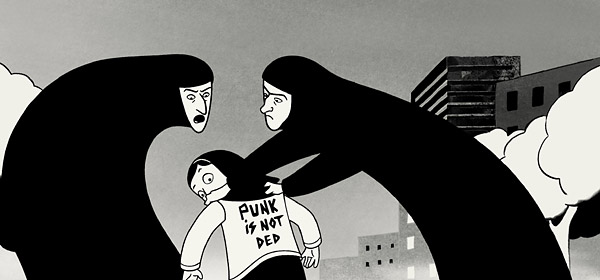
 France’s official selection for the 2007 Academy Awards, Persepolis brings to animated life Marjane Satrapi’s stunning graphic novels. Codirected by Satrapi and comic-book artist Vincent Paronnaud, Persepolis tells Satrapi’s harrowing life story as she comes of age during the Islamic Revolution in Iran in the late 1970s and early 1980s. Raised in a well-off activist family, she fights against many of the country’s crippling mores and laws, particularly those that treat women as second-class citizens, trapping them in their veils, denying them any kind of individual freedom. But the progressive Satrapi (voiced first by Gabrielle Lopes, then Chiara Mastroianni) continually gets into trouble as she speaks her mind, experiments with sex, and refuses to play by her country’s repressive rules. Satrapi and Paronnaud do an outstanding job of adapting the books’ black-and-white panels for the big screen, maintaining her unique style and emotional breadth. The first part of the film is excellent as the precocious teenager who talks to God learns about life in some very harsh ways. Unfortunately, the second half gets bogged down in Satrapi’s failures as an adult, focusing too much on her myriad personal problems and taking away the bigger picture that made the first part so entertaining as well as educational. Still, it’s a story worth telling, and well worth seeing. (Interestingly, since the film, which is in French, is subtitled in English, the audience ends up reading it similarly to the way they read the graphic novel.) The closing-night selection of the 2007 New York Film Festival, Persepolis also features the voices of Catherine Deneuve as Marjane’s mother, Danielle Darrieux as her grandmother, Simon Akbarian as her father, and François Jerosme as her radical uncle Anouche. Persepolis is screening May 28-29 at 1:00 as part of the Museum of the Moving Image’s “Great Adaptations” series, which continues June 4-5 with Wes Anderson’s Fantastic Mr. Fox and June 11-12 with Alfonso Cuarón’s A Little Princess.
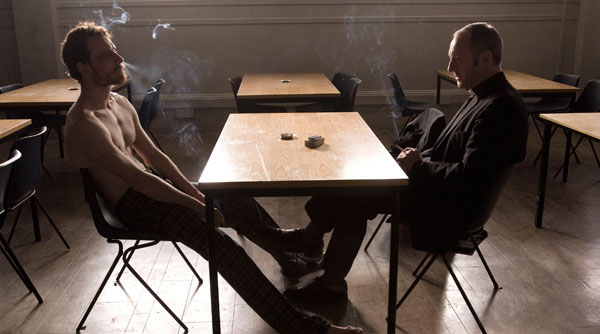
 In 2004, we saw Steve McQueen’s fascinating video installation of three short works at Wellesley’s Davis Museum. As entertaining and intriguing as that show was, it never could have prepared us for Hunger, the British-born Turner Prize winner’s brutal and harrowing feature-length debut. Winner of the Camera d’Or at Cannes, Hunger is set amid the Troubles in Northern Island, as IRA members are locked up in the Maze prison. Seeking special category status, the prisoners are on a Blanket and No Wash protest, refusing to wear official garb or clean up after themselves. They wipe their feces all over their cell walls and let their maggot-infested garbage pile up in corners. Meanwhile, the guards, who live in their own kind of daily fear, never miss a chance to beat the prisoners mercilessly. McQueen introduces the audience to the infamous prison through the eyes of one of the high-ranking guards, Raymond Lohan (Stuart Graham), and new prisoner Davey Gillen (Brian Milligan). He often lets the camera linger on a scene, with little or no dialogue, composing them as if individual works of art; one particularly gorgeous shot features Lohan having a cigarette outside the prison as snow falls. About halfway through, the film radically changes focus as Father Dominic Moran (Liam Cunningham) visits H Block leader Bobby Sands (Michael Fassbender), leading to sixteen minutes of uninterrupted dialogue, the camera never moving, as the two men discuss Sands’s planned hunger strike. Written with Enda Walsh, McQueen’s film is a visually stunning, emotionally powerful story that will leave audiences ragged.