Yoshimasa Ishibashi’s wild and wacky MILOCRORZE will open the tenth annual New York Asian Film Festival on July 1 and screen at Japan Cuts on July 10
MILOCRORZE: A LOVE STORY (Yoshimasa Ishibashi, 2011)
Film Society of Lincoln Center, Walter Reade Theater
165 West 65th St. at Amsterdam Ave.
Friday, July 1, $13, 9:00
Series runs July 1-14, ten-film pass $99
Japan Society
333 East 47th St. at First Ave.
Sunday, July 10, $12, 8:00
Series runs July 7-22, five-film pass $50
212-875-5601 / 212-715-1258
www.filmlinc.com
www.subwaycinemanews.com
www.japansociety.org/japancuts
 The North American premiere of the wild and wacky, genre-iffic Milocrorze: A Love Story kicks off the tenth anniversary of New York City’s most exciting annual film series, the New York Asian Film Festival, running July 1-14 at Lincoln Center. Melding Michel Gondry with Quentin Tarantino and Takashi Miike filtered through Max Ophüls’s La Ronde and Jean-Pierre Jeunet’s Amélie, longtime commercial, video, and television director Yoshimasa Ishibashi makes his feature-film cinematic debut with this highly stylized three-part tale of love and romance. In the first section, seven-year-old salaryman Ovreneli Vreneligare, wearing one of the most charming costumes and hairstyles ever put on celluloid, falls in love with the beautiful, and adult, Milocrorze (Maiko) in a candy-coated fantasyland of lush colors and dreamlike sets. That bittersweet tale leads into the second part, in which bizarre youth counselor Besson Kumagi (Takayuki Yamada) abusively screams relationship advice to lonely boys over the phone, then breaks out into self-celebratory dance numbers with a couple of hot babes, a sort of Japanese version of Andy Kaufman’s Tony Clifton character. That story segues into the violent, vengeful mini-epic of rogue samurai Tamon (Yamada again), who starts out as a simple man who falls in love with Yuri the flower girl (Ann Ishibashi) but is soon trying to rescue her from a high-priced gambling and prostitution ring. Ishibashi then circles back to Milocrorze and Ovreneli Vreneligare (Yamada yet again, in his third role) years later for the tender finale. Milocrorze is a vastly entertaining, wonderfully absurd, and utterly ridiculous (and we mean that in a good way) exercise in multiple genres from the endlessly inventive Ishibashi. The samurai section goes on way too long, but otherwise this is a rousing success from start to finish, even when it is making absolutely no sense, which is very often. Milocrorze is the opening-night selection of NYAFF 2011, and both Ishibashi and Yamada will be at Lincoln Center on July 1 to participate in a postscreening Q&A; prior to the screening, Yamada will receive the Star Asia Rising Star Award. The film is being presented in conjunction with Japan Cuts: The New York Festival of Contemporary Japanese Cinema, screening at Japan Society on July 10, followed by a Q&A with Ishibashi. Keep watching twi-ny for more reviews of select films from our two favorite film festivals of the year.
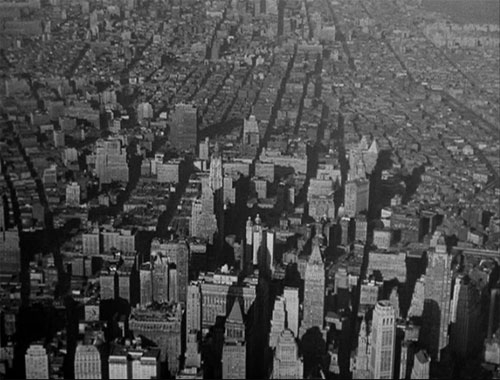
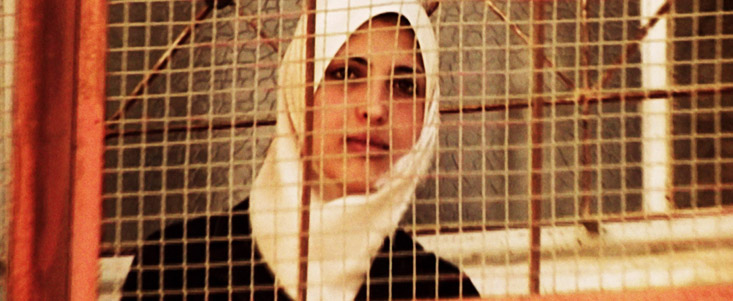

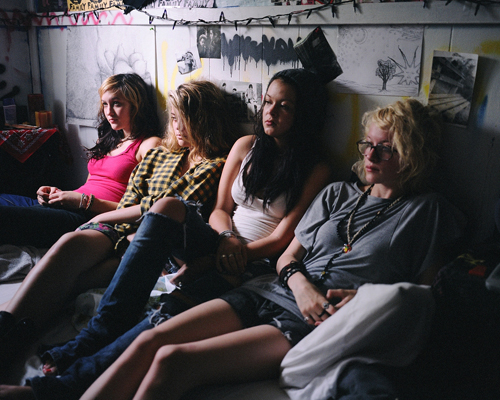
 The city of Baltimore has not exactly been depicted kindly in film and on television, with such series as Homicide: Life on the Street, The Wire, and The Corner: A Year in the Life of an Inner-City Neighborhood focusing on the rash of drugs and violence that have devastated the community, while native son John Waters has shown its wackier side in such films as Polyester and Hairspray. Born and raised in a suburb just inside the Baltimore city line, writer-director Matt Porterfield (Hamilton) has taken a different view in his second feature film, Putty Hill. When financing for his coming-of-age drama Metal Gods fell through, he decided to keep the cast and crew together and instead shoot a cinéma verité story about the after-effects of a young man’s drug overdose on a tight-knit community inspired by the one he grew up in. Not much is revealed about Cory as his funeral nears and life goes on, with his younger brother, Cody (Cody Ray), playing paintball with Cory’s friends; his uncle, Spike (Charles Sauers), tattooing customers in his apartment; and Spike’s daughter, Jenny (Sky Ferreira), returning to her hometown for the first time in several years and hanging out with her old friends like nothing much has changed. Working off a five-page treatment with only one line of scripted dialogue, Porterfield and cinematographer Jeremy Saulnier capture people just going on living, taking Cory’s death in stride; Porterfield interviews much of the cast, who share their thoughts and feelings in relatively unemotional ways. Shot on a minuscule budget in only twelve days, Putty Hill uses natural sound and light, nonprofessional actors, and real locations, enhancing its documentary-like feel, maintaining its understated narrative and avoiding any bombastic or sudden, big revelations. It’s a softly moving film, a tender tale about daily life in a contemporary American working-class neighborhood. Producer Steve Holmgren will participate in a Q&A at IndieScreen following the June 24 screening at 8:00, while editor Marc Vives will be on hand after the 6:00 show on June 25 to talk about the film.
 One of the most controversial films ever made, Stanley Kubrick’s A Clockwork Orange is a sociopolitical masterpiece that skewers everything in its path through the lens of ultraviolence. Malcolm McDowell stars as Alex DeLarge, our humble narrator and leader of the Droogs, a small gang that includes Georgie (James Marcus), Pete (Michael Tarn), and Dim (Warren Clarke), an oddly dressed quartet that rambles about town beating up all in their way. Following a particularly brutal home invasion, Alex finds himself in jail, soon to be part of a medical experiment to instill a Pavlovian fear of violence in criminals. The film consists of a series of marvelous vignettes that explore nothing less than the very nature of humanity itself, with sensational production design by John Barry and art direction by Russell Hagg and Peter Sheilds, each scene featuring bold colors and memorable sets. The intoxicating score ranges from Wendy Carlos’s original, ornate electronic music to Rossini’s “Thieving Magpie” and “William Tell Overture,” from Elgar’s “Pomp and Circumstance” to Alex’s favorite, Ludwig van’s “Ninth.” And you’ll never think of “Singin’ in the Rain” the same way ever again. Kubrick based A Clockwork Orange, which was banned in England for nearly thirty years, on the first twenty chapters of Anthony Burgess’s 1962 novel; the American publisher refused to include the final chapter, about Alex’s ultimate redemption, in the book, and Kubrick left it out of the film as well. (The last chapter wasn’t published in the United States until 1986.) A Clockwork Orange is a truly grand cinematic experience, a treat for the senses; just as Alex’s eyes are pried open to watch scenes of terrible violence, you’ll be unable to take yours off the screen as he does his damage. A Clockwork Orange is screening tonight at the Rubin Museum, concluding the Proverbial Pictureshow series, being held in conjunction with the Tibet carpet exhibit “Patterns of Life,” and will be introduced by cultural critic Mark Dery. Admission to the museum is free on Friday nights, so be sure to check out the other current exhibits as well, which include “Masterworks: Jewels of the Collection,” “Body Language,” and “Quentin Roosevelt’s China.”