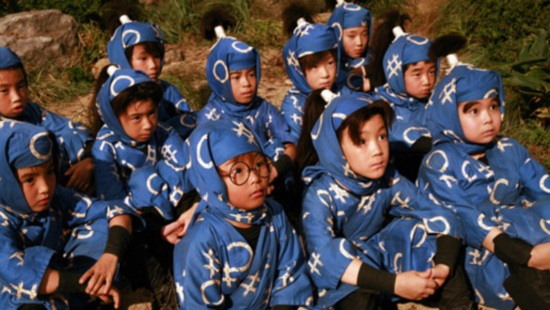
Takashi Miike’s NINJA KIDS!!! will have its world premiere in New York City on July 3
NINJA KIDS!!! (Takashi Miike, 2011)
Film Society of Lincoln Center, Walter Reade Theater
165 West 65th St. at Amsterdam Ave.
Sunday, July 3, $13, 7:00
NYAFF runs through July 14, Japan Cuts July 7-22
212-875-5601
www.filmlinc.com
www.subwaycinemanews.com
www.japansociety.org/japancuts
 Japanese director Takashi Miike might be most well known for such wild and crazy violence-filled works as Ichi the Killer, Audition, and the recent 13 Assassins, but among the ninety films he has made during his twenty-year career are a handful of kids movies, from the charming (Zebraman) and the fantastical (The Great Yokai War) to the overwrought (Yatterman) and now, with Ninja Kids!!!, to the relatively mundane. Based on the long-running Japanese children’s program Rantaro the Ninja Boy, which began in 1993 and is now approaching 1,500 episodes, Ninja Kids!!! follows the trials and tribulations of young Rantaro, played by Japanese child star Seishirô Katô (wearing oversized glasses that make him look like a cross between Poindexter and the Warner Bros. bookworm), who is sent off by his farmer parents to ninja school. There he encounters fellow students dripping snot and baby-sitting, a crazy master who continually challenges death, a teacher who is more like a drill sergeant, a big-headed villain who keeps falling over, an old woman who can change appearance at will, and other oddities as he trains to become the master ninja his father never was. The film is composed of a series of vignettes, some that work, many that don’t, but they never come together to form a cohesive narrative. The costumes are colorful and the hairstyles brilliant, but just as with Yatterman, the look of the film clearly trumps the story, which is disjointed and way too over the top, even though it’s supposed to be cartoonish. Ninja Kids!!! is having its world premiere July 3 at the Walter Reade Theater, a joint presentation of the New York Asian Film Festival and Japan Cuts: The New York Festival of Contemporary Japanese Cinema.
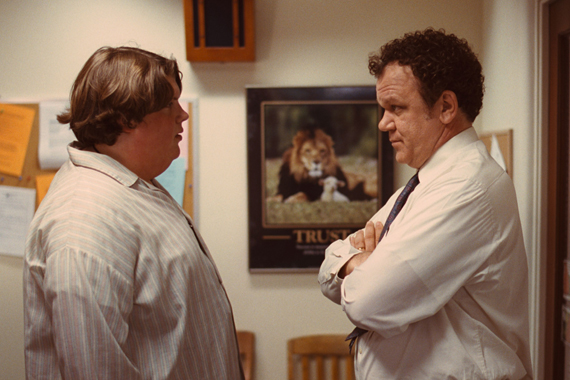
 Azazel Jacobs follows up the widely praised Momma’s Man, in which he cast his real-life parents (experimental filmmaker Ken Jacobs and painter Flo Jacobs) in a story about a married adult and new father (Matt Boren) who keeps extending a visi t to his ancestral home, with another idiosyncratic tale about growing up. Terri, adapted by Patrick deWitt from a series of his interrelated short stories, follows the trials and tribulations of the title teen, played with great subtlety by newcomer Jacob Wysocki. Terri is a grossly overweight kid who shows up late to school every morning wearing pajamas; lives with and takes care of his uncle (The Office’s Creed Bratton), who is in the early stages of Alzheimer’s; becomes obsessed with catching mice; and has a secret crush on high school cutie Heather (Olivia Crocicchia). When the vice principal, Mr. Fitzgerald (a wonderfully offbeat John C. Reilly), takes a personal interest in him, Terri is at first confused, but then seems okay with it, until he finds out that he is part of a group of deeply troubled teens that Mr. Fitzgerald meets with regularly, including such loser outcasts as Chad Markson (Bridger Zadina), who likes to pull out his own hair and say very inappropriate things at inopportune moments. They are soon joined by Heather, who was nearly expelled for allowing a boy to touch her during class and is now shunned by the cool clique. The unlikely threesome, along with Mr. Fitzgerald, who appears to mean well but can’t stop putting his foot in his mouth, exemplify the difficult teenage years as they come together, and break apart, over the course of this charming, eclectic film. As with Momma’s Man, Jacobs has faith in his narrative, eschewing grand statements and teen clichés in favor of a poignant and intelligent examination of adolescence that anyone can relate to, whether they were the teased or the teaser back in those tumultuous and torturous high school days.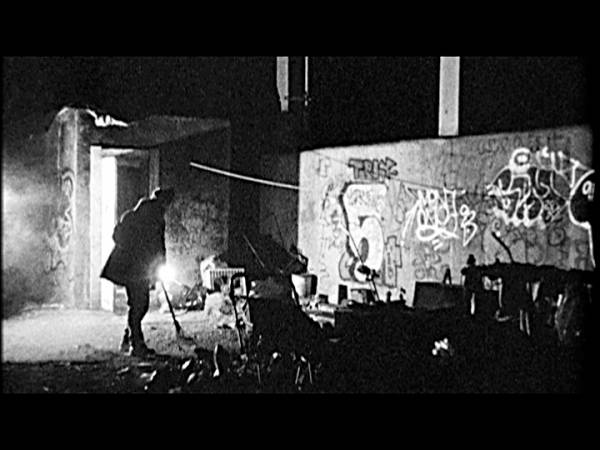
 The award-winning documentary Dark Days takes a frightening look at a community of homeless men and women — many of them former or current crack users — who live in the Amtrak tunnels beneath Penn Station. They sleep in tents, cardboard shacks, and small plywood shanties, some of which have been painted and decorated. As the belowground residents shave, cook, play with their pets, and take showers under leaking pipes, trains speed by, and rats scavenge through the countless mounds of garbage. At times some of the men venture aboveground (“up top”) to go through trash cans, mostly looking for recyclable bottles and junk items they can resell. First-time filmmaker Marc Singer became a part of this colony for two years (he initially went down to help the people, not to film them), getting the residents to open up and tell their fascinating stories, which turn out to be filled with a surprising zest for living. In fact, all of the underground shooting was completed with the help of the subjects themselves acting as the crew when they were not on camera. DJ Shadow composed the haunting music for this strangely enriching look at a mysterious, truly terrifying part of New York City. Dark Days celebrates its tenth anniversary with a theatrical run beginning July 1 at Cinema Village in advance of the July 19 release of the special-edition DVD, which includes featurettes on the making of the film, an update on many of the characters, Singer revisiting the tunnels, a photo essay by Margaret Morton, and more.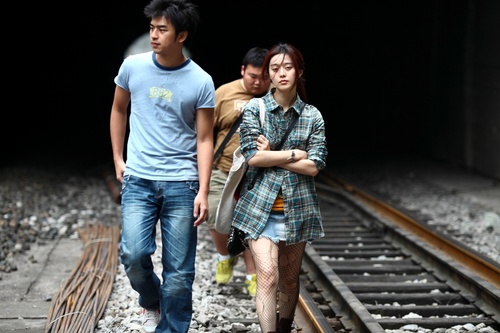
 Li Yu’s Buddha Mountain clocks in at 105 minutes, but the predictable, repetitive, and often ludicrous story of three disenchanted youths feels at least twice as long. When best friends Nan Feng (Fan Bingbing), Ding Bo (Wilson Chen), and Fatso (Fei Long) move in with Sylvia Chang (Chang Yueqin), an older woman having trouble dealing with a personal tragedy hinted at by a severely damaged car locked away in the garage, it is initially a bad match, as the teens like to hang out, sleep late, cause trouble, and show no consideration for others, while Master Chang sings opera at the break of day, enforces a laundry list of rules, and does not tolerate selfishness. Li (Lost in Beijing) fills Buddha Mountain with set pieces that feel like they are from different movies, trying to cram too much in; the journey to the title location is particularly forced. She also enjoys showing Nan, Ding, and Fatso walking down railroad tracks and standing atop moving trains, experiencing a freedom they have definitely not earned. But the biggest problem with Buddha Mountain is that it’s difficult to like or care about the four protagonists, so by the time they start appreciating one another, it’s too late. A veteran of numerous international fests, including Cannes, Tokyo, and Deauville Asian, the dreary Buddha Mountain will make its North American premiere July 3 & 5 at the New York Asian Film Festival at Lincoln Center. Keep watching twi-ny for more reviews from our favorite festival of the year.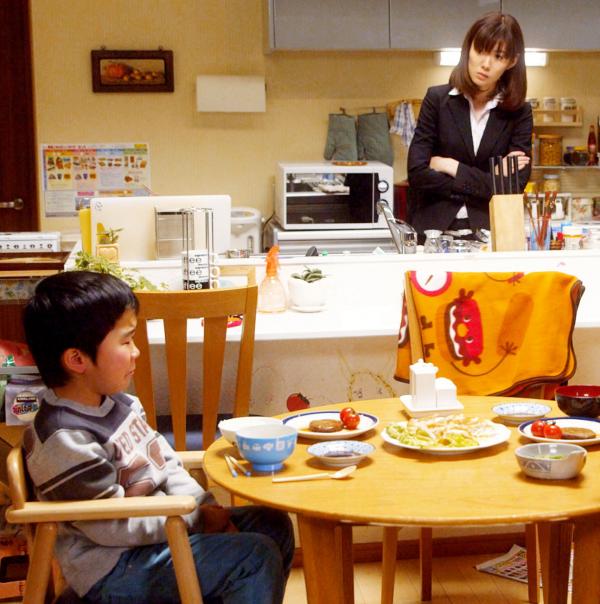
 Following audience favorites Fish Story in 2009 and last year’s Golden Slumber, Japanese director Yoshihiro Nakamura returns to the New York Asian Film Festival with the North American premiere of the often silly but mostly charming heartwarmer A Boy and His Samurai. Based on a manga by Gen Araki, the family-friendly film focuses on single mother Hiroko (Rie Tomosaka) and her young son, Tomoya (Fuku Suzuki), whose lives get turned upside down when Kijima Yasube (Ryo Nishikido) suddenly shows up, claiming to be a samurai from the Edo Period some 180 years ago. In exchange for food and lodging, Yasube helps around the house, doing the cooking and cleaning and looking after Tomoya while Hiroko is at work. When Yasube shows a knack for making amazing desserts, he puts down his sword in favor of a pastry knife, but trouble awaits this mild-mannered samurai. Yasube adapts a little too quickly to the modern world in this fish-out-of-water tale, but every time it threatens to become too conventional, taking the easy way out, Nakamura adds just enough twist and turns to keep it fresh. Tomosaka and Nishikido are fine in their fairly standard roles, but Suzuki is the real star as the cute kid excited to have a father figure around. A joint presentation of the NYAFF and Japan Cuts: The New York Festival of Contemporary Japanese Cinema, A Boy and His Samurai is screening July 3 at 12:30 and July 4 at 6:30 at the Walter Reade Theater at Lincoln Center.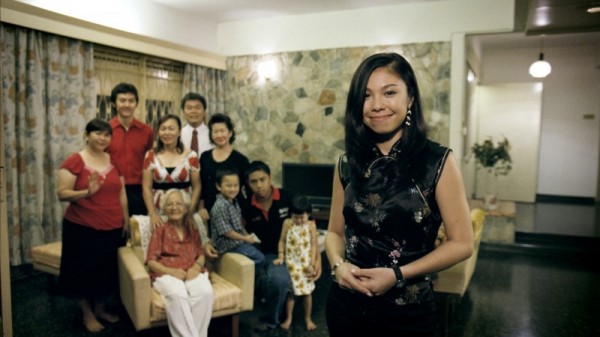
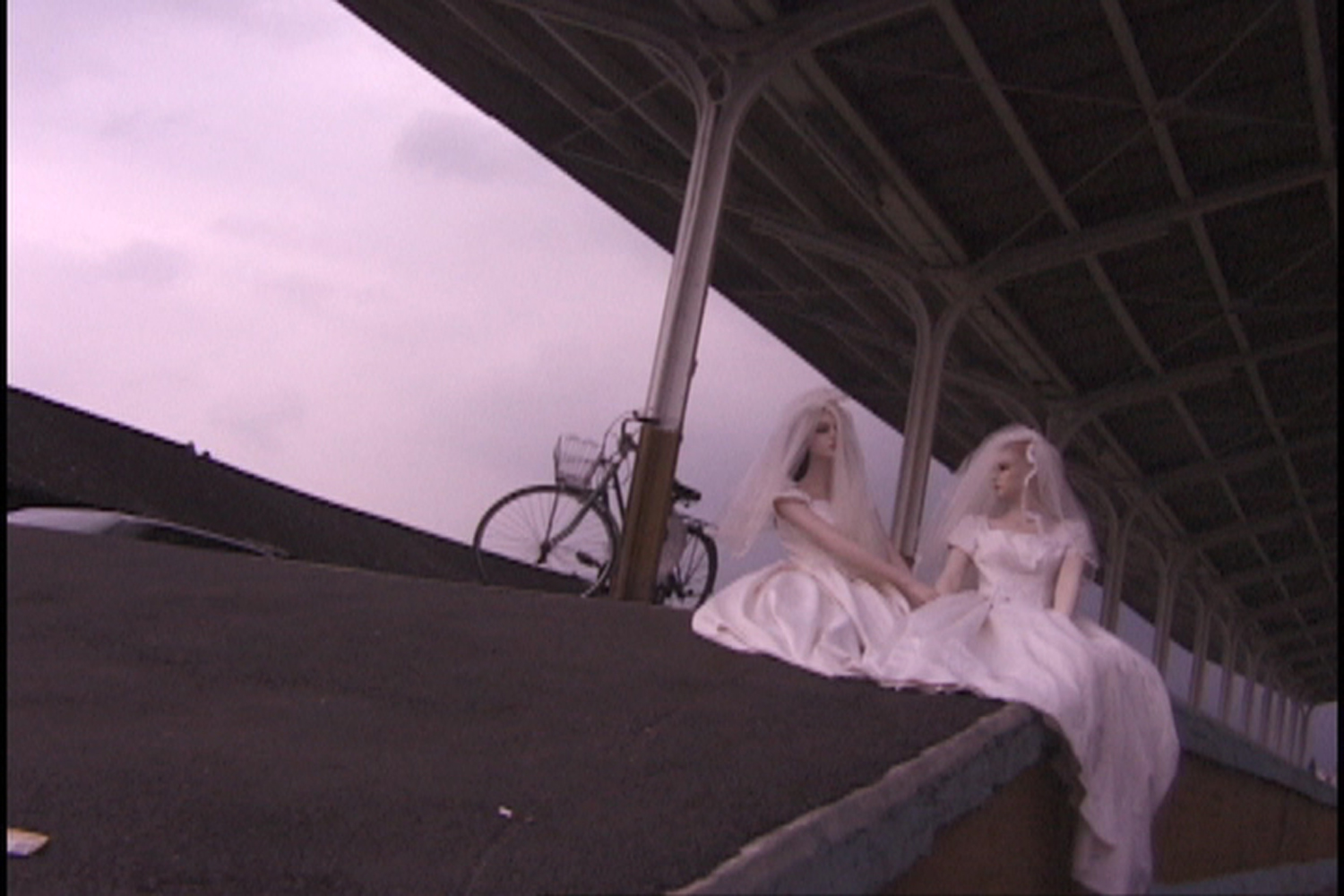
 “Breaking the Waves: The Films of Zero Chou,” the New York Public Library for the Performing Arts’ month-long tribute to Taiwan’s only openly lesbian filmmaker, Zero Chou, concludes June 30 at 6:30 with the intimate and deeply personal Corner’s.. Named Best Documentary at the 2002 Taipei Film Festival, Corner’s centers on a gay bar in Taipei where closeted homosexuals come to be free, revealing a side of themselves they are forced to hide in the outside world. Chou focuses on such characters as Simon, a financial manager who turns into the elegant Sophia, and a man known as the Empress, who hosts a major gay party at a five-star hotel, as she explores the hopes and dreams of a group of people who just want their own little piece of happiness. Chou takes her camera inside a public rest room as one gay man describes what goes on inside; she also occasionally cuts to a naked lesbian couple in the midst of heated erotic passion. The sixty-minute work is narrated by Chou’s longtime partner, photographer and producer Liu Hoho, who recites poetic text in French that poignantly relates to the difficulties of being gay in Taiwanese society but avoids becoming pedantic or overtly political. Like many of her fiction films and other documentaries, Corner’s celebrates the repressed gay subculture of Taiwan, showing the good with the bad but filled with an infectious spirit and love of life.