Andy Lau stars as Di Renjie in Tsui Hark's impressive DETECTIVE DEE AND THE MYSTERY OF THE PHANTOM FLAME
DETECTIVE DEE AND THE MYSTERY OF THE PHANTOM FLAME (DI RENJIE) (Tsui Hark, 2010)
Angelika Film Center
18 West Houston St. at Mercer St.
Opens Friday, September 2
212-995-2570
www.angelikafilmcenter.com
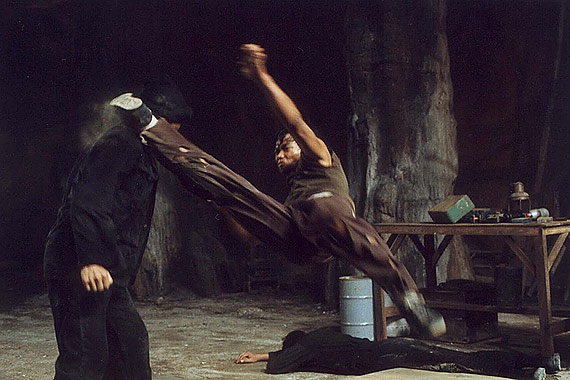
 During the early Tang Dynasty in the late seventh century, Wu Zetian (Carina Lau sporting some great hairdos) is about to become the first empress of China. In preparation for her ascendance to the throne, architect Shatuo (Tony Leung Ka Fai) is leading the construction of a two-hundred-foot Buddha statue with her face, a massive structure that is like its own city inside. But when people start spontaneously combusting after a pair of amulets in the statue are moved, Wu calls in Detective Dee (Andy Lau sporting some great facial hair), who has been in prison for eight years for previously opposing her, to find out who is behind the horrific deaths. Dee is teamed up with Wu’s right-hand woman, Shangguan Jing’er (Li Bingbing), and albino warrior Donglai Pei (Deng Chao) to get to the bottom of the killings, which many believe is a curse not being perpetrated by humans. As the unlikely threesome gets closer to the answers, they become enmeshed in a series of battles featuring unusual weapons and unexpected twists and turns, not knowing whom they can trust, their lives in constant danger. Nominated for the Golden Lion at the 2010 Venice Film Festival and winner of six Hong Kong Film Awards (including Tsui Hark for Best Director, Carina Lau for Best Actress, and Phil Jones for Best Visual Effects), Detective Dee and the Mystery of the Phantom Flame is a fun and exciting old-fashioned wuxia tale, with exciting if repetitive action scenes directed by Sammo Hung and sumptuous production design by James Chiu. The inner workings of the enormous statue is a thing of beauty that has to be seen to be believed. A mix of actual and invented characters — there really was a Judge Dee (Di Renjie), who was turned into a detective hero in a series of novels by Dutch author Robert van Gulik — the film is a thrilling historical mystery epic that could have used a little more back story but is still a return to form for Hark. Detective Dee and the Mystery of the Phantom Flame opens September 2 after having screened at the Tribeca Film Festival and the New York Asian Film Festival earlier this year.
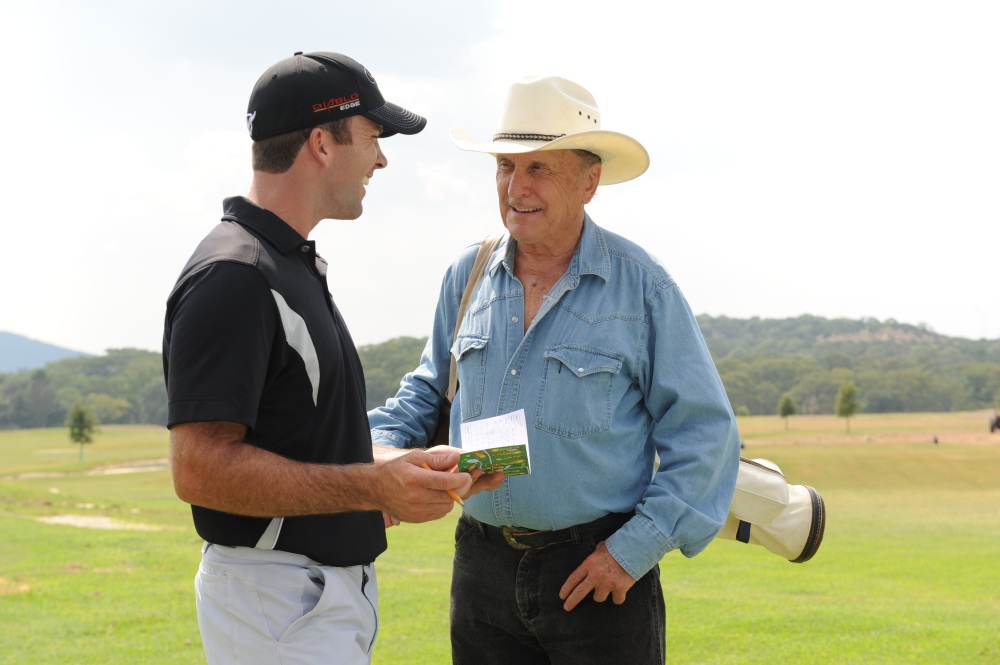
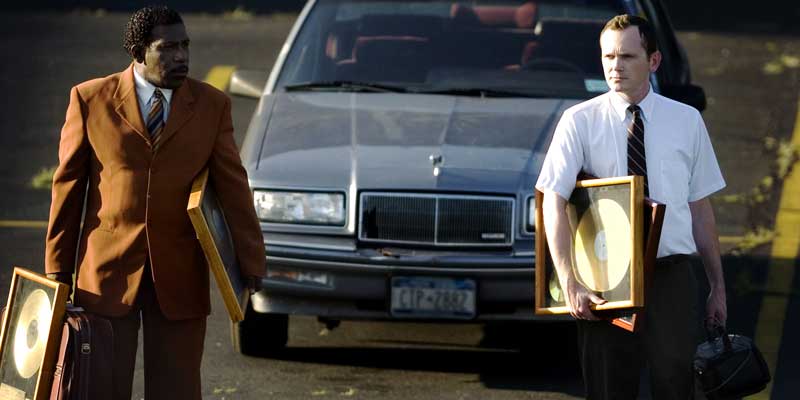
 Watching Matthew Dean Russell’s golf flick, Seven Days in Utopia, is like spending 105 minutes in a sand trap with no way out despite repeated desperate efforts to escape. Based on the book Golf’s Sacred Journey: Seven Days at the Links of Utopia by David L. Cook, Seven Days in Utopia is the unholy child of The Karate Kid and Caddyshack, an evangelical tent show disguised as a soft-hearted sports movie. Lucas Black stars as Luke Chisolm, an amateur golfer who has a major meltdown on the last hole of a qualifying tournament, then drives off the road while attempting to maneuver around a cow. He winds up on a ranch owned by former golf pro Johnny Crawford (Robert Duvall, who really should have known better) in the small, close-knit town of Utopia, Texas. Luke agrees to spend a week with Johnny, who is prepared to teach him not just about golf but about life because, well, playing the game of golf the right way puts you on the path to righteousness. Luke quickly takes a liking to a young waitress, Sarah (Deborah Ann Woll), angering Jake (Brian Geraghty), a local boy who thinks that she belongs to him. Meanwhile, Kathy Baker and Melissa Leo have no idea why their agents allowed them to take such small, insignificant roles in this tedious tale (unless their faith got the better of them too). Clichéd scene after clichéd scene leads to a big showdown on the links with real-life professional golfer K. J. Choi as T. K. Oh (get it!?), but don’t forget that Luke has his trusty Holy Bible with him to help him keep hitting that little white ball into those little cups. The film ends with one of the most jaw-droppingly embarrassing finales ever, one that involves viewers having to visit a website where they can learn more about Cook’s evangelical Sacred Journey. Seven Days in Utopia is little more than a boring, hackneyed vanity project whose ultimate mission is all too clear.
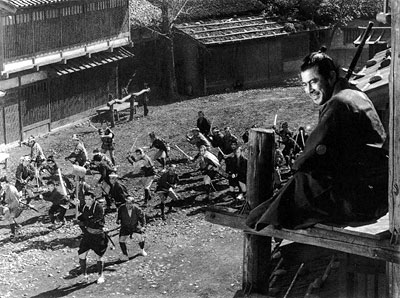
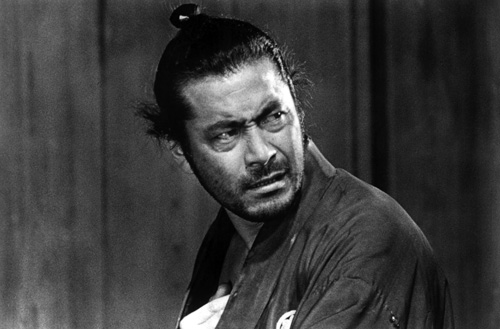
 Toshirō Mifune is a lone samurai on the road following the end of the Tokugawa dynasty in Akira Kurosawa’s unforgettable masterpiece. Mifune comes to a town with two warring factions and plays each one off the other as a hired hand. Neo’s battles with myriad Agent Smiths are nothing compared to Yojimbo’s magnificent swordfights against growing bands of warriors that include one man with a gun. Try watching this film and not think of several Clint Eastwood Westerns (particularly Sergio Leone’s A Fistful of Dollars, since this is a direct remake of that 1964 Italian flick) as well as High Noon. Yojimbo will be screening at 11:00 am on September 2-5 as part of the IFC Center’s Weekend Classics — Kurosawa series, which continues next week with the Kurosawa-Mifune follow-up Sanjuro.