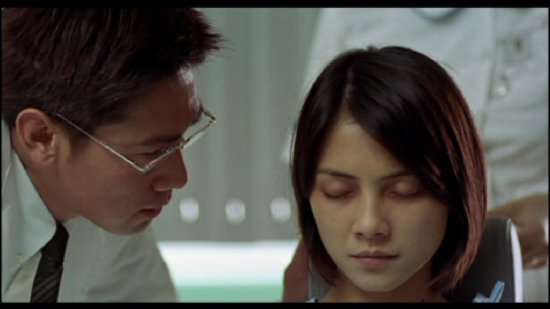
Wong Kar Mun (Lee Sin-Je) is seeking to see things in a different way in the Pang brothers thriller THE EYE
THE EYE (JIAN GUI) (Danny & Oxide Pang, 2002)
MoMA Film
Museum of Modern Art
11 West 53rd St. between Fifth & Sixth Aves.
Wednesday, November 16, 7:00, and Saturday, November 19, 4:00
Series runs through November 21
Tickets: $10, in person only, may be applied to museum admission within thirty days, same-day screenings free with museum admission, available at Film and Media Desk beginning at 9:30 am
212-708-9400
www.moma.org
 The Pang Brothers, who hail from Thailand, will creep you out with this tale of a woman who receives an eye transplant and starts seeing strange paranormal events. Lee Sin-Je is excellent as Wong Kar Mun, a musician who is suddenly cast into a frightening world — which belonged to Ling (Chutcha Ruhinanon), the original owner of her eyes. As Dr. Wah (Lawrence Chou) tries to help her, she heads from Hong Kong to Thailand to try to find out Ling’s terrifying secret. Stick with this one; the payoff’s a doozy. But skip the awful sequel, a boring, repetitive snoozefest starring Shu Qi, as well as the Hollywood remake starring Jessica Alba. The Eye is screening on November 16 and 19 as part of MoMA’s tribute to the twentieth anniversary of Fortissimo Films, which continues with such international works as Wisit Sasanatieng’s Tears of the Black Tiger, Pen-Ek Ratanaruang’s Last Life in the Universe, and Pieter Kramer’s Yes Nurse! No Nurse!
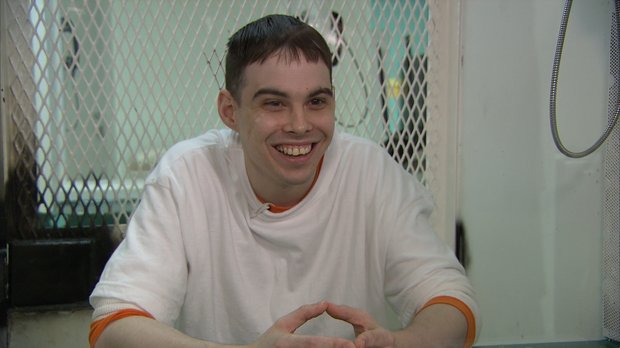
 Upon meeting convicted murderer Michael James Perry on Death Row eight days before the twenty-eight-year-old was going to be executed by the state of Texas, master filmmaker Werner Herzog tells him, “I have the feeling that destiny, in a way, has dealt you a very bad deck of cards. It does not exonerate you, and when I talk to you, it doesn’t necessarily mean that I have to like you, but I respect you, and you are a human being, and I think human beings should not be executed.” After explaining his personal view on capital punishment, Herzog then lets the rest of the compelling documentary Into the Abyss: A Tale of Death, a Tale of Life play out like a police procedural as he investigates how and why two teenage boys murdered three people in October 2001. Herzog opens the film by speaking with Death House chaplain Rev. Richard Lopez in a potter’s field graveyard, then follows that with four sections that detail the crime, the community in which it occurred, and the family members on both sides of the law affected by the grisly, senseless murders. Herzog divides the film into four primary chapters — “The Crime,” “The Dark Side of Conroe,” “Time and Emptiness,” and “A Glimmer of Hope” — as he talks with the often smiling Perry and his cohort, Jason Aaron Burkett; Lt. Damon Hall, who shares the specific aspects of the murders of Sandra Stotler, her seventeen-year-old son, Adam, and Adam’s friend Jeremy Richardson, supplemented by original crime-scene video; Charles Richardson, Jeremy’s older brother; Lisa Stotler-Balloun, Adam’s sister, who has seen more than her fair share of loss; Melyssa Thompson-Burkett, who fell in love with Burkett after he was incarcerated; Delbert Burkett, Jason’s stepfather, who is also behind bars; and Captain Fred Allen, who oversaw executions in the Huntsville prison. Herzog asks penetrating but not leading questions that get the subjects to talk openly and honestly about the crime and its aftermath and their lives in general, many of which seem trapped in a vicious cycle of violence, jail, poor education, and other endless hardships. Into the Abyss is a powerful film that, because of Herzog’s extremely sensitive handling of an extremely controversial topic, is not nearly as polemical or political as it could have been. Into the Abyss, which was the opening-night gala selection of the recent “Doc NYC” festival, opens November 11 at the IFC Center and Lincoln Plaza.
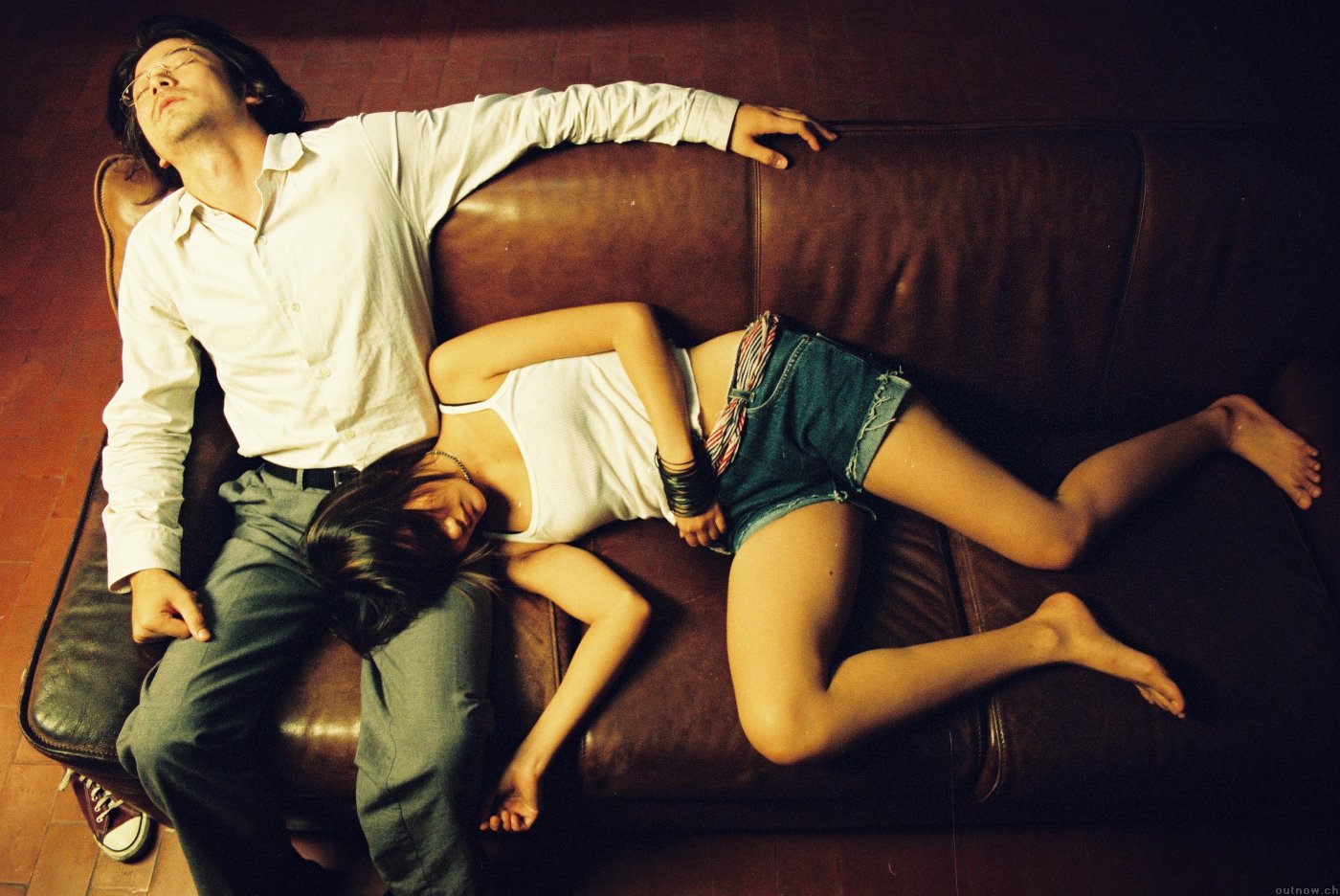
 Japanese actor Tadanobu Asano (Taboo, Ichi the Killer, Zatoichi), Australian-born Hong Kong cinematographer Christopher Doyle (Hero, In the Mood for Love, Chungking Express), and Thai cowriter-director Pen-ek Ratanuruang (6IXTYNIN9, Fun Bar Karaoke) combine their immense talents in the stunningly eloquent and marvelously offbeat black comedy Last Life in the Universe. Asano stars as Kenji, a librarian with OCD, a yakuza brother, and a propensity to consider various ways of killing himself. About to jump off a bridge, he sees a traffic accident, leading to a bizarrely touching Harold & Maude–like relationship with the young and beautiful Noi (Sinitta Boonyasak), who tends to be a little bit wild. As they try to make a simple life for themselves, danger lurks right around the corner in this nearly perfect, sadly overlooked film. Last Life in the Universe is screening at MoMA on November 12 & 18 as part of the “In Focus: Fortissimo Films” series, paying tribute to the company that has been distributing international independent releases for twenty years. The festival, which runs through November 21, opens November 10 with Taiwanese director Wei Te-sheng introducing his latest, Warriors of the Rainbow: Seediq Bale, and continues with such global favorites as Wisit Sasanatieng’s Tears of the Black Tiger, Wong Kar-wai’s Happy Together (introduced by Doyle on November 11), Zhang Yuan’s Beijing Bastards, Zhang Yang’s Shower, and the Pang brothers’ creepy horror flick The Eye.