this week in film and television

THE CONTENDERS 2011: THE TREE OF LIFE

Jessica Chastain, Hunter McCracken, and Brad Pitt star in Terrence Malick’s epic masterpiece, THE TREE OF LIFE

THE TREE OF LIFE (Terrence Malick, 2005)
MoMA Film
Museum of Modern Art
11 West 53rd St. between Fifth & Sixth Aves.
Wednesday, November 23, 7:00
Series runs through January 26
Tickets: $10, in person only, may be applied to museum admission within thirty days, same-day screenings free with museum admission, available at Film and Media Desk beginning at 9:30 am
212-708-9400
www.moma.org
www.twowaysthroughlife.com

Iconoclastic writer-director Terrence Malick has made only five feature films in his forty-plus-year career, but his latest is his very best. Following Badlands (1973), Days of Heaven (1978), The Thin Red Line (1998), and The New World (2005), The Tree of Life is an epic masterpiece of massive proportions, a stirring visual journey into the beginning of the universe, the end of the world, and beyond. The unconventional nonlinear narrative essentially tells the story of a middle-class Texas family having a difficult time coming to grips with the death of one of their sons in the military. Malick cuts between long flashbacks of Mr. and Mrs. O’Brien (Brad Pitt and Jessica Chastain) in the 1950s and 1960s, as they meet, marry, and raise their three boys, to the present, when Jack (Sean Penn), their eldest, now a successful architect, is still searching for answers. The sets by production designer Jack Fisk transport viewers from midcentury suburbia to the modern-day big city and a heavenly beach, all gorgeously shot by cinematographer Emmanuel Lubezki. Every frame is so beautiful, it’s as if they filmed the movie only at sunrise and sunset, the Golden Hour, when the light is at its most pure. The Tree of Life is about God and not God, about faith and belief, about evolution and creationism, about religion and the scientific world. The film opens with a quote from the Book of Job: “Where were you when I laid the earth’s foundation . . . while the morning stars sang together and all the sons of God shouted for joy?” Early on Mrs. O’Brien says in voice-over, “The nuns taught us there are two ways through life: The way of nature, and the way of grace. You have to choose which one to follow.” Malick doesn’t get caught up in those questions, instead focusing on the miracles of life and death and everything in between.

Sean Penn plays an architect searching for answers in THE TREE OF LIFE

With the help of Douglas Trumbull, the special effects legend behind 2001: A Space Odyssey, Blade Runner, and Close Encounters of the Third Kind — and who hasn’t been involved in a Hollywood film in some thirty years — Malick travels through time and space, using almost no CGI. Instead, he employs images from the Hubble telescope along with Thomas Wilfred’s flickering “Opus 161” art installation, which evokes a kind of eternal flame that appears in between the film’s various sections. Malick brings out the Big Bang, dinosaurs, and the planets during this inner and outer head trip of a movie that will leave you breathless with anticipation at where he is going to take you next, and where he goes is never where expected, accompanied by Alexandre Desplat’s ethereal orchestral score. But perhaps more than anything else, The Tree of Life, which won the Palme d’Or at the 2011 Cannes Film Festival, is about the act of creation, from the creation of the universe and the world to the miracle of procreation (and the creation of cinema itself). Mr. O’Brien is an inventor who continually seeks out patents but always wanted to be a musician; he plays the organ in church, but his dream of creating his own symphony has long been dashed. And Jack is an architect, a man who creates and builds large structures but is unable to get his own life in order. In creating The Tree of Life, Malick has torn down convention, coming up with something fresh and new, something that combines powerful human emotions with visual wizardry, a multimedia poem about life and death, the alpha and the omega.

The Tree of Life is screening November 23 at the Museum of Modern Art as part of MoMA’s “The Contenders 2011” series, which focuses on either underlooked films and/or those that MoMA believes will stand the test of time. The series continues through January 26 with such works as Nicholas Winding Refn’s Drive, David Cronenberg’s A Dangerous Method, and Karim Ainouz’s O Abismo Prateado (The Silver Cliff).
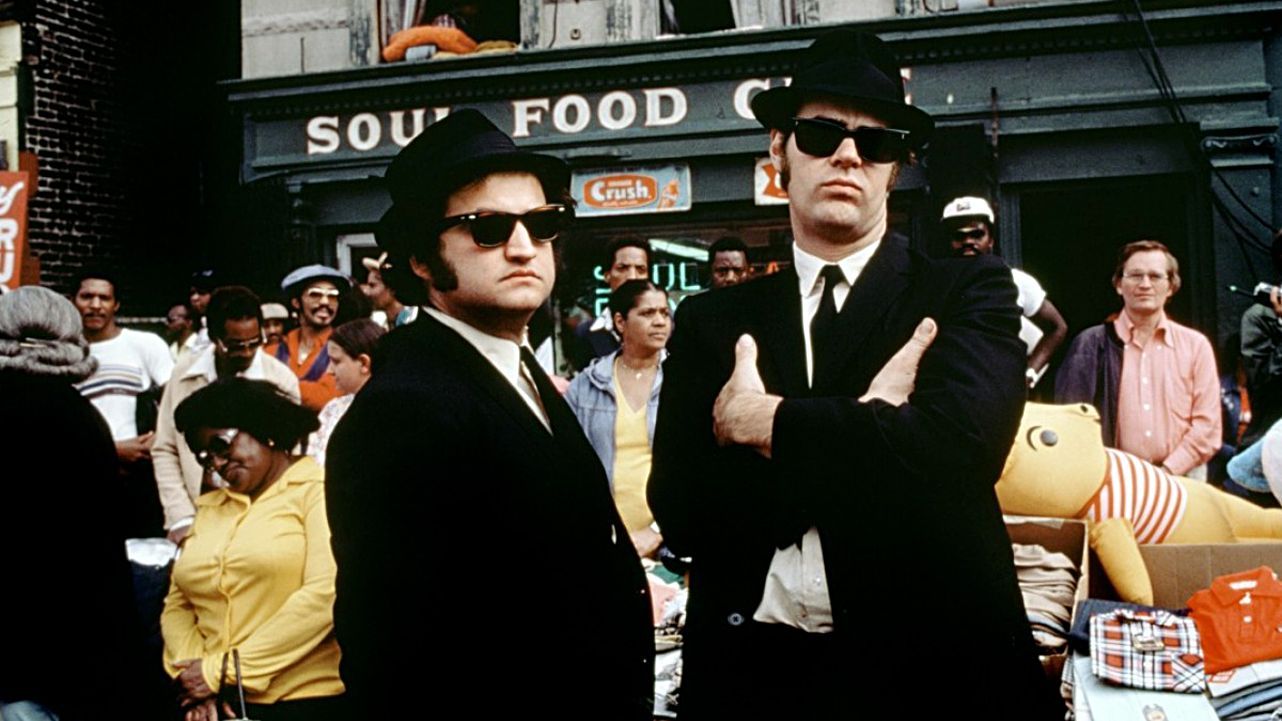

SEE YOU NEXT WEDNESDAY: 8 FILMS BY JOHN LANDIS

THE BLUES BROTHERS is part of eight-film BAMcinématek tribute to John Landis

BAMcinématek
30 Lafayette Ave. between Ashland Pl. & St. Felix St.
November 21-30
212-415-5500
www.bam.org

Film enthusiast, historian, theorist, actor, and writer-director John Landis made some of the seminal comedies of the 1970s and ’80s, particularly a five-film streak that began in 1977 with The Kentucky Fried Movie and continued with National Lampoon’s Animal House (1978), The Blues Brothers (1980), An American Werewolf in London (1981), and Trading Places (1983), followed by the underrated Into the Night (1985). He’s also made such guilty pleasures as 1986’s ¡Three Amigos! (you know you don’t change the channel when you find it on cable) and the 1992 vampire flick Innocent Blood, but he’s directed only one feature film since 1998, the 2010 comedy Burke and Hare. BAMcinématek is honoring the Chicago-born, L.A.-raised auteur with an eight-film tribute in conjunction with the release of his latest book, Monsters in the Movies (DK Adult, September 2011, $40), that begins today with two screenings of Animal House sandwiching a 6:50 showing of Into the Night that will be followed by a Q&A and book signing with Landis, who will be back tomorrow for a Q&A and signing after the 7:00 screening of The Blues Brothers, which is still a riot after all these years. The tribute continues on Wednesday with the very funny — and currently extremely relevant yet again — Trading Places, with one-percenter-wannabe Dan Aykroyd changing positions with ninety-nine-percenter Eddie Murphy. The series concludes next week with a pair of double features, ¡Three Amigos! and Coming to America (1988) on November 29 and the always welcome An American Werewolf in London and the 1982 documentary Coming Soon on November 30. Oh, and keep an eye out for a reference to “See you next Wednesday,” which makes a Hitchockian appearance in nearly every one of Landis’s films.

THE CONTENDERS 2011: BRIDESMAIDS

Kristen Wiig will be at MoMA on November 21 discussing BRIDESMAIDS with costar Rose Byrne and director Paul Feig

BRIDESMAIDS (Paul Feig, 2011)
MoMA Film
Museum of Modern Art
11 West 53rd St. between Fifth & Sixth Aves.
Monday, November 21, 2011, 7:00 p.m
Series runs through January 26
Tickets: $10, in person only, may be applied to museum admission within thirty days, same-day screenings free with museum admission, available at Film and Media Desk beginning at 9:30 am
212-708-9400
www.bridesmaidsmovie.com
www.moma.org

First and foremost, don’t link Bridesmaids in with all those lousy Saturday Night Live one-note movies and the string of overrated and overhyped lowbrow trash streaming out of the Judd Apatow factory. And don’t assume it’s a silly chick flick either. As it turns out, Bridesmaids is one of the most consistently funny laugh-out-loud romps of this young century. Directed by Freaks and Geeks creator Paul Feig, Bridesmaids is an endlessly clever and insightful examination of love, loneliness, and friendship starring SNL’s Kristen Wiig, who cowrote the smart script with Groundlings member Annie Mumolo (who makes a cameo as a nervous flyer). Wiig shows surprising depth and range as Annie, a perennial screw-up whose closest childhood friend, Lillian (Maya Rudolph), is marrying into a very snooty upper-crust family. After agreeing to be Lillian’s maid of honor, Annie gets involved in a battle of wits with Lillian’s future sister-in-law, the elegant Helen (a radiant Rose Byrne), who is determined to outshine Annie in every way possible and steal Lillian away from her. Already a mess — she had to close her bakery, she shares an apartment with a bizarre pair of British siblings, she works in a jewelry store where she drives away potential customers with her sorry tales of woe, and she allows herself to be treated miserably as a late-night booty call for a self-centered businessman (Jon Lamm) — Annie experiences a series of hysterical, pathetic setbacks as she attempts to organize the bridal shower and bachelorette party, including a riotous potty-humor scene in a high-end boutique that is likely to go down in comedy history for its sheer relentlessness. The rest of the bridesmaids are quite a hoot — Becca (Ellie Kemper), the Disney-loving kewpie doll; Rita (Wendi McLendon-Covey), a foul-mouthed married mother who can’t wait to go crazy away from her family; and the groom’s burly sister, Megan (the hugely entertaining Melissa McCarthy), who lives life without a filter. Annie is so caught up in her own failures that she doesn’t recognize when something potentially good enters her life, in the form of state trooper Nathan Rhodes (Chris O’Dowd). Wiig gives the finest performance of her career as Annie, clearly a role that is very close to her heart. Despite the slapstick nature of many of the jokes, Bridesmaids is filled with heart and soul, making it one of the best comedies in years.

Bridesmaids is screening November 21 at the Museum of Modern Art as part of MoMA’s “The Contenders 2011,” with Wiig, Byrne, and Feig participating in a postscreening discussion. The series, which focuses on either underlooked films and/or those that MoMA believes will stand the test of time, continues through January 26 with such works as Terence Malick’s The Tree of Life, Nicholas Winding Refn’s Drive, David Cronenberg’s A Dangerous Method, and Karim Ainouz’s O Abismo Prateado (The Silver Cliff).

BEST FILM NOT PLAYING AT A THEATER NEAR YOU: THE REDEMPTION OF GENERAL BUTT NAKED

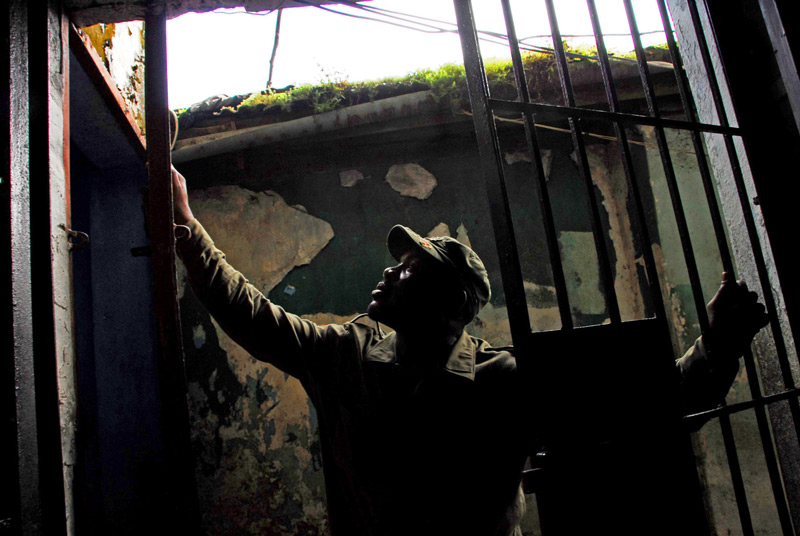
The bizarre story of the Liberian warlord known as General Butt Naked is told in stirring documentary

THE REDEMPTION OF GENERAL BUTT NAKED (Danielle Anastasion & Eric Strauss, 2011)
MoMA Film
Museum of Modern Art
11 West 53rd St. between Fifth & Sixth Aves.
Saturday, November 19, 3:30, and Sunday, November 20, 6:00
Tickets: $10, in person only, may be applied to museum admission within thirty days, same-day screenings free with museum admission, available at Film and Media Desk beginning at 9:30 am
212-708-9400
www.moma.org
www.generalbuttnakedmovie.com

Once again, the month of November is playing host to MoMA’s inventive “Best Film Not Playing at a Theater Near You” series. This program of American independent cinema, held in conjunction with the annual Gotham Independent Film Awards and the Independent Film Project, highlights five award-winning documentaries and features, with Q&A sessions with the filmmakers following selected shows. One of this year’s noteworthy selections is The Redemption of General Butt Naked, a documentary following the story and progression — as well as midlife crisis and career change — of brutal Liberian warlord Joshua Milton Blahyi. A figure infamous for an unimaginable resume of inhuman and genocidal atrocities, the eponymous general was known for leading an army of child soldiers into battle during his country’s long civil war, often wearing nothing more than boots and an AK-47 rifle, believing himself to be supernaturally immune to gunfire. The film examines his history and details his subsequent spiritual reawakening and self-reinvention as a charismatic Christian evangelist. Director-producers Danielle Anastasion and Eric Strauss will be on hand following the two screenings (November 19 at 3:30 and November 20 at 6:00) for a discussion of the film, which was cited for Excellence in Cinematography (Ryan Hill and Peter Hutchens) at this year’s Sundance Film Festival. The series continues through November 21 with four other 2011 discoveries, Madeleine Olnek’s Codependent Lesbian Space Alien Seeks Same, Sophia Takal’s Green, Blue Hadaegh and Grover Babcock’s Scenes of a Crime, and Mark Jackson’s Without. The Best Film Not Playing at a Theater Near You winner will be announced at the Gotham Independent Film Awards ceremony on November 28.

GARBO: THE SPY

GARBO: THE SPY tells the bizarre tale of double agent Juan Pujol Garcia

GARBO: THE SPY (Edmon Roach, 2010)
Quad Cinema
34 West 13th St.
Opens Friday, November 18
212-255-2243
www.quadcinema.com
www.firstrunfeatures.com/garbothespy

Audiences are likely at first to think that Edmon Roch’s feature debut, Garbo: The Spy, is a mockumentary, a made-up movie supposedly about one of the craziest, most absurd characters of the twentieth century. But alas, it is all true. The extremely entertaining film tells the real-life tale of wacky double agent Juan Pujol Garcia, whom the British called Garbo, after the actress who played Mata Hari, and the Nazis referred to as Alaric, after the Germanic Visigoth king. Roch speaks with MI5 specialist Mark Seaman, intelligence and espionage expert Nigel West, WWII spy Aline Griffith (the countess of Romanones), journalist Xavier Vinader, who assisted Pujol in recounting his story, and various members of Pujol’s two families, who share fascinating tidbits about a rather unusual gentleman who was so determined to be a successful spy that he created a fake network of imaginary agents, duping the Germans and assuring the success of the Normandy invasion. In addition to archival and newsreel footage, propaganda material, cartoons, and photographs, Roch includes clips from such WWII and spy thrillers as Mata Hari (starring Greta Garbo), Pimpernel Smith, The Stranger, Mr. Moto’s Last Warning, Patton, The Longest Day, and Our Man in Havana, in which Alec Guinness plays a character inspired by Pujol, lending additional insight to the story. What’s perhaps most remarkable about it all is that despite more than fifty volumes of his own writings and several books about him, Pujol is not more well known, but perhaps that’s all part of the bizarre mystery surrounding him and his extraordinary exploits, which are brought to life here by writer-director-producer Roch and editor Alexander Adams, who culled through more than six hundred hours of interviews to come up with the ninety-minute documentary. And yes, it indeed a documentary, a hard-to-believe true story that, according to Roch, is only the tip of the iceberg of the strange story of Juan Pujol Garcia.

IN HEAVEN, UNDERGROUND

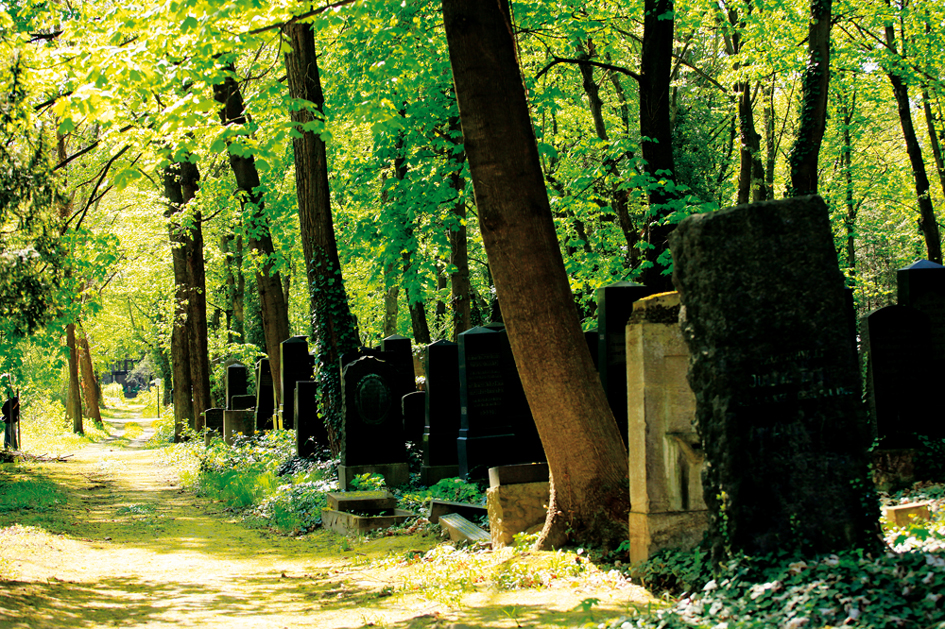
IN HEAVEN, UNDERGROUND goes inside remarkable Jewish cemetery in Berlin

IN HEAVEN, UNDERGROUND (Britta Wauer, 2011)
Cinema Village
22 East 12th St. between University Pl. & Fifth Ave.
November 18-24
212-924-3363
www.7thart.com
www.cinemavillage.com

The main character in Britta Wauer’s charming documentary, In Heaven, Underground: The Weissensee Jewish Cemetery, is described by one man in the film as “a tropical forest with stones,” and it is quite a beautiful one at that. Opened in 1880, the Weissensee Jewish Cemetery in east Berlin is the longest and largest continuously in-operation Jewish burial ground in Europe, currently home to more than 115,000 graves spread across one hundred gorgeous acres of trees and greenery. Combining archival footage, photographs, and new interviews, Wauer (Gerda’s Silence, A Hero’s Death) goes inside the cemetery and the many fascinating characters associated with it, each with a unique story to tell, from octogenarian rabbi William Wolff, who conducts services at the cemetery, to bricklayer Harry Kindermann, who has worked there since he was a child and met his first love there. Art classes come there to make grave rubbings, family members arrive searching for long-deceased relatives (the cemetery has meticulous records identifying every single person buried there), aviary experts climb trees to track birds of prey, men and women wander the many paths seeking to reconnect with their Jewish past, and German military officers regularly provide cleanup help, determined to maintain the dignity of each grave. There are at least 115,000 stories in Weissensee, so although Wauer can’t of course tell them all, she does an excellent job of delving into some of the key tales, including how this remarkable place has survived and thrived, particularly during the Holocaust. Lovingly shot by Kaspar Köpke and featuring a playful score by Karim Sebastian Elias that evokes Hollywood romantic comedies, In Heaven, Underground is a delightfully upbeat look at death.

TWI-NY TALK: GUY MADDIN

Eclectic Canadian filmmaker Guy Maddin will be taking part in a pair of special Performa 11 presentations on Friday and Saturday

Tales from the Gimli Hospital: Reframed
November 18-19, Walter Reade Theater, 165 West 65th St., $25-$30, 7:00 & 9:00
www.11.performa-arts.org/event

“The Power of a Continuity-Free Cinema”
Saturday, November 19, Performa Hub, 233 Mott St., $10, 3:00
www.11.performa-arts.org/event

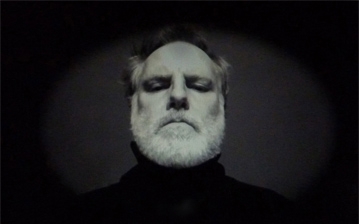
During a career that has now reached a quarter of a century, iconoclastic Canadian filmmaker Guy Maddin has made ten feature films and more than two dozen shorts, many of them harkening back to the early days of silent black-and-white cinema. His eclectic tales often blend fact with fiction, the past with the present (and the future), as evidenced in such critical successes as Careful (1992), The Heart of the World (2000), and My Winnipeg (2007). He has also expanded the notion of cinema with such works as Cowards Bend the Knee (2003), which was initially shown in ten segments screening at individual stations, and Brand upon the Brain! A Remembrance in 12 Chapters (2006), which debuted with live music and narration. For Performa 11, Maddin is going back to his first feature film, 1988’s Tales from the Gimli Hospital, adding a new score by Matthew Patton that will be performed live by an Icelandic supergroup, electronics engineer Paul Corley, and Seattle-based collective Aono Jikken Ensemble, along with new narration sung and spoken by Kristín Anna Valtýsdóttir. The exciting program takes place at the Walter Reade Theater on November 18-19, directed by Maddin, who will also be teaching the film class “The Power of a Continuity-Free Cinema” on Saturday afternoon. We corresponded with Maddin via e-mail as he prepared to participate in Performa 11.

twi-ny: What made you want to revisit your first film, Tales from the Gimli Hospital, for Performa 11?

Guy Maddin I thought, of all the films of mine that might actually thematically justify a revisiting from the director (something that truly ought not to be done under almost any circumstances!), then this was the title. The movie, if it’s about anything, seems to play with the Icelandic proclivity for making personal lives into timeless myths. I chose to use the project to help us timid Canadians take up the task of doing the same thing for our smaller-than-life selves. There’s a serious national myth debt in Canada. Back in 1988, when I completed the movie, I tried to right that wrong by myself, using the great vocabularies of early Hollywood dream factories and the sassitudes of the ancient Icelandic sagas. We have a wondrous and perverted history up here in Canada, but our temperament is too weak, our storytelling flare too pallid, to impart to these stories the bigger-than-life lineaments required to elevate a person or incident to mythic dimensions. Americans can do this stuff in their sleep, so you might be puzzled to hear of a country struggling with such things.

Anyway, myths are the product of a long process of telling and retelling, word-of-mouth burnishings into canonical permanence that can take decades, centuries, or even millennia to complete. I wanted to do it overnight, using artificial means aided by methods borrowed from Hollywood, and now, twenty-three years later, I get to artificially update this saga of Icelanders struggling as delirious pioneers in the Canadian north by speed-composting twenty-three years’ worth of word-of-mouth retellings all in one night at Lincoln Center. I feel a bit like a mad scientist, but with my Petri dishes brimming with narrative gelatins instead of the usual sneeze-cultures. It’s crazy. If I’d tackled any other movie of mine, I’d simply be trying to reduce the humiliations produced by a dated filmography, but here I can use this mad process of allowing the stories to evolve in ways beyond my control to actually increase my humiliation!

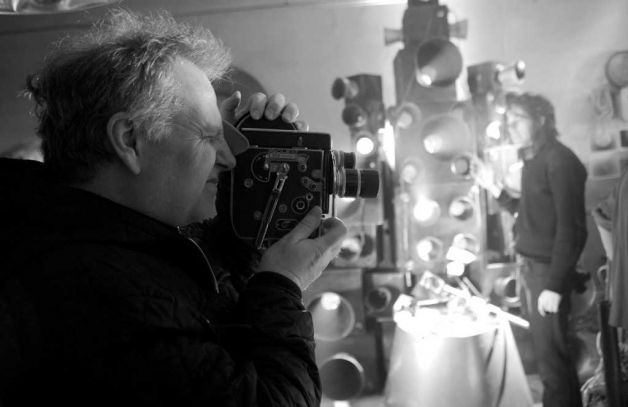
Guy Maddin will be reframing his feature-length debut at Lincoln Center as part of Performa 11 (photo courtesy Guy Maddin)

twi-ny: How did you go about selecting the diverse range of musicians for this event?

Guy Maddin: Some of these were people located by Matthew Patton, the composer originally commissioned to create the new score. He’s a fervid Icelandophile and collected the phone numbers of some of the most talented musicians in that country. Incredible, unearthly, and eerie music is their coin of the realm. One gets the feeling their music would play the same backward as forward, that they waft out melodic palindromes on warm breezes of helium, that the actual source of these strains is the elf king’s adamantine face fixed and hidden somewhere in the Icelandic lava canyons. The other musicians are my friends from the Seattle-based Aono Jikken Ensemble, who performed for my Brand upon the Brain show that I mounted here in New York a few years ago. I love these equally mysterious alchemists. I have no idea how they even make some of the sounds they send out into the theater, although the audience will be able to watch them and perhaps divine for themselves.

I love making the component parts of a film visible to the public. It’s boredom insurance. I’m not thrilled about the vivisection of animals, but of films — I’m all for it!

twi-ny: We have to say that we’re for it too. That’s part of the reason why we’ll be attending the class you’ll be leading on Saturday afternoon, “The Power of a Continuity-Free Cinema.” What can people expect from that class? And what exactly is “Continuity-Free Cinema”?

Guy Maddin: Good question. I’ll be bluffing my way through that class. I guess I plucked the title out of my past, the early days of my career when everyone on set was a continuity expert. It drove me nuts when everyone pointed out to me, or refused to perform because of, the continuity errors I was making. I grew to hate these literal-minded people and to love bad continuity. No one really utters this vilest of c-words anymore. Terrence Malick hasn’t had two consecutive shots cut to continuity in his entire career. It’s gone. Maybe I’ll just show Tree of Life on DVD and dismiss the class when the credits roll. Maybe I’ll show some early examples of flagrant discontinuity from film history and try to share with my students the gooseflesh these incidents produce.

twi-ny: Sounds like it should be fun. Much of your work is not only about cinema itself but the physical and psychological experience involved with watching and listening to a film. With more and more people watching movies on computers and tiny handheld devices, is cinema as we knew it, as Peter Greenaway has announced, dead?

Guy Maddin: Nah, there’s still no better first date than a movie in a theater with popcorn. And we’ll always need first dates, or something like them. On a second date couples can meet up in some motel and watch my stuff on some lurid handheld device. Until we eliminate the first date, cinema is alive.