Juliana Baroni and Rui Ricardo Diaz star in overly reverential story of Brazilian leader
LULA, SON OF BRAZIL (LULA, O FILHO DO BRASIL) (Fábio Barreto, 2011)
Quad Cinema
34 West 13th St.
Opens Friday, January 13
212-255-2243
www.quadcinema.com
www.lulasonofbrazil.com
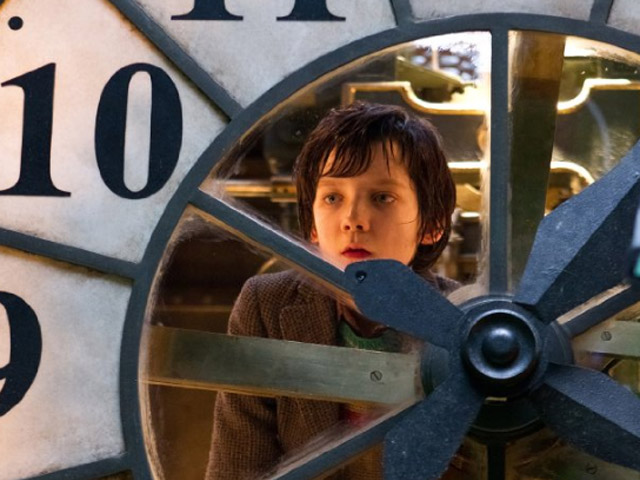
 The story of Luiz Inácio Lula da Silva’s rise from abject poverty to lead his nation is an inspirational, fascinating one. But unfortunately, you won’t find it in Fábio Barreto’s overly earnest, extremely reverential Lula, Son of Brazil. Based on the book by Denise Paraná, the film follows Lula from his childhood with an abusive father (Milhem Cortaz) to his studying to become a machinist and eventually develop into a beloved labor organizer. But the script, by Daniel Tendler, Denise Papana, and Fernando Bonassi, merely hops from important moment to important moment, forgoing any kind of narrative flow and instead feeling like an unconnected series of greatest hits delivered in a matter-of-fact manner devoid of emotion, coming off as flat and trite. His relationship with his devoted mother (Glória Pires) is clichéd and predictable, and his two romances lack any kind of passion. Played by Felipe Falanga as a child, Guilherme Tortólio as an adolescent, and Rui Ricardo Diaz as a grown man, Lula is clearly an inspirational figure in his homeland, but Barreto turns him into a cardboard character in this boring biopic that for some unknown reason ends right before a critical juncture in Lula’s life and career.

 British filmmaker Patrick Keiller’s follow-up to 1994’s London and 1997’s Robinson in Space is another staggering achievement, a gorgeous pairing of word and image resulting in something fresh, challenging, and unlike anything you’ve ever seen before. The conceit behind Robinson in Ruins is that it consists of found footage taken by a man named Robinson, with text from his rather eclectic notebook; in fact, every shot is carefully planned by writer, director, and editor Keiller, with the narrative added later, intoned by Vanessa Redgrave. The camera barely moves throughout the film’s one hundred and one minutes; instead, it remains still as it depicts a construction site, rapeseed fields, nuclear power plants, a mail slot, and a street corner, the only signs of movement the wind blowing through the trees, a passing car, or industrial smoke. People are virtually nonexistent as Redgrave reads Robinson’s complex treatise on agriculture, architecture, the economic crisis, history, politics, and opium, all centered around, as Keiller said at the press preview at the 2010 New York Film Festival, “the problem of dwelling.” Robinson in Ruins is like a tour through a thrilling art exhibition, each piece beautifully composed, coupled with fiercely intellectual poetry that is wonderful to listen to, even if much of it is impossible to understand. The film is screening January 13-18 at Anthology Film Archives as part of “Patrick Keiller’s Robinson Trilogy,” which also includes multiple showings of London and Robinson in Space as well as Keiller’s 2000 work The Dilapidated Dwelling and the 1986 short The End.

 During the Korean War, the north and south did battle over a series of hills, with the key locations changing hands of over and over, sometimes multiple times the same day. Director Jang Hun tells the fictionalized story of one such hill, Aero.K, in the tense military thriller The Front Line. Shin Ha-Kyun (Thirst, Sympathy for Mr. Vengeance) stars as Lt. Kang Eun-pyo, an investigator who has been sent to the eastern front to uncover a possible spy. Upon joining Alligator Company, Eun-pyo is surprised to find his old college friend, Kim Su-hyeok (Ko Soo), a former scared grunt who had been captured by the North Koreans and has now blossomed into a strong leader — and quickly becomes the leading candidate to be the potential traitor. The hill has changed hands so often that each side has been secretly communicating with the other by leaving such materials as photos, letters, and alcohol in a hidden spot, developing a relationship that reveals their humanity but also could compromise them on the field. And as a possible armistice approaches, the brass ramps up the fighting in a series of last-ditch efforts to take the hill and expand the potential demarcation line in their favor. Park Sang-yeon’s script is filled with clichéd characters and familiar plot lines, leaning toward the melodramatic, but Jang still makes it work, building the violent film around the strong main characters and several powerful, unexpected twists. South Korea’s official entry for the Academy Awards, The Front Line is a gritty epic that reveals man’s inhumanity to man and the ultimate futility of war. The film opens at the AMC 25 on January 20, but you can get a free sneak peek at it tonight at Tribeca Cinemas, where its east coast premiere kicks off the latest installment of Korean Movie Night, “Jang Hun Plus One!” which examines the career of the director, who cut his teeth working with Kim Ki-duk. The series continues January 24 with 2008’s Rough Cut, February 15 with 2010’s Secret Reunion,, and February 28 with the North American premiere of Park Shin-woo’s White Night.
 For The Interrupters, director, producer, and editor Steve James (Hoop Dreams, At the Death House Door) teamed up with journalist Alex Kotlowitz (There Are No Children Here) to hit the dangerous inner-city streets of Chicago with the men and women of CeaseFire, a grass-roots organization of former gang members who are now trying to stop the violence. Inspired by Kotlowitz’s New York Times Magazine article, the two men concentrate on three primary stories. Ameena Matthews, the Muslim daughter of notorious gang leader Jeff Fort, is working with a deeply troubled young woman who’d rather fight than flee, even if it means being sent back to prison. Cobe Williams has his hands full with the angry, recently released Flamo, who thinks the whole world is against him. And Eddie Bocanegra is attempting to come to grips with a cold-blooded revenge murder he committed when he was a teenager by visiting schools and talking about turning his life around. One of the most poignant moments of the film occurs when Williams brings Lil Mikey back to the barbershop he and several of his cohorts robbed at gunpoint as he again faces some of his victims. Matthews, Williams, and Bocanegra are paid employees of CeaseFire, which was founded by Dr. Gary Slutkin, an epidemiologist who believes that violence is a disease that can be treated in similar ways, and is run by Tio Hardman, who handles his extremely tough task with intelligence and dignity as he deals with what he calls “the madness.” But in a society in which “words’ll get you killed,” as Matthews says early on, these tireless violence interrupters put their own lives on the line every day, battling a sickness that seems to have no end in sight. The award-winning film, a hit at numerous film festivals, felt a bit long at its original 144 minutes, but James edited it down to a more streamlined 124 minutes for its recent theatrical release. The Interrupters is screening January 12 at 8:00 at the IFC Center as part of the Stranger than Fiction series and will be followed by a Q&A with the director.
 Curator Sylvia Savadjian and the Maysles Institute have put together a terrific program for Wednesday night, offering audiences the opportunity to meet one of the most fascinating characters they’re ever likely to come upon. Born in 1945 in rural Georgia to a mother who abandoned him when he was three months old, Winfred Rembert grew up picking cotton, dropped out of high school, spent time in jail and on a chain gang, and lost nearly all his teeth. But it was his years behind bars that turned him into a new man, as he learned to read and write and developed a unique art style that soon had him carving out the tales of his life on leather. Longtime journalist, producer, and writer Vivian Ducat tells Rembert’s amazing story in her engaging feature-length debut, All Me: The Life and Times of Winfred Rembert. Ducat follows the oversized Rembert, who regularly bubbles over with joy, as he returns for a show in Cuthbert, Georgia, and prepares for a big opening in New York City. “I know he’s here for a reason,” his sister Lorraine says in the film. “To help people and to be a witness through his art.” Throughout All Me, Rembert discusses many of his works, in which he uses indelible dyes on carved leather, in great detail, each one representing a part of his life, focusing on being a poor black man in a white-dominated society. It is quite poignant late in the film when he points out that his art seems to be most appreciated by whites even though it is meant as a visual history for blacks. But what really makes the documentary work is not just that Rembert is such an enigmatic, larger-than-life figure but that his art is exceptional, his self-taught, folksy style reminiscent of such forebears as Romare Bearden and Jacob Lawrence, capturing a deeply personal, intensely intimate part of the black experience in twentieth-century America. Rembert will be at the Maysles Institute on January 11 for a reception, a screening of All Me, and what should be an enlightening Q&A with Ducat. And if you’re as captivated by Rembert’s story as we are, you can see more of his work in his “Amazing Grace” exhibition, running January 21 through May 5 at the