ZONA: A BOOK ABOUT A FILM ABOUT A JOURNEY TO A ROOM
Friday, March 9, 192 Books, 192 Tenth Ave., free, 7:00
Saturday, March 10, “Tarkovsky Interruptus,” the New School, Tishman Auditorium, 6 West 12th St., free, 5:00
Sunday, March 11, “Geoff Dyer on Tarkovsky, Cinema, and Life,” Museum of the Moving Image, 36-01 35th Ave., free with museum admission, 3:00 & 6:00
Monday, March 12, School of Visual Arts, Beatrice Theater, 333 West 23rd St., free, 7:00
“This book is an account of watching, rememberings, misrememberings, and forgettings; it is not the record of a dissection,” British author Geoff Dyer writes in Zona: A Book About a Film About a Journey to a Room (Pantheon, February 21, $24). Over the course of some two hundred pages, Dyer immerses the viewer in the fantastical world of Andrei Tarkovsky’s 1979 film, Stalker, in which the title character leads two men, Writer and Professor, on a dangerous trip into the Zone, a mysterious area that harbors a room where people’s most inner desires are said to come true. Dyer’s obsessively thorough scene-by-scene examination of the film includes tidbits about the making of the existential work as well as stories about his own personal life while referencing Michelangelo Antonioni and Jean-Luc Godard, Roland Barthes and Timothy Leary, Werner Herzog and Richard Widmark, Leo Tolstoy and T. S. Eliot, Mick Jagger and Jim Jarmusch, Milan Kundera and Don DeLillo, John Berger and Alan Watts, and Robert Bresson and Ingmar Bergman, sometimes extending footnotes across several pages that dwarf the main text. Zona is a wonderful companion piece to the film, a must-read for fans of Tarkovsky and the study of cinema itself.
On March 9, Dyer will be reading from and signing copies of Zona at 192 Books in Chelsea, then will participate in the “Tarkovsky Interruptus” program being held at the New School on March 10, a screening of Stalker that will occasionally be interrupted by commentary from Dyer, Walter Murch, Phillip Lopate, Francine Prose, Michael Benson, and Dana Stevens. Dyer will continue his whirlwind adventure on March 11 at the Museum of the Moving Image when he hosts “Geoff Dyer on Tarkovsky, Cinema, and Life,” a discussion with David Schwartz at 3:00, followed by a screening of Tarkovsky’s Mirror at 6:00. And on March 12 he’ll be at the School of Visual Arts for a lecture and book signing.
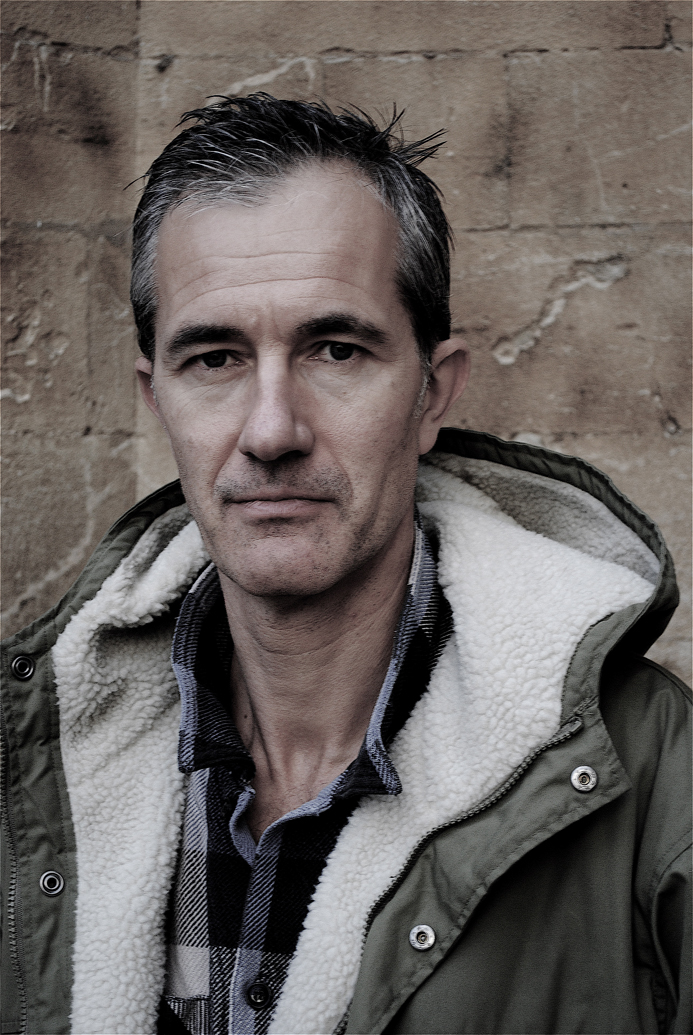
Geoff Dyer will share his Tarkovsky obsession with special appearances all over the city (photo by Marzena Pogorzaly)
twi-ny: In Zona, you essentially play the part of Writer, Professor, and Stalker as you guide readers through the film and certain parts of your life. Which of the three characters do you most closely identify with?
Geoff Dyer: Well, ostensibly it would have to be Writer. He’s my embedded representative. I like his washed-up-ness, his sense of failure, his dissatisfaction with himself and the world. But ultimately it would be Stalker because he’s a believer.
twi-ny: You first saw Stalker in February 1981; how many times have you now seen it on the big screen?
Geoff Dyer: I’ve lost track. More than any film except Where Eagles Dare, which, now that I think of it, I’ve only seen on the big screen once. At this particular moment I’m not in a hurry to see it again but I’m sure I will do so again in the future. It is nothing if not inexhaustible — despite my attempts to exhaust it.
twi-ny: On March 11, you’ll be at the Museum of the Moving Image introducing Tarkovsky’s Mirror, which is mentioned often in Zona. What should a Tarkovsky virgin know about Mirror before experiencing it?
Geoff Dyer: I don’t think you need to know much about it; you just need to relax, to abandon preconceptions and expectations about how a film should proceed, and give yourself to it. It’s the same with Indian classical music; people worry that they don’t know enough to get into it when all you really need is a pair of ears. On reflection, maybe cannabis helps in both these cases. It might also be interesting to think about Terence Malick’s recent Tree of Life. He must have had Mirror in mind when he was making that.
twi-ny: In previous books, you’ve taken unique approaches in examining D. H. Lawrence, jazz, John Berger, and now Andrei Tarkovsky and Stalker. Do you see any similarities among these subjects that drove you to write about them in such detail?
Geoff Dyer: Not really, only my own fan-ness, my love for these things. I see a different continuity with some of the other books — Yoga for People Who Can’t Be Bothered to Do It, The Missing of the Somme, and the second part of Jeff in Venice, Death in Varanasi — and that is more about an ongoing fascination with the idea of the Zone. The one in the film is a sort of invented place but I’ve been drawn to similar places in the real world — places of heightened meaning, of religious significance, places where time has stood its ground, where you have some kind of peak experience — in these books.


 Japan Society’s examination of twisted sex, erotic obsession, and violence focuses on the treatment of those issues in Japanese and Korean cinema, which often have similar narrative structures. On March 4 at 5:30, they will present the unusual road movie Vibrator. Based on the novel by Mari Akasaka, Ryūichi Hiroki’s film is a poetic journey of one woman’s desperate need for connection. Shinobu Terajima (Caterpillar) gives a subtly riveting performance as Rei, a thirty-one-year-old lonely bulimic freelance journalist who hears voices in her head. Shopping in a convenience store for beer and wine, she gets the urge to have a sexual encounter with a stranger, and in walks Okabe (Nao Omori), a younger blond truck driver. After a beautifully shot scene of their love making, Rei asks if she can join him on his travels, and the two set off on a surprisingly tender adventure. Winner of Best Film, Best Director, Best Screenplay (Haruhiko Arai), Best Actress (Terajima), and Best Supporting Actor (Omori) at the twenty-fifth Yokohoma Film Festival, Vibrator is a compelling psychological tale of a complex, troubled soul seeking to be touched by another human being. Hiroki ( I Am an S&M Writer, Tokyo Trash Baby) imbues the film with a gentle thoughtfulness that prevents turning the protagonists into clichéd characters; Vibrator is not so much about sexuality or eroticism as it is about the pain and anguish of loneliness. Among the other films screening this weekend at Japan Society are Ryuichi’s M, Hirokazu Kore-eda’s