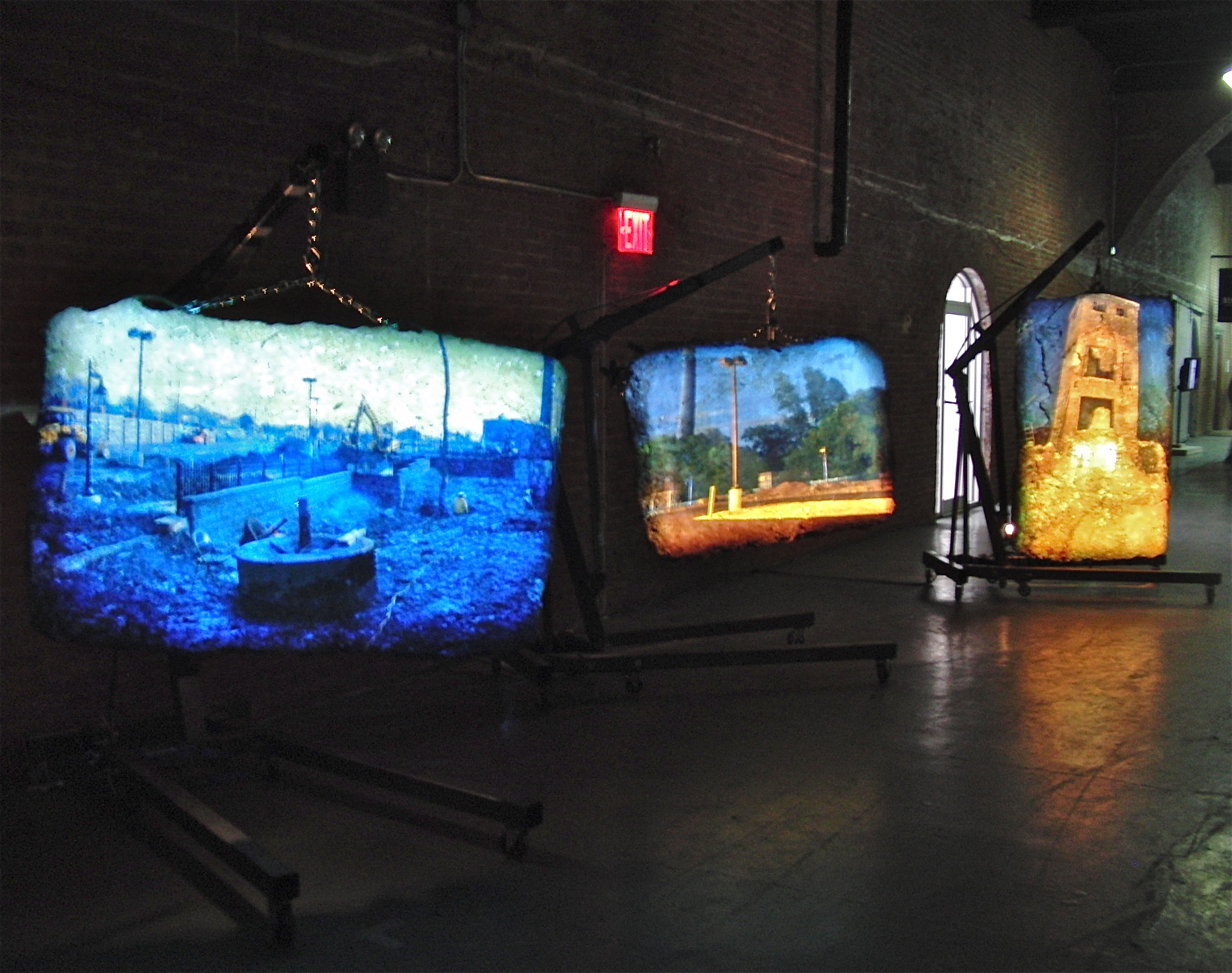
Daniel Phillips’s three-channel installation RIVER STREET is one of the highlights of Moving Image fair (photo by twi-ny/mdr)
Waterfront New York Tunnel
269 11th Ave. between 27th & 28th Sts.
Through March 11, free
212-643-3152
www.moving-image.info
The second annual Moving Image Contemporary Video Art Fair is back in the long, narrow Waterfront New York Tunnel in Chelsea, featuring more than thirty videos and installations from around the world. Upon entering the space from the Eleventh Ave. side, you will find yourself immersed in Janet Biggs’s Predator and Prey, where you can take a seat in the middle of two large screens that follow a polar bear, a horse, and an eagle. For the three-channel River Street, Daniel Phillips documented his rehabilitation of the dilapidated area around his studio and projects the videos on three blocks made from objects and materials he gathered from the construction site. The always playful and innovative Kate Gilmore is represented by Built to Burst, which captures the artist from above as she smashes pots of paint on a series of platforms to create something wholly new. Alex Prager’s Despair, which was recently shown at MoMA, employs colorful, fantasy-like imagery to tell the story of a possible suicide. Martha Wilson uses makeup and camera angles “to deform myself in the way that I fear the most” in the large-screen I have become my own worst fear / Deformation. In Marina Zurkow’s charming black-and-white animation Mesocosm (Northumberland UK), a naked man sits on a tree stump as the seasons pass by around him. There are also creative videos by Sama Alshaibi, Josh Azzarella, Eelco Brand, Susanne Hofer, Jesse McLean, Jenny Perlin, and Yael Kanarek, among others. And be sure not to miss Jesse Fleming’s agonizing The Snail and the Razor, in which a snail ominously attempts to climb over a sharp razor blade. Since you could easily spend much of the day at Moving Image, you can narrow down which videos you want to see by checking out excerpts of every one included in the fair in advance here. On Saturday at noon, Bridgette Howard will moderate the panel discussion “Moving Image Technology of Tomorrow” with Jacob Gaboury, Steven Sacks, and Anne Spalter, followed at 2:00 with Rebecca Cleman moderating the spotlight panel “What Do You Get When You Buy Video Art?” with Lisa Dorin, Jefferson Godard, and Fabienne Stephan.
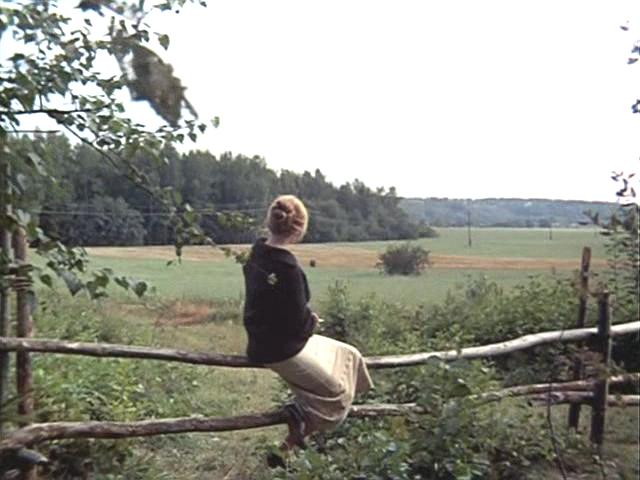
 “Words can’t really express a person’s emotions. They’re too inert.” So says Andrei Tarkovsky’s dream-filled, surreal masterpiece The Mirror, which features long scenes with little or no dialogue. Tarkovsky turns the mirror on himself and his childhood to tell the fragmented and disjointed story of WWII-era Russia through his own personal experiences with his family. Tarkovsky was obsessed with film as art, and this nonlinear film is his poetic masterpiece; he even includes his father’s poems read over shots that are crafted as if paintings. Many of the actors play several roles; have fun trying to figure out who is who and what exactly is going on at any one moment. The Mirror is screening on March 11 at 6:00 at the Museum of the Moving Image as part of the special program “Geoff Dyer on Tarkovsky, Cinema, and Life” and the ongoing “See It Big!” series and will be introduced by award-winning author Dyer, whose latest nonfiction tome is Zona: A Book About a Film About a Journey to a Room (Pantheon, February 21, $24), an obsessively detailed examination of Tarkovsky’s
 Inspired by an actual event that took place during the first Gulf War, Nina Menkes’s The Bloody Child is a visually captivating abstract tale of murder. Shot in the 29 Palms area of the Mojave Desert, the film is essentially told backward in three distinct sections. In one, a group of Marine officers have discovered a dead woman in the back of a car. It’s a crystal-clear beautiful day as they come and go, discussing the situation in dialogue that is often hard to make out. In another, people are having a good time in a dark bar, the men shooting pool, the women being entertained by a male stripper. And in the third, an ash-covered angelic figure lies naked in a forest, carving a prayer in Hebrew on her arm as the witches’ chant from Macbeth is repeated on the soundtrack. Despite its abstract, fractured narrative and ambiguous, unidentified characters, The Bloody Child is an atmospheric, gripping tale. Menkes tells the story in long takes with little or no camera movement, almost as if action is secondary to mood. Casting actual Marines in the film — in addition to her sister, Tinka, who stars in most of her work and plays the Marine captain here — Menkes imbues the film with a reality that lends it a documentary feel, enhanced by gorgeous poetic moments that lift things to a higher plane. The Bloody Child is screening March 9, 11, and 15 as part of Anthology Film Archives’ weeklong Menkes retrospective that also includes such films as Dissolution (2010), The Great Sadness of Zohara (1983), Magdalena Viraga (1986), The Bloody Child (1996), and Phantom Love (2007).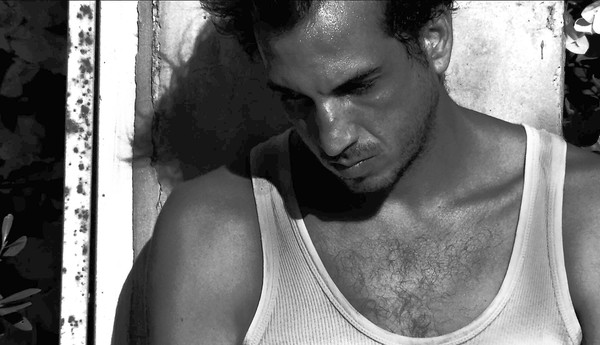

 Set in a seemingly postapocalyptic world that is never explained, Andrei Tarkovsky’s Stalker is an existential work of immense beauty, a deeply philosophical, continually frustrating, and endlessly rewarding journey into nothing less than the heart and soul of the world. Alexander Kaidanovsky stars as Stalker, a careful, precise man who has been hired to lead Writer and Professor (Tarkovsky regulars Anatoli Solonitsyn and Nikolai Grinko, respectively) into the forbidden Zone, a place of mystery that houses a room where it is said that people can achieve their most inner desires. While Stalker’s home and the bar where the men meet are dark, gray, and foreboding, the Zone is filled with lush green fields, trees, and aromatic flowers — as well as abandoned vehicles, strange passageways, and inexplicable sounds. The Zone — which heavily influenced J. J. Abrams’s creation of the island on Lost — has a life all its own as past, present, and future merge in an expansive land where every forward movement is fraught with danger but there is no turning back. An obsessive tyrant of a filmmaker, Tarkovsky (Andrei Rublev, Solaris) imbues every shot with a supreme majesty, taking viewers on an unusual and unforgettable cinematic adventure. On March 10 at 5:00, the New York Institute for the Humanities at NYU and the Illustration Program at Parsons are teaming up to present “Tarkovsy Interruptus,” a free screening of the film that will be stopped at several points for commentary from what is being referred to as a “a distinguished panel of Tarkovsky fanatics,” including Geoff Dyer, Walter Murch, Phillip Lopate, Francine Prose, Michael Benson, and Dana Stevens. The program is being held in conjunction with the publication of Dyer’s latest work, Zona: A Book About a Film About a Journey to a Room (Pantheon, February 21, $24). For more on Dyer, who will also introduce the screening, you can read our twi-ny talk with him
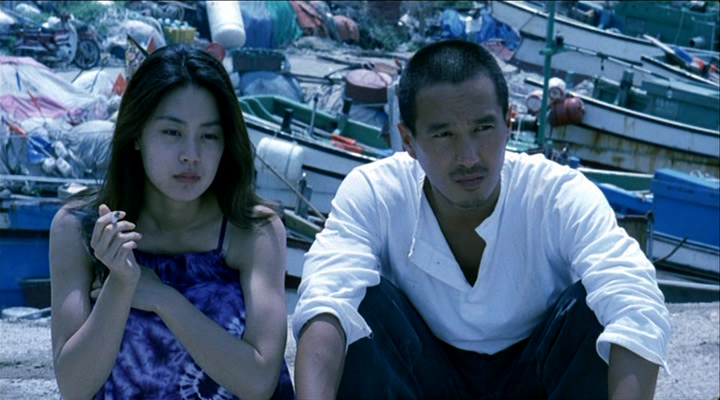
 Kim Ki-duk has made a number of excellent films, but Bad Guy is not one of them. Instead, it’s a preposterous, painfully puerile, and deeply misogynistic movie that is insulting from start to finish. Although it’s only a hundred minutes long, it feels like a thousand. Won Seo stars as Sun-hwa, a college girl who gets conned by Han-ki (Cho Je-hyun) into becoming a prostitute to pay off a false debt. He watches her transformation through a two-way mirror while one of his henchmen, Myung-soo (Choi Duk-moon), thinks he has fallen in love with her himself. Lots of sex and violence ensue, most of which makes no sense and is as unbelievable as the premise. The evening concludes at 7:30 with Kim’s 2008 Dream, a tale in which two people’s dreams intersect.
 Experimental director Marie Losier tells a very different kind of love story in the intimate documentary The Ballad of Genesis and Lady Jaye, her debut feature-length film. In 1993, British industrial music legend Genesis P-Orridge, the founder of such highly influential groups as Psychic TV, Throbbing Gristle, and COUM Transmissions (and who changed his name from Neil Andrew Megson in 1971), married Jacqueline Mary Breyer, a nurse and singer who then changed her name to Lady Jaye Breyer P-Orridge. The two artists were so madly in love that they decided to become a single “pandrogynous” unit known as Breyer P-Orridge, undergoing various forms of plastic surgery to look more alike. Both their life and their music were influenced by the literary cut-up style developed by Brion Gysin and William S. Burroughs, but the film itself has the feel that it too was cut up and randomly put back together, resulting in a seriously flawed and fractured narrative that has fascinating individual moments that don’t form a cohesive whole. Mixing in home movies, staged reenactments, archival concert footage, voice-over narration by Genesis, and new interviews (with such friends and colleagues as Tony Conrad, Marti Domination, Lili Chopra, and Peaches), Losier never quite gets to the heart of the matter. Much of the film feels as if something’s missing, as if the director got too close to her subjects and assumed the audience can fill in certain gaps. As she says in the project’s production notes, “The film will attempt to present the incredible complexity of Genesis’ personality from many different angles, most especially my subjective point of view. From my earliest films, my feeling has been that when shooting real life subjects, my very presence changes the reality of what I am filming. Therefore, I am not a neutral participant, but one equally engaged and inspired by what is happening in front of my camera.” As personal and revealing as the film gets at times, much of it also seems forced and overly arty. The Ballad of Genesis and Lady Jaye opens tonight at Clearview Cinemas in Chelsea, with Losier and Genesis P-Orridge on hand for a Q&A following the 7:00 screening.