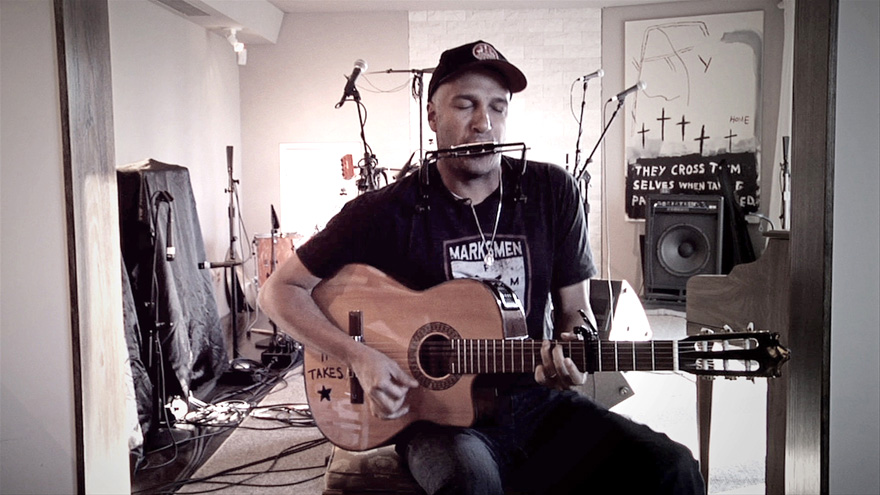
Tom Morello offers his version of creative response in LET FURY HAVE THE HOUR
LET FURY HAVE THE HOUR (Antonino D’Ambrosio, 2012)
Saturday, April 28, AMC Loews Village 7, 7:00
www.tribecafilm.com
www.letfuryhavethehour.com
 In his just-released book Let Fury Have the Hour: Joe Strummer, Punk, and the Movement That Shook the World, author, editor, and visual artist Antonino D’Ambrosio writes, “Let Fury Have the Hour, the book and film, is a call to celebrate the art of living, or being for, not against. For the movie, which is having its world premiere at the Tribeca Film Festival this week, D’Ambrosio brought together some fifty artists to talk about how they use creative response in a positive way to deal with the social, political, and economic outrage that began in the 1980s with the separatist policies of Ronald Reagan and Margaret Thatcher and has exploded today. Shot over the course of seven years, the film features intelligent discourse from such musicians as Billy Bragg, Tom Morello from Rage Against the Machine, Wayne Kramer from the MC5, Chuck D from Public Enemy, Eugene Hütz from Gogol Bordello, and, perhaps most eloquently, Ian MacKaye from Fugazi and Minor Threat. In addition, street artist Shepard Fairey (whose designs can be seen throughout the film), spoken-word poet Staceyann Chin, comedian Lewis Black, filmmaker John Sayles, author Edwidge Danticat, playwright Eve Ensler, choreographer Elizabeth Streb, skateboarder Tommy Guerrero, and many more share how the DIY punk aesthetic influences them in their work and their daily life as they continue to fight the power through artistic self-expression that understands the interconnectedness of everything. “Our freedom of speech is our freedom from death,” Chuck D states. The jumping-off point for many of those in the film, as well as D’Ambrosio himself, was the music of the Clash; the title comes from a line in the Clash classic “Clampdown.” D’Ambrosio and editor Karim Lopez supplement the original interviews, which are all conducted in personal settings unique to each individual, with dramatic archival footage of political and artistic movements from around the world throughout the twentieth century, backed by a score composed by Kramer with songs by Public Enemy, Hütz, Sean Hayes, and others. It all comes together in a rousing wake-up call that is a direct counter to Reagan’s “Morning in America” agenda. “A citizen is someone who participates,” DJ Spooky says in the film. D’Ambrosio is seeking to spread his message of creative response by getting as many citizens as possible to participate in any way they can, making an ambitious film that avoids coming off as propaganda and instead feels necessary in these hard times.
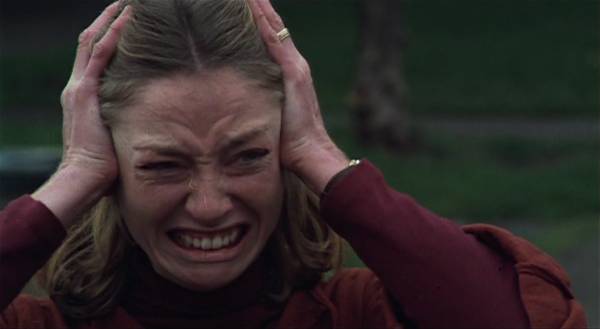
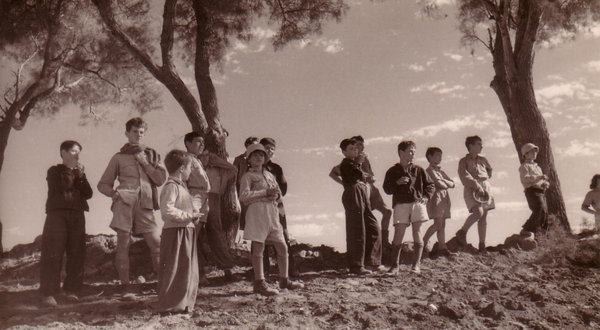
 Inspired by her eighteen-year-old sister’s move to a kibbutz back in 1968, Toby Perl Freilich has written, directed, and produced the compelling documentary Inventing Our Life: The Kibbutz Experiment. Freilich (Secret Lives: Hidden Children & Their Rescuers) traces the hundred-year history of the kibbutz movement in Israel by meeting with three generations of current and former kibbutzniks, who discuss what life was like on such collectives as Degania, Hulda, and Sasa. Mixing in archival footage and black-and-white and color home movies that include some of the very people she is speaking with, Freilich delves into the daily life of the kibbutz, beginning with the earliest immigrants settling a vast wasteland and organizing socialist communes in which most everything was shared; there was no separation of wealth, children were reared and educated together mostly outside the home, and food was eaten in large dining halls that served as the center of the community’s social life. Although critical to the success of the new state of Israel in 1948, the kibbutz grew out of favor by the 1980s as the younger generation began to leave, government support waned, and privatization beckoned. Such historians and philosophers as Avishai Margalit, Moshe Halbertal, and Menachem Brinker place the kibbutz in historical context as men, women, and children talk about what they loved — and hated — about living on a kibbutz. Freilich will be at the Quad for Q&As following the 7:10 screenings on Friday and Saturday and the 5:00 show on Sunday.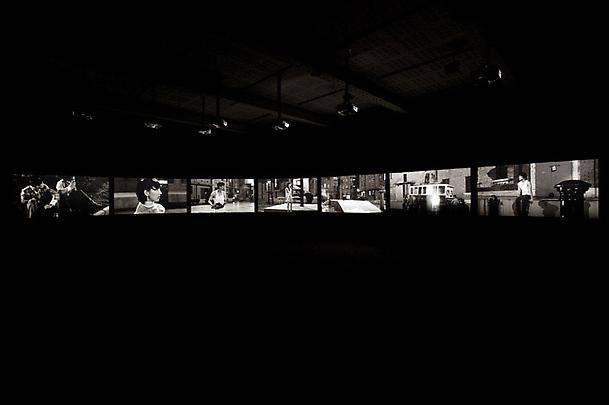
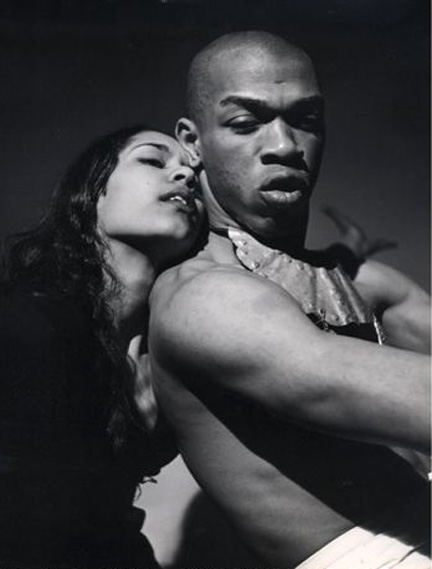
 Carmen & Geoffrey is an endearing look at Carmen de Lavallade and Geoffrey Holder’s lifelong love affair with dance — and each other. The New Orleans-born de Lavallade studied with Lester Horton and went to high school with Alvin Ailey, whom she brought to his first dance class. Trinidadian Holder is a larger-than-life gentle giant who is a dancer, choreographer, composer, costume designer, actor director, writer, photographer, painter, and just about anything else he wants to be. The two met when they both were cast in Truman Capote and Harold Arlen’s Broadway show House of Flowers in 1954, with Holder instantly falling in love with de Lavallade; they’ve been together ever since. Directors Linda Atkinson and Nick Doob combine amazing archival footage — of Eartha Kitt, Josephine Baker, Ulysses Dove, de Lavallade dancing with Ailey, and other splendid moments — with contemporary rehearsal scenes, dance performances, and interviews with such stalwarts as dance critic Jennifer Dunning, former Alvin Ailey artistic director Judith Jamison, and choreographer Joe Layton (watch out for his eyebrows), along with family members and Gus Solomons jr and Dudley Williams, who still work with de Lavallade. The film was made on an extremely low budget, and it shows, but it is filled with such glorious footage that you’ll get over that quickly. Carmen & Geoffrey is screening April 24 at 7:00 at the Baryshnikov Arts Center, with a panel discussion to follow, as part of the “BAC Flicks” series, which continues May 30 with Matt Wolf’s 2008 documentary, Wild Combination: A Portrait of Arthur Russell.
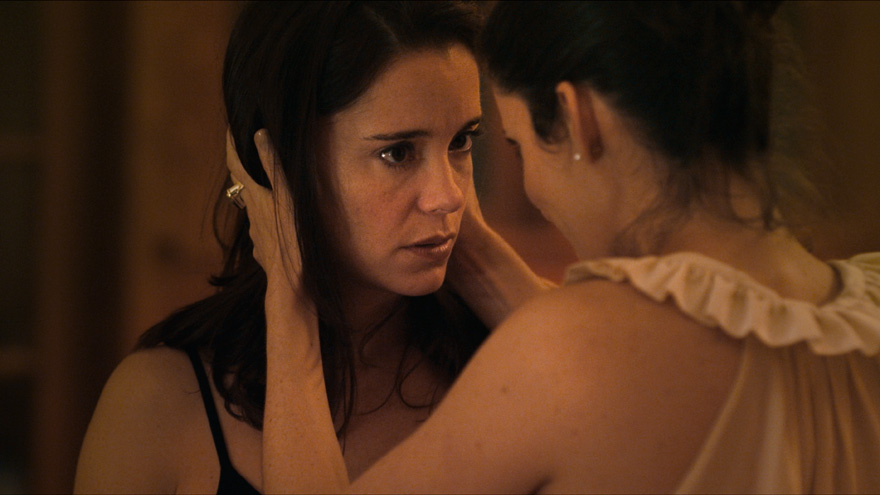
 Writer-director Adam Christian Clark’s feature-length debut, Caroline and Jackie, has nothing to do with the Kennedys. It also turns out to be more of a fictionalized version of a conglomeration of reality-show television series than a coherent narrative, albeit one with some powerful, effective moments. Jackie (Bitsie Tullouch) at first thinks that her sister, Caroline (Marguerite Moreau), has come to visit her to celebrate Caroline’s birthday. But Caroline turns the tables on Jackie, instead throwing a surprise party for Jackie before changing gears once again and staging an intervention, claiming Jackie is a pill-addicted anorexic, which Jackie adamantly denies. Thrust in the middle is Jackie’s boyfriend, Ryan (David Giuntoli). The three of them spend a long, complicated, emotional night together, along with some friends, examining one another as well as themselves, reaching some rather unpleasant conclusions. Clark, who has directed the American version of Big Brother and the Chinese reality show Fashion Star, had the actors improvise much of the dialogue (based on a specific outline), resulting in a choppy story with incongruent lines and characters that are hard to like or even care about. Every time the film seems to be heading in a better direction, particularly in scenes featuring only Ryan and Jackie, it slips back, getting lost in terrain better left to Jersey Shore, The Real World, and, well, Big Brother. In his director’s statement, Clark, who has been based in Los Angeles since he was eighteen and is now thirty-one, explained, “In being truly honest, we have to admit that we are all vapid.” Actually, no we don’t.